Compare commits
1
Commits
| Author | SHA1 | Date | |
|---|---|---|---|
 Lysandre Lysandre
|
7a09a54162 |
@@ -27,9 +27,8 @@ jobs:
|
||||
steps:
|
||||
- checkout
|
||||
- run: sudo pip install .[mecab,sklearn,tf-cpu,torch,testing]
|
||||
- run:
|
||||
command: python -m pytest -n 8 --dist=loadfile -s -v ./tests/
|
||||
no_output_timeout: 4h
|
||||
- run: python -m pytest -n 8 --dist=loadfile -s -v ./tests/
|
||||
- no_output_timeout: 4h
|
||||
|
||||
run_tests_torch:
|
||||
working_directory: ~/transformers
|
||||
@@ -137,7 +136,7 @@ workflows:
|
||||
run_slow_tests:
|
||||
triggers:
|
||||
- schedule:
|
||||
cron: "0 4 * * *"
|
||||
cron: "0 4 * * 1"
|
||||
filters:
|
||||
branches:
|
||||
only:
|
||||
|
||||
@@ -142,6 +142,3 @@ debug.env
|
||||
|
||||
# vim
|
||||
.*.swp
|
||||
|
||||
#ctags
|
||||
tags
|
||||
|
||||
@@ -1,25 +1,3 @@
|
||||
/* Our DOM objects */
|
||||
|
||||
.framework-selector {
|
||||
display: flex;
|
||||
flex-direction: row;
|
||||
justify-content: flex-end;
|
||||
}
|
||||
|
||||
.framework-selector > button {
|
||||
background-color: white;
|
||||
color: #6670FF;
|
||||
border: 1px solid #6670FF;
|
||||
padding: 5px;
|
||||
}
|
||||
|
||||
.framework-selector > button.selected{
|
||||
background-color: #6670FF;
|
||||
color: white;
|
||||
border: 1px solid #6670FF;
|
||||
padding: 5px;
|
||||
}
|
||||
|
||||
/* The literal code blocks */
|
||||
.rst-content tt.literal, .rst-content tt.literal, .rst-content code.literal {
|
||||
color: #6670FF;
|
||||
|
||||
@@ -68,74 +68,6 @@ function addHfMenu() {
|
||||
document.body.insertAdjacentHTML('afterbegin', div);
|
||||
}
|
||||
|
||||
function platformToggle() {
|
||||
const codeBlocks = Array.from(document.getElementsByClassName("highlight"));
|
||||
const pytorchIdentifier = "## PYTORCH CODE";
|
||||
const tensorflowIdentifier = "## TENSORFLOW CODE";
|
||||
const pytorchSpanIdentifier = `<span class="c1">${pytorchIdentifier}</span>`;
|
||||
const tensorflowSpanIdentifier = `<span class="c1">${tensorflowIdentifier}</span>`;
|
||||
|
||||
const getFrameworkSpans = filteredCodeBlock => {
|
||||
const spans = filteredCodeBlock.element.innerHTML;
|
||||
const pytorchSpanPosition = spans.indexOf(pytorchSpanIdentifier);
|
||||
const tensorflowSpanPosition = spans.indexOf(tensorflowSpanIdentifier);
|
||||
|
||||
let pytorchSpans;
|
||||
let tensorflowSpans;
|
||||
|
||||
if(pytorchSpanPosition < tensorflowSpanPosition){
|
||||
pytorchSpans = spans.slice(pytorchSpanPosition + pytorchSpanIdentifier.length + 1, tensorflowSpanPosition);
|
||||
tensorflowSpans = spans.slice(tensorflowSpanPosition + tensorflowSpanIdentifier.length + 1, spans.length);
|
||||
}else{
|
||||
tensorflowSpans = spans.slice(tensorflowSpanPosition + tensorflowSpanIdentifier.length + 1, pytorchSpanPosition);
|
||||
pytorchSpans = spans.slice(pytorchSpanPosition + pytorchSpanIdentifier.length + 1, spans.length);
|
||||
}
|
||||
|
||||
return {
|
||||
...filteredCodeBlock,
|
||||
pytorchSample: pytorchSpans ,
|
||||
tensorflowSample: tensorflowSpans
|
||||
}
|
||||
};
|
||||
|
||||
const createFrameworkButtons = sample => {
|
||||
const pytorchButton = document.createElement("button");
|
||||
pytorchButton.innerText = "PyTorch";
|
||||
|
||||
const tensorflowButton = document.createElement("button");
|
||||
tensorflowButton.innerText = "TensorFlow";
|
||||
|
||||
const selectorDiv = document.createElement("div");
|
||||
selectorDiv.classList.add("framework-selector");
|
||||
selectorDiv.appendChild(pytorchButton);
|
||||
selectorDiv.appendChild(tensorflowButton);
|
||||
sample.element.parentElement.prepend(selectorDiv);
|
||||
|
||||
// Init on PyTorch
|
||||
sample.element.innerHTML = sample.pytorchSample;
|
||||
pytorchButton.classList.add("selected");
|
||||
tensorflowButton.classList.remove("selected");
|
||||
|
||||
pytorchButton.addEventListener("click", () => {
|
||||
sample.element.innerHTML = sample.pytorchSample;
|
||||
pytorchButton.classList.add("selected");
|
||||
tensorflowButton.classList.remove("selected");
|
||||
});
|
||||
tensorflowButton.addEventListener("click", () => {
|
||||
sample.element.innerHTML = sample.tensorflowSample;
|
||||
tensorflowButton.classList.add("selected");
|
||||
pytorchButton.classList.remove("selected");
|
||||
});
|
||||
};
|
||||
|
||||
codeBlocks
|
||||
.map(element => {return {element: element.firstChild, innerText: element.innerText}})
|
||||
.filter(codeBlock => codeBlock.innerText.includes(pytorchIdentifier) && codeBlock.innerText.includes(tensorflowIdentifier))
|
||||
.map(getFrameworkSpans)
|
||||
.forEach(createFrameworkButtons);
|
||||
}
|
||||
|
||||
|
||||
/*!
|
||||
* github-buttons v2.2.10
|
||||
* (c) 2019 なつき
|
||||
@@ -153,7 +85,6 @@ function onLoad() {
|
||||
addGithubButton();
|
||||
parseGithubButtons();
|
||||
addHfMenu();
|
||||
platformToggle();
|
||||
}
|
||||
|
||||
window.addEventListener("load", onLoad);
|
||||
|
||||

File diff suppressed because one or more lines are too long
|
Before Width: | Height: | Size: 7.6 KiB After Width: | Height: | Size: 14 KiB |
+2
-8
@@ -20,13 +20,13 @@ sys.path.insert(0, os.path.abspath('../../src'))
|
||||
# -- Project information -----------------------------------------------------
|
||||
|
||||
project = u'transformers'
|
||||
copyright = u'2020, huggingface'
|
||||
copyright = u'2019, huggingface'
|
||||
author = u'huggingface'
|
||||
|
||||
# The short X.Y version
|
||||
version = u''
|
||||
# The full version, including alpha/beta/rc tags
|
||||
release = u'2.5.1'
|
||||
release = u'2.5.0'
|
||||
|
||||
|
||||
# -- General configuration ---------------------------------------------------
|
||||
@@ -105,12 +105,6 @@ html_static_path = ['_static']
|
||||
#
|
||||
# html_sidebars = {}
|
||||
|
||||
# This must be the name of an image file (path relative to the configuration
|
||||
# directory) that is the favicon of the docs. Modern browsers use this as
|
||||
# the icon for tabs, windows and bookmarks. It should be a Windows-style
|
||||
# icon file (.ico).
|
||||
html_favicon = 'favicon.ico'
|
||||
|
||||
|
||||
# -- Options for HTMLHelp output ---------------------------------------------
|
||||
|
||||
|
||||
Binary file not shown.
|
Before Width: | Height: | Size: 47 KiB |
@@ -61,7 +61,6 @@ The library currently contains PyTorch and Tensorflow implementations, pre-train
|
||||
quickstart
|
||||
glossary
|
||||
pretrained_models
|
||||
usage
|
||||
model_sharing
|
||||
examples
|
||||
notebooks
|
||||
|
||||
@@ -41,8 +41,7 @@ AlbertTokenizer
|
||||
~~~~~~~~~~~~~~~~~~~~~
|
||||
|
||||
.. autoclass:: transformers.AlbertTokenizer
|
||||
:members: build_inputs_with_special_tokens, get_special_tokens_mask,
|
||||
create_token_type_ids_from_sequences, save_vocabulary
|
||||
:members:
|
||||
|
||||
|
||||
AlbertModel
|
||||
|
||||
@@ -46,8 +46,7 @@ BertTokenizer
|
||||
~~~~~~~~~~~~~~~~~~~~~
|
||||
|
||||
.. autoclass:: transformers.BertTokenizer
|
||||
:members: build_inputs_with_special_tokens, get_special_tokens_mask,
|
||||
create_token_type_ids_from_sequences, save_vocabulary
|
||||
:members:
|
||||
|
||||
|
||||
BertModel
|
||||
|
||||
@@ -33,8 +33,7 @@ CamembertTokenizer
|
||||
~~~~~~~~~~~~~~~~~~~~~~~~~~~~~~~~~~~~~~~~~~
|
||||
|
||||
.. autoclass:: transformers.CamembertTokenizer
|
||||
:members: build_inputs_with_special_tokens, get_special_tokens_mask,
|
||||
create_token_type_ids_from_sequences, save_vocabulary
|
||||
:members:
|
||||
|
||||
|
||||
CamembertModel
|
||||
|
||||
@@ -43,7 +43,7 @@ CTRLTokenizer
|
||||
~~~~~~~~~~~~~~~~~~~~~~~~~~~~~~~~
|
||||
|
||||
.. autoclass:: transformers.CTRLTokenizer
|
||||
:members: save_vocabulary
|
||||
:members:
|
||||
|
||||
|
||||
CTRLModel
|
||||
|
||||
@@ -47,7 +47,7 @@ OpenAIGPTTokenizer
|
||||
~~~~~~~~~~~~~~~~~~~~~~~~~~
|
||||
|
||||
.. autoclass:: transformers.OpenAIGPTTokenizer
|
||||
:members: save_vocabulary
|
||||
:members:
|
||||
|
||||
|
||||
OpenAIGPTModel
|
||||
|
||||
@@ -5,7 +5,7 @@ Overview
|
||||
~~~~~~~~~~~~~~~~~~~~~
|
||||
|
||||
OpenAI GPT-2 model was proposed in
|
||||
`Language Models are Unsupervised Multitask Learners <https://cdn.openai.com/better-language-models/language_models_are_unsupervised_multitask_learners.pdf>`_
|
||||
`Language Models are Unsupervised Multitask Learners`_
|
||||
by Alec Radford*, Jeffrey Wu*, Rewon Child, David Luan, Dario Amodei** and Ilya Sutskever**.
|
||||
It's a causal (unidirectional) transformer pre-trained using language modeling on a very large
|
||||
corpus of ~40 GB of text data.
|
||||
@@ -46,7 +46,7 @@ GPT2Tokenizer
|
||||
~~~~~~~~~~~~~~~~~~~~~
|
||||
|
||||
.. autoclass:: transformers.GPT2Tokenizer
|
||||
:members: save_vocabulary
|
||||
:members:
|
||||
|
||||
|
||||
GPT2Model
|
||||
|
||||
@@ -39,8 +39,7 @@ RobertaTokenizer
|
||||
~~~~~~~~~~~~~~~~~~~~~
|
||||
|
||||
.. autoclass:: transformers.RobertaTokenizer
|
||||
:members: build_inputs_with_special_tokens, get_special_tokens_mask,
|
||||
create_token_type_ids_from_sequences, save_vocabulary
|
||||
:members:
|
||||
|
||||
|
||||
RobertaModel
|
||||
|
||||
@@ -42,7 +42,7 @@ TransfoXLTokenizer
|
||||
~~~~~~~~~~~~~~~~~~~~~~~~~~
|
||||
|
||||
.. autoclass:: transformers.TransfoXLTokenizer
|
||||
:members: save_vocabulary
|
||||
:members:
|
||||
|
||||
|
||||
TransfoXLModel
|
||||
|
||||
@@ -41,8 +41,7 @@ XLMTokenizer
|
||||
~~~~~~~~~~~~~~~~~~~~~~~~~~~~~~~~~~~~~~~~~~
|
||||
|
||||
.. autoclass:: transformers.XLMTokenizer
|
||||
:members: build_inputs_with_special_tokens, get_special_tokens_mask,
|
||||
create_token_type_ids_from_sequences, save_vocabulary
|
||||
:members:
|
||||
|
||||
XLMModel
|
||||
~~~~~~~~~~~~~~~~~~~~~~~~~~~~~~~~~~~~~~~~~~~~~~~
|
||||
|
||||
@@ -39,8 +39,7 @@ XLMRobertaTokenizer
|
||||
~~~~~~~~~~~~~~~~~~~~~~~~~~~~~~~~~~~~~~~~~~~~~~
|
||||
|
||||
.. autoclass:: transformers.XLMRobertaTokenizer
|
||||
:members: build_inputs_with_special_tokens, get_special_tokens_mask,
|
||||
create_token_type_ids_from_sequences, save_vocabulary
|
||||
:members:
|
||||
|
||||
|
||||
XLMRobertaModel
|
||||
|
||||
@@ -44,8 +44,7 @@ XLNetTokenizer
|
||||
~~~~~~~~~~~~~~~~~~~~~~~~~~~~~~~~~~~~~~~~~~
|
||||
|
||||
.. autoclass:: transformers.XLNetTokenizer
|
||||
:members: build_inputs_with_special_tokens, get_special_tokens_mask,
|
||||
create_token_type_ids_from_sequences, save_vocabulary
|
||||
:members:
|
||||
|
||||
|
||||
XLNetModel
|
||||
|
||||
@@ -1,597 +0,0 @@
|
||||
Usage
|
||||
^^^^^^^^^^^^^^^^^^^^^^^^^^^^^^^^^^
|
||||
|
||||
This page shows the most frequent use-cases when using the library. The models available allow for many different
|
||||
configurations and a great versatility in use-cases. The most simple ones are presented here, showcasing usage
|
||||
for tasks such as question answering, sequence classification, named entity recognition and others.
|
||||
|
||||
These examples leverage auto-models, which are classes that will instantiate a model according to a given checkpoint,
|
||||
automatically selecting the correct model architecture. Please check the :class:`~transformers.AutoModel` documentation
|
||||
for more information.
|
||||
Feel free to modify the code to be more specific and adapt it to your specific use-case.
|
||||
|
||||
In order for a model to perform well on a task, it must be loaded from a checkpoint corresponding to that task. These
|
||||
checkpoints are usually pre-trained on a large corpus of data and fine-tuned on a specific task. This means the
|
||||
following:
|
||||
|
||||
- Not all models were fine-tuned on all tasks. If you want to fine-tune a model on a specific task, you can leverage
|
||||
one of the `run_$TASK.py` script in the
|
||||
`examples <https://github.com/huggingface/transformers/tree/master/examples>`_ directory.
|
||||
- Fine-tuned models were fine-tuned on a specific dataset. This dataset may or may not overlap with your use-case
|
||||
and domain. As mentioned previously, you may leverage the
|
||||
`examples <https://github.com/huggingface/transformers/tree/master/examples>`_ scripts to fine-tune your model, or you
|
||||
may create your own training script.
|
||||
|
||||
In order to do an inference on a task, several mechanisms are made available by the library:
|
||||
|
||||
- Pipelines: very easy-to-use abstractions, which require as little as two lines of code.
|
||||
- Using a model directly with a tokenizer (PyTorch/TensorFlow): the full inference using the model. Less abstraction,
|
||||
but much more powerful.
|
||||
|
||||
Both approaches are showcased here.
|
||||
|
||||
.. note::
|
||||
|
||||
All tasks presented here leverage pre-trained checkpoints that were fine-tuned on specific tasks. Loading a
|
||||
checkpoint that was not fine-tuned on a specific task would load only the base transformer layers and not the
|
||||
additional head that is used for the task, initializing the weights of that head randomly.
|
||||
|
||||
This would produce random output.
|
||||
|
||||
Sequence Classification
|
||||
--------------------------
|
||||
|
||||
Sequence classification is the task of classifying sequences according to a given number of classes. An example
|
||||
of sequence classification is the GLUE dataset, which is entirely based on that task. If you would like to fine-tune
|
||||
a model on a GLUE sequence classification task, you may leverage the
|
||||
`run_glue.py <https://github.com/huggingface/transformers/tree/master/examples/run_glue.py>`_ or
|
||||
`run_tf_glue.py <https://github.com/huggingface/transformers/tree/master/examples/run_tf_glue.py>`_ scripts.
|
||||
|
||||
Here is an example using the pipelines do to sentiment analysis: identifying if a sequence is positive or negative.
|
||||
It leverages a fine-tuned model on sst2, which is a GLUE task.
|
||||
|
||||
::
|
||||
|
||||
from transformers import pipeline
|
||||
|
||||
nlp = pipeline("sentiment-analysis")
|
||||
|
||||
print(nlp("I hate you"))
|
||||
print(nlp("I love you"))
|
||||
|
||||
This returns a label ("POSITIVE" or "NEGATIVE") alongside a score, as follows:
|
||||
|
||||
::
|
||||
|
||||
[{'label': 'NEGATIVE', 'score': 0.9991129}]
|
||||
[{'label': 'POSITIVE', 'score': 0.99986565}]
|
||||
|
||||
|
||||
Here is an example of doing a sequence classification using a model to determine if two sequences are paraphrases
|
||||
of each other. The process is the following:
|
||||
|
||||
- Instantiate a tokenizer and a model from the checkpoint name. The model is identified as a BERT model and loads it
|
||||
with the weights stored in the checkpoint.
|
||||
- Build a sequence from the two sentences, with the correct model-specific separators token type ids
|
||||
and attention masks (:func:`~transformers.PreTrainedTokenizer.encode` and
|
||||
:func:`~transformers.PreTrainedTokenizer.encode_plus` take care of this)
|
||||
- Pass this sequence through the model so that it is classified in one of the two available classes: 0
|
||||
(not a paraphrase) and 1 (is a paraphrase)
|
||||
- Compute the softmax of the result to get probabilities over the classes
|
||||
- Print the results
|
||||
|
||||
::
|
||||
|
||||
## PYTORCH CODE
|
||||
from transformers import AutoTokenizer, AutoModelForSequenceClassification
|
||||
import torch
|
||||
|
||||
tokenizer = AutoTokenizer.from_pretrained("bert-base-cased-finetuned-mrpc")
|
||||
model = AutoModelForSequenceClassification.from_pretrained("bert-base-cased-finetuned-mrpc")
|
||||
|
||||
classes = ["not paraphrase", "is paraphrase"]
|
||||
|
||||
sequence_0 = "The company HuggingFace is based in New York City"
|
||||
sequence_1 = "Apples are especially bad for your health"
|
||||
sequence_2 = "HuggingFace's headquarters are situated in Manhattan"
|
||||
|
||||
paraphrase = tokenizer.encode_plus(sequence_0, sequence_2, return_tensors="pt")
|
||||
not_paraphrase = tokenizer.encode_plus(sequence_0, sequence_1, return_tensors="pt")
|
||||
|
||||
paraphrase_classification_logits = model(**paraphrase)[0]
|
||||
not_paraphrase_classification_logits = model(**not_paraphrase)[0]
|
||||
|
||||
paraphrase_results = torch.softmax(paraphrase_classification_logits, dim=1).tolist()[0]
|
||||
not_paraphrase_results = torch.softmax(not_paraphrase_classification_logits, dim=1).tolist()[0]
|
||||
|
||||
print("Should be paraphrase")
|
||||
for i in range(len(classes)):
|
||||
print(f"{classes[i]}: {round(paraphrase_results[i] * 100)}%")
|
||||
|
||||
print("\nShould not be paraphrase")
|
||||
for i in range(len(classes)):
|
||||
print(f"{classes[i]}: {round(not_paraphrase_results[i] * 100)}%")
|
||||
## TENSORFLOW CODE
|
||||
from transformers import AutoTokenizer, TFAutoModelForSequenceClassification
|
||||
import tensorflow as tf
|
||||
|
||||
tokenizer = AutoTokenizer.from_pretrained("bert-base-cased-finetuned-mrpc")
|
||||
model = TFAutoModelForSequenceClassification.from_pretrained("bert-base-cased-finetuned-mrpc")
|
||||
|
||||
classes = ["not paraphrase", "is paraphrase"]
|
||||
|
||||
sequence_0 = "The company HuggingFace is based in New York City"
|
||||
sequence_1 = "Apples are especially bad for your health"
|
||||
sequence_2 = "HuggingFace's headquarters are situated in Manhattan"
|
||||
|
||||
paraphrase = tokenizer.encode_plus(sequence_0, sequence_2, return_tensors="tf")
|
||||
not_paraphrase = tokenizer.encode_plus(sequence_0, sequence_1, return_tensors="tf")
|
||||
|
||||
paraphrase_classification_logits = model(paraphrase)[0]
|
||||
not_paraphrase_classification_logits = model(not_paraphrase)[0]
|
||||
|
||||
paraphrase_results = tf.nn.softmax(paraphrase_classification_logits, axis=1).numpy()[0]
|
||||
not_paraphrase_results = tf.nn.softmax(not_paraphrase_classification_logits, axis=1).numpy()[0]
|
||||
|
||||
print("Should be paraphrase")
|
||||
for i in range(len(classes)):
|
||||
print(f"{classes[i]}: {round(paraphrase_results[i] * 100)}%")
|
||||
|
||||
print("\nShould not be paraphrase")
|
||||
for i in range(len(classes)):
|
||||
print(f"{classes[i]}: {round(not_paraphrase_results[i] * 100)}%")
|
||||
|
||||
This outputs the following results:
|
||||
|
||||
::
|
||||
|
||||
Should be paraphrase
|
||||
not paraphrase: 10%
|
||||
is paraphrase: 90%
|
||||
|
||||
Should not be paraphrase
|
||||
not paraphrase: 94%
|
||||
is paraphrase: 6%
|
||||
|
||||
Extractive Question Answering
|
||||
----------------------------------------------------
|
||||
|
||||
Extractive Question Answering is the task of extracting an answer from a text given a question. An example of a
|
||||
question answering dataset is the SQuAD dataset, which is entirely based on that task. If you would like to fine-tune
|
||||
a model on a SQuAD task, you may leverage the `run_squad.py`.
|
||||
|
||||
Here is an example using the pipelines do to question answering: extracting an answer from a text given a question.
|
||||
It leverages a fine-tuned model on SQuAD.
|
||||
|
||||
::
|
||||
|
||||
from transformers import pipeline
|
||||
|
||||
nlp = pipeline("question-answering")
|
||||
|
||||
context = r"""
|
||||
Extractive Question Answering is the task of extracting an answer from a text given a question. An example of a
|
||||
question answering dataset is the SQuAD dataset, which is entirely based on that task. If you would like to fine-tune
|
||||
a model on a SQuAD task, you may leverage the `run_squad.py`.
|
||||
"""
|
||||
|
||||
print(nlp(question="What is extractive question answering?", context=context))
|
||||
print(nlp(question="What is a good example of a question answering dataset?", context=context))
|
||||
|
||||
This returns an answer extracted from the text, a confidence score, alongside "start" and "end" values which
|
||||
are the positions of the extracted answer in the text.
|
||||
|
||||
::
|
||||
|
||||
{'score': 0.622232091629833, 'start': 34, 'end': 96, 'answer': 'the task of extracting an answer from a text given a question.'}
|
||||
{'score': 0.5115299158662765, 'start': 147, 'end': 161, 'answer': 'SQuAD dataset,'}
|
||||
|
||||
|
||||
Here is an example of question answering using a model and a tokenizer. The process is the following:
|
||||
|
||||
- Instantiate a tokenizer and a model from the checkpoint name. The model is identified as a BERT model and loads it
|
||||
with the weights stored in the checkpoint.
|
||||
- Define a text and a few questions.
|
||||
- Iterate over the questions and build a sequence from the text and the current question, with the correct
|
||||
model-specific separators token type ids and attention masks
|
||||
- Pass this sequence through the model. This outputs a range of scores across the entire sequence tokens (question and
|
||||
text), for both the start and end positions.
|
||||
- Compute the softmax of the result to get probabilities over the tokens
|
||||
- Fetch the tokens from the identified start and stop values, convert those tokens to a string.
|
||||
- Print the results
|
||||
|
||||
::
|
||||
|
||||
## PYTORCH CODE
|
||||
from transformers import AutoTokenizer, AutoModelForQuestionAnswering
|
||||
import torch
|
||||
|
||||
tokenizer = AutoTokenizer.from_pretrained("bert-large-uncased-whole-word-masking-finetuned-squad")
|
||||
model = AutoModelForQuestionAnswering.from_pretrained("bert-large-uncased-whole-word-masking-finetuned-squad")
|
||||
|
||||
text = r"""
|
||||
🤗 Transformers (formerly known as pytorch-transformers and pytorch-pretrained-bert) provides general-purpose
|
||||
architectures (BERT, GPT-2, RoBERTa, XLM, DistilBert, XLNet…) for Natural Language Understanding (NLU) and Natural
|
||||
Language Generation (NLG) with over 32+ pretrained models in 100+ languages and deep interoperability between
|
||||
TensorFlow 2.0 and PyTorch.
|
||||
"""
|
||||
|
||||
questions = [
|
||||
"How many pretrained models are available in Transformers?",
|
||||
"What does Transformers provide?",
|
||||
"Transformers provides interoperability between which frameworks?",
|
||||
]
|
||||
|
||||
for question in questions:
|
||||
inputs = tokenizer.encode_plus(question, text, add_special_tokens=True, return_tensors="pt")
|
||||
input_ids = inputs["input_ids"].tolist()[0]
|
||||
|
||||
text_tokens = tokenizer.convert_ids_to_tokens(input_ids)
|
||||
answer_start_scores, answer_end_scores = model(**inputs)
|
||||
|
||||
answer_start = torch.argmax(
|
||||
answer_start_scores
|
||||
) # Get the most likely beginning of answer with the argmax of the score
|
||||
answer_end = torch.argmax(answer_end_scores) + 1 # Get the most likely end of answer with the argmax of the score
|
||||
|
||||
answer = tokenizer.convert_tokens_to_string(tokenizer.convert_ids_to_tokens(input_ids[answer_start:answer_end]))
|
||||
|
||||
print(f"Question: {question}")
|
||||
print(f"Answer: {answer}\n")
|
||||
## TENSORFLOW CODE
|
||||
from transformers import AutoTokenizer, TFAutoModelForQuestionAnswering
|
||||
import tensorflow as tf
|
||||
|
||||
tokenizer = AutoTokenizer.from_pretrained("bert-large-uncased-whole-word-masking-finetuned-squad")
|
||||
model = TFAutoModelForQuestionAnswering.from_pretrained("bert-large-uncased-whole-word-masking-finetuned-squad")
|
||||
|
||||
text = r"""
|
||||
🤗 Transformers (formerly known as pytorch-transformers and pytorch-pretrained-bert) provides general-purpose
|
||||
architectures (BERT, GPT-2, RoBERTa, XLM, DistilBert, XLNet…) for Natural Language Understanding (NLU) and Natural
|
||||
Language Generation (NLG) with over 32+ pretrained models in 100+ languages and deep interoperability between
|
||||
TensorFlow 2.0 and PyTorch.
|
||||
"""
|
||||
|
||||
questions = [
|
||||
"How many pretrained models are available in Transformers?",
|
||||
"What does Transformers provide?",
|
||||
"Transformers provides interoperability between which frameworks?",
|
||||
]
|
||||
|
||||
for question in questions:
|
||||
inputs = tokenizer.encode_plus(question, text, add_special_tokens=True, return_tensors="tf")
|
||||
input_ids = inputs["input_ids"].numpy()[0]
|
||||
|
||||
text_tokens = tokenizer.convert_ids_to_tokens(input_ids)
|
||||
answer_start_scores, answer_end_scores = model(inputs)
|
||||
|
||||
answer_start = tf.argmax(
|
||||
answer_start_scores, axis=1
|
||||
).numpy()[0] # Get the most likely beginning of answer with the argmax of the score
|
||||
answer_end = (
|
||||
tf.argmax(answer_end_scores, axis=1) + 1
|
||||
).numpy()[0] # Get the most likely end of answer with the argmax of the score
|
||||
answer = tokenizer.convert_tokens_to_string(tokenizer.convert_ids_to_tokens(input_ids[answer_start:answer_end]))
|
||||
|
||||
print(f"Question: {question}")
|
||||
print(f"Answer: {answer}\n")
|
||||
|
||||
This outputs the questions followed by the predicted answers:
|
||||
|
||||
::
|
||||
|
||||
Question: How many pretrained models are available in Transformers?
|
||||
Answer: over 32 +
|
||||
|
||||
Question: What does Transformers provide?
|
||||
Answer: general - purpose architectures
|
||||
|
||||
Question: Transformers provides interoperability between which frameworks?
|
||||
Answer: tensorflow 2 . 0 and pytorch
|
||||
|
||||
|
||||
|
||||
Language Modeling
|
||||
----------------------------------------------------
|
||||
|
||||
Language modeling is the task of fitting a model to a corpus, which can be domain specific. All popular transformer
|
||||
based models are trained using a variant of language modeling, e.g. BERT with masked language modeling, GPT-2 with
|
||||
causal language modeling.
|
||||
|
||||
Language modeling can be useful outside of pre-training as well, for example to shift the model distribution to be
|
||||
domain-specific: using a language model trained over a very large corpus, and then fine-tuning it to a news dataset
|
||||
or on scientific papers e.g. `LysandreJik/arxiv-nlp <https://huggingface.co/lysandre/arxiv-nlp>`__.
|
||||
|
||||
Masked Language Modeling
|
||||
~~~~~~~~~~~~~~~~~~~~~~~~~~~~~~~~~~~~~~~~~~~~~~~~~~~~
|
||||
|
||||
Masked language modeling is the task of masking tokens in a sequence with a masking token, and prompting the model to
|
||||
fill that mask with an appropriate token. This allows the model to attend to both the right context (tokens on the
|
||||
right of the mask) and the left context (tokens on the left of the mask). Such a training creates a strong basis
|
||||
for downstream tasks requiring bi-directional context such as SQuAD (question answering,
|
||||
see `Lewis, Lui, Goyal et al. <https://arxiv.org/abs/1910.13461>`__, part 4.2).
|
||||
|
||||
Here is an example of using pipelines to replace a mask from a sequence:
|
||||
|
||||
::
|
||||
|
||||
from transformers import pipeline
|
||||
|
||||
nlp = pipeline("fill-mask")
|
||||
print(nlp(f"HuggingFace is creating a {nlp.tokenizer.mask_token} that the community uses to solve NLP tasks."))
|
||||
|
||||
This outputs the sequences with the mask filled, the confidence score as well as the token id in the tokenizer
|
||||
vocabulary:
|
||||
|
||||
::
|
||||
|
||||
[
|
||||
{'sequence': '<s> HuggingFace is creating a tool that the community uses to solve NLP tasks.</s>', 'score': 0.15627853572368622, 'token': 3944},
|
||||
{'sequence': '<s> HuggingFace is creating a framework that the community uses to solve NLP tasks.</s>', 'score': 0.11690319329500198, 'token': 7208},
|
||||
{'sequence': '<s> HuggingFace is creating a library that the community uses to solve NLP tasks.</s>', 'score': 0.058063216507434845, 'token': 5560},
|
||||
{'sequence': '<s> HuggingFace is creating a database that the community uses to solve NLP tasks.</s>', 'score': 0.04211743175983429, 'token': 8503},
|
||||
{'sequence': '<s> HuggingFace is creating a prototype that the community uses to solve NLP tasks.</s>', 'score': 0.024718601256608963, 'token': 17715}
|
||||
]
|
||||
|
||||
Here is an example doing masked language modeling using a model and a tokenizer. The process is the following:
|
||||
|
||||
- Instantiate a tokenizer and a model from the checkpoint name. The model is identified as a DistilBERT model and
|
||||
loads it with the weights stored in the checkpoint.
|
||||
- Define a sequence with a masked token, placing the :obj:`tokenizer.mask_token` instead of a word.
|
||||
- Encode that sequence into IDs and find the position of the masked token in that list of IDs.
|
||||
- Retrieve the predictions at the index of the mask token: this tensor has the same size as the vocabulary, and the
|
||||
values are the scores attributed to each token. The model gives higher score to tokens he deems probable in that
|
||||
context.
|
||||
- Retrieve the top 5 tokens using the PyTorch :obj:`topk` or TensorFlow :obj:`top_k` methods.
|
||||
- Replace the mask token by the tokens and print the results
|
||||
|
||||
::
|
||||
|
||||
## PYTORCH CODE
|
||||
from transformers import AutoModelWithLMHead, AutoTokenizer
|
||||
import torch
|
||||
|
||||
tokenizer = AutoTokenizer.from_pretrained("distilbert-base-cased")
|
||||
model = AutoModelWithLMHead.from_pretrained("distilbert-base-cased")
|
||||
|
||||
sequence = f"Distilled models are smaller than the models they mimic. Using them instead of the large versions would help {tokenizer.mask_token} our carbon footprint."
|
||||
|
||||
input = tokenizer.encode(sequence, return_tensors="pt")
|
||||
mask_token_index = torch.where(input == tokenizer.mask_token_id)[1]
|
||||
|
||||
token_logits = model(input)[0]
|
||||
mask_token_logits = token_logits[0, mask_token_index, :]
|
||||
|
||||
top_5_tokens = torch.topk(mask_token_logits, 5, dim=1).indices[0].tolist()
|
||||
|
||||
for token in top_5_tokens:
|
||||
print(sequence.replace(tokenizer.mask_token, tokenizer.decode([token])))
|
||||
## TENSORFLOW CODE
|
||||
from transformers import TFAutoModelWithLMHead, AutoTokenizer
|
||||
import tensorflow as tf
|
||||
|
||||
tokenizer = AutoTokenizer.from_pretrained("distilbert-base-cased")
|
||||
model = TFAutoModelWithLMHead.from_pretrained("distilbert-base-cased")
|
||||
|
||||
sequence = f"Distilled models are smaller than the models they mimic. Using them instead of the large versions would help {tokenizer.mask_token} our carbon footprint."
|
||||
|
||||
input = tokenizer.encode(sequence, return_tensors="tf")
|
||||
mask_token_index = tf.where(input == tokenizer.mask_token_id)[0, 1]
|
||||
|
||||
token_logits = model(input)[0]
|
||||
mask_token_logits = token_logits[0, mask_token_index, :]
|
||||
|
||||
top_5_tokens = tf.math.top_k(mask_token_logits, 5).indices.numpy()
|
||||
|
||||
for token in top_5_tokens:
|
||||
print(sequence.replace(tokenizer.mask_token, tokenizer.decode([token])))
|
||||
|
||||
This prints five sequences, with the top 5 tokens predicted by the model:
|
||||
|
||||
::
|
||||
|
||||
Distilled models are smaller than the models they mimic. Using them instead of the large versions would help reduce our carbon footprint.
|
||||
Distilled models are smaller than the models they mimic. Using them instead of the large versions would help increase our carbon footprint.
|
||||
Distilled models are smaller than the models they mimic. Using them instead of the large versions would help decrease our carbon footprint.
|
||||
Distilled models are smaller than the models they mimic. Using them instead of the large versions would help offset our carbon footprint.
|
||||
Distilled models are smaller than the models they mimic. Using them instead of the large versions would help improve our carbon footprint.
|
||||
|
||||
|
||||
Causal Language Modeling
|
||||
~~~~~~~~~~~~~~~~~~~~~~~~~~~~~~~~~~~~~~~~~~~~~~~~~~~~
|
||||
|
||||
Causal language modeling is the task of predicting the token following a sequence of tokens. In this situation, the
|
||||
model only attends to the left context (tokens on the left of the mask). Such a training is particularly interesting
|
||||
for generation tasks.
|
||||
|
||||
There is currently no pipeline to do causal language modeling/generation.
|
||||
|
||||
Here is an example using the tokenizer and model. leveraging the :func:`~transformers.PreTrainedModel.generate` method
|
||||
to generate the tokens following the initial sequence in PyTorch, and creating a simple loop in TensorFlow.
|
||||
|
||||
::
|
||||
|
||||
## PYTORCH CODE
|
||||
from transformers import AutoModelWithLMHead, AutoTokenizer
|
||||
|
||||
tokenizer = AutoTokenizer.from_pretrained("gpt2")
|
||||
model = AutoModelWithLMHead.from_pretrained("gpt2")
|
||||
|
||||
sequence = f"Hugging Face is based in DUMBO, New York City, and is"
|
||||
|
||||
input = tokenizer.encode(sequence, return_tensors="pt")
|
||||
generated = model.generate(input, max_length=50)
|
||||
|
||||
resulting_string = tokenizer.decode(generated.tolist()[0])
|
||||
print(resulting_string)
|
||||
## TENSORFLOW CODE
|
||||
from transformers import TFAutoModelWithLMHead, AutoTokenizer
|
||||
import tensorflow as tf
|
||||
|
||||
tokenizer = AutoTokenizer.from_pretrained("gpt2")
|
||||
model = TFAutoModelWithLMHead.from_pretrained("gpt2")
|
||||
|
||||
sequence = f"Hugging Face is based in DUMBO, New York City, and is"
|
||||
generated = tokenizer.encode(sequence)
|
||||
|
||||
for i in range(50):
|
||||
predictions = model(tf.constant([generated]))[0]
|
||||
token = tf.argmax(predictions[0], axis=1)[-1].numpy()
|
||||
generated += [token]
|
||||
|
||||
resulting_string = tokenizer.decode(generated)
|
||||
print(resulting_string)
|
||||
|
||||
|
||||
This outputs a (hopefully) coherent string from the original sequence, as the
|
||||
:func:`~transformers.PreTrainedModel.generate` samples from a top_p/tok_k distribution:
|
||||
|
||||
::
|
||||
|
||||
Hugging Face is based in DUMBO, New York City, and is a live-action TV series based on the novel by John
|
||||
Carpenter, and its producers, David Kustlin and Steve Pichar. The film is directed by!
|
||||
|
||||
|
||||
Named Entity Recognition
|
||||
----------------------------------------------------
|
||||
|
||||
Named Entity Recognition (NER) is the task of classifying tokens according to a class, for example identifying a
|
||||
token as a person, an organisation or a location.
|
||||
An example of a named entity recognition dataset is the CoNLL-2003 dataset, which is entirely based on that task.
|
||||
If you would like to fine-tune a model on an NER task, you may leverage the `ner/run_ner.py` (PyTorch),
|
||||
`ner/run_pl_ner.py` (leveraging pytorch-lightning) or the `ner/run_tf_ner.py` (TensorFlow) scripts.
|
||||
|
||||
Here is an example using the pipelines do to named entity recognition, trying to identify tokens as belonging to one
|
||||
of 9 classes:
|
||||
|
||||
- O, Outside of a named entity
|
||||
- B-MIS, Beginning of a miscellaneous entity right after another miscellaneous entity
|
||||
- I-MIS, Miscellaneous entity
|
||||
- B-PER, Beginning of a person's name right after another person's name
|
||||
- I-PER, Person's name
|
||||
- B-ORG, Beginning of an organisation right after another organisation
|
||||
- I-ORG, Organisation
|
||||
- B-LOC, Beginning of a location right after another location
|
||||
- I-LOC, Location
|
||||
|
||||
It leverages a fine-tuned model on CoNLL-2003, fine-tuned by `@stefan-it <https://github.com/stefan-it>`__ from
|
||||
`dbmdz <https://github.com/dbmdz>`__.
|
||||
|
||||
::
|
||||
|
||||
from transformers import pipeline
|
||||
|
||||
nlp = pipeline("ner")
|
||||
|
||||
sequence = "Hugging Face Inc. is a company based in New York City. Its headquarters are in DUMBO, therefore very" \
|
||||
"close to the Manhattan Bridge which is visible from the window."
|
||||
|
||||
print(nlp(sequence))
|
||||
|
||||
This outputs a list of all words that have been identified as an entity from the 9 classes defined above. Here is the
|
||||
expected results:
|
||||
|
||||
::
|
||||
|
||||
[
|
||||
{'word': 'Hu', 'score': 0.9995632767677307, 'entity': 'I-ORG'},
|
||||
{'word': '##gging', 'score': 0.9915938973426819, 'entity': 'I-ORG'},
|
||||
{'word': 'Face', 'score': 0.9982671737670898, 'entity': 'I-ORG'},
|
||||
{'word': 'Inc', 'score': 0.9994403719902039, 'entity': 'I-ORG'},
|
||||
{'word': 'New', 'score': 0.9994346499443054, 'entity': 'I-LOC'},
|
||||
{'word': 'York', 'score': 0.9993270635604858, 'entity': 'I-LOC'},
|
||||
{'word': 'City', 'score': 0.9993864893913269, 'entity': 'I-LOC'},
|
||||
{'word': 'D', 'score': 0.9825621843338013, 'entity': 'I-LOC'},
|
||||
{'word': '##UM', 'score': 0.936983048915863, 'entity': 'I-LOC'},
|
||||
{'word': '##BO', 'score': 0.8987102508544922, 'entity': 'I-LOC'},
|
||||
{'word': 'Manhattan', 'score': 0.9758241176605225, 'entity': 'I-LOC'},
|
||||
{'word': 'Bridge', 'score': 0.990249514579773, 'entity': 'I-LOC'}
|
||||
]
|
||||
|
||||
Note how the words "Hugging Face" have been identified as an organisation, and "New York City", "DUMBO" and
|
||||
"Manhattan Bridge" have been identified as locations.
|
||||
|
||||
Here is an example doing named entity recognition using a model and a tokenizer. The process is the following:
|
||||
|
||||
- Instantiate a tokenizer and a model from the checkpoint name. The model is identified as a BERT model and
|
||||
loads it with the weights stored in the checkpoint.
|
||||
- Define the label list with which the model was trained on.
|
||||
- Define a sequence with known entities, such as "Hugging Face" as an organisation and "New York City" as a location.
|
||||
- Split words into tokens so that they can be mapped to the predictions. We use a small hack by firstly completely
|
||||
encoding and decoding the sequence, so that we're left with a string that contains the special tokens.
|
||||
- Encode that sequence into IDs (special tokens are added automatically).
|
||||
- Retrieve the predictions by passing the input to the model and getting the first output. This results in a
|
||||
distribution over the 9 possible classes for each token. We take the argmax to retrieve the most likely class
|
||||
for each token.
|
||||
- Zip together each token with its prediction and print it.
|
||||
|
||||
::
|
||||
|
||||
## PYTORCH CODE
|
||||
from transformers import AutoModelForTokenClassification, AutoTokenizer
|
||||
import torch
|
||||
|
||||
model = AutoModelForTokenClassification.from_pretrained("dbmdz/bert-large-cased-finetuned-conll03-english")
|
||||
tokenizer = AutoTokenizer.from_pretrained("bert-base-cased")
|
||||
|
||||
label_list = [
|
||||
"O", # Outside of a named entity
|
||||
"B-MISC", # Beginning of a miscellaneous entity right after another miscellaneous entity
|
||||
"I-MISC", # Miscellaneous entity
|
||||
"B-PER", # Beginning of a person's name right after another person's name
|
||||
"I-PER", # Person's name
|
||||
"B-ORG", # Beginning of an organisation right after another organisation
|
||||
"I-ORG", # Organisation
|
||||
"B-LOC", # Beginning of a location right after another location
|
||||
"I-LOC" # Location
|
||||
]
|
||||
|
||||
sequence = "Hugging Face Inc. is a company based in New York City. Its headquarters are in DUMBO, therefore very" \
|
||||
"close to the Manhattan Bridge."
|
||||
|
||||
# Bit of a hack to get the tokens with the special tokens
|
||||
tokens = tokenizer.tokenize(tokenizer.decode(tokenizer.encode(sequence)))
|
||||
inputs = tokenizer.encode(sequence, return_tensors="pt")
|
||||
|
||||
outputs = model(inputs)[0]
|
||||
predictions = torch.argmax(outputs, dim=2)
|
||||
|
||||
print([(token, label_list[prediction]) for token, prediction in zip(tokens, predictions[0].tolist())])
|
||||
## TENSORFLOW CODE
|
||||
from transformers import TFAutoModelForTokenClassification, AutoTokenizer
|
||||
import tensorflow as tf
|
||||
|
||||
model = TFAutoModelForTokenClassification.from_pretrained("dbmdz/bert-large-cased-finetuned-conll03-english")
|
||||
tokenizer = AutoTokenizer.from_pretrained("bert-base-cased")
|
||||
|
||||
label_list = [
|
||||
"O", # Outside of a named entity
|
||||
"B-MISC", # Beginning of a miscellaneous entity right after another miscellaneous entity
|
||||
"I-MISC", # Miscellaneous entity
|
||||
"B-PER", # Beginning of a person's name right after another person's name
|
||||
"I-PER", # Person's name
|
||||
"B-ORG", # Beginning of an organisation right after another organisation
|
||||
"I-ORG", # Organisation
|
||||
"B-LOC", # Beginning of a location right after another location
|
||||
"I-LOC" # Location
|
||||
]
|
||||
|
||||
sequence = "Hugging Face Inc. is a company based in New York City. Its headquarters are in DUMBO, therefore very" \
|
||||
"close to the Manhattan Bridge."
|
||||
|
||||
# Bit of a hack to get the tokens with the special tokens
|
||||
tokens = tokenizer.tokenize(tokenizer.decode(tokenizer.encode(sequence)))
|
||||
inputs = tokenizer.encode(sequence, return_tensors="tf")
|
||||
|
||||
outputs = model(inputs)[0]
|
||||
predictions = tf.argmax(outputs, axis=2)
|
||||
|
||||
print([(token, label_list[prediction]) for token, prediction in zip(tokens, predictions[0].numpy())])
|
||||
|
||||
This outputs a list of each token mapped to their prediction. Differently from the pipeline, here every token has
|
||||
a prediction as we didn't remove the "0" class which means that no particular entity was found on that token. The
|
||||
following array should be the output:
|
||||
|
||||
::
|
||||
|
||||
[('[CLS]', 'O'), ('Hu', 'I-ORG'), ('##gging', 'I-ORG'), ('Face', 'I-ORG'), ('Inc', 'I-ORG'), ('.', 'O'), ('is', 'O'), ('a', 'O'), ('company', 'O'), ('based', 'O'), ('in', 'O'), ('New', 'I-LOC'), ('York', 'I-LOC'), ('City', 'I-LOC'), ('.', 'O'), ('Its', 'O'), ('headquarters', 'O'), ('are', 'O'), ('in', 'O'), ('D', 'I-LOC'), ('##UM', 'I-LOC'), ('##BO', 'I-LOC'), (',', 'O'), ('therefore', 'O'), ('very', 'O'), ('##c', 'O'), ('##lose', 'O'), ('to', 'O'), ('the', 'O'), ('Manhattan', 'I-LOC'), ('Bridge', 'I-LOC'), ('.', 'O'), ('[SEP]', 'O')]
|
||||
+4
-4
@@ -22,7 +22,7 @@ pip install -r ./examples/requirements.txt
|
||||
| [GLUE](#glue) | Examples running BERT/XLM/XLNet/RoBERTa on the 9 GLUE tasks. Examples feature distributed training as well as half-precision. |
|
||||
| [SQuAD](#squad) | Using BERT/RoBERTa/XLNet/XLM for question answering, examples with distributed training. |
|
||||
| [Multiple Choice](#multiple-choice) | Examples running BERT/XLNet/RoBERTa on the SWAG/RACE/ARC tasks. |
|
||||
| [Named Entity Recognition](https://github.com/huggingface/transformers/tree/master/examples/ner) | Using BERT for Named Entity Recognition (NER) on the CoNLL 2003 dataset, examples with distributed training. |
|
||||
| [Named Entity Recognition](#named-entity-recognition) | Using BERT for Named Entity Recognition (NER) on the CoNLL 2003 dataset, examples with distributed training. |
|
||||
| [XNLI](#xnli) | Examples running BERT/XLM on the XNLI benchmark. |
|
||||
| [Adversarial evaluation of model performances](#adversarial-evaluation-of-model-performances) | Testing a model with adversarial evaluation of natural language inference on the Heuristic Analysis for NLI Systems (HANS) dataset (McCoy et al., 2019.) |
|
||||
|
||||
@@ -442,14 +442,14 @@ This example code fine-tunes XLNet on both SQuAD1.0 and SQuAD2.0 dataset. See ab
|
||||
```bash
|
||||
export SQUAD_DIR=/path/to/SQUAD
|
||||
|
||||
python run_squad.py \
|
||||
python /data/home/hlu/transformers/examples/run_squad.py \
|
||||
--model_type xlnet \
|
||||
--model_name_or_path xlnet-large-cased \
|
||||
--do_train \
|
||||
--do_eval \
|
||||
--do_lower_case \
|
||||
--train_file $SQUAD_DIR/train-v1.1.json \
|
||||
--predict_file $SQUAD_DIR/dev-v1.1.json \
|
||||
--train_file /data/home/hlu/notebooks/NLP/examples/question_answering/train-v1.1.json \
|
||||
--predict_file /data/home/hlu/notebooks/NLP/examples/question_answering/dev-v1.1.json \
|
||||
--learning_rate 3e-5 \
|
||||
--num_train_epochs 2 \
|
||||
--max_seq_length 384 \
|
||||
|
||||
@@ -59,7 +59,7 @@ MODEL_CLASSES = {
|
||||
# Padding text to help Transformer-XL and XLNet with short prompts as proposed by Aman Rusia
|
||||
# in https://github.com/rusiaaman/XLNet-gen#methodology
|
||||
# and https://medium.com/@amanrusia/xlnet-speaks-comparison-to-gpt-2-ea1a4e9ba39e
|
||||
PADDING_TEXT = """In 1991, the remains of Russian Tsar Nicholas II and his family
|
||||
PADDING_TEXT = """ In 1991, the remains of Russian Tsar Nicholas II and his family
|
||||
(except for Alexei and Maria) are discovered.
|
||||
The voice of Nicholas's young son, Tsarevich Alexei Nikolaevich, narrates the
|
||||
remainder of the story. 1883 Western Siberia,
|
||||
@@ -214,9 +214,7 @@ def main():
|
||||
if requires_preprocessing:
|
||||
prepare_input = PREPROCESSING_FUNCTIONS.get(args.model_type)
|
||||
preprocessed_prompt_text = prepare_input(args, model, tokenizer, prompt_text)
|
||||
encoded_prompt = tokenizer.encode(
|
||||
preprocessed_prompt_text, add_special_tokens=False, return_tensors="pt", add_space_before_punct_symbol=True
|
||||
)
|
||||
encoded_prompt = tokenizer.encode(preprocessed_prompt_text, add_special_tokens=False, return_tensors="pt")
|
||||
else:
|
||||
encoded_prompt = tokenizer.encode(prompt_text, add_special_tokens=False, return_tensors="pt")
|
||||
encoded_prompt = encoded_prompt.to(args.device)
|
||||
|
||||
@@ -1,10 +1,10 @@
|
||||
---
|
||||
language: german
|
||||
thumbnail: https://static.tildacdn.com/tild6438-3730-4164-b266-613634323466/german_bert.png
|
||||
thumbnail: https://thumb.tildacdn.com/tild3162-6462-4566-b663-376630376138/-/format/webp/Screenshot_from_2020.png
|
||||
---
|
||||
|
||||
# German BERT
|
||||

|
||||
|
||||
## Overview
|
||||
**Language model:** bert-base-cased
|
||||
**Language:** German
|
||||
@@ -68,4 +68,4 @@ Some of our work:
|
||||
- [Haystack](https://github.com/deepset-ai/haystack/)
|
||||
|
||||
Get in touch:
|
||||
[Twitter](https://twitter.com/deepset_ai) | [LinkedIn](https://www.linkedin.com/company/deepset-ai/) | [Website](https://deepset.ai)
|
||||
[Twitter](https://twitter.com/deepset_ai) | [LinkedIn](https://www.linkedin.com/company/deepset-ai/) | [Website](https://deepset.ai)
|
||||
@@ -1,80 +0,0 @@
|
||||
---
|
||||
language: spanish
|
||||
thumbnail: https://i.imgur.com/jgBdimh.png
|
||||
---
|
||||
|
||||
# Spanish BERT (BETO) + POS
|
||||
|
||||
This model is a fine-tuned on [NER-C](https://www.kaggle.com/nltkdata/conll-corpora) Of the Spanish BERT cased [(BETO)](https://github.com/dccuchile/beto) for **POS** (Part of Speech tagging) downstream task.
|
||||
|
||||
## Details of the downstream task (POS) - Dataset
|
||||
|
||||
- [Dataset: CONLL Corpora ES](https://www.kaggle.com/nltkdata/conll-corpora) with data augmentation techniques
|
||||
|
||||
I preprocessed the dataset and splitted it as train / dev (80/20)
|
||||
|
||||
| Dataset | # Examples |
|
||||
| ---------------------- | ----- |
|
||||
| Train | 340 K |
|
||||
| Dev | 50 K |
|
||||
|
||||
|
||||
- [Fine-tune on NER script provided by Huggingface](https://github.com/huggingface/transformers/blob/master/examples/run_ner.py)
|
||||
|
||||
- Labels covered:
|
||||
|
||||
```
|
||||
AO, AQ, CC, CS, DA, DD, DE, DI, DN, DP, DT, Faa, Fat, Fc, Fd, Fe, Fg, Fh, Fia, Fit, Fp, Fpa, Fpt, Fs, Ft, Fx, Fz, I, NC, NP, P0, PD, PI, PN, PP, PR, PT, PX, RG, RN, SP, VAI, VAM, VAN, VAP, VAS, VMG, VMI, VMM, VMN, VMP, VMS, VSG, VSI, VSM, VSN, VSP, VSS, Y and Z
|
||||
```
|
||||
|
||||
|
||||
## Metrics on evaluation set:
|
||||
|
||||
| Metric | # score |
|
||||
| :------------------------------------------------------------------------------------: | :-------: |
|
||||
| F1 | **90.06**
|
||||
| Precision | **89.46** |
|
||||
| Recall | **90.67** |
|
||||
|
||||
## Model in action
|
||||
|
||||
Fast usage with **pipelines**:
|
||||
|
||||
```python
|
||||
from transformers import pipeline
|
||||
|
||||
nlp_pos = pipeline(
|
||||
"ner",
|
||||
model="mrm8488/bert-spanish-cased-finetuned-pos",
|
||||
tokenizer=(
|
||||
'mrm8488/bert-spanish-cased-finetuned-pos',
|
||||
{"use_fast": False}
|
||||
))
|
||||
|
||||
|
||||
text = 'Mis amigos están pensando en viajar a Londres este verano'
|
||||
|
||||
nlp_pos(text)
|
||||
|
||||
#Output:
|
||||
'''
|
||||
[{'entity': 'NC', 'score': 0.7792173624038696, 'word': '[CLS]'},
|
||||
{'entity': 'DP', 'score': 0.9996283650398254, 'word': 'Mis'},
|
||||
{'entity': 'NC', 'score': 0.9999253749847412, 'word': 'amigos'},
|
||||
{'entity': 'VMI', 'score': 0.9998560547828674, 'word': 'están'},
|
||||
{'entity': 'VMG', 'score': 0.9992249011993408, 'word': 'pensando'},
|
||||
{'entity': 'SP', 'score': 0.9999602437019348, 'word': 'en'},
|
||||
{'entity': 'VMN', 'score': 0.9998666048049927, 'word': 'viajar'},
|
||||
{'entity': 'SP', 'score': 0.9999545216560364, 'word': 'a'},
|
||||
{'entity': 'VMN', 'score': 0.8722310662269592, 'word': 'Londres'},
|
||||
{'entity': 'DD', 'score': 0.9995203614234924, 'word': 'este'},
|
||||
{'entity': 'NC', 'score': 0.9999248385429382, 'word': 'verano'},
|
||||
{'entity': 'NC', 'score': 0.8802427649497986, 'word': '[SEP]'}]
|
||||
'''
|
||||
```
|
||||
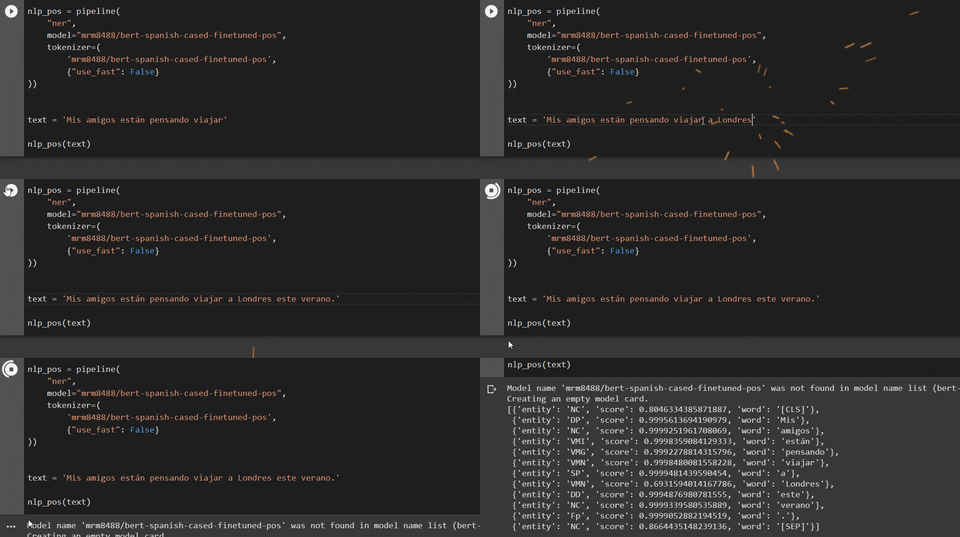
|
||||
|
||||
|
||||
> Created by [Manuel Romero/@mrm8488](https://twitter.com/mrm8488)
|
||||
|
||||
> Made with <span style="color: #e25555;">♥</span> in Spain
|
||||
+6
-35
@@ -89,37 +89,7 @@ The model was trained on a Tesla P100 GPU and 25GB of RAM with the following com
|
||||
|
||||
So, yes, this version is even more accurate.
|
||||
|
||||
### Model in action
|
||||
|
||||
Fast usage with **pipelines**:
|
||||
|
||||
```python
|
||||
from transformers import *
|
||||
|
||||
# Important!: By now the QA pipeline is not compatible with fast tokenizer, but they are working on it. So that pass the object to the tokenizer {"use_fast": False} as in the following example:
|
||||
|
||||
nlp = pipeline(
|
||||
'question-answering',
|
||||
model='mrm8488/distill-bert-base-spanish-wwm-cased-finetuned-spa-squad2-es',
|
||||
tokenizer=(
|
||||
'mrm8488/distill-bert-base-spanish-wwm-cased-finetuned-spa-squad2-es',
|
||||
{"use_fast": False}
|
||||
)
|
||||
)
|
||||
|
||||
nlp(
|
||||
{
|
||||
'question': '¿Para qué lenguaje está trabajando?',
|
||||
'context': 'Manuel Romero está colaborando activamente con huggingface/transformers ' +
|
||||
'para traer el poder de las últimas técnicas de procesamiento de lenguaje natural al idioma español'
|
||||
}
|
||||
)
|
||||
# Output: {'answer': 'español', 'end': 169, 'score': 0.67530957344621, 'start': 163}
|
||||
```
|
||||
|
||||
Play with this model and ```pipelines``` in a Colab:
|
||||
|
||||
<a href="https://colab.research.google.com/github/mrm8488/shared_colab_notebooks/blob/master/Using_Spanish_BERT_fine_tuned_for_Q%26A_pipelines.ipynb" target="_parent"><img src="https://camo.githubusercontent.com/52feade06f2fecbf006889a904d221e6a730c194/68747470733a2f2f636f6c61622e72657365617263682e676f6f676c652e636f6d2f6173736574732f636f6c61622d62616467652e737667" alt="Open In Colab" data-canonical-src="https://colab.research.google.com/assets/colab-badge.svg"></a>
|
||||
### Model in action (in a Colab Notebook)
|
||||
|
||||
<details>
|
||||
|
||||
@@ -130,12 +100,13 @@ Play with this model and ```pipelines``` in a Colab:
|
||||
2. Run predictions:
|
||||
|
||||
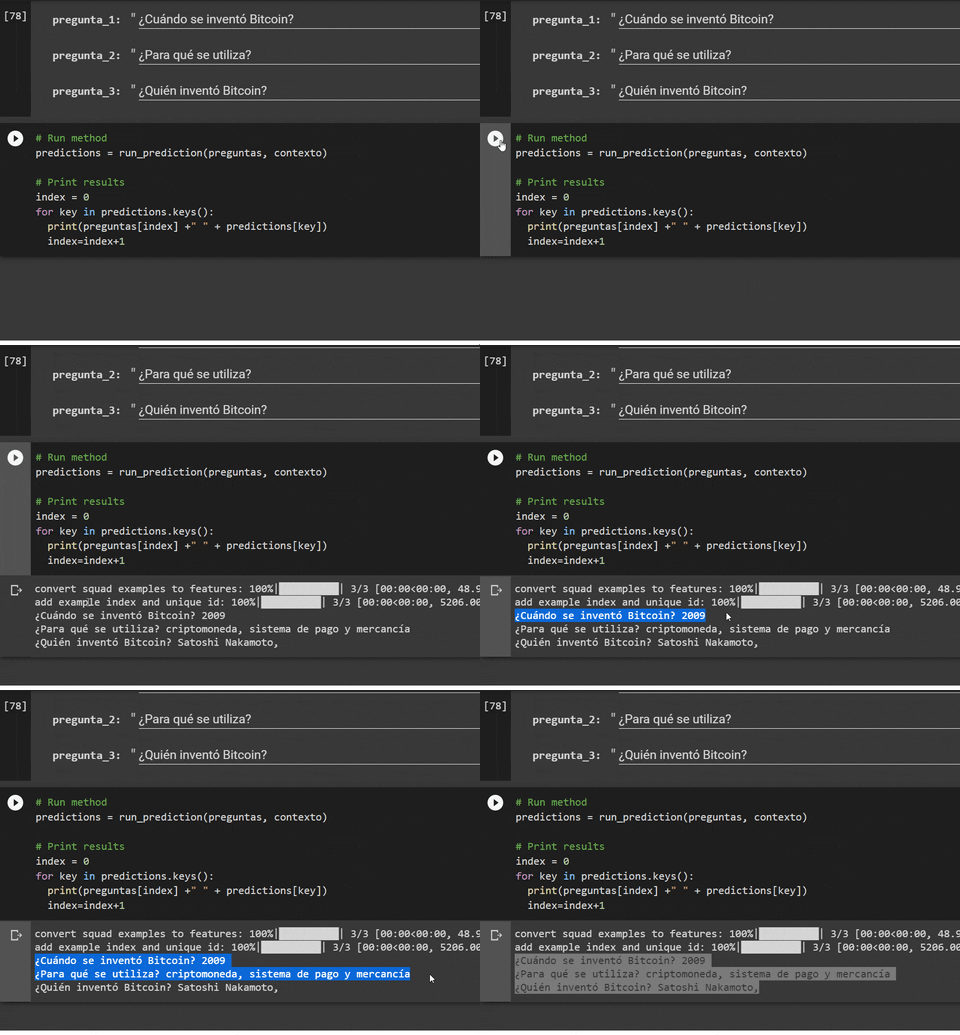
|
||||
|
||||
3. Using **Pipelines**
|
||||
|
||||
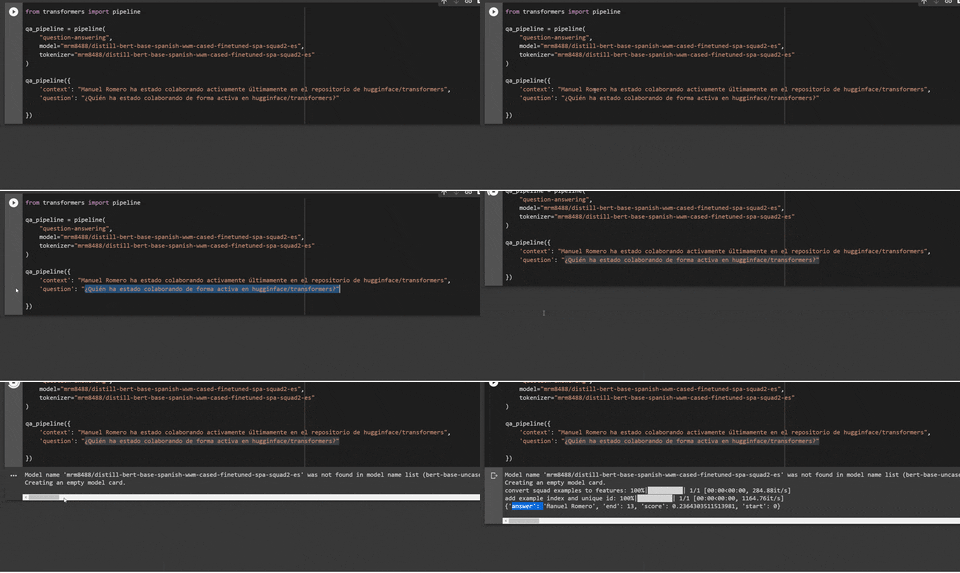
|
||||
|
||||
</details>
|
||||
|
||||
More about ``` Huggingface pipelines```? check this Colab out:
|
||||
|
||||
<a href="https://colab.research.google.com/github/mrm8488/shared_colab_notebooks/blob/master/Huggingface_pipelines_demo.ipynb" target="_parent"><img src="https://camo.githubusercontent.com/52feade06f2fecbf006889a904d221e6a730c194/68747470733a2f2f636f6c61622e72657365617263682e676f6f676c652e636f6d2f6173736574732f636f6c61622d62616467652e737667" alt="Open In Colab" data-canonical-src="https://colab.research.google.com/assets/colab-badge.svg"></a>
|
||||
|
||||
> Created by [Manuel Romero/@mrm8488](https://twitter.com/mrm8488)
|
||||
|
||||
> Made with <span style="color: #e25555;">♥</span> in Spain
|
||||
|
||||
@@ -79,7 +79,7 @@ extras["dev"] = extras["testing"] + extras["quality"] + ["mecab-python3", "sciki
|
||||
|
||||
setup(
|
||||
name="transformers",
|
||||
version="2.5.1",
|
||||
version="2.5.0",
|
||||
author="Thomas Wolf, Lysandre Debut, Victor Sanh, Julien Chaumond, Sam Shleifer, Google AI Language Team Authors, Open AI team Authors, Facebook AI Authors, Carnegie Mellon University Authors",
|
||||
author_email="thomas@huggingface.co",
|
||||
description="State-of-the-art Natural Language Processing for TensorFlow 2.0 and PyTorch",
|
||||
@@ -92,7 +92,7 @@ setup(
|
||||
packages=find_packages("src"),
|
||||
install_requires=[
|
||||
"numpy",
|
||||
"tokenizers == 0.5.2",
|
||||
"tokenizers == 0.5.0",
|
||||
# accessing files from S3 directly
|
||||
"boto3",
|
||||
# filesystem locks e.g. to prevent parallel downloads
|
||||
|
||||
@@ -2,7 +2,7 @@
|
||||
# There's no way to ignore "F401 '...' imported but unused" warnings in this
|
||||
# module, but to preserve other warnings. So, don't check this module at all.
|
||||
|
||||
__version__ = "2.5.1"
|
||||
__version__ = "2.5.0"
|
||||
|
||||
# Work around to update TensorFlow's absl.logging threshold which alters the
|
||||
# default Python logging output behavior when present.
|
||||
|
||||
@@ -109,12 +109,11 @@ class FlaubertConfig(XLMConfig):
|
||||
Argument used when doing sequence summary. Used in for the multiple choice head in
|
||||
:class:`~transformers.XLMForSequenceClassification`.
|
||||
Is one of the following options:
|
||||
|
||||
- 'last' => take the last token hidden state (like XLNet)
|
||||
- 'first' => take the first token hidden state (like Bert)
|
||||
- 'mean' => take the mean of all tokens hidden states
|
||||
- 'cls_index' => supply a Tensor of classification token position (GPT/GPT-2)
|
||||
- 'attn' => Not implemented now, use multi-head attention
|
||||
- 'last' => take the last token hidden state (like XLNet)
|
||||
- 'first' => take the first token hidden state (like Bert)
|
||||
- 'mean' => take the mean of all tokens hidden states
|
||||
- 'cls_index' => supply a Tensor of classification token position (GPT/GPT-2)
|
||||
- 'attn' => Not implemented now, use multi-head attention
|
||||
summary_use_proj (:obj:`boolean`, optional, defaults to :obj:`True`):
|
||||
Argument used when doing sequence summary. Used in for the multiple choice head in
|
||||
:class:`~transformers.XLMForSequenceClassification`.
|
||||
|
||||
@@ -73,12 +73,11 @@ class GPT2Config(PretrainedConfig):
|
||||
Argument used when doing sequence summary. Used in for the multiple choice head in
|
||||
:class:`~transformers.GPT2DoubleHeadsModel`.
|
||||
Is one of the following options:
|
||||
|
||||
- 'last' => take the last token hidden state (like XLNet)
|
||||
- 'first' => take the first token hidden state (like Bert)
|
||||
- 'mean' => take the mean of all tokens hidden states
|
||||
- 'cls_index' => supply a Tensor of classification token position (GPT/GPT-2)
|
||||
- 'attn' => Not implemented now, use multi-head attention
|
||||
- 'last' => take the last token hidden state (like XLNet)
|
||||
- 'first' => take the first token hidden state (like Bert)
|
||||
- 'mean' => take the mean of all tokens hidden states
|
||||
- 'cls_index' => supply a Tensor of classification token position (GPT/GPT-2)
|
||||
- 'attn' => Not implemented now, use multi-head attention
|
||||
summary_use_proj (:obj:`boolean`, optional, defaults to :obj:`True`):
|
||||
Argument used when doing sequence summary. Used in for the multiple choice head in
|
||||
:class:`~transformers.GPT2DoubleHeadsModel`.
|
||||
|
||||
@@ -73,12 +73,11 @@ class OpenAIGPTConfig(PretrainedConfig):
|
||||
Argument used when doing sequence summary. Used in for the multiple choice head in
|
||||
:class:`~transformers.OpenAIGPTDoubleHeadsModel`.
|
||||
Is one of the following options:
|
||||
|
||||
- 'last' => take the last token hidden state (like XLNet)
|
||||
- 'first' => take the first token hidden state (like Bert)
|
||||
- 'mean' => take the mean of all tokens hidden states
|
||||
- 'cls_index' => supply a Tensor of classification token position (GPT/GPT-2)
|
||||
- 'attn' => Not implemented now, use multi-head attention
|
||||
- 'last' => take the last token hidden state (like XLNet)
|
||||
- 'first' => take the first token hidden state (like Bert)
|
||||
- 'mean' => take the mean of all tokens hidden states
|
||||
- 'cls_index' => supply a Tensor of classification token position (GPT/GPT-2)
|
||||
- 'attn' => Not implemented now, use multi-head attention
|
||||
summary_use_proj (:obj:`boolean`, optional, defaults to :obj:`True`):
|
||||
Argument used when doing sequence summary. Used in for the multiple choice head in
|
||||
:class:`~transformers.OpenAIGPTDoubleHeadsModel`.
|
||||
|
||||
@@ -198,7 +198,6 @@ class PretrainedConfig(object):
|
||||
force_download = kwargs.pop("force_download", False)
|
||||
resume_download = kwargs.pop("resume_download", False)
|
||||
proxies = kwargs.pop("proxies", None)
|
||||
local_files_only = kwargs.pop("local_files_only", False)
|
||||
|
||||
if pretrained_config_archive_map is None:
|
||||
pretrained_config_archive_map = cls.pretrained_config_archive_map
|
||||
@@ -220,7 +219,6 @@ class PretrainedConfig(object):
|
||||
force_download=force_download,
|
||||
proxies=proxies,
|
||||
resume_download=resume_download,
|
||||
local_files_only=local_files_only,
|
||||
)
|
||||
# Load config dict
|
||||
if resolved_config_file is None:
|
||||
|
||||
@@ -108,12 +108,11 @@ class XLMConfig(PretrainedConfig):
|
||||
Argument used when doing sequence summary. Used in for the multiple choice head in
|
||||
:class:`~transformers.XLMForSequenceClassification`.
|
||||
Is one of the following options:
|
||||
|
||||
- 'last' => take the last token hidden state (like XLNet)
|
||||
- 'first' => take the first token hidden state (like Bert)
|
||||
- 'mean' => take the mean of all tokens hidden states
|
||||
- 'cls_index' => supply a Tensor of classification token position (GPT/GPT-2)
|
||||
- 'attn' => Not implemented now, use multi-head attention
|
||||
- 'last' => take the last token hidden state (like XLNet)
|
||||
- 'first' => take the first token hidden state (like Bert)
|
||||
- 'mean' => take the mean of all tokens hidden states
|
||||
- 'cls_index' => supply a Tensor of classification token position (GPT/GPT-2)
|
||||
- 'attn' => Not implemented now, use multi-head attention
|
||||
summary_use_proj (:obj:`boolean`, optional, defaults to :obj:`True`):
|
||||
Argument used when doing sequence summary. Used in for the multiple choice head in
|
||||
:class:`~transformers.XLMForSequenceClassification`.
|
||||
|
||||
@@ -214,7 +214,6 @@ def cached_path(
|
||||
user_agent=None,
|
||||
extract_compressed_file=False,
|
||||
force_extract=False,
|
||||
local_files_only=False,
|
||||
) -> Optional[str]:
|
||||
"""
|
||||
Given something that might be a URL (or might be a local path),
|
||||
@@ -251,7 +250,6 @@ def cached_path(
|
||||
proxies=proxies,
|
||||
resume_download=resume_download,
|
||||
user_agent=user_agent,
|
||||
local_files_only=local_files_only,
|
||||
)
|
||||
elif os.path.exists(url_or_filename):
|
||||
# File, and it exists.
|
||||
@@ -380,14 +378,7 @@ def http_get(url, temp_file, proxies=None, resume_size=0, user_agent=None):
|
||||
|
||||
|
||||
def get_from_cache(
|
||||
url,
|
||||
cache_dir=None,
|
||||
force_download=False,
|
||||
proxies=None,
|
||||
etag_timeout=10,
|
||||
resume_download=False,
|
||||
user_agent=None,
|
||||
local_files_only=False,
|
||||
url, cache_dir=None, force_download=False, proxies=None, etag_timeout=10, resume_download=False, user_agent=None
|
||||
) -> Optional[str]:
|
||||
"""
|
||||
Given a URL, look for the corresponding file in the local cache.
|
||||
@@ -404,19 +395,18 @@ def get_from_cache(
|
||||
|
||||
os.makedirs(cache_dir, exist_ok=True)
|
||||
|
||||
etag = None
|
||||
if not local_files_only:
|
||||
# Get eTag to add to filename, if it exists.
|
||||
if url.startswith("s3://"):
|
||||
etag = s3_etag(url, proxies=proxies)
|
||||
else:
|
||||
try:
|
||||
response = requests.head(url, allow_redirects=True, proxies=proxies, timeout=etag_timeout)
|
||||
if response.status_code == 200:
|
||||
etag = response.headers.get("ETag")
|
||||
except (EnvironmentError, requests.exceptions.Timeout):
|
||||
# etag is already None
|
||||
pass
|
||||
# Get eTag to add to filename, if it exists.
|
||||
if url.startswith("s3://"):
|
||||
etag = s3_etag(url, proxies=proxies)
|
||||
else:
|
||||
try:
|
||||
response = requests.head(url, allow_redirects=True, proxies=proxies, timeout=etag_timeout)
|
||||
if response.status_code != 200:
|
||||
etag = None
|
||||
else:
|
||||
etag = response.headers.get("ETag")
|
||||
except (EnvironmentError, requests.exceptions.Timeout):
|
||||
etag = None
|
||||
|
||||
filename = url_to_filename(url, etag)
|
||||
|
||||
@@ -437,15 +427,6 @@ def get_from_cache(
|
||||
if len(matching_files) > 0:
|
||||
return os.path.join(cache_dir, matching_files[-1])
|
||||
else:
|
||||
# If files cannot be found and local_files_only=True,
|
||||
# the models might've been found if local_files_only=False
|
||||
# Notify the user about that
|
||||
if local_files_only:
|
||||
raise ValueError(
|
||||
"Cannot find the requested files in the cached path and outgoing traffic has been"
|
||||
" disabled. To enable model look-ups and downloads online, set 'local_files_only'"
|
||||
" to False."
|
||||
)
|
||||
return None
|
||||
|
||||
# From now on, etag is not None.
|
||||
|
||||
@@ -359,12 +359,16 @@ class AutoModel(object):
|
||||
Set to ``True`` to also return a dictionnary containing missing keys, unexpected keys and error messages.
|
||||
|
||||
kwargs: (`optional`) Remaining dictionary of keyword arguments:
|
||||
These arguments will be passed to the configuration and the model.
|
||||
Can be used to update the configuration object (after it being loaded) and initiate the model. (e.g. ``output_attention=True``). Behave differently depending on whether a `config` is provided or automatically loaded:
|
||||
|
||||
- If a configuration is provided with ``config``, ``**kwargs`` will be directly passed to the underlying model's ``__init__`` method (we assume all relevant updates to the configuration have already been done)
|
||||
- If a configuration is not provided, ``kwargs`` will be first passed to the configuration class initialization function (:func:`~transformers.PretrainedConfig.from_pretrained`). Each key of ``kwargs`` that corresponds to a configuration attribute will be used to override said attribute with the supplied ``kwargs`` value. Remaining keys that do not correspond to any configuration attribute will be passed to the underlying model's ``__init__`` function.
|
||||
|
||||
Examples::
|
||||
|
||||
model = AutoModel.from_pretrained('bert-base-uncased') # Download model and configuration from S3 and cache.
|
||||
model = AutoModel.from_pretrained('./test/bert_model/') # E.g. model was saved using `save_pretrained('./test/saved_model/')`
|
||||
model = AutoModel.from_pretrained('bert-base-uncased', output_attention=True) # Update configuration during loading
|
||||
assert model.config.output_attention == True
|
||||
# Loading from a TF checkpoint file instead of a PyTorch model (slower)
|
||||
config = AutoConfig.from_json_file('./tf_model/bert_tf_model_config.json')
|
||||
@@ -499,12 +503,24 @@ class AutoModelForPreTraining(object):
|
||||
output_loading_info: (`optional`) boolean:
|
||||
Set to ``True`` to also return a dictionnary containing missing keys, unexpected keys and error messages.
|
||||
kwargs: (`optional`) Remaining dictionary of keyword arguments:
|
||||
These arguments will be passed to the configuration and the model.
|
||||
Can be used to update the configuration object (after it being loaded) and initiate the model.
|
||||
(e.g. ``output_attention=True``). Behave differently depending on whether a `config` is provided or
|
||||
automatically loaded:
|
||||
|
||||
- If a configuration is provided with ``config``, ``**kwargs`` will be directly passed to the
|
||||
underlying model's ``__init__`` method (we assume all relevant updates to the configuration have
|
||||
already been done)
|
||||
- If a configuration is not provided, ``kwargs`` will be first passed to the configuration class
|
||||
initialization function (:func:`~transformers.PretrainedConfig.from_pretrained`). Each key of
|
||||
``kwargs`` that corresponds to a configuration attribute will be used to override said attribute
|
||||
with the supplied ``kwargs`` value. Remaining keys that do not correspond to any configuration
|
||||
attribute will be passed to the underlying model's ``__init__`` function.
|
||||
|
||||
Examples::
|
||||
|
||||
model = AutoModelForPreTraining.from_pretrained('bert-base-uncased') # Download model and configuration from S3 and cache.
|
||||
model = AutoModelForPreTraining.from_pretrained('./test/bert_model/') # E.g. model was saved using `save_pretrained('./test/saved_model/')`
|
||||
model = AutoModelForPreTraining.from_pretrained('bert-base-uncased', output_attention=True) # Update configuration during loading
|
||||
assert model.config.output_attention == True
|
||||
# Loading from a TF checkpoint file instead of a PyTorch model (slower)
|
||||
config = AutoConfig.from_json_file('./tf_model/bert_tf_model_config.json')
|
||||
@@ -641,12 +657,24 @@ class AutoModelWithLMHead(object):
|
||||
output_loading_info: (`optional`) boolean:
|
||||
Set to ``True`` to also return a dictionnary containing missing keys, unexpected keys and error messages.
|
||||
kwargs: (`optional`) Remaining dictionary of keyword arguments:
|
||||
These arguments will be passed to the configuration and the model.
|
||||
Can be used to update the configuration object (after it being loaded) and initiate the model.
|
||||
(e.g. ``output_attention=True``). Behave differently depending on whether a `config` is provided or
|
||||
automatically loaded:
|
||||
|
||||
- If a configuration is provided with ``config``, ``**kwargs`` will be directly passed to the
|
||||
underlying model's ``__init__`` method (we assume all relevant updates to the configuration have
|
||||
already been done)
|
||||
- If a configuration is not provided, ``kwargs`` will be first passed to the configuration class
|
||||
initialization function (:func:`~transformers.PretrainedConfig.from_pretrained`). Each key of
|
||||
``kwargs`` that corresponds to a configuration attribute will be used to override said attribute
|
||||
with the supplied ``kwargs`` value. Remaining keys that do not correspond to any configuration
|
||||
attribute will be passed to the underlying model's ``__init__`` function.
|
||||
|
||||
Examples::
|
||||
|
||||
model = AutoModelWithLMHead.from_pretrained('bert-base-uncased') # Download model and configuration from S3 and cache.
|
||||
model = AutoModelWithLMHead.from_pretrained('./test/bert_model/') # E.g. model was saved using `save_pretrained('./test/saved_model/')`
|
||||
model = AutoModelWithLMHead.from_pretrained('bert-base-uncased', output_attention=True) # Update configuration during loading
|
||||
assert model.config.output_attention == True
|
||||
# Loading from a TF checkpoint file instead of a PyTorch model (slower)
|
||||
config = AutoConfig.from_json_file('./tf_model/bert_tf_model_config.json')
|
||||
@@ -786,12 +814,16 @@ class AutoModelForSequenceClassification(object):
|
||||
Set to ``True`` to also return a dictionnary containing missing keys, unexpected keys and error messages.
|
||||
|
||||
kwargs: (`optional`) Remaining dictionary of keyword arguments:
|
||||
These arguments will be passed to the configuration and the model.
|
||||
Can be used to update the configuration object (after it being loaded) and initiate the model. (e.g. ``output_attention=True``). Behave differently depending on whether a `config` is provided or automatically loaded:
|
||||
|
||||
- If a configuration is provided with ``config``, ``**kwargs`` will be directly passed to the underlying model's ``__init__`` method (we assume all relevant updates to the configuration have already been done)
|
||||
- If a configuration is not provided, ``kwargs`` will be first passed to the configuration class initialization function (:func:`~transformers.PretrainedConfig.from_pretrained`). Each key of ``kwargs`` that corresponds to a configuration attribute will be used to override said attribute with the supplied ``kwargs`` value. Remaining keys that do not correspond to any configuration attribute will be passed to the underlying model's ``__init__`` function.
|
||||
|
||||
Examples::
|
||||
|
||||
model = AutoModelForSequenceClassification.from_pretrained('bert-base-uncased') # Download model and configuration from S3 and cache.
|
||||
model = AutoModelForSequenceClassification.from_pretrained('./test/bert_model/') # E.g. model was saved using `save_pretrained('./test/saved_model/')`
|
||||
model = AutoModelForSequenceClassification.from_pretrained('bert-base-uncased', output_attention=True) # Update configuration during loading
|
||||
assert model.config.output_attention == True
|
||||
# Loading from a TF checkpoint file instead of a PyTorch model (slower)
|
||||
config = AutoConfig.from_json_file('./tf_model/bert_tf_model_config.json')
|
||||
@@ -925,12 +957,16 @@ class AutoModelForQuestionAnswering(object):
|
||||
Set to ``True`` to also return a dictionnary containing missing keys, unexpected keys and error messages.
|
||||
|
||||
kwargs: (`optional`) Remaining dictionary of keyword arguments:
|
||||
These arguments will be passed to the configuration and the model.
|
||||
Can be used to update the configuration object (after it being loaded) and initiate the model. (e.g. ``output_attention=True``). Behave differently depending on whether a `config` is provided or automatically loaded:
|
||||
|
||||
- If a configuration is provided with ``config``, ``**kwargs`` will be directly passed to the underlying model's ``__init__`` method (we assume all relevant updates to the configuration have already been done)
|
||||
- If a configuration is not provided, ``kwargs`` will be first passed to the configuration class initialization function (:func:`~transformers.PretrainedConfig.from_pretrained`). Each key of ``kwargs`` that corresponds to a configuration attribute will be used to override said attribute with the supplied ``kwargs`` value. Remaining keys that do not correspond to any configuration attribute will be passed to the underlying model's ``__init__`` function.
|
||||
|
||||
Examples::
|
||||
|
||||
model = AutoModelForQuestionAnswering.from_pretrained('bert-base-uncased') # Download model and configuration from S3 and cache.
|
||||
model = AutoModelForQuestionAnswering.from_pretrained('./test/bert_model/') # E.g. model was saved using `save_pretrained('./test/saved_model/')`
|
||||
model = AutoModelForQuestionAnswering.from_pretrained('bert-base-uncased', output_attention=True) # Update configuration during loading
|
||||
assert model.config.output_attention == True
|
||||
# Loading from a TF checkpoint file instead of a PyTorch model (slower)
|
||||
config = AutoConfig.from_json_file('./tf_model/bert_tf_model_config.json')
|
||||
@@ -1065,12 +1101,16 @@ class AutoModelForTokenClassification:
|
||||
Set to ``True`` to also return a dictionnary containing missing keys, unexpected keys and error messages.
|
||||
|
||||
kwargs: (`optional`) Remaining dictionary of keyword arguments:
|
||||
These arguments will be passed to the configuration and the model.
|
||||
Can be used to update the configuration object (after it being loaded) and initiate the model. (e.g. ``output_attention=True``). Behave differently depending on whether a `config` is provided or automatically loaded:
|
||||
|
||||
- If a configuration is provided with ``config``, ``**kwargs`` will be directly passed to the underlying model's ``__init__`` method (we assume all relevant updates to the configuration have already been done)
|
||||
- If a configuration is not provided, ``kwargs`` will be first passed to the configuration class initialization function (:func:`~transformers.PretrainedConfig.from_pretrained`). Each key of ``kwargs`` that corresponds to a configuration attribute will be used to override said attribute with the supplied ``kwargs`` value. Remaining keys that do not correspond to any configuration attribute will be passed to the underlying model's ``__init__`` function.
|
||||
|
||||
Examples::
|
||||
|
||||
model = AutoModelForTokenClassification.from_pretrained('bert-base-uncased') # Download model and configuration from S3 and cache.
|
||||
model = AutoModelForTokenClassification.from_pretrained('./test/bert_model/') # E.g. model was saved using `save_pretrained('./test/saved_model/')`
|
||||
model = AutoModelForTokenClassification.from_pretrained('bert-base-uncased', output_attention=True) # Update configuration during loading
|
||||
assert model.config.output_attention == True
|
||||
# Loading from a TF checkpoint file instead of a PyTorch model (slower)
|
||||
config = AutoConfig.from_json_file('./tf_model/bert_tf_model_config.json')
|
||||
|
||||
@@ -470,6 +470,10 @@ class BartDecoder(nn.Module):
|
||||
"""
|
||||
# embed positions
|
||||
positions = self.embed_positions(input_ids)
|
||||
|
||||
if decoder_cached_states is not None:
|
||||
input_ids = input_ids[:, -1:]
|
||||
positions = positions[:, -1:]
|
||||
x = self.embed_tokens(input_ids)
|
||||
|
||||
if positions is not None:
|
||||
@@ -487,7 +491,7 @@ class BartDecoder(nn.Module):
|
||||
decoder_layer # type: DecoderLayer
|
||||
# add LayerDrop (see https://arxiv.org/abs/1909.11556 for description)
|
||||
dropout_probability = random.uniform(0, 1)
|
||||
if self.training and (dropout_probability < self.layerdrop):
|
||||
if self.training and (dropout_probability > self.layerdrop):
|
||||
continue
|
||||
layer_state = decoder_cached_states[i] if decoder_cached_states is not None else None
|
||||
x, layer_self_attn, layer_past = decoder_layer.forward(
|
||||
@@ -936,7 +940,7 @@ class BartForMaskedLM(PretrainedBartModel):
|
||||
|
||||
@staticmethod
|
||||
def prepare_inputs_for_generation(input_ids, past, **kwargs):
|
||||
return {"input_ids": input_ids, "decoder_cached_states": past, "decoder_input_ids": input_ids[:, -1:]}
|
||||
return {"input_ids": input_ids, "decoder_cached_states": past, "decoder_input_ids": input_ids}
|
||||
|
||||
def get_output_embeddings(self):
|
||||
return self.lm_head
|
||||
|
||||
@@ -1230,7 +1230,7 @@ class BertForMultipleChoice(BertPreTrainedModel):
|
||||
|
||||
Returns:
|
||||
:obj:`tuple(torch.FloatTensor)` comprising various elements depending on the configuration (:class:`~transformers.BertConfig`) and inputs:
|
||||
loss (:obj:`torch.FloatTensor` of shape `(1,)`, `optional`, returned when :obj:`labels` is provided):
|
||||
loss (:obj:`torch.FloatTensor`` of shape ``(1,)`, `optional`, returned when :obj:`labels` is provided):
|
||||
Classification loss.
|
||||
classification_scores (:obj:`torch.FloatTensor` of shape :obj:`(batch_size, num_choices)`):
|
||||
`num_choices` is the second dimension of the input tensors. (see `input_ids` above).
|
||||
@@ -1382,10 +1382,8 @@ class BertForTokenClassification(BertPreTrainedModel):
|
||||
# Only keep active parts of the loss
|
||||
if attention_mask is not None:
|
||||
active_loss = attention_mask.view(-1) == 1
|
||||
active_logits = logits.view(-1, self.num_labels)
|
||||
active_labels = torch.where(
|
||||
active_loss, labels.view(-1), torch.tensor(loss_fct.ignore_index).type_as(labels)
|
||||
)
|
||||
active_logits = logits.view(-1, self.num_labels)[active_loss]
|
||||
active_labels = labels.view(-1)[active_loss]
|
||||
loss = loss_fct(active_logits, active_labels)
|
||||
else:
|
||||
loss = loss_fct(logits.view(-1, self.num_labels), labels.view(-1))
|
||||
|
||||
@@ -818,10 +818,8 @@ class DistilBertForTokenClassification(DistilBertPreTrainedModel):
|
||||
# Only keep active parts of the loss
|
||||
if attention_mask is not None:
|
||||
active_loss = attention_mask.view(-1) == 1
|
||||
active_logits = logits.view(-1, self.num_labels)
|
||||
active_labels = torch.where(
|
||||
active_loss, labels.view(-1), torch.tensor(loss_fct.ignore_index).type_as(labels)
|
||||
)
|
||||
active_logits = logits.view(-1, self.num_labels)[active_loss]
|
||||
active_labels = labels.view(-1)[active_loss]
|
||||
loss = loss_fct(active_logits, active_labels)
|
||||
else:
|
||||
loss = loss_fct(logits.view(-1, self.num_labels), labels.view(-1))
|
||||
|
||||
@@ -18,6 +18,7 @@
|
||||
import logging
|
||||
import os
|
||||
|
||||
import torch
|
||||
from torch import nn
|
||||
|
||||
from .modeling_auto import AutoModel, AutoModelWithLMHead
|
||||
@@ -293,3 +294,21 @@ class Model2Model(PreTrainedEncoderDecoder):
|
||||
)
|
||||
|
||||
return model
|
||||
|
||||
|
||||
class Model2LSTM(PreTrainedEncoderDecoder):
|
||||
@classmethod
|
||||
def from_pretrained(cls, *args, **kwargs):
|
||||
if kwargs.get("decoder_model", None) is None:
|
||||
# We will create a randomly initilized LSTM model as decoder
|
||||
if "decoder_config" not in kwargs:
|
||||
raise ValueError(
|
||||
"To load an LSTM in Encoder-Decoder model, please supply either: "
|
||||
" - a torch.nn.LSTM model as `decoder_model` parameter (`decoder_model=lstm_model`), or"
|
||||
" - a dictionary of configuration parameters that will be used to initialize a"
|
||||
" torch.nn.LSTM model as `decoder_config` keyword argument. "
|
||||
" E.g. `decoder_config={'input_size': 768, 'hidden_size': 768, 'num_layers': 2}`"
|
||||
)
|
||||
kwargs["decoder_model"] = torch.nn.LSTM(kwargs.pop("decoder_config"))
|
||||
model = super().from_pretrained(*args, **kwargs)
|
||||
return model
|
||||
|
||||
@@ -542,16 +542,13 @@ class RobertaForTokenClassification(BertPreTrainedModel):
|
||||
logits = self.classifier(sequence_output)
|
||||
|
||||
outputs = (logits,) + outputs[2:] # add hidden states and attention if they are here
|
||||
|
||||
if labels is not None:
|
||||
loss_fct = CrossEntropyLoss()
|
||||
# Only keep active parts of the loss
|
||||
if attention_mask is not None:
|
||||
active_loss = attention_mask.view(-1) == 1
|
||||
active_logits = logits.view(-1, self.num_labels)
|
||||
active_labels = torch.where(
|
||||
active_loss, labels.view(-1), torch.tensor(loss_fct.ignore_index).type_as(labels)
|
||||
)
|
||||
active_logits = logits.view(-1, self.num_labels)[active_loss]
|
||||
active_labels = labels.view(-1)[active_loss]
|
||||
loss = loss_fct(active_logits, active_labels)
|
||||
else:
|
||||
loss = loss_fct(logits.view(-1, self.num_labels), labels.view(-1))
|
||||
|
||||
@@ -668,39 +668,38 @@ class TFBertModel(TFBertPreTrainedModel):
|
||||
@add_start_docstrings_to_callable(BERT_INPUTS_DOCSTRING)
|
||||
def call(self, inputs, **kwargs):
|
||||
r"""
|
||||
Returns:
|
||||
Returns:
|
||||
:obj:`tuple(torch.FloatTensor)` comprising various elements depending on the configuration (:class:`~transformers.BertConfig`) and inputs:
|
||||
last_hidden_state (:obj:`tf.Tensor` of shape :obj:`(batch_size, sequence_length, hidden_size)`):
|
||||
Sequence of hidden-states at the output of the last layer of the model.
|
||||
pooler_output (:obj:`tf.Tensor` of shape :obj:`(batch_size, hidden_size)`):
|
||||
Last layer hidden-state of the first token of the sequence (classification token)
|
||||
further processed by a Linear layer and a Tanh activation function. The Linear
|
||||
layer weights are trained from the next sentence prediction (classification)
|
||||
objective during Bert pretraining. This output is usually *not* a good summary
|
||||
of the semantic content of the input, you're often better with averaging or pooling
|
||||
the sequence of hidden-states for the whole input sequence.
|
||||
hidden_states (:obj:`tuple(tf.Tensor)`, `optional`, returned when :obj:`config.output_hidden_states=True`):
|
||||
tuple of :obj:`tf.Tensor` (one for the output of the embeddings + one for the output of each layer)
|
||||
of shape :obj:`(batch_size, sequence_length, hidden_size)`.
|
||||
last_hidden_state (:obj:`tf.Tensor` of shape :obj:`(batch_size, sequence_length, hidden_size)`):
|
||||
Sequence of hidden-states at the output of the last layer of the model.
|
||||
pooler_output (:obj:`tf.Tensor` of shape :obj:`(batch_size, hidden_size)`):
|
||||
Last layer hidden-state of the first token of the sequence (classification token)
|
||||
further processed by a Linear layer and a Tanh activation function. The Linear
|
||||
layer weights are trained from the next sentence prediction (classification)
|
||||
objective during Bert pretraining. This output is usually *not* a good summary
|
||||
of the semantic content of the input, you're often better with averaging or pooling
|
||||
the sequence of hidden-states for the whole input sequence.
|
||||
hidden_states (:obj:`tuple(tf.Tensor)`, `optional`, returned when :obj:`config.output_hidden_states=True`):
|
||||
tuple of :obj:`tf.Tensor` (one for the output of the embeddings + one for the output of each layer)
|
||||
of shape :obj:`(batch_size, sequence_length, hidden_size)`.
|
||||
|
||||
Hidden-states of the model at the output of each layer plus the initial embedding outputs.
|
||||
attentions (:obj:`tuple(tf.Tensor)`, `optional`, returned when ``config.output_attentions=True``):
|
||||
tuple of :obj:`tf.Tensor` (one for each layer) of shape
|
||||
:obj:`(batch_size, num_heads, sequence_length, sequence_length)`.
|
||||
Hidden-states of the model at the output of each layer plus the initial embedding outputs.
|
||||
attentions (:obj:`tuple(tf.Tensor)`, `optional`, returned when ``config.output_attentions=True``):
|
||||
tuple of :obj:`tf.Tensor` (one for each layer) of shape
|
||||
:obj:`(batch_size, num_heads, sequence_length, sequence_length)`:
|
||||
|
||||
Attentions weights after the attention softmax, used to compute the weighted average in the self-attention heads.
|
||||
Attentions weights after the attention softmax, used to compute the weighted average in the self-attention heads.
|
||||
|
||||
Examples::
|
||||
|
||||
Examples::
|
||||
import tensorflow as tf
|
||||
from transformers import BertTokenizer, TFBertModel
|
||||
|
||||
import tensorflow as tf
|
||||
from transformers import BertTokenizer, TFBertModel
|
||||
|
||||
tokenizer = BertTokenizer.from_pretrained('bert-base-uncased')
|
||||
model = TFBertModel.from_pretrained('bert-base-uncased')
|
||||
input_ids = tf.constant(tokenizer.encode("Hello, my dog is cute", add_special_tokens=True))[None, :] # Batch size 1
|
||||
outputs = model(input_ids)
|
||||
last_hidden_states = outputs[0] # The last hidden-state is the first element of the output tuple
|
||||
tokenizer = BertTokenizer.from_pretrained('bert-base-uncased')
|
||||
model = TFBertModel.from_pretrained('bert-base-uncased')
|
||||
input_ids = tf.constant(tokenizer.encode("Hello, my dog is cute", add_special_tokens=True))[None, :] # Batch size 1
|
||||
outputs = model(input_ids)
|
||||
last_hidden_states = outputs[0] # The last hidden-state is the first element of the output tuple
|
||||
"""
|
||||
outputs = self.bert(inputs, **kwargs)
|
||||
return outputs
|
||||
|
||||
@@ -645,7 +645,7 @@ class TransfoXLModel(TransfoXLPreTrainedModel):
|
||||
else:
|
||||
return None
|
||||
|
||||
def _update_mems(self, hids, mems, mlen, qlen):
|
||||
def _update_mems(self, hids, mems, qlen, mlen):
|
||||
# does not deal with None
|
||||
if mems is None:
|
||||
return None
|
||||
|
||||
@@ -376,7 +376,6 @@ class PreTrainedModel(nn.Module, ModuleUtilsMixin):
|
||||
resume_download = kwargs.pop("resume_download", False)
|
||||
proxies = kwargs.pop("proxies", None)
|
||||
output_loading_info = kwargs.pop("output_loading_info", False)
|
||||
local_files_only = kwargs.pop("local_files_only", False)
|
||||
|
||||
# Load config if we don't provide a configuration
|
||||
if not isinstance(config, PretrainedConfig):
|
||||
@@ -389,7 +388,6 @@ class PreTrainedModel(nn.Module, ModuleUtilsMixin):
|
||||
force_download=force_download,
|
||||
resume_download=resume_download,
|
||||
proxies=proxies,
|
||||
local_files_only=local_files_only,
|
||||
**kwargs,
|
||||
)
|
||||
else:
|
||||
@@ -437,7 +435,6 @@ class PreTrainedModel(nn.Module, ModuleUtilsMixin):
|
||||
force_download=force_download,
|
||||
proxies=proxies,
|
||||
resume_download=resume_download,
|
||||
local_files_only=local_files_only,
|
||||
)
|
||||
except EnvironmentError:
|
||||
if pretrained_model_name_or_path in cls.pretrained_model_archive_map:
|
||||
|
||||
@@ -512,7 +512,7 @@ class XLMModel(XLMPreTrainedModel):
|
||||
inputs_embeds = self.embeddings(input_ids)
|
||||
|
||||
tensor = inputs_embeds + self.position_embeddings(position_ids).expand_as(inputs_embeds)
|
||||
if langs is not None and self.use_lang_emb and self.n_langs > 1:
|
||||
if langs is not None and self.use_lang_emb:
|
||||
tensor = tensor + self.lang_embeddings(langs)
|
||||
if token_type_ids is not None:
|
||||
tensor = tensor + self.embeddings(token_type_ids)
|
||||
|
||||
@@ -702,9 +702,8 @@ class XLNetModel(XLNetPreTrainedModel):
|
||||
r"""
|
||||
Return:
|
||||
:obj:`tuple(torch.FloatTensor)` comprising various elements depending on the configuration (:class:`~transformers.XLNetConfig`) and inputs:
|
||||
last_hidden_state (:obj:`torch.FloatTensor` of shape :obj:`(batch_size, num_predict, hidden_size)`):
|
||||
last_hidden_state (:obj:`torch.FloatTensor` of shape :obj:`(batch_size, sequence_length, hidden_size)`):
|
||||
Sequence of hidden-states at the last layer of the model.
|
||||
`num_predict` corresponds to `target_mapping.shape[1]`. If `target_mapping` is `None`, then `num_predict` corresponds to `sequence_length`.
|
||||
mems (:obj:`List[torch.FloatTensor]` of length :obj:`config.n_layers`):
|
||||
Contains pre-computed hidden-states (key and values in the attention blocks).
|
||||
Can be used (see `mems` input) to speed up sequential decoding. The token ids which have their past given to this model
|
||||
@@ -729,7 +728,7 @@ class XLNetModel(XLNetPreTrainedModel):
|
||||
tokenizer = XLNetTokenizer.from_pretrained('xlnet-large-cased')
|
||||
model = XLNetModel.from_pretrained('xlnet-large-cased')
|
||||
|
||||
input_ids = torch.tensor(tokenizer.encode("Hello, my dog is cute", add_special_tokens=False)).unsqueeze(0) # Batch size 1
|
||||
input_ids = torch.tensor(tokenizer.encode("Hello, my dog is cute", add_special_tokens=True)).unsqueeze(0) # Batch size 1
|
||||
|
||||
outputs = model(input_ids)
|
||||
last_hidden_states = outputs[0] # The last hidden-state is the first element of the output tuple
|
||||
@@ -978,21 +977,19 @@ class XLNetLMHeadModel(XLNetPreTrainedModel):
|
||||
labels=None,
|
||||
):
|
||||
r"""
|
||||
labels (:obj:`torch.LongTensor` of shape :obj:`(batch_size, num_predict)`, `optional`, defaults to :obj:`None`):
|
||||
Labels for masked language modeling.
|
||||
`num_predict` corresponds to `target_mapping.shape[1]`. If `target_mapping` is `None`, then `num_predict` corresponds to `sequence_length`.
|
||||
The labels should correspond to the masked input words that should be predicted and depends on `target_mapping`. Note in order to perform standard auto-regressive language modeling a `<mask>` token has to be added to the `input_ids` (see `prepare_inputs_for_generation` fn and examples below)
|
||||
labels (:obj:`torch.LongTensor` of shape :obj:`(batch_size, sequence_length)`, `optional`, defaults to :obj:`None`):
|
||||
Labels for language modeling.
|
||||
Note that the labels **are shifted** inside the model, i.e. you can set ``lm_labels = input_ids``
|
||||
Indices are selected in ``[-100, 0, ..., config.vocab_size]``
|
||||
All labels set to ``-100`` are ignored, the loss is only
|
||||
All labels set to ``-100`` are ignored (masked), the loss is only
|
||||
computed for labels in ``[0, ..., config.vocab_size]``
|
||||
|
||||
Return:
|
||||
:obj:`tuple(torch.FloatTensor)` comprising various elements depending on the configuration (:class:`~transformers.XLNetConfig`) and inputs:
|
||||
loss (:obj:`torch.FloatTensor` of shape `(1,)`, `optional`, returned when ``labels`` is provided)
|
||||
Language modeling loss.
|
||||
prediction_scores (:obj:`torch.FloatTensor` of shape :obj:`(batch_size, num_predict, config.vocab_size)`):
|
||||
prediction_scores (:obj:`torch.FloatTensor` of shape :obj:`(batch_size, sequence_length, config.vocab_size)`):
|
||||
Prediction scores of the language modeling head (scores for each vocabulary token before SoftMax).
|
||||
`num_predict` corresponds to `target_mapping.shape[1]`. If `target_mapping` is `None`, then `num_predict` corresponds to `sequence_length`.
|
||||
mems (:obj:`List[torch.FloatTensor]` of length :obj:`config.n_layers`):
|
||||
Contains pre-computed hidden-states (key and values in the attention blocks).
|
||||
Can be used (see `past` input) to speed up sequential decoding. The token ids which have their past given to this model
|
||||
@@ -1018,7 +1015,7 @@ class XLNetLMHeadModel(XLNetPreTrainedModel):
|
||||
model = XLNetLMHeadModel.from_pretrained('xlnet-large-cased')
|
||||
|
||||
# We show how to setup inputs to predict a next token using a bi-directional context.
|
||||
input_ids = torch.tensor(tokenizer.encode("Hello, my dog is very <mask>", add_special_tokens=False)).unsqueeze(0) # We will predict the masked token
|
||||
input_ids = torch.tensor(tokenizer.encode("Hello, my dog is very <mask>", add_special_tokens=True)).unsqueeze(0) # We will predict the masked token
|
||||
perm_mask = torch.zeros((1, input_ids.shape[1], input_ids.shape[1]), dtype=torch.float)
|
||||
perm_mask[:, :, -1] = 1.0 # Previous tokens don't see last token
|
||||
target_mapping = torch.zeros((1, 1, input_ids.shape[1]), dtype=torch.float) # Shape [1, 1, seq_length] => let's predict one token
|
||||
@@ -1027,18 +1024,6 @@ class XLNetLMHeadModel(XLNetPreTrainedModel):
|
||||
outputs = model(input_ids, perm_mask=perm_mask, target_mapping=target_mapping)
|
||||
next_token_logits = outputs[0] # Output has shape [target_mapping.size(0), target_mapping.size(1), config.vocab_size]
|
||||
|
||||
# The same way can the XLNetLMHeadModel be used to be trained by standard auto-regressive language modeling.
|
||||
input_ids = torch.tensor(tokenizer.encode("Hello, my dog is very <mask>", add_special_tokens=False)).unsqueeze(0) # We will predict the masked token
|
||||
labels = torch.tensor(tokenizer.encode("cute", add_special_tokens=False)).unsqueeze(0)
|
||||
assert labels.shape[0] == 1, 'only one word will be predicted'
|
||||
perm_mask = torch.zeros((1, input_ids.shape[1], input_ids.shape[1]), dtype=torch.float)
|
||||
perm_mask[:, :, -1] = 1.0 # Previous tokens don't see last token as is done in standard auto-regressive lm training
|
||||
target_mapping = torch.zeros((1, 1, input_ids.shape[1]), dtype=torch.float) # Shape [1, 1, seq_length] => let's predict one token
|
||||
target_mapping[0, 0, -1] = 1.0 # Our first (and only) prediction will be the last token of the sequence (the masked token)
|
||||
|
||||
outputs = model(input_ids, perm_mask=perm_mask, target_mapping=target_mapping, labels=labels)
|
||||
loss, next_token_logits = outputs[:2] # Output has shape [target_mapping.size(0), target_mapping.size(1), config.vocab_size]
|
||||
|
||||
"""
|
||||
transformer_outputs = self.transformer(
|
||||
input_ids,
|
||||
@@ -1264,10 +1249,8 @@ class XLNetForTokenClassification(XLNetPreTrainedModel):
|
||||
# Only keep active parts of the loss
|
||||
if attention_mask is not None:
|
||||
active_loss = attention_mask.view(-1) == 1
|
||||
active_logits = logits.view(-1, self.num_labels)
|
||||
active_labels = torch.where(
|
||||
active_loss, labels.view(-1), torch.tensor(loss_fct.ignore_index).type_as(labels)
|
||||
)
|
||||
active_logits = logits.view(-1, self.num_labels)[active_loss]
|
||||
active_labels = labels.view(-1)[active_loss]
|
||||
loss = loss_fct(active_logits, active_labels)
|
||||
else:
|
||||
loss = loss_fct(logits.view(-1, self.num_labels), labels.view(-1))
|
||||
|
||||
@@ -19,7 +19,6 @@ import logging
|
||||
import os
|
||||
import unicodedata
|
||||
from shutil import copyfile
|
||||
from typing import List, Optional
|
||||
|
||||
from .tokenization_utils import PreTrainedTokenizer
|
||||
|
||||
@@ -56,55 +55,9 @@ SPIECE_UNDERLINE = "▁"
|
||||
|
||||
class AlbertTokenizer(PreTrainedTokenizer):
|
||||
"""
|
||||
Constructs an ALBERT tokenizer. Based on `SentencePiece <https://github.com/google/sentencepiece>`__
|
||||
SentencePiece based tokenizer. Peculiarities:
|
||||
|
||||
This tokenizer inherits from :class:`~transformers.PreTrainedTokenizer` which contains most of the methods. Users
|
||||
should refer to the superclass for more information regarding methods.
|
||||
|
||||
Args:
|
||||
vocab_file (:obj:`string`):
|
||||
`SentencePiece <https://github.com/google/sentencepiece>`__ file (generally has a .spm extension) that
|
||||
contains the vocabulary necessary to instantiate a tokenizer.
|
||||
do_lower_case (:obj:`bool`, `optional`, defaults to :obj:`True`):
|
||||
Whether to lowercase the input when tokenizing.
|
||||
remove_space (:obj:`bool`, `optional`, defaults to :obj:`True`):
|
||||
Whether to strip the text when tokenizing (removing excess spaces before and after the string).
|
||||
keep_accents (:obj:`bool`, `optional`, defaults to :obj:`False`):
|
||||
Whether to keep accents when tokenizing.
|
||||
bos_token (:obj:`string`, `optional`, defaults to "[CLS]"):
|
||||
The beginning of sequence token that was used during pre-training. Can be used a sequence classifier token.
|
||||
|
||||
.. note::
|
||||
|
||||
When building a sequence using special tokens, this is not the token that is used for the beginning
|
||||
of sequence. The token used is the :obj:`cls_token`.
|
||||
eos_token (:obj:`string`, `optional`, defaults to "[SEP]"):
|
||||
The end of sequence token.
|
||||
|
||||
.. note::
|
||||
|
||||
When building a sequence using special tokens, this is not the token that is used for the end
|
||||
of sequence. The token used is the :obj:`sep_token`.
|
||||
unk_token (:obj:`string`, `optional`, defaults to "<unk>"):
|
||||
The unknown token. A token that is not in the vocabulary cannot be converted to an ID and is set to be this
|
||||
token instead.
|
||||
sep_token (:obj:`string`, `optional`, defaults to "[SEP]"):
|
||||
The separator token, which is used when building a sequence from multiple sequences, e.g. two sequences
|
||||
for sequence classification or for a text and a question for question answering.
|
||||
It is also used as the last token of a sequence built with special tokens.
|
||||
pad_token (:obj:`string`, `optional`, defaults to "<pad>"):
|
||||
The token used for padding, for example when batching sequences of different lengths.
|
||||
cls_token (:obj:`string`, `optional`, defaults to "[CLS]"):
|
||||
The classifier token which is used when doing sequence classification (classification of the whole
|
||||
sequence instead of per-token classification). It is the first token of the sequence when built with
|
||||
special tokens.
|
||||
mask_token (:obj:`string`, `optional`, defaults to "[MASK]"):
|
||||
The token used for masking values. This is the token used when training this model with masked language
|
||||
modeling. This is the token which the model will try to predict.
|
||||
|
||||
Attributes:
|
||||
sp_model (:obj:`SentencePieceProcessor`):
|
||||
The `SentencePiece` processor that is used for every conversion (string, tokens and IDs).
|
||||
- requires `SentencePiece <https://github.com/google/sentencepiece>`_
|
||||
"""
|
||||
|
||||
vocab_files_names = VOCAB_FILES_NAMES
|
||||
@@ -161,11 +114,6 @@ class AlbertTokenizer(PreTrainedTokenizer):
|
||||
def vocab_size(self):
|
||||
return len(self.sp_model)
|
||||
|
||||
def get_vocab(self):
|
||||
vocab = {self.convert_ids_to_tokens(i): i for i in range(self.vocab_size)}
|
||||
vocab.update(self.added_tokens_encoder)
|
||||
return vocab
|
||||
|
||||
def __getstate__(self):
|
||||
state = self.__dict__.copy()
|
||||
state["sp_model"] = None
|
||||
@@ -232,28 +180,17 @@ class AlbertTokenizer(PreTrainedTokenizer):
|
||||
return self.sp_model.IdToPiece(index)
|
||||
|
||||
def convert_tokens_to_string(self, tokens):
|
||||
"""Converts a sequence of tokens (strings for sub-words) in a single string."""
|
||||
out_string = "".join(tokens).replace(SPIECE_UNDERLINE, " ").strip()
|
||||
return out_string
|
||||
|
||||
def build_inputs_with_special_tokens(
|
||||
self, token_ids_0: List[int], token_ids_1: Optional[List[int]] = None
|
||||
) -> List[int]:
|
||||
def build_inputs_with_special_tokens(self, token_ids_0, token_ids_1=None):
|
||||
"""
|
||||
Build model inputs from a sequence or a pair of sequence for sequence classification tasks
|
||||
by concatenating and adding special tokens.
|
||||
An ALBERT sequence has the following format:
|
||||
|
||||
- single sequence: ``[CLS] X [SEP]``
|
||||
- pair of sequences: ``[CLS] A [SEP] B [SEP]``
|
||||
|
||||
Args:
|
||||
token_ids_0 (:obj:`List[int]`):
|
||||
List of IDs to which the special tokens will be added
|
||||
token_ids_1 (:obj:`List[int]`, `optional`, defaults to :obj:`None`):
|
||||
Optional second list of IDs for sequence pairs.
|
||||
|
||||
Returns:
|
||||
:obj:`List[int]`: list of `input IDs <../glossary.html#input-ids>`__ with the appropriate special tokens.
|
||||
single sequence: [CLS] X [SEP]
|
||||
pair of sequences: [CLS] A [SEP] B [SEP]
|
||||
"""
|
||||
sep = [self.sep_token_id]
|
||||
cls = [self.cls_token_id]
|
||||
@@ -261,30 +198,27 @@ class AlbertTokenizer(PreTrainedTokenizer):
|
||||
return cls + token_ids_0 + sep
|
||||
return cls + token_ids_0 + sep + token_ids_1 + sep
|
||||
|
||||
def get_special_tokens_mask(
|
||||
self, token_ids_0: List[int], token_ids_1: Optional[List[int]] = None, already_has_special_tokens: bool = False
|
||||
) -> List[int]:
|
||||
def get_special_tokens_mask(self, token_ids_0, token_ids_1=None, already_has_special_tokens=False):
|
||||
"""
|
||||
Retrieves sequence ids from a token list that has no special tokens added. This method is called when adding
|
||||
special tokens using the tokenizer ``prepare_for_model`` or ``encode_plus`` methods.
|
||||
|
||||
Args:
|
||||
token_ids_0 (:obj:`List[int]`):
|
||||
List of ids.
|
||||
token_ids_1 (:obj:`List[int]`, `optional`, defaults to :obj:`None`):
|
||||
Optional second list of IDs for sequence pairs.
|
||||
already_has_special_tokens (:obj:`bool`, `optional`, defaults to :obj:`False`):
|
||||
Set to True if the token list is already formatted with special tokens for the model
|
||||
token_ids_0: list of ids (must not contain special tokens)
|
||||
token_ids_1: Optional list of ids (must not contain special tokens), necessary when fetching sequence ids
|
||||
for sequence pairs
|
||||
already_has_special_tokens: (default False) Set to True if the token list is already formated with
|
||||
special tokens for the model
|
||||
|
||||
Returns:
|
||||
:obj:`List[int]`: A list of integers in the range [0, 1]: 0 for a special token, 1 for a sequence token.
|
||||
A list of integers in the range [0, 1]: 0 for a special token, 1 for a sequence token.
|
||||
"""
|
||||
|
||||
if already_has_special_tokens:
|
||||
if token_ids_1 is not None:
|
||||
raise ValueError(
|
||||
"You should not supply a second sequence if the provided sequence of "
|
||||
"ids is already formatted with special tokens for the model."
|
||||
"ids is already formated with special tokens for the model."
|
||||
)
|
||||
return list(map(lambda x: 1 if x in [self.sep_token_id, self.cls_token_id] else 0, token_ids_0))
|
||||
|
||||
@@ -292,29 +226,14 @@ class AlbertTokenizer(PreTrainedTokenizer):
|
||||
return [1] + ([0] * len(token_ids_0)) + [1] + ([0] * len(token_ids_1)) + [1]
|
||||
return [1] + ([0] * len(token_ids_0)) + [1]
|
||||
|
||||
def create_token_type_ids_from_sequences(
|
||||
self, token_ids_0: List[int], token_ids_1: Optional[List[int]] = None
|
||||
) -> List[int]:
|
||||
def create_token_type_ids_from_sequences(self, token_ids_0, token_ids_1=None):
|
||||
"""
|
||||
Creates a mask from the two sequences passed to be used in a sequence-pair classification task.
|
||||
An ALBERT sequence pair mask has the following format:
|
||||
0 0 0 0 0 0 0 0 0 0 0 1 1 1 1 1 1 1 1 1 1
|
||||
| first sequence | second sequence
|
||||
|
||||
::
|
||||
|
||||
0 0 0 0 0 0 0 0 0 0 0 1 1 1 1 1 1 1 1 1
|
||||
| first sequence | second sequence |
|
||||
|
||||
if token_ids_1 is None, only returns the first portion of the mask (0s).
|
||||
|
||||
Args:
|
||||
token_ids_0 (:obj:`List[int]`):
|
||||
List of ids.
|
||||
token_ids_1 (:obj:`List[int]`, `optional`, defaults to :obj:`None`):
|
||||
Optional second list of IDs for sequence pairs.
|
||||
|
||||
Returns:
|
||||
:obj:`List[int]`: List of `token type IDs <../glossary.html#token-type-ids>`_ according to the given
|
||||
sequence(s).
|
||||
if token_ids_1 is None, only returns the first portion of the mask (0's).
|
||||
"""
|
||||
sep = [self.sep_token_id]
|
||||
cls = [self.cls_token_id]
|
||||
@@ -324,15 +243,8 @@ class AlbertTokenizer(PreTrainedTokenizer):
|
||||
return len(cls + token_ids_0 + sep) * [0] + len(token_ids_1 + sep) * [1]
|
||||
|
||||
def save_vocabulary(self, save_directory):
|
||||
"""
|
||||
Save the sentencepiece vocabulary (copy original file) and special tokens file to a directory.
|
||||
|
||||
Args:
|
||||
save_directory (:obj:`str`):
|
||||
The directory in which to save the vocabulary.
|
||||
|
||||
Returns:
|
||||
:obj:`Tuple(str)`: Paths to the files saved.
|
||||
""" Save the sentencepiece vocabulary (copy original file) and special tokens file
|
||||
to a directory.
|
||||
"""
|
||||
if not os.path.isdir(save_directory):
|
||||
logger.error("Vocabulary path ({}) should be a directory".format(save_directory))
|
||||
|
||||
@@ -157,7 +157,7 @@ class AutoTokenizer:
|
||||
A dictionary of proxy servers to use by protocol or endpoint, e.g.: {'http': 'foo.bar:3128', 'http://hostname': 'foo.bar:4012'}.
|
||||
The proxies are used on each request.
|
||||
|
||||
use_fast: (`optional`) boolean, default False:
|
||||
use_fast: (`optional`) boolean, default True:
|
||||
Indicate if transformers should try to load the fast version of the tokenizer (True) or use the Python one (False).
|
||||
|
||||
inputs: (`optional`) positional arguments: will be passed to the Tokenizer ``__init__`` method.
|
||||
@@ -183,7 +183,7 @@ class AutoTokenizer:
|
||||
if "bert-base-japanese" in pretrained_model_name_or_path:
|
||||
return BertJapaneseTokenizer.from_pretrained(pretrained_model_name_or_path, *inputs, **kwargs)
|
||||
|
||||
use_fast = kwargs.pop("use_fast", False)
|
||||
use_fast = kwargs.pop("use_fast", True)
|
||||
for config_class, (tokenizer_class_py, tokenizer_class_fast) in TOKENIZER_MAPPING.items():
|
||||
if isinstance(config, config_class):
|
||||
if tokenizer_class_fast and use_fast:
|
||||
|
||||
@@ -19,7 +19,6 @@ import collections
|
||||
import logging
|
||||
import os
|
||||
import unicodedata
|
||||
from typing import List, Optional
|
||||
|
||||
from tokenizers import BertWordPieceTokenizer
|
||||
|
||||
@@ -118,41 +117,17 @@ def whitespace_tokenize(text):
|
||||
|
||||
class BertTokenizer(PreTrainedTokenizer):
|
||||
r"""
|
||||
Constructs a BERT tokenizer. Based on WordPiece.
|
||||
|
||||
This tokenizer inherits from :class:`~transformers.PreTrainedTokenizer` which contains most of the methods. Users
|
||||
should refer to the superclass for more information regarding methods.
|
||||
Constructs a BertTokenizer.
|
||||
:class:`~transformers.BertTokenizer` runs end-to-end tokenization: punctuation splitting + wordpiece
|
||||
|
||||
Args:
|
||||
vocab_file (:obj:`string`):
|
||||
File containing the vocabulary.
|
||||
do_lower_case (:obj:`bool`, `optional`, defaults to :obj:`True`):
|
||||
Whether to lowercase the input when tokenizing.
|
||||
do_basic_tokenize (:obj:`bool`, `optional`, defaults to :obj:`True`):
|
||||
Whether to do basic tokenization before WordPiece.
|
||||
never_split (:obj:`bool`, `optional`, defaults to :obj:`True`):
|
||||
List of tokens which will never be split during tokenization. Only has an effect when
|
||||
:obj:`do_basic_tokenize=True`
|
||||
unk_token (:obj:`string`, `optional`, defaults to "[UNK]"):
|
||||
The unknown token. A token that is not in the vocabulary cannot be converted to an ID and is set to be this
|
||||
token instead.
|
||||
sep_token (:obj:`string`, `optional`, defaults to "[SEP]"):
|
||||
The separator token, which is used when building a sequence from multiple sequences, e.g. two sequences
|
||||
for sequence classification or for a text and a question for question answering.
|
||||
It is also used as the last token of a sequence built with special tokens.
|
||||
pad_token (:obj:`string`, `optional`, defaults to "[PAD]"):
|
||||
The token used for padding, for example when batching sequences of different lengths.
|
||||
cls_token (:obj:`string`, `optional`, defaults to "[CLS]"):
|
||||
The classifier token which is used when doing sequence classification (classification of the whole
|
||||
sequence instead of per-token classification). It is the first token of the sequence when built with
|
||||
special tokens.
|
||||
mask_token (:obj:`string`, `optional`, defaults to "[MASK]"):
|
||||
The token used for masking values. This is the token used when training this model with masked language
|
||||
modeling. This is the token which the model will try to predict.
|
||||
tokenize_chinese_chars (:obj:`bool`, `optional`, defaults to :obj:`True`):
|
||||
Whether to tokenize Chinese characters.
|
||||
This should likely be deactivated for Japanese:
|
||||
see: https://github.com/huggingface/transformers/issues/328
|
||||
vocab_file: Path to a one-wordpiece-per-line vocabulary file
|
||||
do_lower_case: Whether to lower case the input. Only has an effect when do_basic_tokenize=True
|
||||
do_basic_tokenize: Whether to do basic tokenization before wordpiece.
|
||||
max_len: An artificial maximum length to truncate tokenized sequences to; Effective maximum length is always the
|
||||
minimum of this value (if specified) and the underlying BERT model's sequence length.
|
||||
never_split: List of tokens which will never be split during tokenization. Only has an effect when
|
||||
do_basic_tokenize=True
|
||||
"""
|
||||
|
||||
vocab_files_names = VOCAB_FILES_NAMES
|
||||
@@ -174,6 +149,23 @@ class BertTokenizer(PreTrainedTokenizer):
|
||||
tokenize_chinese_chars=True,
|
||||
**kwargs
|
||||
):
|
||||
"""Constructs a BertTokenizer.
|
||||
|
||||
Args:
|
||||
**vocab_file**: Path to a one-wordpiece-per-line vocabulary file
|
||||
**do_lower_case**: (`optional`) boolean (default True)
|
||||
Whether to lower case the input
|
||||
Only has an effect when do_basic_tokenize=True
|
||||
**do_basic_tokenize**: (`optional`) boolean (default True)
|
||||
Whether to do basic tokenization before wordpiece.
|
||||
**never_split**: (`optional`) list of string
|
||||
List of tokens which will never be split during tokenization.
|
||||
Only has an effect when do_basic_tokenize=True
|
||||
**tokenize_chinese_chars**: (`optional`) boolean (default True)
|
||||
Whether to tokenize Chinese characters.
|
||||
This should likely be deactivated for Japanese:
|
||||
see: https://github.com/huggingface/pytorch-pretrained-BERT/issues/328
|
||||
"""
|
||||
super().__init__(
|
||||
unk_token=unk_token,
|
||||
sep_token=sep_token,
|
||||
@@ -203,9 +195,6 @@ class BertTokenizer(PreTrainedTokenizer):
|
||||
def vocab_size(self):
|
||||
return len(self.vocab)
|
||||
|
||||
def get_vocab(self):
|
||||
return dict(self.vocab, **self.added_tokens_encoder)
|
||||
|
||||
def _tokenize(self, text):
|
||||
split_tokens = []
|
||||
if self.do_basic_tokenize:
|
||||
@@ -229,25 +218,13 @@ class BertTokenizer(PreTrainedTokenizer):
|
||||
out_string = " ".join(tokens).replace(" ##", "").strip()
|
||||
return out_string
|
||||
|
||||
def build_inputs_with_special_tokens(
|
||||
self, token_ids_0: List[int], token_ids_1: Optional[List[int]] = None
|
||||
) -> List[int]:
|
||||
def build_inputs_with_special_tokens(self, token_ids_0, token_ids_1=None):
|
||||
"""
|
||||
Build model inputs from a sequence or a pair of sequence for sequence classification tasks
|
||||
by concatenating and adding special tokens.
|
||||
A BERT sequence has the following format:
|
||||
|
||||
- single sequence: ``[CLS] X [SEP]``
|
||||
- pair of sequences: ``[CLS] A [SEP] B [SEP]``
|
||||
|
||||
Args:
|
||||
token_ids_0 (:obj:`List[int]`):
|
||||
List of IDs to which the special tokens will be added
|
||||
token_ids_1 (:obj:`List[int]`, `optional`, defaults to :obj:`None`):
|
||||
Optional second list of IDs for sequence pairs.
|
||||
|
||||
Returns:
|
||||
:obj:`List[int]`: list of `input IDs <../glossary.html#input-ids>`__ with the appropriate special tokens.
|
||||
single sequence: [CLS] X [SEP]
|
||||
pair of sequences: [CLS] A [SEP] B [SEP]
|
||||
"""
|
||||
if token_ids_1 is None:
|
||||
return [self.cls_token_id] + token_ids_0 + [self.sep_token_id]
|
||||
@@ -255,23 +232,20 @@ class BertTokenizer(PreTrainedTokenizer):
|
||||
sep = [self.sep_token_id]
|
||||
return cls + token_ids_0 + sep + token_ids_1 + sep
|
||||
|
||||
def get_special_tokens_mask(
|
||||
self, token_ids_0: List[int], token_ids_1: Optional[List[int]] = None, already_has_special_tokens: bool = False
|
||||
) -> List[int]:
|
||||
def get_special_tokens_mask(self, token_ids_0, token_ids_1=None, already_has_special_tokens=False):
|
||||
"""
|
||||
Retrieves sequence ids from a token list that has no special tokens added. This method is called when adding
|
||||
special tokens using the tokenizer ``prepare_for_model`` or ``encode_plus`` methods.
|
||||
|
||||
Args:
|
||||
token_ids_0 (:obj:`List[int]`):
|
||||
List of ids.
|
||||
token_ids_1 (:obj:`List[int]`, `optional`, defaults to :obj:`None`):
|
||||
Optional second list of IDs for sequence pairs.
|
||||
already_has_special_tokens (:obj:`bool`, `optional`, defaults to :obj:`False`):
|
||||
Set to True if the token list is already formatted with special tokens for the model
|
||||
token_ids_0: list of ids (must not contain special tokens)
|
||||
token_ids_1: Optional list of ids (must not contain special tokens), necessary when fetching sequence ids
|
||||
for sequence pairs
|
||||
already_has_special_tokens: (default False) Set to True if the token list is already formated with
|
||||
special tokens for the model
|
||||
|
||||
Returns:
|
||||
:obj:`List[int]`: A list of integers in the range [0, 1]: 0 for a special token, 1 for a sequence token.
|
||||
A list of integers in the range [0, 1]: 1 for a special token, 0 for a sequence token.
|
||||
"""
|
||||
|
||||
if already_has_special_tokens:
|
||||
@@ -286,29 +260,14 @@ class BertTokenizer(PreTrainedTokenizer):
|
||||
return [1] + ([0] * len(token_ids_0)) + [1] + ([0] * len(token_ids_1)) + [1]
|
||||
return [1] + ([0] * len(token_ids_0)) + [1]
|
||||
|
||||
def create_token_type_ids_from_sequences(
|
||||
self, token_ids_0: List[int], token_ids_1: Optional[List[int]] = None
|
||||
) -> List[int]:
|
||||
def create_token_type_ids_from_sequences(self, token_ids_0, token_ids_1=None):
|
||||
"""
|
||||
Creates a mask from the two sequences passed to be used in a sequence-pair classification task.
|
||||
A BERT sequence pair mask has the following format:
|
||||
|
||||
::
|
||||
|
||||
0 0 0 0 0 0 0 0 0 0 0 1 1 1 1 1 1 1 1 1
|
||||
| first sequence | second sequence |
|
||||
0 0 0 0 0 0 0 0 0 0 1 1 1 1 1 1 1 1 1 1 1
|
||||
| first sequence | second sequence
|
||||
|
||||
if token_ids_1 is None, only returns the first portion of the mask (0's).
|
||||
|
||||
Args:
|
||||
token_ids_0 (:obj:`List[int]`):
|
||||
List of ids.
|
||||
token_ids_1 (:obj:`List[int]`, `optional`, defaults to :obj:`None`):
|
||||
Optional second list of IDs for sequence pairs.
|
||||
|
||||
Returns:
|
||||
:obj:`List[int]`: List of `token type IDs <../glossary.html#token-type-ids>`_ according to the given
|
||||
sequence(s).
|
||||
"""
|
||||
sep = [self.sep_token_id]
|
||||
cls = [self.cls_token_id]
|
||||
@@ -317,16 +276,7 @@ class BertTokenizer(PreTrainedTokenizer):
|
||||
return len(cls + token_ids_0 + sep) * [0] + len(token_ids_1 + sep) * [1]
|
||||
|
||||
def save_vocabulary(self, vocab_path):
|
||||
"""
|
||||
Save the sentencepiece vocabulary (copy original file) and special tokens file to a directory.
|
||||
|
||||
Args:
|
||||
vocab_path (:obj:`str`):
|
||||
The directory in which to save the vocabulary.
|
||||
|
||||
Returns:
|
||||
:obj:`Tuple(str)`: Paths to the files saved.
|
||||
"""
|
||||
"""Save the tokenizer vocabulary to a directory or file."""
|
||||
index = 0
|
||||
if os.path.isdir(vocab_path):
|
||||
vocab_file = os.path.join(vocab_path, VOCAB_FILES_NAMES["vocab_file"])
|
||||
|
||||
@@ -18,7 +18,6 @@
|
||||
import logging
|
||||
import os
|
||||
from shutil import copyfile
|
||||
from typing import List, Optional
|
||||
|
||||
import sentencepiece as spm
|
||||
|
||||
@@ -54,50 +53,7 @@ class CamembertTokenizer(PreTrainedTokenizer):
|
||||
Adapted from RobertaTokenizer and XLNetTokenizer
|
||||
SentencePiece based tokenizer. Peculiarities:
|
||||
|
||||
- requires `SentencePiece <https://github.com/google/sentencepiece>`_
|
||||
|
||||
This tokenizer inherits from :class:`~transformers.PreTrainedTokenizer` which contains most of the methods. Users
|
||||
should refer to the superclass for more information regarding methods.
|
||||
|
||||
Args:
|
||||
vocab_file (:obj:`str`):
|
||||
Path to the vocabulary file.
|
||||
bos_token (:obj:`string`, `optional`, defaults to "<s>"):
|
||||
The beginning of sequence token that was used during pre-training. Can be used a sequence classifier token.
|
||||
|
||||
.. note::
|
||||
|
||||
When building a sequence using special tokens, this is not the token that is used for the beginning
|
||||
of sequence. The token used is the :obj:`cls_token`.
|
||||
eos_token (:obj:`string`, `optional`, defaults to "</s>"):
|
||||
The end of sequence token.
|
||||
|
||||
.. note::
|
||||
|
||||
When building a sequence using special tokens, this is not the token that is used for the end
|
||||
of sequence. The token used is the :obj:`sep_token`.
|
||||
sep_token (:obj:`string`, `optional`, defaults to "</s>"):
|
||||
The separator token, which is used when building a sequence from multiple sequences, e.g. two sequences
|
||||
for sequence classification or for a text and a question for question answering.
|
||||
It is also used as the last token of a sequence built with special tokens.
|
||||
cls_token (:obj:`string`, `optional`, defaults to "<s>"):
|
||||
The classifier token which is used when doing sequence classification (classification of the whole
|
||||
sequence instead of per-token classification). It is the first token of the sequence when built with
|
||||
special tokens.
|
||||
unk_token (:obj:`string`, `optional`, defaults to "<unk>"):
|
||||
The unknown token. A token that is not in the vocabulary cannot be converted to an ID and is set to be this
|
||||
token instead.
|
||||
pad_token (:obj:`string`, `optional`, defaults to "<pad>"):
|
||||
The token used for padding, for example when batching sequences of different lengths.
|
||||
mask_token (:obj:`string`, `optional`, defaults to "<mask>"):
|
||||
The token used for masking values. This is the token used when training this model with masked language
|
||||
modeling. This is the token which the model will try to predict.
|
||||
additional_special_tokens (:obj:`List[str]`, `optional`, defaults to :obj:`["<s>NOTUSED", "</s>NOTUSED"]`):
|
||||
Additional special tokens used by the tokenizer.
|
||||
|
||||
Attributes:
|
||||
sp_model (:obj:`SentencePieceProcessor`):
|
||||
The `SentencePiece` processor that is used for every conversion (string, tokens and IDs).
|
||||
- requires `SentencePiece <https://github.com/google/sentencepiece>`_
|
||||
"""
|
||||
|
||||
vocab_files_names = VOCAB_FILES_NAMES
|
||||
@@ -141,50 +97,34 @@ class CamembertTokenizer(PreTrainedTokenizer):
|
||||
self.fairseq_tokens_to_ids["<mask>"] = len(self.sp_model) + len(self.fairseq_tokens_to_ids)
|
||||
self.fairseq_ids_to_tokens = {v: k for k, v in self.fairseq_tokens_to_ids.items()}
|
||||
|
||||
def build_inputs_with_special_tokens(
|
||||
self, token_ids_0: List[int], token_ids_1: Optional[List[int]] = None
|
||||
) -> List[int]:
|
||||
def build_inputs_with_special_tokens(self, token_ids_0, token_ids_1=None):
|
||||
"""
|
||||
Build model inputs from a sequence or a pair of sequence for sequence classification tasks
|
||||
by concatenating and adding special tokens.
|
||||
A CamemBERT sequence has the following format:
|
||||
|
||||
- single sequence: ``<s> X </s>``
|
||||
- pair of sequences: ``<s> A </s></s> B </s>``
|
||||
|
||||
Args:
|
||||
token_ids_0 (:obj:`List[int]`):
|
||||
List of IDs to which the special tokens will be added
|
||||
token_ids_1 (:obj:`List[int]`, `optional`, defaults to :obj:`None`):
|
||||
Optional second list of IDs for sequence pairs.
|
||||
|
||||
Returns:
|
||||
:obj:`List[int]`: list of `input IDs <../glossary.html#input-ids>`__ with the appropriate special tokens.
|
||||
A RoBERTa sequence has the following format:
|
||||
single sequence: <s> X </s>
|
||||
pair of sequences: <s> A </s></s> B </s>
|
||||
"""
|
||||
|
||||
if token_ids_1 is None:
|
||||
return [self.cls_token_id] + token_ids_0 + [self.sep_token_id]
|
||||
cls = [self.cls_token_id]
|
||||
sep = [self.sep_token_id]
|
||||
return cls + token_ids_0 + sep + sep + token_ids_1 + sep
|
||||
|
||||
def get_special_tokens_mask(
|
||||
self, token_ids_0: List[int], token_ids_1: Optional[List[int]] = None, already_has_special_tokens: bool = False
|
||||
) -> List[int]:
|
||||
def get_special_tokens_mask(self, token_ids_0, token_ids_1=None, already_has_special_tokens=False):
|
||||
"""
|
||||
Retrieves sequence ids from a token list that has no special tokens added. This method is called when adding
|
||||
special tokens using the tokenizer ``prepare_for_model`` or ``encode_plus`` methods.
|
||||
|
||||
Args:
|
||||
token_ids_0 (:obj:`List[int]`):
|
||||
List of ids.
|
||||
token_ids_1 (:obj:`List[int]`, `optional`, defaults to :obj:`None`):
|
||||
Optional second list of IDs for sequence pairs.
|
||||
already_has_special_tokens (:obj:`bool`, `optional`, defaults to :obj:`False`):
|
||||
Set to True if the token list is already formatted with special tokens for the model
|
||||
token_ids_0: list of ids (must not contain special tokens)
|
||||
token_ids_1: Optional list of ids (must not contain special tokens), necessary when fetching sequence ids
|
||||
for sequence pairs
|
||||
already_has_special_tokens: (default False) Set to True if the token list is already formated with
|
||||
special tokens for the model
|
||||
|
||||
Returns:
|
||||
:obj:`List[int]`: A list of integers in the range [0, 1]: 0 for a special token, 1 for a sequence token.
|
||||
A list of integers in the range [0, 1]: 1 for a special token, 0 for a sequence token.
|
||||
"""
|
||||
if already_has_special_tokens:
|
||||
if token_ids_1 is not None:
|
||||
@@ -198,29 +138,14 @@ class CamembertTokenizer(PreTrainedTokenizer):
|
||||
return [1] + ([0] * len(token_ids_0)) + [1]
|
||||
return [1] + ([0] * len(token_ids_0)) + [1, 1] + ([0] * len(token_ids_1)) + [1]
|
||||
|
||||
def create_token_type_ids_from_sequences(
|
||||
self, token_ids_0: List[int], token_ids_1: Optional[List[int]] = None
|
||||
) -> List[int]:
|
||||
def create_token_type_ids_from_sequences(self, token_ids_0, token_ids_1=None):
|
||||
"""
|
||||
Creates a mask from the two sequences passed to be used in a sequence-pair classification task.
|
||||
A CamemBERT sequence pair mask has the following format:
|
||||
A RoBERTa sequence pair mask has the following format:
|
||||
0 0 0 0 0 0 0 0 0 0 1 1 1 1 1 1 1 1 1 1 1
|
||||
| first sequence | second sequence
|
||||
|
||||
::
|
||||
|
||||
0 0 0 0 0 0 0 0 0 0 0 1 1 1 1 1 1 1 1 1
|
||||
| first sequence | | second sequence |
|
||||
|
||||
if token_ids_1 is None, only returns the first portion of the mask (0s).
|
||||
|
||||
Args:
|
||||
token_ids_0 (:obj:`List[int]`):
|
||||
List of ids.
|
||||
token_ids_1 (:obj:`List[int]`, `optional`, defaults to :obj:`None`):
|
||||
Optional second list of IDs for sequence pairs.
|
||||
|
||||
Returns:
|
||||
:obj:`List[int]`: List of `token type IDs <../glossary.html#token-type-ids>`_ according to the given
|
||||
sequence(s).
|
||||
if token_ids_1 is None, only returns the first portion of the mask (0's).
|
||||
"""
|
||||
sep = [self.sep_token_id]
|
||||
cls = [self.cls_token_id]
|
||||
@@ -275,15 +200,8 @@ class CamembertTokenizer(PreTrainedTokenizer):
|
||||
return out_string
|
||||
|
||||
def save_vocabulary(self, save_directory):
|
||||
"""
|
||||
Save the sentencepiece vocabulary (copy original file) and special tokens file to a directory.
|
||||
|
||||
Args:
|
||||
save_directory (:obj:`str`):
|
||||
The directory in which to save the vocabulary.
|
||||
|
||||
Returns:
|
||||
:obj:`Tuple(str)`: Paths to the files saved.
|
||||
""" Save the sentencepiece vocabulary (copy original file) and special tokens file
|
||||
to a directory.
|
||||
"""
|
||||
if not os.path.isdir(save_directory):
|
||||
logger.error("Vocabulary path ({}) should be a directory".format(save_directory))
|
||||
|
||||
@@ -116,21 +116,8 @@ def get_pairs(word):
|
||||
|
||||
class CTRLTokenizer(PreTrainedTokenizer):
|
||||
"""
|
||||
Constructs a CTRL tokenizer. Peculiarities:
|
||||
|
||||
- Byte-Pair-Encoding
|
||||
|
||||
This tokenizer inherits from :class:`~transformers.PreTrainedTokenizer` which contains most of the methods. Users
|
||||
should refer to the superclass for more information regarding methods.
|
||||
|
||||
Args:
|
||||
vocab_file (:obj:`str`):
|
||||
Path to the vocabulary file.
|
||||
merges_file (:obj:`str`):
|
||||
Path to the merges file.
|
||||
unk_token (:obj:`string`, `optional`, defaults to "<unk>"):
|
||||
The unknown token. A token that is not in the vocabulary cannot be converted to an ID and is set to be this
|
||||
token instead.
|
||||
CTRL BPE tokenizer. Peculiarities:
|
||||
- Byte-Pair-Encoding
|
||||
"""
|
||||
|
||||
vocab_files_names = VOCAB_FILES_NAMES
|
||||
@@ -160,9 +147,6 @@ class CTRLTokenizer(PreTrainedTokenizer):
|
||||
def vocab_size(self):
|
||||
return len(self.encoder)
|
||||
|
||||
def get_vocab(self):
|
||||
return dict(self.encoder, **self.added_tokens_encoder)
|
||||
|
||||
def bpe(self, token):
|
||||
if token in self.cache:
|
||||
return self.cache[token]
|
||||
@@ -232,16 +216,7 @@ class CTRLTokenizer(PreTrainedTokenizer):
|
||||
return out_string
|
||||
|
||||
def save_vocabulary(self, save_directory):
|
||||
"""
|
||||
Save the vocabulary and special tokens file to a directory.
|
||||
|
||||
Args:
|
||||
save_directory (:obj:`str`):
|
||||
The directory in which to save the vocabulary.
|
||||
|
||||
Returns:
|
||||
:obj:`Tuple(str)`: Paths to the files saved.
|
||||
"""
|
||||
"""Save the tokenizer vocabulary and merge files to a directory."""
|
||||
if not os.path.isdir(save_directory):
|
||||
logger.error("Vocabulary path ({}) should be a directory".format(save_directory))
|
||||
return
|
||||
|
||||
@@ -58,11 +58,16 @@ PRETRAINED_INIT_CONFIGURATION = {
|
||||
class DistilBertTokenizer(BertTokenizer):
|
||||
r"""
|
||||
Constructs a DistilBertTokenizer.
|
||||
:class:`~transformers.DistilBertTokenizer` is identical to :class:`~transformers.BertTokenizer` and runs end-to-end
|
||||
tokenization: punctuation splitting + wordpiece.
|
||||
:class:`~transformers.DistilBertTokenizer` is identical to BertTokenizer and runs end-to-end tokenization: punctuation splitting + wordpiece
|
||||
|
||||
Refer to superclass :class:`~transformers.BertTokenizer` for usage examples and documentation concerning
|
||||
parameters.
|
||||
Args:
|
||||
vocab_file: Path to a one-wordpiece-per-line vocabulary file
|
||||
do_lower_case: Whether to lower case the input. Only has an effect when do_basic_tokenize=True
|
||||
do_basic_tokenize: Whether to do basic tokenization before wordpiece.
|
||||
max_len: An artificial maximum length to truncate tokenized sequences to; Effective maximum length is always the
|
||||
minimum of this value (if specified) and the underlying BERT model's sequence length.
|
||||
never_split: List of tokens which will never be split during tokenization. Only has an effect when
|
||||
do_basic_tokenize=True
|
||||
"""
|
||||
|
||||
vocab_files_names = VOCAB_FILES_NAMES
|
||||
|
||||
@@ -80,14 +80,14 @@ class FlaubertTokenizer(XLMTokenizer):
|
||||
"""
|
||||
BPE tokenizer for Flaubert
|
||||
|
||||
- Moses preprocessing & tokenization
|
||||
- Normalize all inputs text
|
||||
- argument ``special_tokens`` and function ``set_special_tokens``, can be used to add additional symbols \
|
||||
(ex: "__classify__") to a vocabulary
|
||||
- `do_lowercase` controle lower casing (automatically set for pretrained vocabularies)
|
||||
- Moses preprocessing & tokenization
|
||||
|
||||
This tokenizer inherits from :class:`~transformers.XLMTokenizer`. Please check the superclass for usage examples
|
||||
and documentation regarding arguments.
|
||||
- Normalize all inputs text
|
||||
|
||||
- argument ``special_tokens`` and function ``set_special_tokens``, can be used to add additional symbols \
|
||||
(ex: "__classify__") to a vocabulary
|
||||
|
||||
- `do_lowercase` controle lower casing (automatically set for pretrained vocabularies)
|
||||
"""
|
||||
|
||||
vocab_files_names = VOCAB_FILES_NAMES
|
||||
|
||||
@@ -101,35 +101,11 @@ def get_pairs(word):
|
||||
class GPT2Tokenizer(PreTrainedTokenizer):
|
||||
"""
|
||||
GPT-2 BPE tokenizer. Peculiarities:
|
||||
|
||||
- Byte-level Byte-Pair-Encoding
|
||||
- Requires a space to start the input string => the encoding methods should be called with the
|
||||
``add_prefix_space`` flag set to ``True``.
|
||||
Otherwise, this tokenizer ``encode`` and ``decode`` method will not conserve
|
||||
the absence of a space at the beginning of a string:
|
||||
|
||||
::
|
||||
|
||||
tokenizer.decode(tokenizer.encode("Hello")) = " Hello"
|
||||
|
||||
This tokenizer inherits from :class:`~transformers.PreTrainedTokenizer` which contains most of the methods. Users
|
||||
should refer to the superclass for more information regarding methods.
|
||||
|
||||
Args:
|
||||
vocab_file (:obj:`str`):
|
||||
Path to the vocabulary file.
|
||||
merges_file (:obj:`str`):
|
||||
Path to the merges file.
|
||||
errors (:obj:`str`, `optional`, defaults to "replace"):
|
||||
Paradigm to follow when decoding bytes to UTF-8. See `bytes.decode
|
||||
<https://docs.python.org/3/library/stdtypes.html#bytes.decode>`__ for more information.
|
||||
unk_token (:obj:`string`, `optional`, defaults to `<|endoftext|>`):
|
||||
The unknown token. A token that is not in the vocabulary cannot be converted to an ID and is set to be this
|
||||
token instead.
|
||||
bos_token (:obj:`string`, `optional`, defaults to `<|endoftext|>`):
|
||||
The beginning of sequence token.
|
||||
eos_token (:obj:`string`, `optional`, defaults to `<|endoftext|>`):
|
||||
The end of sequence token.
|
||||
- Byte-level Byte-Pair-Encoding
|
||||
- Requires a space to start the input string => the encoding and tokenize methods should be called with the
|
||||
``add_prefix_space`` flag set to ``True``.
|
||||
Otherwise, this tokenizer's ``encode``, ``decode``, and ``tokenize`` methods will not conserve
|
||||
the spaces at the beginning of a string: `tokenizer.decode(tokenizer.encode(" Hello")) = "Hello"`
|
||||
"""
|
||||
|
||||
vocab_files_names = VOCAB_FILES_NAMES
|
||||
@@ -173,9 +149,6 @@ class GPT2Tokenizer(PreTrainedTokenizer):
|
||||
def vocab_size(self):
|
||||
return len(self.encoder)
|
||||
|
||||
def get_vocab(self):
|
||||
return dict(self.encoder, **self.added_tokens_encoder)
|
||||
|
||||
def bpe(self, token):
|
||||
if token in self.cache:
|
||||
return self.cache[token]
|
||||
@@ -243,16 +216,7 @@ class GPT2Tokenizer(PreTrainedTokenizer):
|
||||
return text
|
||||
|
||||
def save_vocabulary(self, save_directory):
|
||||
"""
|
||||
Save the vocabulary and special tokens file to a directory.
|
||||
|
||||
Args:
|
||||
save_directory (:obj:`str`):
|
||||
The directory in which to save the vocabulary.
|
||||
|
||||
Returns:
|
||||
:obj:`Tuple(str)`: Paths to the files saved.
|
||||
"""
|
||||
"""Save the tokenizer vocabulary and merge files to a directory."""
|
||||
if not os.path.isdir(save_directory):
|
||||
logger.error("Vocabulary path ({}) should be a directory".format(save_directory))
|
||||
return
|
||||
|
||||
@@ -82,21 +82,8 @@ def text_standardize(text):
|
||||
class OpenAIGPTTokenizer(PreTrainedTokenizer):
|
||||
"""
|
||||
BPE tokenizer. Peculiarities:
|
||||
|
||||
- lower case all inputs
|
||||
- uses SpaCy tokenizer and ftfy for pre-BPE tokenization if they are installed, fallback to BERT's BasicTokenizer if not.
|
||||
|
||||
This tokenizer inherits from :class:`~transformers.PreTrainedTokenizer` which contains most of the methods. Users
|
||||
should refer to the superclass for more information regarding methods.
|
||||
|
||||
Args:
|
||||
vocab_file (:obj:`str`):
|
||||
Path to the vocabulary file.
|
||||
merges_file (:obj:`str`):
|
||||
Path to the merges file.
|
||||
unk_token (:obj:`string`, `optional`, defaults to "<unk>"):
|
||||
The unknown token. A token that is not in the vocabulary cannot be converted to an ID and is set to be this
|
||||
token instead.
|
||||
- lower case all inputs
|
||||
- uses SpaCy tokenizer and ftfy for pre-BPE tokenization if they are installed, fallback to BERT's BasicTokenizer if not.
|
||||
"""
|
||||
|
||||
vocab_files_names = VOCAB_FILES_NAMES
|
||||
@@ -138,9 +125,6 @@ class OpenAIGPTTokenizer(PreTrainedTokenizer):
|
||||
def vocab_size(self):
|
||||
return len(self.encoder)
|
||||
|
||||
def get_vocab(self):
|
||||
return dict(self.encoder, **self.added_tokens_encoder)
|
||||
|
||||
def bpe(self, token):
|
||||
word = tuple(token[:-1]) + (token[-1] + "</w>",)
|
||||
if token in self.cache:
|
||||
@@ -214,16 +198,7 @@ class OpenAIGPTTokenizer(PreTrainedTokenizer):
|
||||
return out_string
|
||||
|
||||
def save_vocabulary(self, save_directory):
|
||||
"""
|
||||
Save the vocabulary and special tokens file to a directory.
|
||||
|
||||
Args:
|
||||
save_directory (:obj:`str`):
|
||||
The directory in which to save the vocabulary.
|
||||
|
||||
Returns:
|
||||
:obj:`Tuple(str)`: Paths to the files saved.
|
||||
"""
|
||||
"""Save the tokenizer vocabulary and merge files to a directory."""
|
||||
if not os.path.isdir(save_directory):
|
||||
logger.error("Vocabulary path ({}) should be a directory".format(save_directory))
|
||||
return
|
||||
|
||||
@@ -16,7 +16,6 @@
|
||||
|
||||
|
||||
import logging
|
||||
from typing import List, Optional
|
||||
|
||||
from tokenizers.processors import RobertaProcessing
|
||||
|
||||
@@ -61,59 +60,12 @@ PRETRAINED_POSITIONAL_EMBEDDINGS_SIZES = {
|
||||
|
||||
class RobertaTokenizer(GPT2Tokenizer):
|
||||
"""
|
||||
Constructs a RoBERTa BPE tokenizer, derived from the GPT-2 tokenizer. Peculiarities:
|
||||
|
||||
- Byte-level Byte-Pair-Encoding
|
||||
- Requires a space to start the input string => the encoding methods should be called with the
|
||||
``add_prefix_space`` flag set to ``True``.
|
||||
Otherwise, this tokenizer ``encode`` and ``decode`` method will not conserve
|
||||
the absence of a space at the beginning of a string:
|
||||
|
||||
::
|
||||
|
||||
tokenizer.decode(tokenizer.encode("Hello")) = " Hello"
|
||||
|
||||
This tokenizer inherits from :class:`~transformers.PreTrainedTokenizer` which contains most of the methods. Users
|
||||
should refer to the superclass for more information regarding methods.
|
||||
|
||||
Args:
|
||||
vocab_file (:obj:`str`):
|
||||
Path to the vocabulary file.
|
||||
merges_file (:obj:`str`):
|
||||
Path to the merges file.
|
||||
errors (:obj:`str`, `optional`, defaults to "replace"):
|
||||
Paradigm to follow when decoding bytes to UTF-8. See `bytes.decode
|
||||
<https://docs.python.org/3/library/stdtypes.html#bytes.decode>`__ for more information.
|
||||
bos_token (:obj:`string`, `optional`, defaults to "<s>"):
|
||||
The beginning of sequence token that was used during pre-training. Can be used a sequence classifier token.
|
||||
|
||||
.. note::
|
||||
|
||||
When building a sequence using special tokens, this is not the token that is used for the beginning
|
||||
of sequence. The token used is the :obj:`cls_token`.
|
||||
eos_token (:obj:`string`, `optional`, defaults to "</s>"):
|
||||
The end of sequence token.
|
||||
|
||||
.. note::
|
||||
|
||||
When building a sequence using special tokens, this is not the token that is used for the end
|
||||
of sequence. The token used is the :obj:`sep_token`.
|
||||
sep_token (:obj:`string`, `optional`, defaults to "</s>"):
|
||||
The separator token, which is used when building a sequence from multiple sequences, e.g. two sequences
|
||||
for sequence classification or for a text and a question for question answering.
|
||||
It is also used as the last token of a sequence built with special tokens.
|
||||
cls_token (:obj:`string`, `optional`, defaults to "<s>"):
|
||||
The classifier token which is used when doing sequence classification (classification of the whole
|
||||
sequence instead of per-token classification). It is the first token of the sequence when built with
|
||||
special tokens.
|
||||
unk_token (:obj:`string`, `optional`, defaults to "<unk>"):
|
||||
The unknown token. A token that is not in the vocabulary cannot be converted to an ID and is set to be this
|
||||
token instead.
|
||||
pad_token (:obj:`string`, `optional`, defaults to "<pad>"):
|
||||
The token used for padding, for example when batching sequences of different lengths.
|
||||
mask_token (:obj:`string`, `optional`, defaults to "<mask>"):
|
||||
The token used for masking values. This is the token used when training this model with masked language
|
||||
modeling. This is the token which the model will try to predict.
|
||||
RoBERTa BPE tokenizer, derived from the GPT-2 tokenizer. Peculiarities:
|
||||
- Byte-level Byte-Pair-Encoding
|
||||
- Requires a space to start the input string => the encoding methods should be called with the
|
||||
``add_prefix_space`` flag set to ``True``.
|
||||
Otherwise, this tokenizer ``encode`` and ``decode`` method will not conserve
|
||||
the absence of a space at the beginning of a string: `tokenizer.decode(tokenizer.encode("Hello")) = " Hello"`
|
||||
"""
|
||||
|
||||
vocab_files_names = VOCAB_FILES_NAMES
|
||||
@@ -150,25 +102,13 @@ class RobertaTokenizer(GPT2Tokenizer):
|
||||
self.max_len_single_sentence = self.max_len - 2 # take into account special tokens
|
||||
self.max_len_sentences_pair = self.max_len - 4 # take into account special tokens
|
||||
|
||||
def build_inputs_with_special_tokens(
|
||||
self, token_ids_0: List[int], token_ids_1: Optional[List[int]] = None
|
||||
) -> List[int]:
|
||||
def build_inputs_with_special_tokens(self, token_ids_0, token_ids_1=None):
|
||||
"""
|
||||
Build model inputs from a sequence or a pair of sequence for sequence classification tasks
|
||||
by concatenating and adding special tokens.
|
||||
A RoBERTa sequence has the following format:
|
||||
|
||||
- single sequence: ``<s> X </s>``
|
||||
- pair of sequences: ``<s> A </s></s> B </s>``
|
||||
|
||||
Args:
|
||||
token_ids_0 (:obj:`List[int]`):
|
||||
List of IDs to which the special tokens will be added
|
||||
token_ids_1 (:obj:`List[int]`, `optional`, defaults to :obj:`None`):
|
||||
Optional second list of IDs for sequence pairs.
|
||||
|
||||
Returns:
|
||||
:obj:`List[int]`: list of `input IDs <../glossary.html#input-ids>`__ with the appropriate special tokens.
|
||||
single sequence: <s> X </s>
|
||||
pair of sequences: <s> A </s></s> B </s>
|
||||
"""
|
||||
if token_ids_1 is None:
|
||||
return [self.cls_token_id] + token_ids_0 + [self.sep_token_id]
|
||||
@@ -176,23 +116,20 @@ class RobertaTokenizer(GPT2Tokenizer):
|
||||
sep = [self.sep_token_id]
|
||||
return cls + token_ids_0 + sep + sep + token_ids_1 + sep
|
||||
|
||||
def get_special_tokens_mask(
|
||||
self, token_ids_0: List[int], token_ids_1: Optional[List[int]] = None, already_has_special_tokens: bool = False
|
||||
) -> List[int]:
|
||||
def get_special_tokens_mask(self, token_ids_0, token_ids_1=None, already_has_special_tokens=False):
|
||||
"""
|
||||
Retrieves sequence ids from a token list that has no special tokens added. This method is called when adding
|
||||
special tokens using the tokenizer ``prepare_for_model`` or ``encode_plus`` methods.
|
||||
|
||||
Args:
|
||||
token_ids_0 (:obj:`List[int]`):
|
||||
List of ids.
|
||||
token_ids_1 (:obj:`List[int]`, `optional`, defaults to :obj:`None`):
|
||||
Optional second list of IDs for sequence pairs.
|
||||
already_has_special_tokens (:obj:`bool`, `optional`, defaults to :obj:`False`):
|
||||
Set to True if the token list is already formatted with special tokens for the model
|
||||
token_ids_0: list of ids (must not contain special tokens)
|
||||
token_ids_1: Optional list of ids (must not contain special tokens), necessary when fetching sequence ids
|
||||
for sequence pairs
|
||||
already_has_special_tokens: (default False) Set to True if the token list is already formated with
|
||||
special tokens for the model
|
||||
|
||||
Returns:
|
||||
:obj:`List[int]`: A list of integers in the range [0, 1]: 0 for a special token, 1 for a sequence token.
|
||||
A list of integers in the range [0, 1]: 1 for a special token, 0 for a sequence token.
|
||||
"""
|
||||
if already_has_special_tokens:
|
||||
if token_ids_1 is not None:
|
||||
@@ -206,22 +143,12 @@ class RobertaTokenizer(GPT2Tokenizer):
|
||||
return [1] + ([0] * len(token_ids_0)) + [1]
|
||||
return [1] + ([0] * len(token_ids_0)) + [1, 1] + ([0] * len(token_ids_1)) + [1]
|
||||
|
||||
def create_token_type_ids_from_sequences(
|
||||
self, token_ids_0: List[int], token_ids_1: Optional[List[int]] = None
|
||||
) -> List[int]:
|
||||
def create_token_type_ids_from_sequences(self, token_ids_0, token_ids_1=None):
|
||||
"""
|
||||
Creates a mask from the two sequences passed to be used in a sequence-pair classification task.
|
||||
RoBERTa does not make use of token type ids, therefore a list of zeros is returned.
|
||||
|
||||
Args:
|
||||
token_ids_0 (:obj:`List[int]`):
|
||||
List of ids.
|
||||
token_ids_1 (:obj:`List[int]`, `optional`, defaults to :obj:`None`):
|
||||
Optional second list of IDs for sequence pairs.
|
||||
|
||||
Returns:
|
||||
:obj:`List[int]`: List of zeros.
|
||||
|
||||
if token_ids_1 is None, only returns the first portion of the mask (0's).
|
||||
"""
|
||||
sep = [self.sep_token_id]
|
||||
cls = [self.cls_token_id]
|
||||
|
||||
@@ -98,12 +98,6 @@ class T5Tokenizer(PreTrainedTokenizer):
|
||||
additional_special_tokens=additional_special_tokens,
|
||||
**kwargs,
|
||||
)
|
||||
self.max_len_single_sentence = (
|
||||
self.max_len
|
||||
) # no default special tokens - you can update this value if you add special tokens
|
||||
self.max_len_sentences_pair = (
|
||||
self.max_len
|
||||
) # no default special tokens - you can update this value if you add special tokens
|
||||
|
||||
try:
|
||||
import sentencepiece as spm
|
||||
@@ -125,11 +119,6 @@ class T5Tokenizer(PreTrainedTokenizer):
|
||||
def vocab_size(self):
|
||||
return self.sp_model.get_piece_size() + self._extra_ids
|
||||
|
||||
def get_vocab(self):
|
||||
vocab = {self.convert_ids_to_tokens(i): i for i in range(self.vocab_size)}
|
||||
vocab.update(self.added_tokens_encoder)
|
||||
return vocab
|
||||
|
||||
def __getstate__(self):
|
||||
state = self.__dict__.copy()
|
||||
state["sp_model"] = None
|
||||
|
||||
@@ -22,7 +22,6 @@ import glob
|
||||
import logging
|
||||
import os
|
||||
import pickle
|
||||
import re
|
||||
from collections import Counter, OrderedDict
|
||||
from typing import List, Optional, Tuple, Union
|
||||
|
||||
@@ -45,7 +44,6 @@ if is_torch_available():
|
||||
logger = logging.getLogger(__name__)
|
||||
|
||||
VOCAB_FILES_NAMES = {"pretrained_vocab_file": "vocab.bin", "vocab_file": "vocab.txt"}
|
||||
VOCAB_FILES_NAMES_FAST = {"pretrained_vocab_file": "vocab.json", "vocab_file": "vocab.json"}
|
||||
|
||||
PRETRAINED_VOCAB_FILES_MAP = {
|
||||
"pretrained_vocab_file": {
|
||||
@@ -72,9 +70,6 @@ CORPUS_NAME = "corpus.bin"
|
||||
class TransfoXLTokenizer(PreTrainedTokenizer):
|
||||
"""
|
||||
Transformer-XL tokenizer adapted from Vocab class in https://github.com/kimiyoung/transformer-xl
|
||||
|
||||
This tokenizer inherits from :class:`~transformers.PreTrainedTokenizer` which contains most of the methods. Users
|
||||
should refer to the superclass for more information regarding methods.
|
||||
"""
|
||||
|
||||
vocab_files_names = VOCAB_FILES_NAMES
|
||||
@@ -119,36 +114,18 @@ class TransfoXLTokenizer(PreTrainedTokenizer):
|
||||
self.delimiter = delimiter
|
||||
self.vocab_file = vocab_file
|
||||
self.never_split = never_split
|
||||
self.punctuation_symbols = '!"#$%&()*+,-./\:;<=>?@[\\]^_`{|}~' # noqa: W605
|
||||
self.punction_without_space_before_pattern = re.compile(r"[^\s][{}]".format(self.punctuation_symbols))
|
||||
self.punctuation_with_space_around_pattern = self._compile_space_around_punctuation_pattern()
|
||||
|
||||
try:
|
||||
if pretrained_vocab_file is not None:
|
||||
# Hack because, honestly this tokenizer was not made to be used
|
||||
# in a library like ours, at all.
|
||||
vocab_dict = torch.load(pretrained_vocab_file)
|
||||
for key, value in vocab_dict.items():
|
||||
if key not in self.__dict__:
|
||||
self.__dict__[key] = value
|
||||
|
||||
if vocab_file is not None:
|
||||
self.build_vocab()
|
||||
except Exception:
|
||||
raise ValueError(
|
||||
"Unable to parse file {}. Unknown format. "
|
||||
"If you tried to load a model saved through TransfoXLTokenizerFast,"
|
||||
"please note they are not compatible.".format(pretrained_vocab_file)
|
||||
)
|
||||
if pretrained_vocab_file is not None:
|
||||
# Hack because, honestly this tokenizer was not made to be used
|
||||
# in a library like ours, at all.
|
||||
vocab_dict = torch.load(pretrained_vocab_file)
|
||||
for key, value in vocab_dict.items():
|
||||
if key not in self.__dict__:
|
||||
self.__dict__[key] = value
|
||||
|
||||
if vocab_file is not None:
|
||||
self.build_vocab()
|
||||
|
||||
def _compile_space_around_punctuation_pattern(self):
|
||||
look_ahead_for_special_token = "(?=[{}])".format(self.punctuation_symbols)
|
||||
look_ahead_to_match_all_except_space = "(?=[^\s])" # noqa: W605
|
||||
return re.compile(r"" + look_ahead_for_special_token + look_ahead_to_match_all_except_space)
|
||||
|
||||
def count_file(self, path, verbose=False, add_eos=False):
|
||||
if verbose:
|
||||
logger.info("counting file {} ...".format(path))
|
||||
@@ -192,22 +169,7 @@ class TransfoXLTokenizer(PreTrainedTokenizer):
|
||||
raise ValueError("No <unkown> token in vocabulary")
|
||||
|
||||
def save_vocabulary(self, vocab_path):
|
||||
"""
|
||||
Save the vocabulary and special tokens file to a directory.
|
||||
|
||||
Args:
|
||||
vocab_path (:obj:`str`):
|
||||
The directory in which to save the vocabulary.
|
||||
|
||||
Returns:
|
||||
:obj:`Tuple(str)`: Paths to the files saved.
|
||||
"""
|
||||
|
||||
logger.warning(
|
||||
"Please note you will not be able to load the save vocabulary in"
|
||||
" Rust-based TransfoXLTokenizerFast as they don't share the same structure."
|
||||
)
|
||||
|
||||
"""Save the tokenizer vocabulary to a directory or file."""
|
||||
if os.path.isdir(vocab_path):
|
||||
vocab_file = os.path.join(vocab_path, VOCAB_FILES_NAMES["pretrained_vocab_file"])
|
||||
else:
|
||||
@@ -311,9 +273,6 @@ class TransfoXLTokenizer(PreTrainedTokenizer):
|
||||
def vocab_size(self):
|
||||
return len(self.idx2sym)
|
||||
|
||||
def get_vocab(self):
|
||||
return dict(self.sym2idx, **self.added_tokens_encoder)
|
||||
|
||||
def _tokenize(self, line, add_eos=False, add_double_eos=False):
|
||||
line = line.strip()
|
||||
# convert to lower case
|
||||
@@ -333,19 +292,6 @@ class TransfoXLTokenizer(PreTrainedTokenizer):
|
||||
else:
|
||||
return symbols
|
||||
|
||||
def prepare_for_tokenization(self, text, **kwargs):
|
||||
# add spaces before punctuation symbols as should be done in transfo-xl
|
||||
|
||||
if "add_space_before_punct_symbol" in kwargs and kwargs["add_space_before_punct_symbol"]:
|
||||
text = self.punctuation_with_space_around_pattern.sub(r" ", text)
|
||||
elif self.punction_without_space_before_pattern.search(text):
|
||||
# searches until the first occurence of a punctuation symbol without surrounding spaces
|
||||
logger.warning(
|
||||
"You might want to consider setting `add_space_before_punct_symbol=True` as an argument to the `tokenizer.encode()` to avoid tokenizing words with punctuation symbols to the `<unk>` token"
|
||||
)
|
||||
|
||||
return text
|
||||
|
||||
|
||||
class _TransfoXLDelimiterLookupTokenizer(BaseTokenizer):
|
||||
def __init__(
|
||||
@@ -360,15 +306,8 @@ class _TransfoXLDelimiterLookupTokenizer(BaseTokenizer):
|
||||
normalization: Optional[str] = None,
|
||||
):
|
||||
|
||||
try:
|
||||
tokenizer = WordLevel.from_files(vocab_file, unk_token=unk_token)
|
||||
tokenizer = Tokenizer(tokenizer)
|
||||
except Exception:
|
||||
raise ValueError(
|
||||
"Unable to parse file {}. Unknown format. "
|
||||
"If you tried to load a model saved through TransfoXLTokenizer,"
|
||||
"please note they are not compatible.".format(vocab_file)
|
||||
)
|
||||
tokenizer = WordLevel.from_files(vocab_file, unk_token=unk_token)
|
||||
tokenizer = Tokenizer(tokenizer)
|
||||
|
||||
# Create the correct normalization path
|
||||
normalizer = []
|
||||
@@ -415,7 +354,7 @@ class _TransfoXLDelimiterLookupTokenizer(BaseTokenizer):
|
||||
|
||||
class TransfoXLTokenizerFast(PreTrainedTokenizerFast):
|
||||
|
||||
vocab_files_names = VOCAB_FILES_NAMES_FAST
|
||||
vocab_files_names = VOCAB_FILES_NAMES
|
||||
pretrained_vocab_files_map = PRETRAINED_VOCAB_FILES_MAP_FAST
|
||||
max_model_input_sizes = PRETRAINED_POSITIONAL_EMBEDDINGS_SIZES
|
||||
|
||||
@@ -455,14 +394,6 @@ class TransfoXLTokenizerFast(PreTrainedTokenizerFast):
|
||||
**kwargs,
|
||||
)
|
||||
|
||||
def save_pretrained(self, save_directory):
|
||||
logger.warning(
|
||||
"Please note you will not be able to load the vocabulary in"
|
||||
" Python-based TransfoXLTokenizer as they don't share the same structure."
|
||||
)
|
||||
|
||||
return super().save_pretrained(save_directory)
|
||||
|
||||
|
||||
class LMOrderedIterator(object):
|
||||
def __init__(self, data, bsz, bptt, device="cpu", ext_len=None):
|
||||
|
||||
@@ -14,6 +14,7 @@
|
||||
# limitations under the License.
|
||||
"""Tokenization classes for OpenAI GPT."""
|
||||
|
||||
|
||||
import copy
|
||||
import itertools
|
||||
import json
|
||||
@@ -152,18 +153,6 @@ class PreTrainedTokenizer(object):
|
||||
|
||||
padding_side = "right"
|
||||
|
||||
NO_PAD_TOKEN_FOR_BATCH_MSG = (
|
||||
"No padding token is set for this model, therefore no batch can be made with uneven "
|
||||
"sequences. Set a padding token or adjust the lengths of the sequences building the "
|
||||
"batch so that every sequence is of the same length."
|
||||
)
|
||||
|
||||
UNEVEN_SEQUENCES_FOR_BATCH_MSG = (
|
||||
"The sequences building the batch are not of the same size, no tensor "
|
||||
"can be built. Set `pad_to_max_length=True` to pad the smaller sequences"
|
||||
"up to the larger sequence's length."
|
||||
)
|
||||
|
||||
@property
|
||||
def bos_token(self):
|
||||
""" Beginning of sentence token (string). Log an error if used while not having been set. """
|
||||
@@ -297,10 +286,6 @@ class PreTrainedTokenizer(object):
|
||||
""" Ids of all the additional special tokens in the vocabulary (list of integers). Log an error if used while not having been set. """
|
||||
return self.convert_tokens_to_ids(self.additional_special_tokens)
|
||||
|
||||
def get_vocab(self):
|
||||
""" Returns the vocabulary as a dict of {token: index} pairs. `tokenizer.get_vocab()[token]` is equivalent to `tokenizer.convert_tokens_to_ids(token)` when `token` is in the vocab. """
|
||||
raise NotImplementedError()
|
||||
|
||||
def __init__(self, max_len=None, **kwargs):
|
||||
self._bos_token = None
|
||||
self._eos_token = None
|
||||
@@ -395,7 +380,6 @@ class PreTrainedTokenizer(object):
|
||||
force_download = kwargs.pop("force_download", False)
|
||||
resume_download = kwargs.pop("resume_download", False)
|
||||
proxies = kwargs.pop("proxies", None)
|
||||
local_files_only = kwargs.pop("local_files_only", False)
|
||||
|
||||
s3_models = list(cls.max_model_input_sizes.keys())
|
||||
vocab_files = {}
|
||||
@@ -463,7 +447,6 @@ class PreTrainedTokenizer(object):
|
||||
force_download=force_download,
|
||||
proxies=proxies,
|
||||
resume_download=resume_download,
|
||||
local_files_only=local_files_only,
|
||||
)
|
||||
except EnvironmentError:
|
||||
if pretrained_model_name_or_path in s3_models:
|
||||
@@ -1033,18 +1016,14 @@ class PreTrainedTokenizer(object):
|
||||
def batch_encode_plus(
|
||||
self,
|
||||
batch_text_or_text_pairs=None,
|
||||
add_special_tokens=True,
|
||||
add_special_tokens=False,
|
||||
max_length=None,
|
||||
stride=0,
|
||||
truncation_strategy="longest_first",
|
||||
pad_to_max_length=False,
|
||||
return_tensors=None,
|
||||
return_token_type_ids=True,
|
||||
return_attention_masks=True,
|
||||
return_overflowing_tokens=False,
|
||||
return_special_tokens_masks=False,
|
||||
return_offsets_mapping=False,
|
||||
return_input_lengths=False,
|
||||
return_attention_masks=False,
|
||||
return_offsets_mapping=False,
|
||||
**kwargs
|
||||
):
|
||||
"""
|
||||
@@ -1067,54 +1046,14 @@ class PreTrainedTokenizer(object):
|
||||
- 'only_first': Only truncate the first sequence
|
||||
- 'only_second': Only truncate the second sequence
|
||||
- 'do_not_truncate': Does not truncate (raise an error if the input sequence is longer than max_length)
|
||||
pad_to_max_length: if set to True, the returned sequences will be padded according to the model's padding side and
|
||||
padding index, up to their max length. If no max length is specified, the padding is done up to the model's max length.
|
||||
The tokenizer padding sides are handled by the class attribute `padding_side` which can be set to the following strings:
|
||||
- 'left': pads on the left of the sequences
|
||||
- 'right': pads on the right of the sequences
|
||||
Defaults to False: no padding.
|
||||
return_tensors: (optional) can be set to 'tf' or 'pt' to return respectively TensorFlow tf.constant
|
||||
or PyTorch torch.Tensor instead of a list of python integers.
|
||||
return_input_lengths: (optional) If set the resulting dictionary will include the length of each sample
|
||||
return_attention_masks: (optional) Set to True to return the attention mask (default False)
|
||||
return_offsets_mapping: (optional) Not available, should be set to False or it will throw NotImplementError
|
||||
**kwargs: passed to the `self.tokenize()` method
|
||||
|
||||
Return:
|
||||
A Dictionary of shape::
|
||||
|
||||
{
|
||||
input_ids: list[List[int]],
|
||||
token_type_ids: list[List[int]] if return_token_type_ids is True (default)
|
||||
attention_mask: list[List[int]] if return_attention_mask is True (default)
|
||||
overflowing_tokens: list[List[int]] if a ``max_length`` is specified and return_overflowing_tokens is True
|
||||
num_truncated_tokens: List[int] if a ``max_length`` is specified and return_overflowing_tokens is True
|
||||
special_tokens_mask: list[List[int]] if ``add_special_tokens`` if set to ``True`` and return_special_tokens_mask is True
|
||||
}
|
||||
|
||||
With the fields:
|
||||
``input_ids``: list of token ids to be fed to a model
|
||||
``token_type_ids``: list of token type ids to be fed to a model
|
||||
``attention_mask``: list of indices specifying which tokens should be attended to by the model
|
||||
``overflowing_tokens``: list of overflowing tokens if a max length is specified.
|
||||
``num_truncated_tokens``: number of overflowing tokens a ``max_length`` is specified
|
||||
``special_tokens_mask``: if adding special tokens, this is a list of [0, 1], with 0 specifying special added
|
||||
tokens and 1 specifying sequence tokens.
|
||||
"""
|
||||
|
||||
def get_input_ids(text):
|
||||
if isinstance(text, str):
|
||||
tokens = self.tokenize(text, add_special_tokens=add_special_tokens, **kwargs)
|
||||
return self.convert_tokens_to_ids(tokens)
|
||||
elif isinstance(text, (list, tuple)) and len(text) > 0 and isinstance(text[0], str):
|
||||
return self.convert_tokens_to_ids(text)
|
||||
elif isinstance(text, (list, tuple)) and len(text) > 0 and isinstance(text[0], int):
|
||||
return text
|
||||
else:
|
||||
raise ValueError(
|
||||
"Input is not valid. Should be a string, a list/tuple of strings or a list/tuple of integers."
|
||||
)
|
||||
|
||||
if return_offsets_mapping:
|
||||
raise NotImplementedError(
|
||||
"return_offset_mapping is not available when using Python tokenizers."
|
||||
@@ -1124,47 +1063,21 @@ class PreTrainedTokenizer(object):
|
||||
"https://github.com/huggingface/transformers/pull/2674"
|
||||
)
|
||||
|
||||
input_ids = []
|
||||
batch_outputs = {}
|
||||
for ids_or_pair_ids in batch_text_or_text_pairs:
|
||||
if isinstance(ids_or_pair_ids, (list, tuple)):
|
||||
assert len(ids_or_pair_ids) == 2
|
||||
ids, pair_ids = ids_or_pair_ids
|
||||
else:
|
||||
ids, pair_ids = ids_or_pair_ids, None
|
||||
|
||||
first_ids = get_input_ids(ids)
|
||||
second_ids = get_input_ids(pair_ids) if pair_ids is not None else None
|
||||
input_ids.append((first_ids, second_ids))
|
||||
|
||||
if max_length is None and pad_to_max_length:
|
||||
|
||||
def total_sequence_length(input_pairs):
|
||||
first_ids, second_ids = input_pairs
|
||||
return len(first_ids) + (
|
||||
self.num_added_tokens()
|
||||
if second_ids is None
|
||||
else (len(second_ids) + self.num_added_tokens(pair=True))
|
||||
)
|
||||
|
||||
max_length = max([total_sequence_length(ids) for ids in input_ids])
|
||||
|
||||
batch_outputs = {}
|
||||
for first_ids, second_ids in input_ids:
|
||||
# Prepares a sequence of input id, or a pair of sequences of inputs ids so that it can be used by
|
||||
# the model. It adds special tokens, truncates sequences if overflowing while taking into account
|
||||
# the special tokens and manages a window stride for overflowing tokens
|
||||
outputs = self.prepare_for_model(
|
||||
first_ids,
|
||||
pair_ids=second_ids,
|
||||
max_length=max_length,
|
||||
pad_to_max_length=pad_to_max_length,
|
||||
outputs = self.encode_plus(
|
||||
ids,
|
||||
pair_ids,
|
||||
add_special_tokens=add_special_tokens,
|
||||
max_length=max_length,
|
||||
stride=stride,
|
||||
truncation_strategy=truncation_strategy,
|
||||
return_attention_mask=return_attention_masks,
|
||||
return_token_type_ids=return_token_type_ids,
|
||||
return_overflowing_tokens=return_overflowing_tokens,
|
||||
return_special_tokens_mask=return_special_tokens_masks,
|
||||
return_tensors=None,
|
||||
)
|
||||
|
||||
# Append the non-padded length to the output
|
||||
@@ -1176,28 +1089,31 @@ class PreTrainedTokenizer(object):
|
||||
batch_outputs[key] = []
|
||||
batch_outputs[key].append(value)
|
||||
|
||||
# Compute longest sequence size
|
||||
max_seq_len = max(map(len, batch_outputs["input_ids"]))
|
||||
|
||||
if return_attention_masks:
|
||||
# Allow the model to not give any special attention to padded input
|
||||
batch_outputs["attention_mask"] = [[0] * len(v) for v in batch_outputs["input_ids"]]
|
||||
|
||||
if return_tensors is not None:
|
||||
|
||||
# Do the tensor conversion in batch
|
||||
for key, value in batch_outputs.items():
|
||||
|
||||
padded_value = value
|
||||
# verify that the tokenizer has a pad_token_id
|
||||
if key != "input_len" and self._pad_token is not None:
|
||||
# Padding handle
|
||||
padded_value = [
|
||||
v + [self.pad_token_id if key == "input_ids" else 1] * (max_seq_len - len(v))
|
||||
for v in padded_value
|
||||
]
|
||||
|
||||
if return_tensors == "tf" and is_tf_available():
|
||||
try:
|
||||
batch_outputs[key] = tf.constant(value)
|
||||
except ValueError:
|
||||
if None in [item for sequence in value for item in sequence]:
|
||||
raise ValueError(self.NO_PAD_TOKEN_FOR_BATCH_MSG)
|
||||
else:
|
||||
raise ValueError(self.UNEVEN_SEQUENCES_FOR_BATCH_MSG)
|
||||
batch_outputs[key] = tf.constant(padded_value)
|
||||
elif return_tensors == "pt" and is_torch_available():
|
||||
try:
|
||||
batch_outputs[key] = torch.tensor(value)
|
||||
except ValueError:
|
||||
raise ValueError(self.UNEVEN_SEQUENCES_FOR_BATCH_MSG)
|
||||
except RuntimeError:
|
||||
if None in [item for sequence in value for item in sequence]:
|
||||
raise ValueError(self.NO_PAD_TOKEN_FOR_BATCH_MSG)
|
||||
else:
|
||||
raise
|
||||
batch_outputs[key] = torch.tensor(padded_value)
|
||||
elif return_tensors is not None:
|
||||
logger.warning(
|
||||
"Unable to convert output to tensors format {}, PyTorch or TensorFlow is not available.".format(
|
||||
@@ -1205,6 +1121,13 @@ class PreTrainedTokenizer(object):
|
||||
)
|
||||
)
|
||||
|
||||
# encoder_attention_mask requires 1 for real token, 0 for padding, just invert value
|
||||
if return_attention_masks:
|
||||
if is_tf_available():
|
||||
batch_outputs["attention_mask"] = tf.abs(batch_outputs["attention_mask"] - 1)
|
||||
else:
|
||||
batch_outputs["attention_mask"] = torch.abs(batch_outputs["attention_mask"] - 1)
|
||||
|
||||
return batch_outputs
|
||||
|
||||
def prepare_for_model(
|
||||
@@ -1306,10 +1229,7 @@ class PreTrainedTokenizer(object):
|
||||
token_type_ids = [0] * len(ids) + ([1] * len(pair_ids) if pair else [])
|
||||
|
||||
if return_special_tokens_mask:
|
||||
if add_special_tokens:
|
||||
encoded_inputs["special_tokens_mask"] = self.get_special_tokens_mask(ids, pair_ids)
|
||||
else:
|
||||
encoded_inputs["special_tokens_mask"] = [0] * len(sequence)
|
||||
encoded_inputs["special_tokens_mask"] = self.get_special_tokens_mask(ids, pair_ids)
|
||||
|
||||
encoded_inputs["input_ids"] = sequence
|
||||
if return_token_type_ids:
|
||||
@@ -1906,9 +1826,8 @@ class PreTrainedTokenizerFast(PreTrainedTokenizer):
|
||||
|
||||
def save_vocabulary(self, save_directory):
|
||||
if os.path.isdir(save_directory):
|
||||
files = self._tokenizer.save(save_directory)
|
||||
folder, file = save_directory, self.vocab_files_names["vocab_file"]
|
||||
else:
|
||||
folder, file = os.path.split(os.path.abspath(save_directory))
|
||||
files = self._tokenizer.save(folder, name=file)
|
||||
|
||||
return tuple(files)
|
||||
return tuple(self._tokenizer.save(folder, file))
|
||||
|
||||
@@ -21,7 +21,6 @@ import os
|
||||
import re
|
||||
import sys
|
||||
import unicodedata
|
||||
from typing import List, Optional
|
||||
|
||||
import sacremoses as sm
|
||||
|
||||
@@ -531,59 +530,20 @@ class XLMTokenizer(PreTrainedTokenizer):
|
||||
"""
|
||||
BPE tokenizer for XLM
|
||||
|
||||
- Moses preprocessing & tokenization for most supported languages
|
||||
- Language specific tokenization for Chinese (Jieba), Japanese (KyTea) and Thai (PyThaiNLP)
|
||||
- (optionally) lower case & normalize all inputs text
|
||||
- argument ``special_tokens`` and function ``set_special_tokens``, can be used to add additional symbols \
|
||||
(ex: "__classify__") to a vocabulary
|
||||
- `lang2id` attribute maps the languages supported by the model with their ids if provided (automatically set for pretrained vocabularies)
|
||||
- `id2lang` attributes does reverse mapping if provided (automatically set for pretrained vocabularies)
|
||||
- Moses preprocessing & tokenization for most supported languages
|
||||
|
||||
This tokenizer inherits from :class:`~transformers.PreTrainedTokenizer` which contains most of the methods. Users
|
||||
should refer to the superclass for more information regarding methods.
|
||||
- Language specific tokenization for Chinese (Jieba), Japanese (KyTea) and Thai (PyThaiNLP)
|
||||
|
||||
Args:
|
||||
vocab_file (:obj:`string`):
|
||||
Vocabulary file.
|
||||
merges_file (:obj:`string`):
|
||||
Merges file.
|
||||
do_lower_case (:obj:`bool`, `optional`, defaults to :obj:`True`):
|
||||
Whether to lowercase the input when tokenizing.
|
||||
remove_space (:obj:`bool`, `optional`, defaults to :obj:`True`):
|
||||
Whether to strip the text when tokenizing (removing excess spaces before and after the string).
|
||||
keep_accents (:obj:`bool`, `optional`, defaults to :obj:`False`):
|
||||
Whether to keep accents when tokenizing.
|
||||
unk_token (:obj:`string`, `optional`, defaults to "<unk>"):
|
||||
The unknown token. A token that is not in the vocabulary cannot be converted to an ID and is set to be this
|
||||
token instead.
|
||||
bos_token (:obj:`string`, `optional`, defaults to "<s>"):
|
||||
The beginning of sequence token that was used during pre-training. Can be used a sequence classifier token.
|
||||
- (optionally) lower case & normalize all inputs text
|
||||
|
||||
.. note::
|
||||
- argument ``special_tokens`` and function ``set_special_tokens``, can be used to add additional symbols \
|
||||
(ex: "__classify__") to a vocabulary
|
||||
|
||||
When building a sequence using special tokens, this is not the token that is used for the beginning
|
||||
of sequence. The token used is the :obj:`cls_token`.
|
||||
sep_token (:obj:`string`, `optional`, defaults to "</s>"):
|
||||
The separator token, which is used when building a sequence from multiple sequences, e.g. two sequences
|
||||
for sequence classification or for a text and a question for question answering.
|
||||
It is also used as the last token of a sequence built with special tokens.
|
||||
pad_token (:obj:`string`, `optional`, defaults to "<pad>"):
|
||||
The token used for padding, for example when batching sequences of different lengths.
|
||||
cls_token (:obj:`string`, `optional`, defaults to "</s>"):
|
||||
The classifier token which is used when doing sequence classification (classification of the whole
|
||||
sequence instead of per-token classification). It is the first token of the sequence when built with
|
||||
special tokens.
|
||||
mask_token (:obj:`string`, `optional`, defaults to "<special1>"):
|
||||
The token used for masking values. This is the token used when training this model with masked language
|
||||
modeling. This is the token which the model will try to predict.
|
||||
additional_special_tokens (:obj:`List[str]`, `optional`, defaults to :obj:`["<special0>","<special1>","<special2>","<special3>","<special4>","<special5>","<special6>","<special7>","<special8>","<special9>"]`):
|
||||
List of additional special tokens.
|
||||
lang2id (:obj:`Dict[str, int]`, `optional`, defaults to :obj:`None`):
|
||||
Dictionary mapping languages string identifiers to their IDs.
|
||||
id2lang (:obj:`Dict[int, str`, `optional`, defaults to :obj:`None`):
|
||||
Dictionary mapping language IDs to their string identifiers.
|
||||
do_lowercase_and_remove_accent (:obj:`bool`, `optional`, defaults to :obj:`True`):
|
||||
Whether to lowercase and remove accents when tokenizing.
|
||||
- `lang2id` attribute maps the languages supported by the model with their ids if provided (automatically set for pretrained vocabularies)
|
||||
|
||||
- `id2lang` attributes does reverse mapping if provided (automatically set for pretrained vocabularies)
|
||||
|
||||
- `do_lowercase_and_remove_accent` controle lower casing and accent (automatically set for pretrained vocabularies)
|
||||
"""
|
||||
|
||||
vocab_files_names = VOCAB_FILES_NAMES
|
||||
@@ -702,9 +662,6 @@ class XLMTokenizer(PreTrainedTokenizer):
|
||||
def vocab_size(self):
|
||||
return len(self.encoder)
|
||||
|
||||
def get_vocab(self):
|
||||
return dict(self.encoder, **self.added_tokens_encoder)
|
||||
|
||||
def bpe(self, token):
|
||||
word = tuple(token[:-1]) + (token[-1] + "</w>",)
|
||||
if token in self.cache:
|
||||
@@ -852,26 +809,13 @@ class XLMTokenizer(PreTrainedTokenizer):
|
||||
out_string = "".join(tokens).replace("</w>", " ").strip()
|
||||
return out_string
|
||||
|
||||
def build_inputs_with_special_tokens(
|
||||
self, token_ids_0: List[int], token_ids_1: Optional[List[int]] = None
|
||||
) -> List[int]:
|
||||
def build_inputs_with_special_tokens(self, token_ids_0, token_ids_1=None):
|
||||
"""
|
||||
Build model inputs from a sequence or a pair of sequence for sequence classification tasks
|
||||
by concatenating and adding special tokens.
|
||||
A XLM sequence has the following format:
|
||||
|
||||
- single sequence: ``<s> X </s>``
|
||||
- pair of sequences: ``<s> A </s> B </s>``
|
||||
|
||||
Args:
|
||||
token_ids_0 (:obj:`List[int]`):
|
||||
List of IDs to which the special tokens will be added
|
||||
token_ids_1 (:obj:`List[int]`, `optional`, defaults to :obj:`None`):
|
||||
Optional second list of IDs for sequence pairs.
|
||||
|
||||
Returns:
|
||||
:obj:`List[int]`: list of `input IDs <../glossary.html#input-ids>`__ with the appropriate special tokens.
|
||||
|
||||
single sequence: <s> X </s>
|
||||
pair of sequences: <s> A </s> B </s>
|
||||
"""
|
||||
if token_ids_1 is None:
|
||||
return [self.cls_token_id] + token_ids_0 + [self.sep_token_id]
|
||||
@@ -879,23 +823,20 @@ class XLMTokenizer(PreTrainedTokenizer):
|
||||
cls = [self.cls_token_id]
|
||||
return cls + token_ids_0 + sep + token_ids_1 + sep
|
||||
|
||||
def get_special_tokens_mask(
|
||||
self, token_ids_0: List[int], token_ids_1: Optional[List[int]] = None, already_has_special_tokens: bool = False
|
||||
) -> List[int]:
|
||||
def get_special_tokens_mask(self, token_ids_0, token_ids_1=None, already_has_special_tokens=False):
|
||||
"""
|
||||
Retrieves sequence ids from a token list that has no special tokens added. This method is called when adding
|
||||
special tokens using the tokenizer ``prepare_for_model`` or ``encode_plus`` methods.
|
||||
|
||||
Args:
|
||||
token_ids_0 (:obj:`List[int]`):
|
||||
List of ids.
|
||||
token_ids_1 (:obj:`List[int]`, `optional`, defaults to :obj:`None`):
|
||||
Optional second list of IDs for sequence pairs.
|
||||
already_has_special_tokens (:obj:`bool`, `optional`, defaults to :obj:`False`):
|
||||
Set to True if the token list is already formatted with special tokens for the model
|
||||
token_ids_0: list of ids (must not contain special tokens)
|
||||
token_ids_1: Optional list of ids (must not contain special tokens), necessary when fetching sequence ids
|
||||
for sequence pairs
|
||||
already_has_special_tokens: (default False) Set to True if the token list is already formated with
|
||||
special tokens for the model
|
||||
|
||||
Returns:
|
||||
:obj:`List[int]`: A list of integers in the range [0, 1]: 0 for a special token, 1 for a sequence token.
|
||||
A list of integers in the range [0, 1]: 1 for a special token, 0 for a sequence token.
|
||||
"""
|
||||
|
||||
if already_has_special_tokens:
|
||||
@@ -910,29 +851,14 @@ class XLMTokenizer(PreTrainedTokenizer):
|
||||
return [1] + ([0] * len(token_ids_0)) + [1] + ([0] * len(token_ids_1)) + [1]
|
||||
return [1] + ([0] * len(token_ids_0)) + [1]
|
||||
|
||||
def create_token_type_ids_from_sequences(
|
||||
self, token_ids_0: List[int], token_ids_1: Optional[List[int]] = None
|
||||
) -> List[int]:
|
||||
def create_token_type_ids_from_sequences(self, token_ids_0, token_ids_1=None):
|
||||
"""
|
||||
Creates a mask from the two sequences passed to be used in a sequence-pair classification task.
|
||||
An XLM sequence pair mask has the following format:
|
||||
0 0 0 0 0 0 0 0 0 0 1 1 1 1 1 1 1 1 1 1 1
|
||||
| first sequence | second sequence
|
||||
|
||||
::
|
||||
|
||||
0 0 0 0 0 0 0 0 0 0 0 1 1 1 1 1 1 1 1 1
|
||||
| first sequence | second sequence |
|
||||
|
||||
if token_ids_1 is None, only returns the first portion of the mask (0s).
|
||||
|
||||
Args:
|
||||
token_ids_0 (:obj:`List[int]`):
|
||||
List of ids.
|
||||
token_ids_1 (:obj:`List[int]`, `optional`, defaults to :obj:`None`):
|
||||
Optional second list of IDs for sequence pairs.
|
||||
|
||||
Returns:
|
||||
:obj:`List[int]`: List of `token type IDs <../glossary.html#token-type-ids>`_ according to the given
|
||||
sequence(s).
|
||||
if token_ids_1 is None, only returns the first portion of the mask (0's).
|
||||
"""
|
||||
sep = [self.sep_token_id]
|
||||
cls = [self.cls_token_id]
|
||||
@@ -941,16 +867,7 @@ class XLMTokenizer(PreTrainedTokenizer):
|
||||
return len(cls + token_ids_0 + sep) * [0] + len(token_ids_1 + sep) * [1]
|
||||
|
||||
def save_vocabulary(self, save_directory):
|
||||
"""
|
||||
Save the vocabulary and special tokens file to a directory.
|
||||
|
||||
Args:
|
||||
save_directory (:obj:`str`):
|
||||
The directory in which to save the vocabulary.
|
||||
|
||||
Returns:
|
||||
:obj:`Tuple(str)`: Paths to the files saved.
|
||||
"""
|
||||
"""Save the tokenizer vocabulary and merge files to a directory."""
|
||||
if not os.path.isdir(save_directory):
|
||||
logger.error("Vocabulary path ({}) should be a directory".format(save_directory))
|
||||
return
|
||||
|
||||
@@ -18,7 +18,6 @@
|
||||
import logging
|
||||
import os
|
||||
from shutil import copyfile
|
||||
from typing import List, Optional
|
||||
|
||||
from transformers.tokenization_utils import PreTrainedTokenizer
|
||||
|
||||
@@ -55,50 +54,7 @@ class XLMRobertaTokenizer(PreTrainedTokenizer):
|
||||
Adapted from RobertaTokenizer and XLNetTokenizer
|
||||
SentencePiece based tokenizer. Peculiarities:
|
||||
|
||||
- requires `SentencePiece <https://github.com/google/sentencepiece>`_
|
||||
|
||||
This tokenizer inherits from :class:`~transformers.PreTrainedTokenizer` which contains most of the methods. Users
|
||||
should refer to the superclass for more information regarding methods.
|
||||
|
||||
Args:
|
||||
vocab_file (:obj:`str`):
|
||||
Path to the vocabulary file.
|
||||
bos_token (:obj:`string`, `optional`, defaults to "<s>"):
|
||||
The beginning of sequence token that was used during pre-training. Can be used a sequence classifier token.
|
||||
|
||||
.. note::
|
||||
|
||||
When building a sequence using special tokens, this is not the token that is used for the beginning
|
||||
of sequence. The token used is the :obj:`cls_token`.
|
||||
eos_token (:obj:`string`, `optional`, defaults to "</s>"):
|
||||
The end of sequence token.
|
||||
|
||||
.. note::
|
||||
|
||||
When building a sequence using special tokens, this is not the token that is used for the end
|
||||
of sequence. The token used is the :obj:`sep_token`.
|
||||
sep_token (:obj:`string`, `optional`, defaults to "</s>"):
|
||||
The separator token, which is used when building a sequence from multiple sequences, e.g. two sequences
|
||||
for sequence classification or for a text and a question for question answering.
|
||||
It is also used as the last token of a sequence built with special tokens.
|
||||
cls_token (:obj:`string`, `optional`, defaults to "<s>"):
|
||||
The classifier token which is used when doing sequence classification (classification of the whole
|
||||
sequence instead of per-token classification). It is the first token of the sequence when built with
|
||||
special tokens.
|
||||
unk_token (:obj:`string`, `optional`, defaults to "<unk>"):
|
||||
The unknown token. A token that is not in the vocabulary cannot be converted to an ID and is set to be this
|
||||
token instead.
|
||||
pad_token (:obj:`string`, `optional`, defaults to "<pad>"):
|
||||
The token used for padding, for example when batching sequences of different lengths.
|
||||
mask_token (:obj:`string`, `optional`, defaults to "<mask>"):
|
||||
The token used for masking values. This is the token used when training this model with masked language
|
||||
modeling. This is the token which the model will try to predict.
|
||||
additional_special_tokens (:obj:`List[str]`, `optional`, defaults to :obj:`["<s>NOTUSED", "</s>NOTUSED"]`):
|
||||
Additional special tokens used by the tokenizer.
|
||||
|
||||
Attributes:
|
||||
sp_model (:obj:`SentencePieceProcessor`):
|
||||
The `SentencePiece` processor that is used for every conversion (string, tokens and IDs).
|
||||
- requires `SentencePiece <https://github.com/google/sentencepiece>`_
|
||||
"""
|
||||
|
||||
vocab_files_names = VOCAB_FILES_NAMES
|
||||
@@ -176,52 +132,35 @@ class XLMRobertaTokenizer(PreTrainedTokenizer):
|
||||
self.sp_model = spm.SentencePieceProcessor()
|
||||
self.sp_model.Load(self.vocab_file)
|
||||
|
||||
def build_inputs_with_special_tokens(
|
||||
self, token_ids_0: List[int], token_ids_1: Optional[List[int]] = None
|
||||
) -> List[int]:
|
||||
def build_inputs_with_special_tokens(self, token_ids_0, token_ids_1=None):
|
||||
"""
|
||||
Build model inputs from a sequence or a pair of sequence for sequence classification tasks
|
||||
by concatenating and adding special tokens.
|
||||
A XLM-R sequence has the following format:
|
||||
|
||||
- single sequence: ``<s> X </s>``
|
||||
- pair of sequences: ``<s> A </s></s> B </s>``
|
||||
|
||||
Args:
|
||||
token_ids_0 (:obj:`List[int]`):
|
||||
List of IDs to which the special tokens will be added
|
||||
token_ids_1 (:obj:`List[int]`, `optional`, defaults to :obj:`None`):
|
||||
Optional second list of IDs for sequence pairs.
|
||||
|
||||
Returns:
|
||||
:obj:`List[int]`: list of `input IDs <../glossary.html#input-ids>`__ with the appropriate special tokens.
|
||||
A RoBERTa sequence has the following format:
|
||||
single sequence: <s> X </s>
|
||||
pair of sequences: <s> A </s></s> B </s>
|
||||
"""
|
||||
|
||||
if token_ids_1 is None:
|
||||
return [self.cls_token_id] + token_ids_0 + [self.sep_token_id]
|
||||
cls = [self.cls_token_id]
|
||||
sep = [self.sep_token_id]
|
||||
return cls + token_ids_0 + sep + sep + token_ids_1 + sep
|
||||
|
||||
def get_special_tokens_mask(
|
||||
self, token_ids_0: List[int], token_ids_1: Optional[List[int]] = None, already_has_special_tokens: bool = False
|
||||
) -> List[int]:
|
||||
def get_special_tokens_mask(self, token_ids_0, token_ids_1=None, already_has_special_tokens=False):
|
||||
"""
|
||||
Retrieves sequence ids from a token list that has no special tokens added. This method is called when adding
|
||||
special tokens using the tokenizer ``prepare_for_model`` or ``encode_plus`` methods.
|
||||
|
||||
Args:
|
||||
token_ids_0 (:obj:`List[int]`):
|
||||
List of ids.
|
||||
token_ids_1 (:obj:`List[int]`, `optional`, defaults to :obj:`None`):
|
||||
Optional second list of IDs for sequence pairs.
|
||||
already_has_special_tokens (:obj:`bool`, `optional`, defaults to :obj:`False`):
|
||||
Set to True if the token list is already formatted with special tokens for the model
|
||||
token_ids_0: list of ids (must not contain special tokens)
|
||||
token_ids_1: Optional list of ids (must not contain special tokens), necessary when fetching sequence ids
|
||||
for sequence pairs
|
||||
already_has_special_tokens: (default False) Set to True if the token list is already formated with
|
||||
special tokens for the model
|
||||
|
||||
Returns:
|
||||
:obj:`List[int]`: A list of integers in the range [0, 1]: 0 for a special token, 1 for a sequence token.
|
||||
A list of integers in the range [0, 1]: 1 for a special token, 0 for a sequence token.
|
||||
"""
|
||||
|
||||
if already_has_special_tokens:
|
||||
if token_ids_1 is not None:
|
||||
raise ValueError(
|
||||
@@ -234,24 +173,12 @@ class XLMRobertaTokenizer(PreTrainedTokenizer):
|
||||
return [1] + ([0] * len(token_ids_0)) + [1]
|
||||
return [1] + ([0] * len(token_ids_0)) + [1, 1] + ([0] * len(token_ids_1)) + [1]
|
||||
|
||||
def create_token_type_ids_from_sequences(
|
||||
self, token_ids_0: List[int], token_ids_1: Optional[List[int]] = None
|
||||
) -> List[int]:
|
||||
def create_token_type_ids_from_sequences(self, token_ids_0, token_ids_1=None):
|
||||
"""
|
||||
Creates a mask from the two sequences passed to be used in a sequence-pair classification task.
|
||||
XLM-R does not make use of token type ids, therefore a list of zeros is returned.
|
||||
|
||||
Args:
|
||||
token_ids_0 (:obj:`List[int]`):
|
||||
List of ids.
|
||||
token_ids_1 (:obj:`List[int]`, `optional`, defaults to :obj:`None`):
|
||||
Optional second list of IDs for sequence pairs.
|
||||
|
||||
Returns:
|
||||
:obj:`List[int]`: List of zeros.
|
||||
|
||||
RoBERTa does not make use of token type ids, therefore a list of zeros is returned.
|
||||
if token_ids_1 is None, only returns the first portion of the mask (0's).
|
||||
"""
|
||||
|
||||
sep = [self.sep_token_id]
|
||||
cls = [self.cls_token_id]
|
||||
|
||||
@@ -263,11 +190,6 @@ class XLMRobertaTokenizer(PreTrainedTokenizer):
|
||||
def vocab_size(self):
|
||||
return len(self.sp_model) + len(self.fairseq_tokens_to_ids)
|
||||
|
||||
def get_vocab(self):
|
||||
vocab = {self.convert_ids_to_tokens(i): i for i in range(self.vocab_size)}
|
||||
vocab.update(self.added_tokens_encoder)
|
||||
return vocab
|
||||
|
||||
def _tokenize(self, text):
|
||||
return self.sp_model.EncodeAsPieces(text)
|
||||
|
||||
@@ -289,15 +211,8 @@ class XLMRobertaTokenizer(PreTrainedTokenizer):
|
||||
return out_string
|
||||
|
||||
def save_vocabulary(self, save_directory):
|
||||
"""
|
||||
Save the sentencepiece vocabulary (copy original file) and special tokens file to a directory.
|
||||
|
||||
Args:
|
||||
save_directory (:obj:`str`):
|
||||
The directory in which to save the vocabulary.
|
||||
|
||||
Returns:
|
||||
:obj:`Tuple(str)`: Paths to the files saved.
|
||||
""" Save the sentencepiece vocabulary (copy original file) and special tokens file
|
||||
to a directory.
|
||||
"""
|
||||
if not os.path.isdir(save_directory):
|
||||
logger.error("Vocabulary path ({}) should be a directory".format(save_directory))
|
||||
|
||||
@@ -19,7 +19,6 @@ import logging
|
||||
import os
|
||||
import unicodedata
|
||||
from shutil import copyfile
|
||||
from typing import List, Optional
|
||||
|
||||
from .tokenization_utils import PreTrainedTokenizer
|
||||
|
||||
@@ -52,57 +51,9 @@ SEG_ID_PAD = 4
|
||||
|
||||
class XLNetTokenizer(PreTrainedTokenizer):
|
||||
"""
|
||||
Constructs an XLNet tokenizer. Based on `SentencePiece <https://github.com/google/sentencepiece>`__
|
||||
SentencePiece based tokenizer. Peculiarities:
|
||||
|
||||
This tokenizer inherits from :class:`~transformers.PreTrainedTokenizer` which contains most of the methods. Users
|
||||
should refer to the superclass for more information regarding methods.
|
||||
|
||||
Args:
|
||||
vocab_file (:obj:`string`):
|
||||
`SentencePiece <https://github.com/google/sentencepiece>`__ file (generally has a .spm extension) that
|
||||
contains the vocabulary necessary to instantiate a tokenizer.
|
||||
do_lower_case (:obj:`bool`, `optional`, defaults to :obj:`True`):
|
||||
Whether to lowercase the input when tokenizing.
|
||||
remove_space (:obj:`bool`, `optional`, defaults to :obj:`True`):
|
||||
Whether to strip the text when tokenizing (removing excess spaces before and after the string).
|
||||
keep_accents (:obj:`bool`, `optional`, defaults to :obj:`False`):
|
||||
Whether to keep accents when tokenizing.
|
||||
bos_token (:obj:`string`, `optional`, defaults to "<s>"):
|
||||
The beginning of sequence token that was used during pre-training. Can be used a sequence classifier token.
|
||||
|
||||
.. note::
|
||||
|
||||
When building a sequence using special tokens, this is not the token that is used for the beginning
|
||||
of sequence. The token used is the :obj:`cls_token`.
|
||||
eos_token (:obj:`string`, `optional`, defaults to "</s>"):
|
||||
The end of sequence token.
|
||||
|
||||
.. note::
|
||||
|
||||
When building a sequence using special tokens, this is not the token that is used for the end
|
||||
of sequence. The token used is the :obj:`sep_token`.
|
||||
unk_token (:obj:`string`, `optional`, defaults to "<unk>"):
|
||||
The unknown token. A token that is not in the vocabulary cannot be converted to an ID and is set to be this
|
||||
token instead.
|
||||
sep_token (:obj:`string`, `optional`, defaults to "<sep>"):
|
||||
The separator token, which is used when building a sequence from multiple sequences, e.g. two sequences
|
||||
for sequence classification or for a text and a question for question answering.
|
||||
It is also used as the last token of a sequence built with special tokens.
|
||||
pad_token (:obj:`string`, `optional`, defaults to "<pad>"):
|
||||
The token used for padding, for example when batching sequences of different lengths.
|
||||
cls_token (:obj:`string`, `optional`, defaults to "<cls>"):
|
||||
The classifier token which is used when doing sequence classification (classification of the whole
|
||||
sequence instead of per-token classification). It is the first token of the sequence when built with
|
||||
special tokens.
|
||||
mask_token (:obj:`string`, `optional`, defaults to "<mask>"):
|
||||
The token used for masking values. This is the token used when training this model with masked language
|
||||
modeling. This is the token which the model will try to predict.
|
||||
additional_special_tokens (:obj:`List[str]`, `optional`, defaults to :obj:`["<eop>", "<eod>"]`):
|
||||
Additional special tokens used by the tokenizer.
|
||||
|
||||
Attributes:
|
||||
sp_model (:obj:`SentencePieceProcessor`):
|
||||
The `SentencePiece` processor that is used for every conversion (string, tokens and IDs).
|
||||
- requires `SentencePiece <https://github.com/google/sentencepiece>`_
|
||||
"""
|
||||
|
||||
vocab_files_names = VOCAB_FILES_NAMES
|
||||
@@ -163,11 +114,6 @@ class XLNetTokenizer(PreTrainedTokenizer):
|
||||
def vocab_size(self):
|
||||
return len(self.sp_model)
|
||||
|
||||
def get_vocab(self):
|
||||
vocab = {self.convert_ids_to_tokens(i): i for i in range(self.vocab_size)}
|
||||
vocab.update(self.added_tokens_encoder)
|
||||
return vocab
|
||||
|
||||
def __getstate__(self):
|
||||
state = self.__dict__.copy()
|
||||
state["sp_model"] = None
|
||||
@@ -238,25 +184,13 @@ class XLNetTokenizer(PreTrainedTokenizer):
|
||||
out_string = "".join(tokens).replace(SPIECE_UNDERLINE, " ").strip()
|
||||
return out_string
|
||||
|
||||
def build_inputs_with_special_tokens(
|
||||
self, token_ids_0: List[int], token_ids_1: Optional[List[int]] = None
|
||||
) -> List[int]:
|
||||
def build_inputs_with_special_tokens(self, token_ids_0, token_ids_1=None):
|
||||
"""
|
||||
Build model inputs from a sequence or a pair of sequence for sequence classification tasks
|
||||
by concatenating and adding special tokens.
|
||||
An XLNet sequence has the following format:
|
||||
|
||||
- single sequence: ``X <sep> <cls>``
|
||||
- pair of sequences: ``A <sep> B <sep> <cls>``
|
||||
|
||||
Args:
|
||||
token_ids_0 (:obj:`List[int]`):
|
||||
List of IDs to which the special tokens will be added
|
||||
token_ids_1 (:obj:`List[int]`, `optional`, defaults to :obj:`None`):
|
||||
Optional second list of IDs for sequence pairs.
|
||||
|
||||
Returns:
|
||||
:obj:`List[int]`: list of `input IDs <../glossary.html#input-ids>`__ with the appropriate special tokens.
|
||||
single sequence: X <sep> <cls>
|
||||
pair of sequences: A <sep> B <sep> <cls>
|
||||
"""
|
||||
sep = [self.sep_token_id]
|
||||
cls = [self.cls_token_id]
|
||||
@@ -264,23 +198,20 @@ class XLNetTokenizer(PreTrainedTokenizer):
|
||||
return token_ids_0 + sep + cls
|
||||
return token_ids_0 + sep + token_ids_1 + sep + cls
|
||||
|
||||
def get_special_tokens_mask(
|
||||
self, token_ids_0: List[int], token_ids_1: Optional[List[int]] = None, already_has_special_tokens: bool = False
|
||||
) -> List[int]:
|
||||
def get_special_tokens_mask(self, token_ids_0, token_ids_1=None, already_has_special_tokens=False):
|
||||
"""
|
||||
Retrieves sequence ids from a token list that has no special tokens added. This method is called when adding
|
||||
special tokens using the tokenizer ``prepare_for_model`` or ``encode_plus`` methods.
|
||||
|
||||
Args:
|
||||
token_ids_0 (:obj:`List[int]`):
|
||||
List of ids.
|
||||
token_ids_1 (:obj:`List[int]`, `optional`, defaults to :obj:`None`):
|
||||
Optional second list of IDs for sequence pairs.
|
||||
already_has_special_tokens (:obj:`bool`, `optional`, defaults to :obj:`False`):
|
||||
Set to True if the token list is already formatted with special tokens for the model
|
||||
token_ids_0: list of ids (must not contain special tokens)
|
||||
token_ids_1: Optional list of ids (must not contain special tokens), necessary when fetching sequence ids
|
||||
for sequence pairs
|
||||
already_has_special_tokens: (default False) Set to True if the token list is already formated with
|
||||
special tokens for the model
|
||||
|
||||
Returns:
|
||||
:obj:`List[int]`: A list of integers in the range [0, 1]: 0 for a special token, 1 for a sequence token.
|
||||
A list of integers in the range [0, 1]: 1 for a special token, 0 for a sequence token.
|
||||
"""
|
||||
|
||||
if already_has_special_tokens:
|
||||
@@ -295,9 +226,7 @@ class XLNetTokenizer(PreTrainedTokenizer):
|
||||
return ([0] * len(token_ids_0)) + [1] + ([0] * len(token_ids_1)) + [1, 1]
|
||||
return ([0] * len(token_ids_0)) + [1, 1]
|
||||
|
||||
def create_token_type_ids_from_sequences(
|
||||
self, token_ids_0: List[int], token_ids_1: Optional[List[int]] = None
|
||||
) -> List[int]:
|
||||
def create_token_type_ids_from_sequences(self, token_ids_0, token_ids_1=None):
|
||||
"""
|
||||
Creates a mask from the two sequences passed to be used in a sequence-pair classification task.
|
||||
An XLNet sequence pair mask has the following format:
|
||||
@@ -305,16 +234,6 @@ class XLNetTokenizer(PreTrainedTokenizer):
|
||||
| first sequence | second sequence | CLS segment ID
|
||||
|
||||
if token_ids_1 is None, only returns the first portion of the mask (0's).
|
||||
|
||||
Args:
|
||||
token_ids_0 (:obj:`List[int]`):
|
||||
List of ids.
|
||||
token_ids_1 (:obj:`List[int]`, `optional`, defaults to :obj:`None`):
|
||||
Optional second list of IDs for sequence pairs.
|
||||
|
||||
Returns:
|
||||
:obj:`List[int]`: List of `token type IDs <../glossary.html#token-type-ids>`_ according to the given
|
||||
sequence(s).
|
||||
"""
|
||||
sep = [self.sep_token_id]
|
||||
cls_segment_id = [2]
|
||||
@@ -324,15 +243,8 @@ class XLNetTokenizer(PreTrainedTokenizer):
|
||||
return len(token_ids_0 + sep) * [0] + len(token_ids_1 + sep) * [1] + cls_segment_id
|
||||
|
||||
def save_vocabulary(self, save_directory):
|
||||
"""
|
||||
Save the sentencepiece vocabulary (copy original file) and special tokens file to a directory.
|
||||
|
||||
Args:
|
||||
save_directory (:obj:`str`):
|
||||
The directory in which to save the vocabulary.
|
||||
|
||||
Returns:
|
||||
:obj:`Tuple(str)`: Paths to the files saved.
|
||||
""" Save the sentencepiece vocabulary (copy original file) and special tokens file
|
||||
to a directory.
|
||||
"""
|
||||
if not os.path.isdir(save_directory):
|
||||
logger.error("Vocabulary path ({}) should be a directory".format(save_directory))
|
||||
|
||||
@@ -251,7 +251,6 @@ class BartHeadTests(unittest.TestCase):
|
||||
output_past=True,
|
||||
)
|
||||
lm_model = BartForMaskedLM(config)
|
||||
lm_model.eval()
|
||||
new_input_ids = lm_model.generate(input_ids)
|
||||
self.assertEqual(new_input_ids.shape, (input_ids.shape[0], 20))
|
||||
|
||||
|
||||
@@ -641,7 +641,7 @@ global_rng = random.Random()
|
||||
|
||||
|
||||
def ids_tensor(shape, vocab_size, rng=None, name=None):
|
||||
# Creates a random int32 tensor of the shape within the vocab size
|
||||
"""Creates a random int32 tensor of the shape within the vocab size."""
|
||||
if rng is None:
|
||||
rng = global_rng
|
||||
|
||||
|
||||
@@ -23,7 +23,6 @@ from .utils import CACHE_DIR, require_torch, slow, torch_device
|
||||
|
||||
|
||||
if is_torch_available():
|
||||
import torch
|
||||
from transformers import CTRLConfig, CTRLModel, CTRL_PRETRAINED_MODEL_ARCHIVE_MAP, CTRLLMHeadModel
|
||||
|
||||
|
||||
@@ -213,36 +212,3 @@ class CTRLModelTest(ModelTesterMixin, unittest.TestCase):
|
||||
for model_name in list(CTRL_PRETRAINED_MODEL_ARCHIVE_MAP.keys())[:1]:
|
||||
model = CTRLModel.from_pretrained(model_name, cache_dir=CACHE_DIR)
|
||||
self.assertIsNotNone(model)
|
||||
|
||||
|
||||
class CTRLModelLanguageGenerationTest(unittest.TestCase):
|
||||
@slow
|
||||
def test_lm_generate_ctrl(self):
|
||||
model = CTRLLMHeadModel.from_pretrained("ctrl")
|
||||
input_ids = torch.Tensor([[11859, 586, 20984, 8]]).long() # Legal My neighbor is
|
||||
expected_output_ids = [
|
||||
11859,
|
||||
586,
|
||||
20984,
|
||||
8,
|
||||
13391,
|
||||
3,
|
||||
980,
|
||||
8258,
|
||||
72,
|
||||
327,
|
||||
148,
|
||||
2,
|
||||
53,
|
||||
29,
|
||||
226,
|
||||
3,
|
||||
780,
|
||||
49,
|
||||
3,
|
||||
980,
|
||||
] # Legal My neighbor is refusing to pay rent after 2 years and we are having to force him to pay
|
||||
torch.manual_seed(0)
|
||||
|
||||
output_ids = model.generate(input_ids)
|
||||
self.assertListEqual(output_ids[0].tolist(), expected_output_ids)
|
||||
|
||||
@@ -24,7 +24,6 @@ from .utils import CACHE_DIR, require_torch, slow, torch_device
|
||||
|
||||
|
||||
if is_torch_available():
|
||||
import torch
|
||||
from transformers import (
|
||||
GPT2Config,
|
||||
GPT2Model,
|
||||
@@ -166,7 +165,7 @@ class GPT2ModelTest(ModelTesterMixin, unittest.TestCase):
|
||||
"presents": presents,
|
||||
}
|
||||
self.parent.assertListEqual(
|
||||
list(result["sequence_output"].size()), [self.batch_size, self.seq_length, self.hidden_size],
|
||||
list(result["sequence_output"].size()), [self.batch_size, self.seq_length, self.hidden_size]
|
||||
)
|
||||
self.parent.assertEqual(len(result["presents"]), config.n_layer)
|
||||
|
||||
@@ -181,7 +180,7 @@ class GPT2ModelTest(ModelTesterMixin, unittest.TestCase):
|
||||
|
||||
self.parent.assertListEqual(list(result["loss"].size()), [])
|
||||
self.parent.assertListEqual(
|
||||
list(result["lm_logits"].size()), [self.batch_size, self.seq_length, self.vocab_size],
|
||||
list(result["lm_logits"].size()), [self.batch_size, self.seq_length, self.vocab_size]
|
||||
)
|
||||
|
||||
def create_and_check_double_lm_head_model(
|
||||
@@ -209,8 +208,7 @@ class GPT2ModelTest(ModelTesterMixin, unittest.TestCase):
|
||||
|
||||
self.parent.assertListEqual(list(result["loss"].size()), [])
|
||||
self.parent.assertListEqual(
|
||||
list(result["lm_logits"].size()),
|
||||
[self.batch_size, self.num_choices, self.seq_length, self.vocab_size],
|
||||
list(result["lm_logits"].size()), [self.batch_size, self.num_choices, self.seq_length, self.vocab_size]
|
||||
)
|
||||
self.parent.assertListEqual(list(result["mc_logits"].size()), [self.batch_size, self.num_choices])
|
||||
|
||||
@@ -229,11 +227,7 @@ class GPT2ModelTest(ModelTesterMixin, unittest.TestCase):
|
||||
choice_labels,
|
||||
) = config_and_inputs
|
||||
|
||||
inputs_dict = {
|
||||
"input_ids": input_ids,
|
||||
"token_type_ids": token_type_ids,
|
||||
"head_mask": head_mask,
|
||||
}
|
||||
inputs_dict = {"input_ids": input_ids, "token_type_ids": token_type_ids, "head_mask": head_mask}
|
||||
|
||||
return config, inputs_dict
|
||||
|
||||
@@ -261,84 +255,3 @@ class GPT2ModelTest(ModelTesterMixin, unittest.TestCase):
|
||||
for model_name in list(GPT2_PRETRAINED_MODEL_ARCHIVE_MAP.keys())[:1]:
|
||||
model = GPT2Model.from_pretrained(model_name, cache_dir=CACHE_DIR)
|
||||
self.assertIsNotNone(model)
|
||||
|
||||
|
||||
def prepare_generation_special_tokens():
|
||||
return {"bos_token_id": 50256, "eos_token_id": 50256}
|
||||
|
||||
|
||||
class GPT2ModelLanguageGenerationTest(unittest.TestCase):
|
||||
|
||||
special_tokens = prepare_generation_special_tokens()
|
||||
|
||||
@slow
|
||||
def test_lm_generate_gpt2(self):
|
||||
model = GPT2LMHeadModel.from_pretrained("gpt2")
|
||||
input_ids = torch.Tensor([[464, 3290, 318, 13779]]).long() # The dog is cute
|
||||
expected_output_ids = [
|
||||
464,
|
||||
3290,
|
||||
318,
|
||||
13779,
|
||||
1165,
|
||||
13,
|
||||
632,
|
||||
7832,
|
||||
284,
|
||||
6437,
|
||||
319,
|
||||
502,
|
||||
290,
|
||||
318,
|
||||
922,
|
||||
329,
|
||||
502,
|
||||
357,
|
||||
1169,
|
||||
3290,
|
||||
] # The dog is cute too. It likes to rub on me and is good for me (the dog
|
||||
torch.manual_seed(0)
|
||||
|
||||
output_ids = model.generate(
|
||||
input_ids,
|
||||
bos_token_id=self.special_tokens["bos_token_id"],
|
||||
eos_token_ids=self.special_tokens["eos_token_id"],
|
||||
)
|
||||
|
||||
self.assertListEqual(output_ids[0].tolist(), expected_output_ids)
|
||||
|
||||
@slow
|
||||
def test_lm_generate_distilgpt2(self):
|
||||
model = GPT2LMHeadModel.from_pretrained("distilgpt2")
|
||||
input_ids = torch.Tensor([[464, 3290, 318, 13779]]).long() # The dog is cute
|
||||
expected_output_ids = [
|
||||
464,
|
||||
3290,
|
||||
318,
|
||||
13779,
|
||||
996,
|
||||
339,
|
||||
460,
|
||||
3360,
|
||||
655,
|
||||
2513,
|
||||
287,
|
||||
262,
|
||||
3952,
|
||||
13,
|
||||
632,
|
||||
318,
|
||||
407,
|
||||
845,
|
||||
3621,
|
||||
284,
|
||||
] # The dog is cute though he can sometimes just walk in the park. It is not very nice to
|
||||
torch.manual_seed(0)
|
||||
|
||||
output_ids = model.generate(
|
||||
input_ids,
|
||||
bos_token_id=self.special_tokens["bos_token_id"],
|
||||
eos_token_ids=self.special_tokens["eos_token_id"],
|
||||
)
|
||||
|
||||
self.assertListEqual(output_ids[0].tolist(), expected_output_ids)
|
||||
|
||||
@@ -24,7 +24,6 @@ from .utils import CACHE_DIR, require_torch, slow, torch_device
|
||||
|
||||
|
||||
if is_torch_available():
|
||||
import torch
|
||||
from transformers import (
|
||||
OpenAIGPTConfig,
|
||||
OpenAIGPTModel,
|
||||
@@ -209,36 +208,3 @@ class OpenAIGPTModelTest(ModelTesterMixin, unittest.TestCase):
|
||||
for model_name in list(OPENAI_GPT_PRETRAINED_MODEL_ARCHIVE_MAP.keys())[:1]:
|
||||
model = OpenAIGPTModel.from_pretrained(model_name, cache_dir=CACHE_DIR)
|
||||
self.assertIsNotNone(model)
|
||||
|
||||
|
||||
class OPENAIGPTModelLanguageGenerationTest(unittest.TestCase):
|
||||
@slow
|
||||
def test_lm_generate_openai_gpt(self):
|
||||
model = OpenAIGPTLMHeadModel.from_pretrained("openai-gpt")
|
||||
input_ids = torch.Tensor([[481, 2585, 544, 4957]]).long() # The dog is cute
|
||||
expected_output_ids = [
|
||||
481,
|
||||
2585,
|
||||
544,
|
||||
4957,
|
||||
669,
|
||||
512,
|
||||
761,
|
||||
5990,
|
||||
271,
|
||||
645,
|
||||
487,
|
||||
535,
|
||||
976,
|
||||
2479,
|
||||
240,
|
||||
487,
|
||||
804,
|
||||
1296,
|
||||
2891,
|
||||
512,
|
||||
] # the dog is cute when you're annoyed : if he's really stupid, he 'll stop fighting you
|
||||
torch.manual_seed(0)
|
||||
|
||||
output_ids = model.generate(input_ids)
|
||||
self.assertListEqual(output_ids[0].tolist(), expected_output_ids)
|
||||
|
||||
@@ -212,372 +212,3 @@ class TransfoXLModelTest(ModelTesterMixin, unittest.TestCase):
|
||||
for model_name in list(TRANSFO_XL_PRETRAINED_MODEL_ARCHIVE_MAP.keys())[:1]:
|
||||
model = TransfoXLModel.from_pretrained(model_name, cache_dir=CACHE_DIR)
|
||||
self.assertIsNotNone(model)
|
||||
|
||||
|
||||
def prepare_generation_special_tokens():
|
||||
return {"eos_token_id": 0}
|
||||
|
||||
|
||||
class TransfoXLModelLanguageGenerationTest(unittest.TestCase):
|
||||
|
||||
special_tokens = prepare_generation_special_tokens()
|
||||
|
||||
@slow
|
||||
def test_lm_generate_transfo_xl_wt103(self):
|
||||
model = TransfoXLLMHeadModel.from_pretrained("transfo-xl-wt103")
|
||||
input_ids = torch.Tensor(
|
||||
[
|
||||
[
|
||||
33,
|
||||
1297,
|
||||
2,
|
||||
1,
|
||||
1009,
|
||||
4,
|
||||
1109,
|
||||
11739,
|
||||
4762,
|
||||
358,
|
||||
5,
|
||||
25,
|
||||
245,
|
||||
22,
|
||||
1706,
|
||||
17,
|
||||
20098,
|
||||
5,
|
||||
3215,
|
||||
21,
|
||||
37,
|
||||
1110,
|
||||
3,
|
||||
13,
|
||||
1041,
|
||||
4,
|
||||
24,
|
||||
603,
|
||||
490,
|
||||
2,
|
||||
71477,
|
||||
20098,
|
||||
104447,
|
||||
2,
|
||||
20961,
|
||||
1,
|
||||
2604,
|
||||
4,
|
||||
1,
|
||||
329,
|
||||
3,
|
||||
6224,
|
||||
831,
|
||||
16002,
|
||||
2,
|
||||
8,
|
||||
603,
|
||||
78967,
|
||||
29546,
|
||||
23,
|
||||
803,
|
||||
20,
|
||||
25,
|
||||
416,
|
||||
5,
|
||||
8,
|
||||
232,
|
||||
4,
|
||||
277,
|
||||
6,
|
||||
1855,
|
||||
4601,
|
||||
3,
|
||||
29546,
|
||||
54,
|
||||
8,
|
||||
3609,
|
||||
5,
|
||||
57211,
|
||||
49,
|
||||
4,
|
||||
1,
|
||||
277,
|
||||
18,
|
||||
8,
|
||||
1755,
|
||||
15691,
|
||||
3,
|
||||
341,
|
||||
25,
|
||||
416,
|
||||
693,
|
||||
42573,
|
||||
71,
|
||||
17,
|
||||
401,
|
||||
94,
|
||||
31,
|
||||
17919,
|
||||
2,
|
||||
29546,
|
||||
7873,
|
||||
18,
|
||||
1,
|
||||
435,
|
||||
23,
|
||||
11011,
|
||||
755,
|
||||
5,
|
||||
5167,
|
||||
3,
|
||||
7983,
|
||||
98,
|
||||
84,
|
||||
2,
|
||||
29546,
|
||||
3267,
|
||||
8,
|
||||
3609,
|
||||
4,
|
||||
1,
|
||||
4865,
|
||||
1075,
|
||||
2,
|
||||
6087,
|
||||
71,
|
||||
6,
|
||||
346,
|
||||
8,
|
||||
5854,
|
||||
3,
|
||||
29546,
|
||||
824,
|
||||
1400,
|
||||
1868,
|
||||
2,
|
||||
19,
|
||||
160,
|
||||
2,
|
||||
311,
|
||||
8,
|
||||
5496,
|
||||
2,
|
||||
20920,
|
||||
17,
|
||||
25,
|
||||
15097,
|
||||
3,
|
||||
24,
|
||||
24,
|
||||
0,
|
||||
]
|
||||
]
|
||||
).long()
|
||||
# In 1991 , the remains of Russian Tsar Nicholas II and his family
|
||||
# ( except for Alexei and Maria ) are discovered .
|
||||
# The voice of Nicholas's young son , Tsarevich Alexei Nikolaevich , narrates the
|
||||
# remainder of the story . 1883 Western Siberia ,
|
||||
# a young Grigori Rasputin is asked by his father and a group of men to perform magic .
|
||||
# Rasputin has a vision and denounces one of the men as a horse thief . Although his
|
||||
# father initially slaps him for making such an accusation , Rasputin watches as the
|
||||
# man is chased outside and beaten . Twenty years later , Rasputin sees a vision of
|
||||
# the Virgin Mary , prompting him to become a priest . Rasputin quickly becomes famous ,
|
||||
# with people , even a bishop , begging for his blessing . <eod> </s> <eos>
|
||||
|
||||
expected_output_ids = [
|
||||
33,
|
||||
1297,
|
||||
2,
|
||||
1,
|
||||
1009,
|
||||
4,
|
||||
1109,
|
||||
11739,
|
||||
4762,
|
||||
358,
|
||||
5,
|
||||
25,
|
||||
245,
|
||||
22,
|
||||
1706,
|
||||
17,
|
||||
20098,
|
||||
5,
|
||||
3215,
|
||||
21,
|
||||
37,
|
||||
1110,
|
||||
3,
|
||||
13,
|
||||
1041,
|
||||
4,
|
||||
24,
|
||||
603,
|
||||
490,
|
||||
2,
|
||||
71477,
|
||||
20098,
|
||||
104447,
|
||||
2,
|
||||
20961,
|
||||
1,
|
||||
2604,
|
||||
4,
|
||||
1,
|
||||
329,
|
||||
3,
|
||||
6224,
|
||||
831,
|
||||
16002,
|
||||
2,
|
||||
8,
|
||||
603,
|
||||
78967,
|
||||
29546,
|
||||
23,
|
||||
803,
|
||||
20,
|
||||
25,
|
||||
416,
|
||||
5,
|
||||
8,
|
||||
232,
|
||||
4,
|
||||
277,
|
||||
6,
|
||||
1855,
|
||||
4601,
|
||||
3,
|
||||
29546,
|
||||
54,
|
||||
8,
|
||||
3609,
|
||||
5,
|
||||
57211,
|
||||
49,
|
||||
4,
|
||||
1,
|
||||
277,
|
||||
18,
|
||||
8,
|
||||
1755,
|
||||
15691,
|
||||
3,
|
||||
341,
|
||||
25,
|
||||
416,
|
||||
693,
|
||||
42573,
|
||||
71,
|
||||
17,
|
||||
401,
|
||||
94,
|
||||
31,
|
||||
17919,
|
||||
2,
|
||||
29546,
|
||||
7873,
|
||||
18,
|
||||
1,
|
||||
435,
|
||||
23,
|
||||
11011,
|
||||
755,
|
||||
5,
|
||||
5167,
|
||||
3,
|
||||
7983,
|
||||
98,
|
||||
84,
|
||||
2,
|
||||
29546,
|
||||
3267,
|
||||
8,
|
||||
3609,
|
||||
4,
|
||||
1,
|
||||
4865,
|
||||
1075,
|
||||
2,
|
||||
6087,
|
||||
71,
|
||||
6,
|
||||
346,
|
||||
8,
|
||||
5854,
|
||||
3,
|
||||
29546,
|
||||
824,
|
||||
1400,
|
||||
1868,
|
||||
2,
|
||||
19,
|
||||
160,
|
||||
2,
|
||||
311,
|
||||
8,
|
||||
5496,
|
||||
2,
|
||||
20920,
|
||||
17,
|
||||
25,
|
||||
15097,
|
||||
3,
|
||||
24,
|
||||
24,
|
||||
0,
|
||||
29546,
|
||||
40,
|
||||
1092,
|
||||
18,
|
||||
8,
|
||||
5854,
|
||||
7,
|
||||
1143,
|
||||
2,
|
||||
7,
|
||||
1,
|
||||
159,
|
||||
99,
|
||||
16,
|
||||
1,
|
||||
1009,
|
||||
4,
|
||||
1109,
|
||||
11739,
|
||||
4762,
|
||||
358,
|
||||
5,
|
||||
25,
|
||||
245,
|
||||
28,
|
||||
1110,
|
||||
3,
|
||||
57,
|
||||
629,
|
||||
38,
|
||||
3493,
|
||||
47,
|
||||
1094,
|
||||
7,
|
||||
1297,
|
||||
3,
|
||||
0,
|
||||
]
|
||||
# In 1991, the remains of Russian Tsar Nicholas II and his family (
|
||||
# except for Alexei and Maria ) are discovered. The voice of young son,
|
||||
# Tsarevich Alexei Nikolaevich, narrates the remainder of the story.
|
||||
# 1883 Western Siberia, a young Grigori Rasputin is asked by his father
|
||||
# and a group of men to perform magic. Rasputin has a vision and
|
||||
# denounces one of the men as a horse thief. Although his father initially
|
||||
# slaps him for making such an accusation, Rasputin watches as the man
|
||||
# is chased outside and beaten. Twenty years later, Rasputin sees a vision
|
||||
# of the Virgin Mary, prompting him to become a priest.
|
||||
# Rasputin quickly becomes famous, with people, even a bishop, begging for
|
||||
# his blessing. Rasputin first appears as a priest in 1996, in the same year
|
||||
# that the remains of Russian Tsar Nicholas II and his family were discovered. H
|
||||
|
||||
torch.manual_seed(0)
|
||||
|
||||
output_ids = model.generate(input_ids, eos_token_ids=self.special_tokens["eos_token_id"], max_length=200)
|
||||
|
||||
self.assertListEqual(output_ids[0].tolist(), expected_output_ids)
|
||||
|
||||
@@ -24,7 +24,6 @@ from .utils import CACHE_DIR, require_torch, slow, torch_device
|
||||
|
||||
|
||||
if is_torch_available():
|
||||
import torch
|
||||
from transformers import (
|
||||
XLMConfig,
|
||||
XLMModel,
|
||||
@@ -397,48 +396,3 @@ class XLMModelTest(ModelTesterMixin, unittest.TestCase):
|
||||
for model_name in list(XLM_PRETRAINED_MODEL_ARCHIVE_MAP.keys())[:1]:
|
||||
model = XLMModel.from_pretrained(model_name, cache_dir=CACHE_DIR)
|
||||
self.assertIsNotNone(model)
|
||||
|
||||
|
||||
def prepare_generation_special_tokens():
|
||||
return {"bos_token_id": 0, "pad_token_id": 2}
|
||||
|
||||
|
||||
class XLMModelLanguageGenerationTest(unittest.TestCase):
|
||||
|
||||
special_tokens = prepare_generation_special_tokens()
|
||||
|
||||
@slow
|
||||
def test_lm_generate_xlm_mlm_en_2048(self):
|
||||
model = XLMWithLMHeadModel.from_pretrained("xlm-mlm-en-2048")
|
||||
input_ids = torch.Tensor([[1, 14, 2232, 26, 1]]).long() # The dog is cute
|
||||
expected_output_ids = [
|
||||
1,
|
||||
14,
|
||||
2232,
|
||||
26,
|
||||
1,
|
||||
567,
|
||||
26,
|
||||
32,
|
||||
149,
|
||||
149,
|
||||
149,
|
||||
149,
|
||||
149,
|
||||
149,
|
||||
149,
|
||||
149,
|
||||
149,
|
||||
149,
|
||||
149,
|
||||
149,
|
||||
] # The dog is nothing is it!!!!!!!!!!!! TODO (PVP): this sentence (and others I tried) does not make much sense, there seems to be a problem with xlm language generation.
|
||||
torch.manual_seed(0)
|
||||
|
||||
output_ids = model.generate(
|
||||
input_ids,
|
||||
bos_token_id=self.special_tokens["bos_token_id"],
|
||||
pad_token_id=self.special_tokens["pad_token_id"],
|
||||
)
|
||||
|
||||
self.assertListEqual(output_ids[0].tolist(), expected_output_ids)
|
||||
|
||||
@@ -1,68 +0,0 @@
|
||||
# coding=utf-8
|
||||
# Copyright 2018 The Google AI Language Team Authors.
|
||||
#
|
||||
# Licensed under the Apache License, Version 2.0 (the "License");
|
||||
# you may not use this file except in compliance with the License.
|
||||
# You may obtain a copy of the License at
|
||||
#
|
||||
# http://www.apache.org/licenses/LICENSE-2.0
|
||||
#
|
||||
# Unless required by applicable law or agreed to in writing, software
|
||||
# distributed under the License is distributed on an "AS IS" BASIS,
|
||||
# WITHOUT WARRANTIES OR CONDITIONS OF ANY KIND, either express or implied.
|
||||
# See the License for the specific language governing permissions and
|
||||
# limitations under the License.
|
||||
|
||||
|
||||
import unittest
|
||||
|
||||
from transformers import is_torch_available
|
||||
|
||||
from .utils import slow
|
||||
|
||||
|
||||
if is_torch_available():
|
||||
import torch
|
||||
from transformers import XLMRobertaModel
|
||||
|
||||
|
||||
class XLMRobertaModelIntegrationTest(unittest.TestCase):
|
||||
@slow
|
||||
def test_xlm_roberta_base(self):
|
||||
model = XLMRobertaModel.from_pretrained("xlm-roberta-base")
|
||||
input_ids = torch.tensor([0, 581, 10269, 83, 99942, 136, 60742, 23, 70, 80583, 18276, 2]).unsqueeze(
|
||||
0
|
||||
) # The dog is cute and lives in the garden house
|
||||
|
||||
expected_output_shape = torch.Size((1, 12, 768)) # batch_size, sequence_length, embedding_vector_dim
|
||||
expected_output_values_last_dim = torch.tensor(
|
||||
[-0.0101, 0.1218, -0.0803, 0.0801, 0.1327, 0.0776, -0.1215, 0.2383, 0.3338, 0.3106, 0.0300, 0.0252]
|
||||
).unsqueeze(0)
|
||||
# xlmr = torch.hub.load('pytorch/fairseq', 'xlmr.base')
|
||||
# xlmr.eval()
|
||||
# expected_output_values_last_dim = xlmr.extract_features(input_ids[0])[:, :, -1]
|
||||
|
||||
output = model(input_ids)[0].detach()
|
||||
self.assertEqual(output.shape, expected_output_shape)
|
||||
# compare the actual values for a slice of last dim
|
||||
self.assertTrue(torch.allclose(output[:, :, -1], expected_output_values_last_dim, atol=1e-3))
|
||||
|
||||
@slow
|
||||
def test_xlm_roberta_large(self):
|
||||
model = XLMRobertaModel.from_pretrained("xlm-roberta-large")
|
||||
input_ids = torch.tensor([0, 581, 10269, 83, 99942, 136, 60742, 23, 70, 80583, 18276, 2]).unsqueeze(
|
||||
0
|
||||
) # The dog is cute and lives in the garden house
|
||||
|
||||
expected_output_shape = torch.Size((1, 12, 1024)) # batch_size, sequence_length, embedding_vector_dim
|
||||
expected_output_values_last_dim = torch.tensor(
|
||||
[-0.0699, -0.0318, 0.0705, -0.1241, 0.0999, -0.0520, 0.1004, -0.1838, -0.4704, 0.1437, 0.0821, 0.0126]
|
||||
).unsqueeze(0)
|
||||
# xlmr = torch.hub.load('pytorch/fairseq', 'xlmr.large')
|
||||
# xlmr.eval()
|
||||
# expected_output_values_last_dim = xlmr.extract_features(input_ids[0])[:, :, -1]
|
||||
|
||||
output = model(input_ids)[0].detach()
|
||||
self.assertEqual(output.shape, expected_output_shape)
|
||||
# compare the actual values for a slice of last dim
|
||||
self.assertTrue(torch.allclose(output[:, :, -1], expected_output_values_last_dim, atol=1e-3))
|
||||
@@ -511,418 +511,3 @@ class XLNetModelTest(ModelTesterMixin, unittest.TestCase):
|
||||
for model_name in list(XLNET_PRETRAINED_MODEL_ARCHIVE_MAP.keys())[:1]:
|
||||
model = XLNetModel.from_pretrained(model_name, cache_dir=CACHE_DIR)
|
||||
self.assertIsNotNone(model)
|
||||
|
||||
|
||||
def prepare_generation_special_tokens():
|
||||
return {"bos_token_id": 1, "pad_token_id": 5, "eos_token_id": 2}
|
||||
|
||||
|
||||
class XLNetModelLanguageGenerationTest(unittest.TestCase):
|
||||
|
||||
special_tokens = prepare_generation_special_tokens()
|
||||
|
||||
@slow
|
||||
def test_lm_generate_xlnet_base_cased(self):
|
||||
model = XLNetLMHeadModel.from_pretrained("xlnet-base-cased")
|
||||
input_ids = torch.Tensor(
|
||||
[
|
||||
[
|
||||
67,
|
||||
2840,
|
||||
19,
|
||||
18,
|
||||
1484,
|
||||
20,
|
||||
965,
|
||||
29077,
|
||||
8719,
|
||||
1273,
|
||||
21,
|
||||
45,
|
||||
273,
|
||||
17,
|
||||
10,
|
||||
15048,
|
||||
28,
|
||||
27511,
|
||||
21,
|
||||
4185,
|
||||
11,
|
||||
41,
|
||||
2444,
|
||||
9,
|
||||
32,
|
||||
1025,
|
||||
20,
|
||||
8719,
|
||||
26,
|
||||
23,
|
||||
673,
|
||||
966,
|
||||
19,
|
||||
29077,
|
||||
20643,
|
||||
27511,
|
||||
20822,
|
||||
20643,
|
||||
19,
|
||||
17,
|
||||
6616,
|
||||
17511,
|
||||
18,
|
||||
8978,
|
||||
20,
|
||||
18,
|
||||
777,
|
||||
9,
|
||||
19233,
|
||||
1527,
|
||||
17669,
|
||||
19,
|
||||
24,
|
||||
673,
|
||||
17,
|
||||
28756,
|
||||
150,
|
||||
12943,
|
||||
4354,
|
||||
153,
|
||||
27,
|
||||
442,
|
||||
37,
|
||||
45,
|
||||
668,
|
||||
21,
|
||||
24,
|
||||
256,
|
||||
20,
|
||||
416,
|
||||
22,
|
||||
2771,
|
||||
4901,
|
||||
9,
|
||||
12943,
|
||||
4354,
|
||||
153,
|
||||
51,
|
||||
24,
|
||||
3004,
|
||||
21,
|
||||
28142,
|
||||
23,
|
||||
65,
|
||||
20,
|
||||
18,
|
||||
416,
|
||||
34,
|
||||
24,
|
||||
2958,
|
||||
22947,
|
||||
9,
|
||||
1177,
|
||||
45,
|
||||
668,
|
||||
3097,
|
||||
13768,
|
||||
23,
|
||||
103,
|
||||
28,
|
||||
441,
|
||||
148,
|
||||
48,
|
||||
20522,
|
||||
19,
|
||||
12943,
|
||||
4354,
|
||||
153,
|
||||
12860,
|
||||
34,
|
||||
18,
|
||||
326,
|
||||
27,
|
||||
17492,
|
||||
684,
|
||||
21,
|
||||
6709,
|
||||
9,
|
||||
8585,
|
||||
123,
|
||||
266,
|
||||
19,
|
||||
12943,
|
||||
4354,
|
||||
153,
|
||||
6872,
|
||||
24,
|
||||
3004,
|
||||
20,
|
||||
18,
|
||||
9225,
|
||||
2198,
|
||||
19,
|
||||
12717,
|
||||
103,
|
||||
22,
|
||||
401,
|
||||
24,
|
||||
6348,
|
||||
9,
|
||||
12943,
|
||||
4354,
|
||||
153,
|
||||
1068,
|
||||
2768,
|
||||
2286,
|
||||
19,
|
||||
33,
|
||||
104,
|
||||
19,
|
||||
176,
|
||||
24,
|
||||
9313,
|
||||
19,
|
||||
20086,
|
||||
28,
|
||||
45,
|
||||
10292,
|
||||
9,
|
||||
4,
|
||||
3,
|
||||
]
|
||||
]
|
||||
).long()
|
||||
# In 1991, the remains of Russian Tsar Nicholas II and his family
|
||||
# (except for Alexei and Maria) are discovered.
|
||||
# The voice of Nicholas's young son, Tsarevich Alexei Nikolaevich, narrates the
|
||||
# remainder of the story. 1883 Western Siberia,
|
||||
# a young Grigori Rasputin is asked by his father and a group of men to perform magic.
|
||||
# Rasputin has a vision and denounces one of the men as a horse thief. Although his
|
||||
# father initially slaps him for making such an accusation, Rasputin watches as the
|
||||
# man is chased outside and beaten. Twenty years later, Rasputin sees a vision of
|
||||
# the Virgin Mary, prompting him to become a priest. Rasputin quickly becomes famous,
|
||||
# with people, even a bishop, begging for his blessing. """
|
||||
|
||||
expected_output_ids = [
|
||||
67,
|
||||
2840,
|
||||
19,
|
||||
18,
|
||||
1484,
|
||||
20,
|
||||
965,
|
||||
29077,
|
||||
8719,
|
||||
1273,
|
||||
21,
|
||||
45,
|
||||
273,
|
||||
17,
|
||||
10,
|
||||
15048,
|
||||
28,
|
||||
27511,
|
||||
21,
|
||||
4185,
|
||||
11,
|
||||
41,
|
||||
2444,
|
||||
9,
|
||||
32,
|
||||
1025,
|
||||
20,
|
||||
8719,
|
||||
26,
|
||||
23,
|
||||
673,
|
||||
966,
|
||||
19,
|
||||
29077,
|
||||
20643,
|
||||
27511,
|
||||
20822,
|
||||
20643,
|
||||
19,
|
||||
17,
|
||||
6616,
|
||||
17511,
|
||||
18,
|
||||
8978,
|
||||
20,
|
||||
18,
|
||||
777,
|
||||
9,
|
||||
19233,
|
||||
1527,
|
||||
17669,
|
||||
19,
|
||||
24,
|
||||
673,
|
||||
17,
|
||||
28756,
|
||||
150,
|
||||
12943,
|
||||
4354,
|
||||
153,
|
||||
27,
|
||||
442,
|
||||
37,
|
||||
45,
|
||||
668,
|
||||
21,
|
||||
24,
|
||||
256,
|
||||
20,
|
||||
416,
|
||||
22,
|
||||
2771,
|
||||
4901,
|
||||
9,
|
||||
12943,
|
||||
4354,
|
||||
153,
|
||||
51,
|
||||
24,
|
||||
3004,
|
||||
21,
|
||||
28142,
|
||||
23,
|
||||
65,
|
||||
20,
|
||||
18,
|
||||
416,
|
||||
34,
|
||||
24,
|
||||
2958,
|
||||
22947,
|
||||
9,
|
||||
1177,
|
||||
45,
|
||||
668,
|
||||
3097,
|
||||
13768,
|
||||
23,
|
||||
103,
|
||||
28,
|
||||
441,
|
||||
148,
|
||||
48,
|
||||
20522,
|
||||
19,
|
||||
12943,
|
||||
4354,
|
||||
153,
|
||||
12860,
|
||||
34,
|
||||
18,
|
||||
326,
|
||||
27,
|
||||
17492,
|
||||
684,
|
||||
21,
|
||||
6709,
|
||||
9,
|
||||
8585,
|
||||
123,
|
||||
266,
|
||||
19,
|
||||
12943,
|
||||
4354,
|
||||
153,
|
||||
6872,
|
||||
24,
|
||||
3004,
|
||||
20,
|
||||
18,
|
||||
9225,
|
||||
2198,
|
||||
19,
|
||||
12717,
|
||||
103,
|
||||
22,
|
||||
401,
|
||||
24,
|
||||
6348,
|
||||
9,
|
||||
12943,
|
||||
4354,
|
||||
153,
|
||||
1068,
|
||||
2768,
|
||||
2286,
|
||||
19,
|
||||
33,
|
||||
104,
|
||||
19,
|
||||
176,
|
||||
24,
|
||||
9313,
|
||||
19,
|
||||
20086,
|
||||
28,
|
||||
45,
|
||||
10292,
|
||||
9,
|
||||
4,
|
||||
3,
|
||||
1722,
|
||||
19,
|
||||
24,
|
||||
6348,
|
||||
61,
|
||||
977,
|
||||
176,
|
||||
1772,
|
||||
33,
|
||||
45,
|
||||
970,
|
||||
19,
|
||||
4185,
|
||||
19,
|
||||
27,
|
||||
442,
|
||||
22,
|
||||
2771,
|
||||
4901,
|
||||
25,
|
||||
18,
|
||||
2059,
|
||||
20,
|
||||
24,
|
||||
303,
|
||||
1775,
|
||||
691,
|
||||
9,
|
||||
1147,
|
||||
19,
|
||||
634,
|
||||
19,
|
||||
43,
|
||||
51,
|
||||
54,
|
||||
6157,
|
||||
2999,
|
||||
33,
|
||||
4185,
|
||||
]
|
||||
# In 1991, the remains of Russian Tsar Nicholas II and his family (except for Alexei and Maria)
|
||||
# are discovered. The voice of Nicholas's young son, Tsarevich Alexei Nikolaevich,
|
||||
# narrates the remainder of the story. 1883 Western Siberia, a young Grigori Rasputin
|
||||
# is asked by his father and a group of men to perform magic. Rasputin has a vision and
|
||||
# denounces one of the men as a horse thief. Although his father initially slaps
|
||||
# him for making such an accusation, Rasputin watches as the man is chased outside and beaten.
|
||||
# Twenty years later, Rasputin sees a vision of the Virgin Mary, prompting him to become a priest.
|
||||
# Rasputin quickly becomes famous, with people, even a bishop, begging for his blessing.
|
||||
# 1990, a priest who cannot even walk with his wife, Maria, is asked to perform magic
|
||||
# in the presence of a local religious leader.
|
||||
# Since, however, he has had difficulty walking with Maria
|
||||
|
||||
torch.manual_seed(0)
|
||||
output_ids = model.generate(
|
||||
input_ids,
|
||||
bos_token_id=self.special_tokens["bos_token_id"],
|
||||
pad_token_id=self.special_tokens["pad_token_id"],
|
||||
eos_token_ids=self.special_tokens["eos_token_id"],
|
||||
max_length=200,
|
||||
)
|
||||
|
||||
self.assertListEqual(output_ids[0].tolist(), expected_output_ids)
|
||||
|
||||
@@ -101,5 +101,5 @@ class AutoTokenizerTest(unittest.TestCase):
|
||||
self.assertFalse(issubclass(child_model_fast, parent_model_fast))
|
||||
|
||||
def test_from_pretrained_use_fast_toggle(self):
|
||||
self.assertIsInstance(AutoTokenizer.from_pretrained("bert-base-cased"), BertTokenizer)
|
||||
self.assertIsInstance(AutoTokenizer.from_pretrained("bert-base-cased", use_fast=True), BertTokenizerFast)
|
||||
self.assertIsInstance(AutoTokenizer.from_pretrained("bert-base-cased"), BertTokenizerFast)
|
||||
self.assertIsInstance(AutoTokenizer.from_pretrained("bert-base-cased", use_fast=False), BertTokenizer)
|
||||
|
||||
@@ -19,8 +19,6 @@ import pickle
|
||||
import shutil
|
||||
import tempfile
|
||||
|
||||
from tests.utils import require_tf, require_torch
|
||||
|
||||
|
||||
class TokenizerTesterMixin:
|
||||
|
||||
@@ -42,15 +40,6 @@ class TokenizerTesterMixin:
|
||||
def get_input_output_texts(self):
|
||||
raise NotImplementedError
|
||||
|
||||
@staticmethod
|
||||
def convert_batch_encode_plus_format_to_encode_plus(batch_encode_plus_sequences):
|
||||
# Switch from batch_encode_plus format: {'input_ids': [[...], [...]], ...}
|
||||
# to the concatenated encode_plus format: [{'input_ids': [...], ...}, {'input_ids': [...], ...}]
|
||||
return [
|
||||
{value: batch_encode_plus_sequences[value][i] for value in batch_encode_plus_sequences.keys()}
|
||||
for i in range(len(batch_encode_plus_sequences))
|
||||
]
|
||||
|
||||
def test_tokenizers_common_properties(self):
|
||||
tokenizer = self.get_tokenizer()
|
||||
attributes_list = [
|
||||
@@ -546,125 +535,10 @@ class TokenizerTesterMixin:
|
||||
# we're loading an S3 configuration from a pre-trained identifier, and we have no way of testing those today.
|
||||
|
||||
tokenizer = self.get_tokenizer(random_argument=True)
|
||||
print(tokenizer.init_kwargs)
|
||||
assert tokenizer.init_kwargs["random_argument"] is True
|
||||
new_tokenizer = self.get_tokenizer(random_argument=False)
|
||||
print(tokenizer.init_kwargs)
|
||||
print(new_tokenizer.init_kwargs)
|
||||
assert tokenizer.init_kwargs["random_argument"] is True
|
||||
assert new_tokenizer.init_kwargs["random_argument"] is False
|
||||
|
||||
def test_get_vocab(self):
|
||||
tokenizer = self.get_tokenizer()
|
||||
vocab = tokenizer.get_vocab()
|
||||
|
||||
self.assertIsInstance(vocab, dict)
|
||||
self.assertEqual(len(vocab), len(tokenizer))
|
||||
|
||||
for word, ind in vocab.items():
|
||||
self.assertEqual(tokenizer.convert_tokens_to_ids(word), ind)
|
||||
self.assertEqual(tokenizer.convert_ids_to_tokens(ind), word)
|
||||
|
||||
tokenizer.add_tokens(["asdfasdfasdfasdf"])
|
||||
vocab = tokenizer.get_vocab()
|
||||
self.assertIsInstance(vocab, dict)
|
||||
self.assertEqual(len(vocab), len(tokenizer))
|
||||
|
||||
for word, ind in vocab.items():
|
||||
self.assertEqual(tokenizer.convert_tokens_to_ids(word), ind)
|
||||
self.assertEqual(tokenizer.convert_ids_to_tokens(ind), word)
|
||||
|
||||
def test_batch_encode_plus_batch_sequence_length(self):
|
||||
# Tests that all encoded values have the correct size
|
||||
tokenizer = self.get_tokenizer()
|
||||
sequences = [
|
||||
"Testing batch encode plus",
|
||||
"Testing batch encode plus with different sequence lengths",
|
||||
"Testing batch encode plus with different sequence lengths correctly pads",
|
||||
]
|
||||
|
||||
encoded_sequences = [tokenizer.encode_plus(sequence, pad_to_max_length=False) for sequence in sequences]
|
||||
encoded_sequences_batch = tokenizer.batch_encode_plus(sequences)
|
||||
self.assertListEqual(
|
||||
encoded_sequences, self.convert_batch_encode_plus_format_to_encode_plus(encoded_sequences_batch)
|
||||
)
|
||||
|
||||
maximum_length = len(max([encoded_sequence["input_ids"] for encoded_sequence in encoded_sequences], key=len))
|
||||
|
||||
encoded_sequences_padded = [
|
||||
tokenizer.encode_plus(sequence, pad_to_max_length=True, max_length=maximum_length)
|
||||
for sequence in sequences
|
||||
]
|
||||
encoded_sequences_batch_padded = tokenizer.batch_encode_plus(sequences, pad_to_max_length=True)
|
||||
self.assertListEqual(
|
||||
encoded_sequences_padded,
|
||||
self.convert_batch_encode_plus_format_to_encode_plus(encoded_sequences_batch_padded),
|
||||
)
|
||||
|
||||
def test_batch_encode_plus_padding(self):
|
||||
# Test that padded sequences are equivalent between batch_encode_plus and encode_plus
|
||||
|
||||
# Right padding tests
|
||||
tokenizer = self.get_tokenizer()
|
||||
sequences = [
|
||||
"Testing batch encode plus",
|
||||
"Testing batch encode plus with different sequence lengths",
|
||||
"Testing batch encode plus with different sequence lengths correctly pads",
|
||||
]
|
||||
|
||||
max_length = 100
|
||||
encoded_sequences = [
|
||||
tokenizer.encode_plus(sequence, pad_to_max_length=True, max_length=max_length) for sequence in sequences
|
||||
]
|
||||
encoded_sequences_batch = tokenizer.batch_encode_plus(sequences, pad_to_max_length=True, max_length=max_length)
|
||||
self.assertListEqual(
|
||||
encoded_sequences, self.convert_batch_encode_plus_format_to_encode_plus(encoded_sequences_batch)
|
||||
)
|
||||
|
||||
# Left padding tests
|
||||
tokenizer = self.get_tokenizer()
|
||||
tokenizer.padding_side = "left"
|
||||
sequences = [
|
||||
"Testing batch encode plus",
|
||||
"Testing batch encode plus with different sequence lengths",
|
||||
"Testing batch encode plus with different sequence lengths correctly pads",
|
||||
]
|
||||
|
||||
max_length = 100
|
||||
encoded_sequences = [
|
||||
tokenizer.encode_plus(sequence, pad_to_max_length=True, max_length=max_length) for sequence in sequences
|
||||
]
|
||||
encoded_sequences_batch = tokenizer.batch_encode_plus(sequences, pad_to_max_length=True, max_length=max_length)
|
||||
self.assertListEqual(
|
||||
encoded_sequences, self.convert_batch_encode_plus_format_to_encode_plus(encoded_sequences_batch)
|
||||
)
|
||||
|
||||
@require_torch
|
||||
@require_tf
|
||||
def test_batch_encode_plus_tensors(self):
|
||||
tokenizer = self.get_tokenizer()
|
||||
sequences = [
|
||||
"Testing batch encode plus",
|
||||
"Testing batch encode plus with different sequence lengths",
|
||||
"Testing batch encode plus with different sequence lengths correctly pads",
|
||||
]
|
||||
|
||||
# A Tensor cannot be build by sequences which are not the same size
|
||||
self.assertRaises(ValueError, tokenizer.batch_encode_plus, sequences, return_tensors="pt")
|
||||
self.assertRaises(ValueError, tokenizer.batch_encode_plus, sequences, return_tensors="tf")
|
||||
|
||||
if tokenizer.pad_token_id is None:
|
||||
self.assertRaises(
|
||||
ValueError, tokenizer.batch_encode_plus, sequences, pad_to_max_length=True, return_tensors="pt"
|
||||
)
|
||||
self.assertRaises(
|
||||
ValueError, tokenizer.batch_encode_plus, sequences, pad_to_max_length=True, return_tensors="tf"
|
||||
)
|
||||
else:
|
||||
pytorch_tensor = tokenizer.batch_encode_plus(sequences, pad_to_max_length=True, return_tensors="pt")
|
||||
tensorflow_tensor = tokenizer.batch_encode_plus(sequences, pad_to_max_length=True, return_tensors="tf")
|
||||
encoded_sequences = tokenizer.batch_encode_plus(sequences, pad_to_max_length=True)
|
||||
|
||||
for key in encoded_sequences.keys():
|
||||
pytorch_value = pytorch_tensor[key].tolist()
|
||||
tensorflow_value = tensorflow_tensor[key].numpy().tolist()
|
||||
encoded_value = encoded_sequences[key]
|
||||
|
||||
self.assertEqual(pytorch_value, tensorflow_value, encoded_value)
|
||||
|
||||
@@ -258,20 +258,6 @@ class FastTokenizerMatchingTest(unittest.TestCase):
|
||||
output_p = tokenizer_p.build_inputs_with_special_tokens(input_simple, input_pair)
|
||||
self.assertEqual(output_p, output_r)
|
||||
|
||||
def assert_save_pretrained(self, tokenizer_r, tokenizer_p):
|
||||
|
||||
# Checks it save with the same files
|
||||
self.assertSequenceEqual(tokenizer_r.save_vocabulary("."), tokenizer_p.save_vocabulary("."))
|
||||
|
||||
# Checks everything loads correctly in the same way
|
||||
tokenizer_rp, tokenizer_pp = tokenizer_r.from_pretrained("."), tokenizer_p.from_pretrained(".")
|
||||
|
||||
# Check special tokens are set accordingly on Rust and Python
|
||||
for key in tokenizer_pp.special_tokens_map:
|
||||
self.assertTrue(hasattr(tokenizer_rp, key))
|
||||
# self.assertEqual(getattr(tokenizer_rp, key), getattr(tokenizer_pp, key))
|
||||
# self.assertEqual(getattr(tokenizer_rp, key + "_id"), getattr(tokenizer_pp, key + "_id"))
|
||||
|
||||
def test_bert(self):
|
||||
for tokenizer_name in BertTokenizer.pretrained_vocab_files_map["vocab_file"].keys():
|
||||
tokenizer_p = BertTokenizer.from_pretrained(tokenizer_name)
|
||||
@@ -308,7 +294,7 @@ class FastTokenizerMatchingTest(unittest.TestCase):
|
||||
self.assert_build_inputs_with_special_tokens(tokenizer_r, tokenizer_p)
|
||||
|
||||
# Check the number of returned files for save_vocabulary
|
||||
self.assert_save_pretrained(tokenizer_r, tokenizer_p)
|
||||
self.assertEqual(len(tokenizer_r.save_vocabulary(".")), len(tokenizer_p.save_vocabulary(".")))
|
||||
|
||||
# Check for padding
|
||||
self.assert_padding(tokenizer_r, tokenizer_p)
|
||||
@@ -349,26 +335,12 @@ class FastTokenizerMatchingTest(unittest.TestCase):
|
||||
# Check alignment for build_inputs_with_special_tokens
|
||||
self.assert_build_inputs_with_special_tokens(tokenizer_r, tokenizer_p)
|
||||
|
||||
# Check the number of returned files for save_vocabulary
|
||||
self.assertEqual(len(tokenizer_r.save_vocabulary(".")), len(tokenizer_p.save_vocabulary(".")))
|
||||
|
||||
# Check for padding
|
||||
self.assertRaises(ValueError, self.assert_padding, tokenizer_r, tokenizer_p)
|
||||
|
||||
# Check the number of returned files for save_vocabulary
|
||||
# TransfoXL tokenizers comes in a special format which is not compatible at all
|
||||
# with rust tokenizers. We ensure the errors detection at correctly raised
|
||||
tokenizer_r_files = tokenizer_r.save_pretrained(".")
|
||||
self.assertSequenceEqual(
|
||||
tokenizer_r_files, ["./vocab.json", "./special_tokens_map.json", "./added_tokens.json"]
|
||||
)
|
||||
|
||||
# Check loading Python-tokenizer save through Rust doesnt work (and the opposite)
|
||||
self.assertRaises(ValueError, tokenizer_p.from_pretrained, *tokenizer_r_files)
|
||||
self.assertRaises(ValueError, tokenizer_r.from_pretrained, *tokenizer_p.save_pretrained("."))
|
||||
|
||||
# Check loading works for Python to Python and Rust to Rust
|
||||
# Issue: https://github.com/huggingface/transformers/issues/3000
|
||||
# self.assertIsNotNone(tokenizer_p.__class__.from_pretrained('./'))
|
||||
self.assertIsNotNone(tokenizer_r.__class__.from_pretrained("./"))
|
||||
|
||||
def test_distilbert(self):
|
||||
for tokenizer_name in DistilBertTokenizer.pretrained_vocab_files_map["vocab_file"].keys():
|
||||
tokenizer_p = DistilBertTokenizer.from_pretrained(tokenizer_name)
|
||||
@@ -406,7 +378,7 @@ class FastTokenizerMatchingTest(unittest.TestCase):
|
||||
self.assert_build_inputs_with_special_tokens(tokenizer_r, tokenizer_p)
|
||||
|
||||
# Check the number of returned files for save_vocabulary
|
||||
self.assert_save_pretrained(tokenizer_r, tokenizer_p)
|
||||
self.assertEqual(len(tokenizer_r.save_vocabulary(".")), len(tokenizer_p.save_vocabulary(".")))
|
||||
|
||||
# Check for padding
|
||||
self.assert_padding(tokenizer_r, tokenizer_p)
|
||||
@@ -447,7 +419,7 @@ class FastTokenizerMatchingTest(unittest.TestCase):
|
||||
self.assert_build_inputs_with_special_tokens(tokenizer_r, tokenizer_p)
|
||||
|
||||
# Check the number of returned files for save_vocabulary
|
||||
self.assert_save_pretrained(tokenizer_r, tokenizer_p)
|
||||
self.assertEqual(len(tokenizer_r.save_vocabulary(".")), len(tokenizer_p.save_vocabulary(".")))
|
||||
|
||||
# Check for padding
|
||||
self.assertRaises(ValueError, self.assert_padding, tokenizer_r, tokenizer_p)
|
||||
@@ -488,7 +460,7 @@ class FastTokenizerMatchingTest(unittest.TestCase):
|
||||
self.assert_build_inputs_with_special_tokens(tokenizer_r, tokenizer_p)
|
||||
|
||||
# Check the number of returned files for save_vocabulary
|
||||
self.assert_save_pretrained(tokenizer_r, tokenizer_p)
|
||||
self.assertEqual(len(tokenizer_r.save_vocabulary(".")), len(tokenizer_p.save_vocabulary(".")))
|
||||
|
||||
# Check for padding
|
||||
# TODO: Re-enable this test as soon as Roberta align with the python tokenizer.
|
||||
@@ -529,10 +501,12 @@ class FastTokenizerMatchingTest(unittest.TestCase):
|
||||
# Check alignment for build_inputs_with_special_tokens
|
||||
self.assert_build_inputs_with_special_tokens(tokenizer_r, tokenizer_p)
|
||||
|
||||
# Check the number of returned files for save_vocabulary
|
||||
self.assertEqual(len(tokenizer_r.save_vocabulary(".")), len(tokenizer_p.save_vocabulary(".")))
|
||||
|
||||
# Check for padding
|
||||
self.assertRaises(ValueError, self.assert_padding, tokenizer_r, tokenizer_p)
|
||||
|
||||
# Check the number of returned files for save_vocabulary
|
||||
self.assert_save_pretrained(tokenizer_r, tokenizer_p)
|
||||
|
||||
if __name__ == "__main__":
|
||||
unittest.main()
|
||||
|
||||
@@ -1,111 +0,0 @@
|
||||
# coding=utf-8
|
||||
# Copyright 2018 The Google AI Language Team Authors.
|
||||
#
|
||||
# Licensed under the Apache License, Version 2.0 (the "License");
|
||||
# you may not use this file except in compliance with the License.
|
||||
# You may obtain a copy of the License at
|
||||
#
|
||||
# http://www.apache.org/licenses/LICENSE-2.0
|
||||
#
|
||||
# Unless required by applicable law or agreed to in writing, software
|
||||
# distributed under the License is distributed on an "AS IS" BASIS,
|
||||
# WITHOUT WARRANTIES OR CONDITIONS OF ANY KIND, either express or implied.
|
||||
# See the License for the specific language governing permissions and
|
||||
# limitations under the License.
|
||||
|
||||
|
||||
import unittest
|
||||
|
||||
from transformers.tokenization_xlm_roberta import XLMRobertaTokenizer
|
||||
|
||||
from .utils import slow
|
||||
|
||||
|
||||
class XLMRobertaTokenizationIntegrationTest(unittest.TestCase):
|
||||
@slow
|
||||
def test_tokenization_base_easy_symbols(self):
|
||||
tokenizer = XLMRobertaTokenizer.from_pretrained("xlm-roberta-base")
|
||||
|
||||
symbols = "Hello World!"
|
||||
original_tokenizer_encodings = [0, 35378, 6661, 38, 2]
|
||||
# xlmr = torch.hub.load('pytorch/fairseq', 'xlmr.base') # xlmr.large has same tokenizer
|
||||
# xlmr.eval()
|
||||
# xlmr.encode(symbols)
|
||||
|
||||
self.assertListEqual(original_tokenizer_encodings, tokenizer.encode(symbols))
|
||||
|
||||
@slow
|
||||
def test_tokenization_base_hard_symbols(self):
|
||||
tokenizer = XLMRobertaTokenizer.from_pretrained("xlm-roberta-base")
|
||||
|
||||
symbols = 'This is a very long text with a lot of weird characters, such as: . , ~ ? ( ) " [ ] ! : - . Also we will add words that should not exsist and be tokenized to <unk>, such as saoneuhaoesuth'
|
||||
original_tokenizer_encodings = [
|
||||
0,
|
||||
3293,
|
||||
83,
|
||||
10,
|
||||
4552,
|
||||
4989,
|
||||
7986,
|
||||
678,
|
||||
10,
|
||||
5915,
|
||||
111,
|
||||
179459,
|
||||
124850,
|
||||
4,
|
||||
6044,
|
||||
237,
|
||||
12,
|
||||
6,
|
||||
5,
|
||||
6,
|
||||
4,
|
||||
6780,
|
||||
705,
|
||||
15,
|
||||
1388,
|
||||
44,
|
||||
378,
|
||||
10114,
|
||||
711,
|
||||
152,
|
||||
20,
|
||||
6,
|
||||
5,
|
||||
22376,
|
||||
642,
|
||||
1221,
|
||||
15190,
|
||||
34153,
|
||||
450,
|
||||
5608,
|
||||
959,
|
||||
1119,
|
||||
57702,
|
||||
136,
|
||||
186,
|
||||
47,
|
||||
1098,
|
||||
29367,
|
||||
47,
|
||||
4426,
|
||||
3678,
|
||||
2740,
|
||||
4,
|
||||
6044,
|
||||
237,
|
||||
6284,
|
||||
50901,
|
||||
528,
|
||||
31,
|
||||
90,
|
||||
34,
|
||||
927,
|
||||
2,
|
||||
]
|
||||
# xlmr = torch.hub.load('pytorch/fairseq', 'xlmr.base') # xlmr.large has same tokenizer
|
||||
# xlmr.eval()
|
||||
# xlmr.encode(symbols)
|
||||
|
||||
self.assertListEqual(original_tokenizer_encodings, tokenizer.encode(symbols))
|
||||
Reference in New Issue
Block a user