Compare commits
5
Commits
| Author | SHA1 | Date | |
|---|---|---|---|
 Lysandre Lysandre
|
7ab2fe4471 | ||
|
Lysandre
|
23d03e4f60 | ||
|
Lysandre
|
730d5e429b | ||
|
Lysandre
|
3d169f94fe | ||
|
Lysandre
|
28960e41fe |
No files matched your search
@@ -10,7 +10,7 @@ jobs:
|
||||
parallelism: 1
|
||||
steps:
|
||||
- checkout
|
||||
- run: sudo pip install .[sklearn,tf-cpu,torch,testing]
|
||||
- run: sudo pip install .[sklearn,tf,torch,testing]
|
||||
- run: sudo pip install codecov pytest-cov
|
||||
- run: python -m pytest -n 8 --dist=loadfile -s -v ./tests/ --cov
|
||||
- run: codecov
|
||||
@@ -26,10 +26,8 @@ jobs:
|
||||
parallelism: 1
|
||||
steps:
|
||||
- checkout
|
||||
- run: sudo pip install .[mecab,sklearn,tf-cpu,torch,testing]
|
||||
- run: sudo pip install .[mecab,sklearn,tf,torch,testing]
|
||||
- run: python -m pytest -n 8 --dist=loadfile -s -v ./tests/
|
||||
- no_output_timeout: 4h
|
||||
|
||||
run_tests_torch:
|
||||
working_directory: ~/transformers
|
||||
docker:
|
||||
@@ -54,7 +52,7 @@ jobs:
|
||||
parallelism: 1
|
||||
steps:
|
||||
- checkout
|
||||
- run: sudo pip install .[sklearn,tf-cpu,testing]
|
||||
- run: sudo pip install .[sklearn,tf,testing]
|
||||
- run: sudo pip install codecov pytest-cov
|
||||
- run: python -m pytest -n 8 --dist=loadfile -s -v ./tests/ --cov
|
||||
- run: codecov
|
||||
|
||||
+1
-2
@@ -25,5 +25,4 @@ deploy_doc "fc9faa8" v2.0.0
|
||||
deploy_doc "3ddce1d" v2.1.1
|
||||
deploy_doc "3616209" v2.2.0
|
||||
deploy_doc "d0f8b9a" v2.3.0
|
||||
deploy_doc "6664ea9" v2.4.0
|
||||
deploy_doc "fb560dc" v2.5.0
|
||||
deploy_doc "6664ea9" v2.4.0
|
||||
@@ -139,6 +139,3 @@ serialization_dir
|
||||
# emacs
|
||||
*.*~
|
||||
debug.env
|
||||
|
||||
# vim
|
||||
.*.swp
|
||||
+3
-5
@@ -198,13 +198,11 @@ Follow these steps to start contributing:
|
||||
3. To indicate a work in progress please prefix the title with `[WIP]`. These
|
||||
are useful to avoid duplicated work, and to differentiate it from PRs ready
|
||||
to be merged;
|
||||
4. Make sure existing tests pass;
|
||||
5. Add high-coverage tests. No quality test, no merge.
|
||||
- If you are adding a new model, make sure that you use `ModelTester.all_model_classes = (MyModel, MyModelWithLMHead,...)`, which triggers the common tests.
|
||||
- If you are adding new `@slow` tests, make sure they pass using `RUN_SLOW=1 python -m pytest tests/test_my_new_model.py`.
|
||||
CircleCI does not run them.
|
||||
4. Make sure pre-existing tests still pass;
|
||||
5. Add high-coverage tests. No quality test, no merge;
|
||||
6. All public methods must have informative docstrings;
|
||||
|
||||
|
||||
### Tests
|
||||
|
||||
You can run 🤗 Transformers tests with `unittest` or `pytest`.
|
||||
|
||||
@@ -24,8 +24,6 @@
|
||||
|
||||
🤗 Transformers (formerly known as `pytorch-transformers` and `pytorch-pretrained-bert`) provides state-of-the-art general-purpose architectures (BERT, GPT-2, RoBERTa, XLM, DistilBert, XLNet, CTRL...) for Natural Language Understanding (NLU) and Natural Language Generation (NLG) with over 32+ pretrained models in 100+ languages and deep interoperability between TensorFlow 2.0 and PyTorch.
|
||||
|
||||
[](https://sourcerer.io/fame/clmnt/huggingface/transformers/links/0)[](https://sourcerer.io/fame/clmnt/huggingface/transformers/links/1)[](https://sourcerer.io/fame/clmnt/huggingface/transformers/links/2)[](https://sourcerer.io/fame/clmnt/huggingface/transformers/links/3)[](https://sourcerer.io/fame/clmnt/huggingface/transformers/links/4)[](https://sourcerer.io/fame/clmnt/huggingface/transformers/links/5)[](https://sourcerer.io/fame/clmnt/huggingface/transformers/links/6)[](https://sourcerer.io/fame/clmnt/huggingface/transformers/links/7)
|
||||
|
||||
### Features
|
||||
|
||||
- As easy to use as pytorch-transformers
|
||||
@@ -62,7 +60,7 @@ Choose the right framework for every part of a model's lifetime
|
||||
| [Quick tour: Share your models ](#Quick-tour-of-model-sharing) | Upload and share your fine-tuned models with the community |
|
||||
| [Migrating from pytorch-transformers to transformers](#Migrating-from-pytorch-transformers-to-transformers) | Migrating your code from pytorch-transformers to transformers |
|
||||
| [Migrating from pytorch-pretrained-bert to pytorch-transformers](#Migrating-from-pytorch-pretrained-bert-to-transformers) | Migrating your code from pytorch-pretrained-bert to transformers |
|
||||
| [Documentation][(v2.5.0)](https://huggingface.co/transformers/v2.5.0)[(v2.4.0/v2.4.1)](https://huggingface.co/transformers/v2.4.0)[(v2.3.0)](https://huggingface.co/transformers/v2.3.0)[(v2.2.0/v2.2.1/v2.2.2)](https://huggingface.co/transformers/v2.2.0) [(v2.1.1)](https://huggingface.co/transformers/v2.1.1) [(v2.0.0)](https://huggingface.co/transformers/v2.0.0) [(v1.2.0)](https://huggingface.co/transformers/v1.2.0) [(v1.1.0)](https://huggingface.co/transformers/v1.1.0) [(v1.0.0)](https://huggingface.co/transformers/v1.0.0) [(master)](https://huggingface.co/transformers) | Full API documentation and more |
|
||||
| [Documentation][(v2.4.0)](https://huggingface.co/transformers/v2.4.0)[(v2.3.0)](https://huggingface.co/transformers/v2.3.0)[(v2.2.0/v2.2.1/v2.2.2)](https://huggingface.co/transformers/v2.2.0) [(v2.1.1)](https://huggingface.co/transformers/v2.1.1) [(v2.0.0)](https://huggingface.co/transformers/v2.0.0) [(v1.2.0)](https://huggingface.co/transformers/v1.2.0) [(v1.1.0)](https://huggingface.co/transformers/v1.1.0) [(v1.0.0)](https://huggingface.co/transformers/v1.0.0) [(master)](https://huggingface.co/transformers) | Full API documentation and more |
|
||||
|
||||
## Installation
|
||||
|
||||
@@ -195,7 +193,7 @@ MODELS = [(BertModel, BertTokenizer, 'bert-base-uncased'),
|
||||
(TransfoXLModel, TransfoXLTokenizer, 'transfo-xl-wt103'),
|
||||
(XLNetModel, XLNetTokenizer, 'xlnet-base-cased'),
|
||||
(XLMModel, XLMTokenizer, 'xlm-mlm-enfr-1024'),
|
||||
(DistilBertModel, DistilBertTokenizer, 'distilbert-base-cased'),
|
||||
(DistilBertModel, DistilBertTokenizer, 'distilbert-base-uncased'),
|
||||
(RobertaModel, RobertaTokenizer, 'roberta-base'),
|
||||
(XLMRobertaModel, XLMRobertaTokenizer, 'xlm-roberta-base'),
|
||||
]
|
||||
@@ -495,22 +493,19 @@ Your model will then be accessible through its identifier, a concatenation of yo
|
||||
"username/pretrained_model"
|
||||
```
|
||||
|
||||
**Please add a README.md model card** to the repo under `model_cards/` with: model description, training params (dataset, preprocessing, hyperparameters), evaluation results, intended uses & limitations, etc.
|
||||
|
||||
Your model now has a page on huggingface.co/models 🔥
|
||||
|
||||
Anyone can load it from code:
|
||||
```python
|
||||
tokenizer = AutoTokenizer.from_pretrained("username/pretrained_model")
|
||||
model = AutoModel.from_pretrained("username/pretrained_model")
|
||||
```
|
||||
|
||||
List all your files on S3:
|
||||
Finally, list all your files on S3:
|
||||
```shell
|
||||
transformers-cli s3 ls
|
||||
# List all your S3 objects.
|
||||
```
|
||||
|
||||
You can also delete unneeded files:
|
||||
You can also delete files:
|
||||
|
||||
```shell
|
||||
transformers-cli s3 rm …
|
||||
@@ -678,7 +673,7 @@ for batch in train_data:
|
||||
## Citation
|
||||
|
||||
We now have a paper you can cite for the 🤗 Transformers library:
|
||||
```bibtex
|
||||
```
|
||||
@article{Wolf2019HuggingFacesTS,
|
||||
title={HuggingFace's Transformers: State-of-the-art Natural Language Processing},
|
||||
author={Thomas Wolf and Lysandre Debut and Victor Sanh and Julien Chaumond and Clement Delangue and Anthony Moi and Pierric Cistac and Tim Rault and R'emi Louf and Morgan Funtowicz and Jamie Brew},
|
||||
|
||||
@@ -194,41 +194,3 @@ h2, .rst-content .toctree-wrapper p.caption, h3, h4, h5, h6, legend{
|
||||
src: url(./Calibre-Thin.otf);
|
||||
font-weight:400;
|
||||
}
|
||||
|
||||
|
||||
/**
|
||||
* Nav Links to other parts of huggingface.co
|
||||
*/
|
||||
div.menu {
|
||||
position: absolute;
|
||||
top: 0;
|
||||
right: 0;
|
||||
padding-top: 20px;
|
||||
padding-right: 20px;
|
||||
z-index: 1000;
|
||||
}
|
||||
div.menu a {
|
||||
font-size: 14px;
|
||||
letter-spacing: 0.3px;
|
||||
text-transform: uppercase;
|
||||
color: white;
|
||||
-webkit-font-smoothing: antialiased;
|
||||
background: linear-gradient(0deg, #6671ffb8, #9a66ffb8 50%);
|
||||
padding: 10px 16px 6px 16px;
|
||||
border-radius: 3px;
|
||||
margin-left: 12px;
|
||||
position: relative;
|
||||
}
|
||||
div.menu a:active {
|
||||
top: 1px;
|
||||
}
|
||||
@media (min-width: 768px) and (max-width: 1750px) {
|
||||
.wy-breadcrumbs {
|
||||
margin-top: 32px;
|
||||
}
|
||||
}
|
||||
@media (max-width: 768px) {
|
||||
div.menu {
|
||||
display: none;
|
||||
}
|
||||
}
|
||||
@@ -58,16 +58,6 @@ function addGithubButton() {
|
||||
document.querySelector(".wy-side-nav-search .icon-home").insertAdjacentHTML('afterend', div);
|
||||
}
|
||||
|
||||
function addHfMenu() {
|
||||
const div = `
|
||||
<div class="menu">
|
||||
<a href="/welcome">🔥 Sign in</a>
|
||||
<a href="/models">🚀 Models</a>
|
||||
</div>
|
||||
`;
|
||||
document.body.insertAdjacentHTML('afterbegin', div);
|
||||
}
|
||||
|
||||
/*!
|
||||
* github-buttons v2.2.10
|
||||
* (c) 2019 なつき
|
||||
@@ -84,7 +74,6 @@ function onLoad() {
|
||||
addCustomFooter();
|
||||
addGithubButton();
|
||||
parseGithubButtons();
|
||||
addHfMenu();
|
||||
}
|
||||
|
||||
window.addEventListener("load", onLoad);
|
||||
+1
-1
@@ -26,7 +26,7 @@ author = u'huggingface'
|
||||
# The short X.Y version
|
||||
version = u''
|
||||
# The full version, including alpha/beta/rc tags
|
||||
release = u'2.5.0'
|
||||
release = u'2.4.1'
|
||||
|
||||
|
||||
# -- General configuration ---------------------------------------------------
|
||||
|
||||
@@ -99,5 +99,4 @@ The library currently contains PyTorch and Tensorflow implementations, pre-train
|
||||
model_doc/camembert
|
||||
model_doc/albert
|
||||
model_doc/xlmroberta
|
||||
model_doc/flaubert
|
||||
model_doc/bart
|
||||
model_doc/flaubert
|
||||
@@ -63,7 +63,7 @@ XNLI
|
||||
`The Cross-Lingual NLI Corpus (XNLI) <https://www.nyu.edu/projects/bowman/xnli/>`__ is a benchmark that evaluates
|
||||
the quality of cross-lingual text representations.
|
||||
XNLI is crowd-sourced dataset based on `MultiNLI <http://www.nyu.edu/projects/bowman/multinli/>`: pairs of text are labeled with textual entailment
|
||||
annotations for 15 different languages (including both high-resource language such as English and low-resource languages such as Swahili).
|
||||
annotations for 15 different languages (including both high-ressource language such as English and low-ressource languages such as Swahili).
|
||||
|
||||
It was released together with the paper
|
||||
`XNLI: Evaluating Cross-lingual Sentence Representations <https://arxiv.org/abs/1809.05053>`__
|
||||
|
||||
@@ -1,52 +0,0 @@
|
||||
Bart
|
||||
----------------------------------------------------
|
||||
**DISCLAIMER:** This model is still a work in progress, if you see something strange,
|
||||
file a `Github Issue <https://github.com/huggingface/transformers/issues/new?assignees=&labels=&template=bug-report.md&title>`__ and assign
|
||||
@sshleifer
|
||||
|
||||
The Bart model was `proposed <https://arxiv.org/abs/1910.13461>`_ by Mike Lewis, Yinhan Liu, Naman Goyal, Marjan Ghazvininejad, Abdelrahman Mohamed, Omer Levy, Ves Stoyanov, Luke Zettlemoyer on 29 Oct, 2019.
|
||||
It is a sequence to sequence model where both encoder and decoder are transformers. The paper also introduces a novel pretraining objective, and demonstrates excellent summarization results.
|
||||
The authors released their code `here <https://github.com/pytorch/fairseq/tree/master/examples/bart>`_
|
||||
|
||||
**Abstract:**
|
||||
|
||||
*We present BART, a denoising autoencoder for pretraining sequence-to-sequence models. BART is trained by (1) corrupting text with an arbitrary noising function, and (2) learning a model to reconstruct the original text. It uses a standard Tranformer-based neural machine translation architecture which, despite its simplicity, can be seen as generalizing BERT (due to the bidirectional encoder), GPT (with the left-to-right decoder), and many other more recent pretraining schemes. We evaluate a number of noising approaches, finding the best performance by both randomly shuffling the order of the original sentences and using a novel in-filling scheme, where spans of text are replaced with a single mask token. BART is particularly effective when fine tuned for text generation but also works well for comprehension tasks. It matches the performance of RoBERTa with comparable training resources on GLUE and SQuAD, achieves new state-of-the-art results on a range of abstractive dialogue, question answering, and summarization tasks, with gains of up to 6 ROUGE. BART also provides a 1.1 BLEU increase over a back-translation system for machine translation, with only target language pretraining. We also report ablation experiments that replicate other pretraining schemes within the BART framework, to better measure which factors most influence end-task performance.*
|
||||
`BART: Denoising Sequence-to-Sequence Pre-training for Natural Language Generation, Translation, and Comprehension`
|
||||
|
||||
|
||||
Notes:
|
||||
- Bart doesn't use :obj:`token_type_ids`, for sequence classification just use BartTokenizer.encode to get the proper splitting.
|
||||
- Inputs to the decoder are created by BartModel.forward if they are not passed. This is different than some other model APIs.
|
||||
- Model predictions are intended to be identical to the original implementation. This only works, however, if the string you pass to fairseq.encode starts with a space.
|
||||
|
||||
BartModel
|
||||
~~~~~~~~~~~~~~~~~~~~
|
||||
|
||||
.. autoclass:: transformers.BartModel
|
||||
:members: forward
|
||||
|
||||
|
||||
BartForMaskedLM
|
||||
~~~~~~~~~~~~~~~~~~~~~~~~~~
|
||||
|
||||
.. autoclass:: transformers.BartForMaskedLM
|
||||
:members: forward
|
||||
|
||||
|
||||
BartForSequenceClassification
|
||||
~~~~~~~~~~~~~~~~~~~~~~~~~~~~~
|
||||
|
||||
.. autoclass:: transformers.BartForSequenceClassification
|
||||
:members: forward
|
||||
|
||||
BartConfig
|
||||
~~~~~~~~~~~~~~~~~~~~~
|
||||
|
||||
.. autoclass:: transformers.BartConfig
|
||||
:members:
|
||||
|
||||
Automatic Creation of Decoder Inputs
|
||||
~~~~~~~~~~~~~~~~~~~~~~~~~~~~~~~~~~~~
|
||||
This is enabled by default
|
||||
|
||||
.. autofunction:: transformers.modeling_bart._prepare_bart_decoder_inputs
|
||||
@@ -23,9 +23,6 @@ Tips:
|
||||
|
||||
- This implementation is the same as :class:`~transformers.BertModel` with a tiny embeddings tweak as well as a
|
||||
setup for Roberta pretrained models.
|
||||
- RoBERTa has the same architecture as BERT, but uses a byte-level BPE as a tokenizer (same as GPT-2) and uses a
|
||||
different pre-training scheme.
|
||||
- RoBERTa doesn't have `token_type_ids`, you don't need to indicate which token belongs to which segment. Just separate your segments with the separation token `tokenizer.sep_token` (or `</s>`)
|
||||
- `Camembert <./camembert.html>`__ is a wrapper around RoBERTa. Refer to this page for usage examples.
|
||||
|
||||
RobertaConfig
|
||||
|
||||
@@ -22,9 +22,6 @@ and XNLI benchmarks. We will make XLM-R code, data, and models publicly availabl
|
||||
|
||||
Tips:
|
||||
|
||||
- XLM-R is a multilingual model trained on 100 different languages. Unlike some XLM multilingual models, it does
|
||||
not require `lang` tensors to understand which language is used, and should be able to determine the correct
|
||||
language from the input ids.
|
||||
- This implementation is the same as RoBERTa. Refer to the `documentation of RoBERTa <./roberta.html>`__ for usage
|
||||
examples as well as the information relative to the inputs and outputs.
|
||||
|
||||
|
||||
@@ -26,22 +26,19 @@ Your model will then be accessible through its identifier, a concatenation of yo
|
||||
"username/pretrained_model"
|
||||
```
|
||||
|
||||
**Please add a README.md model card** to the repo under `model_cards/` with: model description, training params (dataset, preprocessing, hyperparameters), evaluation results, intended uses & limitations, etc.
|
||||
|
||||
Your model now has a page on huggingface.co/models 🔥
|
||||
|
||||
Anyone can load it from code:
|
||||
```python
|
||||
tokenizer = AutoTokenizer.from_pretrained("username/pretrained_model")
|
||||
model = AutoModel.from_pretrained("username/pretrained_model")
|
||||
```
|
||||
|
||||
List all your files on S3:
|
||||
Finally, list all your files on S3:
|
||||
```shell
|
||||
transformers-cli s3 ls
|
||||
# List all your S3 objects.
|
||||
```
|
||||
|
||||
You can also delete unneeded files:
|
||||
You can also delete files:
|
||||
|
||||
```shell
|
||||
transformers-cli s3 rm …
|
||||
|
||||
@@ -179,14 +179,6 @@ For a list that includes community-uploaded models, refer to `https://huggingfac
|
||||
| | | | The DistilBERT model distilled from the BERT model `bert-base-uncased` checkpoint, with an additional linear layer. |
|
||||
| | | (see `details <https://github.com/huggingface/transformers/tree/master/examples/distillation>`__) |
|
||||
| +------------------------------------------------------------+---------------------------------------------------------------------------------------------------------------------------------------+
|
||||
| | ``distilbert-base-cased`` | | 6-layer, 768-hidden, 12-heads, 65M parameters |
|
||||
| | | | The DistilBERT model distilled from the BERT model `bert-base-cased` checkpoint |
|
||||
| | | (see `details <https://github.com/huggingface/transformers/tree/master/examples/distillation>`__) |
|
||||
| +------------------------------------------------------------+---------------------------------------------------------------------------------------------------------------------------------------+
|
||||
| | ``distilbert-base-cased-distilled-squad`` | | 6-layer, 768-hidden, 12-heads, 65M parameters |
|
||||
| | | | The DistilBERT model distilled from the BERT model `bert-base-cased` checkpoint, with an additional question answering layer. |
|
||||
| | | (see `details <https://github.com/huggingface/transformers/tree/master/examples/distillation>`__) |
|
||||
| +------------------------------------------------------------+---------------------------------------------------------------------------------------------------------------------------------------+
|
||||
| | ``distilgpt2`` | | 6-layer, 768-hidden, 12-heads, 82M parameters |
|
||||
| | | | The DistilGPT2 model distilled from the GPT2 model `gpt2` checkpoint. |
|
||||
| | | (see `details <https://github.com/huggingface/transformers/tree/master/examples/distillation>`__) |
|
||||
@@ -275,13 +267,6 @@ For a list that includes community-uploaded models, refer to `https://huggingfac
|
||||
| | | | FlauBERT large architecture |
|
||||
| | | (see `details <https://github.com/getalp/Flaubert>`__) |
|
||||
+-------------------+------------------------------------------------------------+---------------------------------------------------------------------------------------------------------------------------------------+
|
||||
+-------------------+------------------------------------------------------------+---------------------------------------------------------------------------------------------------------------------------------------+
|
||||
| Bart | ``bart-large`` | | 12-layer, 1024-hidden, 16-heads, 406M parameters |
|
||||
| | | (see `details <https://github.com/pytorch/fairseq/tree/master/examples/bart>`_) |
|
||||
| +------------------------------------------------------------+---------------------------------------------------------------------------------------------------------------------------------------+
|
||||
| | ``bart-large-mnli`` | | Adds a 2 layer classification head with 1 million parameters |
|
||||
| | | | bart-large base architecture with a classification head |
|
||||
+-------------------+------------------------------------------------------------+---------------------------------------------------------------------------------------------------------------------------------------+
|
||||
|
||||
|
||||
.. <https://huggingface.co/transformers/examples.html>`__
|
||||
@@ -209,7 +209,7 @@ past = None
|
||||
for i in range(100):
|
||||
print(i)
|
||||
output, past = model(context, past=past)
|
||||
token = torch.argmax(output[..., -1, :])
|
||||
token = torch.argmax(output[0, :])
|
||||
|
||||
generated += [token.tolist()]
|
||||
context = token.unsqueeze(0)
|
||||
|
||||
+215
-35
@@ -3,7 +3,7 @@
|
||||
In this section a few examples are put together. All of these examples work for several models, making use of the very
|
||||
similar API between the different models.
|
||||
|
||||
**Important**
|
||||
**Important**
|
||||
To run the latest versions of the examples, you have to install from source and install some specific requirements for the examples.
|
||||
Execute the following steps in a new virtual environment:
|
||||
|
||||
@@ -15,16 +15,17 @@ pip install -r ./examples/requirements.txt
|
||||
```
|
||||
|
||||
| Section | Description |
|
||||
|----------------------------|------------------------------------------------------------------------------------------------------------------------------------------
|
||||
| [TensorFlow 2.0 models on GLUE](#TensorFlow-2.0-Bert-models-on-GLUE) | Examples running BERT TensorFlow 2.0 model on the GLUE tasks. |
|
||||
| [Language Model training](#language-model-training) | Fine-tuning (or training from scratch) the library models for language modeling on a text dataset. Causal language modeling for GPT/GPT-2, masked language modeling for BERT/RoBERTa. |
|
||||
| [Language Generation](#language-generation) | Conditional text generation using the auto-regressive models of the library: GPT, GPT-2, Transformer-XL and XLNet. |
|
||||
| [GLUE](#glue) | Examples running BERT/XLM/XLNet/RoBERTa on the 9 GLUE tasks. Examples feature distributed training as well as half-precision. |
|
||||
| [SQuAD](#squad) | Using BERT/RoBERTa/XLNet/XLM for question answering, examples with distributed training. |
|
||||
| [Multiple Choice](#multiple-choice) | Examples running BERT/XLNet/RoBERTa on the SWAG/RACE/ARC tasks. |
|
||||
| [Named Entity Recognition](#named-entity-recognition) | Using BERT for Named Entity Recognition (NER) on the CoNLL 2003 dataset, examples with distributed training. |
|
||||
|----------------------------|------------------------------------------------------------------------------------------------------------------------------------------------------------|
|
||||
| [TensorFlow 2.0 models on GLUE](#TensorFlow-2.0-Bert-models-on-GLUE) | Examples running BERT TensorFlow 2.0 model on the GLUE tasks.
|
||||
| [Language Model fine-tuning](#language-model-fine-tuning) | Fine-tuning the library models for language modeling on a text dataset. Causal language modeling for GPT/GPT-2, masked language modeling for BERT/RoBERTa. |
|
||||
| [Language Generation](#language-generation) | Conditional text generation using the auto-regressive models of the library: GPT, GPT-2, Transformer-XL and XLNet. |
|
||||
| [GLUE](#glue) | Examples running BERT/XLM/XLNet/RoBERTa on the 9 GLUE tasks. Examples feature distributed training as well as half-precision. |
|
||||
| [SQuAD](#squad) | Using BERT/RoBERTa/XLNet/XLM for question answering, examples with distributed training. |
|
||||
| [Multiple Choice](#multiple-choice) | Examples running BERT/XLNet/RoBERTa on the SWAG/RACE/ARC tasks.
|
||||
| [Named Entity Recognition](#named-entity-recognition) | Using BERT for Named Entity Recognition (NER) on the CoNLL 2003 dataset, examples with distributed training. |
|
||||
| [XNLI](#xnli) | Examples running BERT/XLM on the XNLI benchmark. |
|
||||
| [Adversarial evaluation of model performances](#adversarial-evaluation-of-model-performances) | Testing a model with adversarial evaluation of natural language inference on the Heuristic Analysis for NLI Systems (HANS) dataset (McCoy et al., 2019.) |
|
||||
| [Adversarial evaluation of model performances](#adversarial-evaluation-of-model-performances) | Testing a model with adversarial evaluation of natural language
|
||||
inference on the Heuristic Analysis for NLI Systems (HANS) dataset (McCoy et al., 2019.) |
|
||||
|
||||
## TensorFlow 2.0 Bert models on GLUE
|
||||
|
||||
@@ -48,16 +49,16 @@ Quick benchmarks from the script (no other modifications):
|
||||
|
||||
Mixed precision (AMP) reduces the training time considerably for the same hardware and hyper-parameters (same batch size was used).
|
||||
|
||||
## Language model training
|
||||
## Language model fine-tuning
|
||||
|
||||
Based on the script [`run_language_modeling.py`](https://github.com/huggingface/transformers/blob/master/examples/run_language_modeling.py).
|
||||
Based on the script [`run_lm_finetuning.py`](https://github.com/huggingface/transformers/blob/master/examples/run_lm_finetuning.py).
|
||||
|
||||
Fine-tuning (or training from scratch) the library models for language modeling on a text dataset for GPT, GPT-2, BERT and RoBERTa (DistilBERT
|
||||
Fine-tuning the library models for language modeling on a text dataset for GPT, GPT-2, BERT and RoBERTa (DistilBERT
|
||||
to be added soon). GPT and GPT-2 are fine-tuned using a causal language modeling (CLM) loss while BERT and RoBERTa
|
||||
are fine-tuned using a masked language modeling (MLM) loss.
|
||||
|
||||
Before running the following example, you should get a file that contains text on which the language model will be
|
||||
trained or fine-tuned. A good example of such text is the [WikiText-2 dataset](https://blog.einstein.ai/the-wikitext-long-term-dependency-language-modeling-dataset/).
|
||||
fine-tuned. A good example of such text is the [WikiText-2 dataset](https://blog.einstein.ai/the-wikitext-long-term-dependency-language-modeling-dataset/).
|
||||
|
||||
We will refer to two different files: `$TRAIN_FILE`, which contains text for training, and `$TEST_FILE`, which contains
|
||||
text that will be used for evaluation.
|
||||
@@ -71,7 +72,7 @@ the tokenization). The loss here is that of causal language modeling.
|
||||
export TRAIN_FILE=/path/to/dataset/wiki.train.raw
|
||||
export TEST_FILE=/path/to/dataset/wiki.test.raw
|
||||
|
||||
python run_language_modeling.py \
|
||||
python run_lm_finetuning.py \
|
||||
--output_dir=output \
|
||||
--model_type=gpt2 \
|
||||
--model_name_or_path=gpt2 \
|
||||
@@ -88,7 +89,7 @@ a score of ~20 perplexity once fine-tuned on the dataset.
|
||||
|
||||
The following example fine-tunes RoBERTa on WikiText-2. Here too, we're using the raw WikiText-2. The loss is different
|
||||
as BERT/RoBERTa have a bidirectional mechanism; we're therefore using the same loss that was used during their
|
||||
pre-training: masked language modeling.
|
||||
pre-training: masked language modeling.
|
||||
|
||||
In accordance to the RoBERTa paper, we use dynamic masking rather than static masking. The model may, therefore, converge
|
||||
slightly slower (over-fitting takes more epochs).
|
||||
@@ -99,7 +100,7 @@ We use the `--mlm` flag so that the script may change its loss function.
|
||||
export TRAIN_FILE=/path/to/dataset/wiki.train.raw
|
||||
export TEST_FILE=/path/to/dataset/wiki.test.raw
|
||||
|
||||
python run_language_modeling.py \
|
||||
python run_lm_finetuning.py \
|
||||
--output_dir=output \
|
||||
--model_type=roberta \
|
||||
--model_name_or_path=roberta-base \
|
||||
@@ -130,8 +131,8 @@ python run_generation.py \
|
||||
|
||||
Based on the script [`run_glue.py`](https://github.com/huggingface/transformers/blob/master/examples/run_glue.py).
|
||||
|
||||
Fine-tuning the library models for sequence classification on the GLUE benchmark: [General Language Understanding
|
||||
Evaluation](https://gluebenchmark.com/). This script can fine-tune the following models: BERT, XLM, XLNet and RoBERTa.
|
||||
Fine-tuning the library models for sequence classification on the GLUE benchmark: [General Language Understanding
|
||||
Evaluation](https://gluebenchmark.com/). This script can fine-tune the following models: BERT, XLM, XLNet and RoBERTa.
|
||||
|
||||
GLUE is made up of a total of 9 different tasks. We get the following results on the dev set of the benchmark with an
|
||||
uncased BERT base model (the checkpoint `bert-base-uncased`). All experiments ran single V100 GPUs with a total train
|
||||
@@ -153,7 +154,7 @@ between different runs. We report the median on 5 runs (with different seeds) fo
|
||||
Some of these results are significantly different from the ones reported on the test set
|
||||
of GLUE benchmark on the website. For QQP and WNLI, please refer to [FAQ #12](https://gluebenchmark.com/faq) on the webite.
|
||||
|
||||
Before running any one of these GLUE tasks you should download the
|
||||
Before running anyone of these GLUE tasks you should download the
|
||||
[GLUE data](https://gluebenchmark.com/tasks) by running
|
||||
[this script](https://gist.github.com/W4ngatang/60c2bdb54d156a41194446737ce03e2e)
|
||||
and unpack it to some directory `$GLUE_DIR`.
|
||||
@@ -179,23 +180,23 @@ python run_glue.py \
|
||||
|
||||
where task name can be one of CoLA, SST-2, MRPC, STS-B, QQP, MNLI, QNLI, RTE, WNLI.
|
||||
|
||||
The dev set results will be present within the text file `eval_results.txt` in the specified output_dir.
|
||||
In case of MNLI, since there are two separate dev sets (matched and mismatched), there will be a separate
|
||||
The dev set results will be present within the text file `eval_results.txt` in the specified output_dir.
|
||||
In case of MNLI, since there are two separate dev sets (matched and mismatched), there will be a separate
|
||||
output folder called `/tmp/MNLI-MM/` in addition to `/tmp/MNLI/`.
|
||||
|
||||
The code has not been tested with half-precision training with apex on any GLUE task apart from MRPC, MNLI,
|
||||
CoLA, SST-2. The following section provides details on how to run half-precision training with MRPC. With that being
|
||||
said, there shouldn’t be any issues in running half-precision training with the remaining GLUE tasks as well,
|
||||
The code has not been tested with half-precision training with apex on any GLUE task apart from MRPC, MNLI,
|
||||
CoLA, SST-2. The following section provides details on how to run half-precision training with MRPC. With that being
|
||||
said, there shouldn’t be any issues in running half-precision training with the remaining GLUE tasks as well,
|
||||
since the data processor for each task inherits from the base class DataProcessor.
|
||||
|
||||
### MRPC
|
||||
|
||||
#### Fine-tuning example
|
||||
|
||||
The following examples fine-tune BERT on the Microsoft Research Paraphrase Corpus (MRPC) corpus and runs in less
|
||||
The following examples fine-tune BERT on the Microsoft Research Paraphrase Corpus (MRPC) corpus and runs in less
|
||||
than 10 minutes on a single K-80 and in 27 seconds (!) on single tesla V100 16GB with apex installed.
|
||||
|
||||
Before running any one of these GLUE tasks you should download the
|
||||
Before running anyone of these GLUE tasks you should download the
|
||||
[GLUE data](https://gluebenchmark.com/tasks) by running
|
||||
[this script](https://gist.github.com/W4ngatang/60c2bdb54d156a41194446737ce03e2e)
|
||||
and unpack it to some directory `$GLUE_DIR`.
|
||||
@@ -219,12 +220,12 @@ python run_glue.py \
|
||||
```
|
||||
|
||||
Our test ran on a few seeds with [the original implementation hyper-
|
||||
parameters](https://github.com/google-research/bert#sentence-and-sentence-pair-classification-tasks) gave evaluation
|
||||
parameters](https://github.com/google-research/bert#sentence-and-sentence-pair-classification-tasks) gave evaluation
|
||||
results between 84% and 88%.
|
||||
|
||||
#### Using Apex and mixed-precision
|
||||
|
||||
Using Apex and 16 bit precision, the fine-tuning on MRPC only takes 27 seconds. First install
|
||||
Using Apex and 16 bit precision, the fine-tuning on MRPC only takes 27 seconds. First install
|
||||
[apex](https://github.com/NVIDIA/apex), then run the following example:
|
||||
|
||||
```bash
|
||||
@@ -360,8 +361,8 @@ Based on the script [`run_squad.py`](https://github.com/huggingface/transformers
|
||||
|
||||
#### Fine-tuning BERT on SQuAD1.0
|
||||
|
||||
This example code fine-tunes BERT on the SQuAD1.0 dataset. It runs in 24 min (with BERT-base) or 68 min (with BERT-large)
|
||||
on a single tesla V100 16GB. The data for SQuAD can be downloaded with the following links and should be saved in a
|
||||
This example code fine-tunes BERT on the SQuAD1.0 dataset. It runs in 24 min (with BERT-base) or 68 min (with BERT-large)
|
||||
on a single tesla V100 16GB. The data for SQuAD can be downloaded with the following links and should be saved in a
|
||||
$SQUAD_DIR directory.
|
||||
|
||||
* [train-v1.1.json](https://rajpurkar.github.io/SQuAD-explorer/dataset/train-v1.1.json)
|
||||
@@ -516,17 +517,196 @@ Larger batch size may improve the performance while costing more memory.
|
||||
|
||||
|
||||
|
||||
## Named Entity Recognition
|
||||
|
||||
Based on the scripts [`run_ner.py`](https://github.com/huggingface/transformers/blob/master/examples/run_ner.py) for Pytorch and
|
||||
[`run_tf_ner.py`](https://github.com/huggingface/transformers/blob/master/examples/run_tf_ner.py) for Tensorflow 2.
|
||||
This example fine-tune Bert Multilingual on GermEval 2014 (German NER).
|
||||
Details and results for the fine-tuning provided by @stefan-it.
|
||||
|
||||
### Data (Download and pre-processing steps)
|
||||
|
||||
Data can be obtained from the [GermEval 2014](https://sites.google.com/site/germeval2014ner/data) shared task page.
|
||||
|
||||
Here are the commands for downloading and pre-processing train, dev and test datasets. The original data format has four (tab-separated) columns, in a pre-processing step only the two relevant columns (token and outer span NER annotation) are extracted:
|
||||
|
||||
```bash
|
||||
curl -L 'https://sites.google.com/site/germeval2014ner/data/NER-de-train.tsv?attredirects=0&d=1' \
|
||||
| grep -v "^#" | cut -f 2,3 | tr '\t' ' ' > train.txt.tmp
|
||||
curl -L 'https://sites.google.com/site/germeval2014ner/data/NER-de-dev.tsv?attredirects=0&d=1' \
|
||||
| grep -v "^#" | cut -f 2,3 | tr '\t' ' ' > dev.txt.tmp
|
||||
curl -L 'https://sites.google.com/site/germeval2014ner/data/NER-de-test.tsv?attredirects=0&d=1' \
|
||||
| grep -v "^#" | cut -f 2,3 | tr '\t' ' ' > test.txt.tmp
|
||||
```
|
||||
|
||||
The GermEval 2014 dataset contains some strange "control character" tokens like `'\x96', '\u200e', '\x95', '\xad' or '\x80'`. One problem with these tokens is, that `BertTokenizer` returns an empty token for them, resulting in misaligned `InputExample`s. I wrote a script that a) filters these tokens and b) splits longer sentences into smaller ones (once the max. subtoken length is reached).
|
||||
|
||||
```bash
|
||||
wget "https://raw.githubusercontent.com/stefan-it/fine-tuned-berts-seq/master/scripts/preprocess.py"
|
||||
```
|
||||
Let's define some variables that we need for further pre-processing steps and training the model:
|
||||
|
||||
```bash
|
||||
export MAX_LENGTH=128
|
||||
export BERT_MODEL=bert-base-multilingual-cased
|
||||
```
|
||||
|
||||
Run the pre-processing script on training, dev and test datasets:
|
||||
|
||||
```bash
|
||||
python3 preprocess.py train.txt.tmp $BERT_MODEL $MAX_LENGTH > train.txt
|
||||
python3 preprocess.py dev.txt.tmp $BERT_MODEL $MAX_LENGTH > dev.txt
|
||||
python3 preprocess.py test.txt.tmp $BERT_MODEL $MAX_LENGTH > test.txt
|
||||
```
|
||||
|
||||
The GermEval 2014 dataset has much more labels than CoNLL-2002/2003 datasets, so an own set of labels must be used:
|
||||
|
||||
```bash
|
||||
cat train.txt dev.txt test.txt | cut -d " " -f 2 | grep -v "^$"| sort | uniq > labels.txt
|
||||
```
|
||||
|
||||
### Prepare the run
|
||||
|
||||
Additional environment variables must be set:
|
||||
|
||||
```bash
|
||||
export OUTPUT_DIR=germeval-model
|
||||
export BATCH_SIZE=32
|
||||
export NUM_EPOCHS=3
|
||||
export SAVE_STEPS=750
|
||||
export SEED=1
|
||||
```
|
||||
|
||||
### Run the Pytorch version
|
||||
|
||||
To start training, just run:
|
||||
|
||||
```bash
|
||||
python3 run_ner.py --data_dir ./ \
|
||||
--model_type bert \
|
||||
--labels ./labels.txt \
|
||||
--model_name_or_path $BERT_MODEL \
|
||||
--output_dir $OUTPUT_DIR \
|
||||
--max_seq_length $MAX_LENGTH \
|
||||
--num_train_epochs $NUM_EPOCHS \
|
||||
--per_gpu_train_batch_size $BATCH_SIZE \
|
||||
--save_steps $SAVE_STEPS \
|
||||
--seed $SEED \
|
||||
--do_train \
|
||||
--do_eval \
|
||||
--do_predict
|
||||
```
|
||||
|
||||
If your GPU supports half-precision training, just add the `--fp16` flag. After training, the model will be both evaluated on development and test datasets.
|
||||
|
||||
#### Evaluation
|
||||
|
||||
Evaluation on development dataset outputs the following for our example:
|
||||
|
||||
```bash
|
||||
10/04/2019 00:42:06 - INFO - __main__ - ***** Eval results *****
|
||||
10/04/2019 00:42:06 - INFO - __main__ - f1 = 0.8623348017621146
|
||||
10/04/2019 00:42:06 - INFO - __main__ - loss = 0.07183869666975543
|
||||
10/04/2019 00:42:06 - INFO - __main__ - precision = 0.8467916366258111
|
||||
10/04/2019 00:42:06 - INFO - __main__ - recall = 0.8784592370979806
|
||||
```
|
||||
|
||||
On the test dataset the following results could be achieved:
|
||||
|
||||
```bash
|
||||
10/04/2019 00:42:42 - INFO - __main__ - ***** Eval results *****
|
||||
10/04/2019 00:42:42 - INFO - __main__ - f1 = 0.8614389652384803
|
||||
10/04/2019 00:42:42 - INFO - __main__ - loss = 0.07064602487454782
|
||||
10/04/2019 00:42:42 - INFO - __main__ - precision = 0.8604651162790697
|
||||
10/04/2019 00:42:42 - INFO - __main__ - recall = 0.8624150210424085
|
||||
```
|
||||
|
||||
#### Comparing BERT (large, cased), RoBERTa (large, cased) and DistilBERT (base, uncased)
|
||||
|
||||
Here is a small comparison between BERT (large, cased), RoBERTa (large, cased) and DistilBERT (base, uncased) with the same hyperparameters as specified in the [example documentation](https://huggingface.co/transformers/examples.html#named-entity-recognition) (one run):
|
||||
|
||||
| Model | F-Score Dev | F-Score Test
|
||||
| --------------------------------- | ------- | --------
|
||||
| `bert-large-cased` | 95.59 | 91.70
|
||||
| `roberta-large` | 95.96 | 91.87
|
||||
| `distilbert-base-uncased` | 94.34 | 90.32
|
||||
|
||||
### Run the Tensorflow 2 version
|
||||
|
||||
To start training, just run:
|
||||
|
||||
```bash
|
||||
python3 run_tf_ner.py --data_dir ./ \
|
||||
--model_type bert \
|
||||
--labels ./labels.txt \
|
||||
--model_name_or_path $BERT_MODEL \
|
||||
--output_dir $OUTPUT_DIR \
|
||||
--max_seq_length $MAX_LENGTH \
|
||||
--num_train_epochs $NUM_EPOCHS \
|
||||
--per_device_train_batch_size $BATCH_SIZE \
|
||||
--save_steps $SAVE_STEPS \
|
||||
--seed $SEED \
|
||||
--do_train \
|
||||
--do_eval \
|
||||
--do_predict
|
||||
```
|
||||
|
||||
Such as the Pytorch version, if your GPU supports half-precision training, just add the `--fp16` flag. After training, the model will be both evaluated on development and test datasets.
|
||||
|
||||
#### Evaluation
|
||||
|
||||
Evaluation on development dataset outputs the following for our example:
|
||||
```bash
|
||||
precision recall f1-score support
|
||||
|
||||
LOCderiv 0.7619 0.6154 0.6809 52
|
||||
PERpart 0.8724 0.8997 0.8858 4057
|
||||
OTHpart 0.9360 0.9466 0.9413 711
|
||||
ORGpart 0.7015 0.6989 0.7002 269
|
||||
LOCpart 0.7668 0.8488 0.8057 496
|
||||
LOC 0.8745 0.9191 0.8963 235
|
||||
ORGderiv 0.7723 0.8571 0.8125 91
|
||||
OTHderiv 0.4800 0.6667 0.5581 18
|
||||
OTH 0.5789 0.6875 0.6286 16
|
||||
PERderiv 0.5385 0.3889 0.4516 18
|
||||
PER 0.5000 0.5000 0.5000 2
|
||||
ORG 0.0000 0.0000 0.0000 3
|
||||
|
||||
micro avg 0.8574 0.8862 0.8715 5968
|
||||
macro avg 0.8575 0.8862 0.8713 5968
|
||||
```
|
||||
|
||||
On the test dataset the following results could be achieved:
|
||||
```bash
|
||||
precision recall f1-score support
|
||||
|
||||
PERpart 0.8847 0.8944 0.8896 9397
|
||||
OTHpart 0.9376 0.9353 0.9365 1639
|
||||
ORGpart 0.7307 0.7044 0.7173 697
|
||||
LOC 0.9133 0.9394 0.9262 561
|
||||
LOCpart 0.8058 0.8157 0.8107 1150
|
||||
ORG 0.0000 0.0000 0.0000 8
|
||||
OTHderiv 0.5882 0.4762 0.5263 42
|
||||
PERderiv 0.6571 0.5227 0.5823 44
|
||||
OTH 0.4906 0.6667 0.5652 39
|
||||
ORGderiv 0.7016 0.7791 0.7383 172
|
||||
LOCderiv 0.8256 0.6514 0.7282 109
|
||||
PER 0.0000 0.0000 0.0000 11
|
||||
|
||||
micro avg 0.8722 0.8774 0.8748 13869
|
||||
macro avg 0.8712 0.8774 0.8740 13869
|
||||
```
|
||||
|
||||
## XNLI
|
||||
|
||||
Based on the script [`run_xnli.py`](https://github.com/huggingface/transformers/blob/master/examples/run_xnli.py).
|
||||
|
||||
[XNLI](https://www.nyu.edu/projects/bowman/xnli/) is crowd-sourced dataset based on [MultiNLI](http://www.nyu.edu/projects/bowman/multinli/). It is an evaluation benchmark for cross-lingual text representations. Pairs of text are labeled with textual entailment annotations for 15 different languages (including both high-resource language such as English and low-resource languages such as Swahili).
|
||||
[XNLI](https://www.nyu.edu/projects/bowman/xnli/) is crowd-sourced dataset based on [MultiNLI](http://www.nyu.edu/projects/bowman/multinli/). It is an evaluation benchmark for cross-lingual text representations. Pairs of text are labeled with textual entailment annotations for 15 different languages (including both high-ressource language such as English and low-ressource languages such as Swahili).
|
||||
|
||||
#### Fine-tuning on XNLI
|
||||
|
||||
This example code fine-tunes mBERT (multi-lingual BERT) on the XNLI dataset. It runs in 106 mins
|
||||
on a single tesla V100 16GB. The data for XNLI can be downloaded with the following links and should be both saved (and un-zipped) in a
|
||||
on a single tesla V100 16GB. The data for XNLI can be downloaded with the following links and should be both saved (and un-zipped) in a
|
||||
`$XNLI_DIR` directory.
|
||||
|
||||
* [XNLI 1.0](https://www.nyu.edu/projects/bowman/xnli/XNLI-1.0.zip)
|
||||
@@ -593,7 +773,7 @@ export HANS_DIR=path-to-hans
|
||||
export MODEL_TYPE=type-of-the-model-e.g.-bert-roberta-xlnet-etc
|
||||
export MODEL_PATH=path-to-the-model-directory-that-is-trained-on-NLI-e.g.-by-using-run_glue.py
|
||||
|
||||
python examples/hans/test_hans.py \
|
||||
python examples/test_hans.py \
|
||||
--task_name hans \
|
||||
--model_type $MODEL_TYPE \
|
||||
--do_eval \
|
||||
@@ -601,7 +781,7 @@ python examples/hans/test_hans.py \
|
||||
--data_dir $HANS_DIR \
|
||||
--model_name_or_path $MODEL_PATH \
|
||||
--max_seq_length 128 \
|
||||
--output_dir $MODEL_PATH \
|
||||
-output_dir $MODEL_PATH \
|
||||
```
|
||||
|
||||
This will create the hans_predictions.txt file in MODEL_PATH, which can then be evaluated using hans/evaluate_heur_output.py from the HANS dataset.
|
||||
|
||||
@@ -31,10 +31,8 @@ Here are the results on the dev sets of GLUE:
|
||||
|
||||
| Model | Macro-score | CoLA | MNLI | MRPC | QNLI | QQP | RTE | SST-2| STS-B| WNLI |
|
||||
| :---: | :---: | :---:| :---:| :---:| :---:| :---:| :---:| :---:| :---:| :---: |
|
||||
| BERT-base-uncased | **74.9** | 49.2 | 80.8 | 87.4 | 87.5 | 86.4 | 61.7 | 92.0 | 83.8 | 45.1 |
|
||||
| DistilBERT-base-uncased | **74.3** | 43.6 | 79.0 | 87.5 | 85.3 | 84.9 | 59.9 | 90.7 | 81.2 | 56.3 |
|
||||
| BERT-base-cased | **78.2** | 58.2 | 83.9 | 87.8 | 91.0 | 89.2 | 66.1 | 91.7 | 89.2 | 46.5 |
|
||||
| DistilBERT-base-cased | **75.9** | 47.2 | 81.5 | 85.6 | 88.2 | 87.8 | 60.6 | 90.4 | 85.5 | 56.3 |
|
||||
| BERT-base-uncased | **77.6** | 49.2 | 80.8 | 87.4 | 87.5 | 86.4 | 61.7 | 92.0 | 83.8 | 45.1 |
|
||||
| DistilBERT-base-uncased | **76.8** | 43.6 | 79.0 | 87.5 | 85.3 | 84.9 | 59.9 | 90.7 | 81.2 | 56.3 |
|
||||
| --- | --- | --- | --- | --- | --- | --- | --- | --- | --- | --- |
|
||||
| RoBERTa-base (reported) | **83.2**/**86.4**<sup>2</sup> | 63.6 | 87.6 | 90.2 | 92.8 | 91.9 | 78.7 | 94.8 | 91.2 | 57.7<sup>3</sup> |
|
||||
| DistilRoBERTa<sup>1</sup> | **79.0**/**82.3**<sup>2</sup> | 59.3 | 84.0 | 86.6 | 90.8 | 89.4 | 67.9 | 92.5 | 88.3 | 52.1 |
|
||||
@@ -65,9 +63,7 @@ This part of the library has only be tested with Python3.6+. There are few speci
|
||||
Transformers includes five pre-trained Distil* models, currently only provided for English and German (we are investigating the possibility to train and release a multilingual version of DistilBERT):
|
||||
|
||||
- `distilbert-base-uncased`: DistilBERT English language model pretrained on the same data used to pretrain Bert (concatenation of the Toronto Book Corpus and full English Wikipedia) using distillation with the supervision of the `bert-base-uncased` version of Bert. The model has 6 layers, 768 dimension and 12 heads, totalizing 66M parameters.
|
||||
- `distilbert-base-uncased-distilled-squad`: A finetuned version of `distilbert-base-uncased` finetuned using (a second step of) knwoledge distillation on SQuAD 1.0. This model reaches a F1 score of 79.8 on the dev set (for comparison, Bert `bert-base-uncased` version reaches a 82.3 F1 score).
|
||||
- `distilbert-base-cased`: DistilBERT English language model pretrained on the same data used to pretrain Bert (concatenation of the Toronto Book Corpus and full English Wikipedia) using distillation with the supervision of the `bert-base-cased` version of Bert. The model has 6 layers, 768 dimension and 12 heads, totalizing 65M parameters.
|
||||
- `distilbert-base-cased-distilled-squad`: A finetuned version of `distilbert-base-cased` finetuned using (a second step of) knwoledge distillation on SQuAD 1.0. This model reaches a F1 score of 87.1 on the dev set (for comparison, Bert `bert-base-cased` version reaches a 88.7 F1 score).
|
||||
- `distilbert-base-uncased-distilled-squad`: A finetuned version of `distilbert-base-uncased` finetuned using (a second step of) knwoledge distillation on SQuAD 1.0. This model reaches a F1 score of 86.9 on the dev set (for comparison, Bert `bert-base-uncased` version reaches a 88.5 F1 score).
|
||||
- `distilbert-base-german-cased`: DistilBERT German language model pretrained on 1/2 of the data used to pretrain Bert using distillation with the supervision of the `bert-base-german-dbmdz-cased` version of German DBMDZ Bert. For NER tasks the model reaches a F1 score of 83.49 on the CoNLL-2003 test set (for comparison, `bert-base-german-dbmdz-cased` reaches a 84.52 F1 score), and a F1 score of 85.23 on the GermEval 2014 test set (`bert-base-german-dbmdz-cased` reaches a 86.89 F1 score).
|
||||
- `distilgpt2`: DistilGPT2 English language model pretrained with the supervision of `gpt2` (the smallest version of GPT2) on [OpenWebTextCorpus](https://skylion007.github.io/OpenWebTextCorpus/), a reproduction of OpenAI's WebText dataset. The model has 6 layers, 768 dimension and 12 heads, totalizing 82M parameters (compared to 124M parameters for GPT2). On average, DistilGPT2 is two times faster than GPT2.
|
||||
- `distilroberta-base`: DistilRoBERTa English language model pretrained with the supervision of `roberta-base` solely on [OpenWebTextCorpus](https://skylion007.github.io/OpenWebTextCorpus/), a reproduction of OpenAI's WebText dataset (it is ~4 times less training data than the teacher RoBERTa). The model has 6 layers, 768 dimension and 12 heads, totalizing 82M parameters (compared to 125M parameters for RoBERTa-base). On average DistilRoBERTa is twice as fast as Roberta-base.
|
||||
@@ -76,8 +72,8 @@ Transformers includes five pre-trained Distil* models, currently only provided f
|
||||
Using DistilBERT is very similar to using BERT. DistilBERT share the same tokenizer as BERT's `bert-base-uncased` even though we provide a link to this tokenizer under the `DistilBertTokenizer` name to have a consistent naming between the library models.
|
||||
|
||||
```python
|
||||
tokenizer = DistilBertTokenizer.from_pretrained('distilbert-base-cased')
|
||||
model = DistilBertModel.from_pretrained('distilbert-base-cased')
|
||||
tokenizer = DistilBertTokenizer.from_pretrained('distilbert-base-uncased')
|
||||
model = DistilBertModel.from_pretrained('distilbert-base-uncased')
|
||||
|
||||
input_ids = torch.tensor(tokenizer.encode("Hello, my dog is cute")).unsqueeze(0)
|
||||
outputs = model(input_ids)
|
||||
@@ -85,7 +81,6 @@ last_hidden_states = outputs[0] # The last hidden-state is the first element of
|
||||
```
|
||||
|
||||
Similarly, using the other Distil* models simply consists in calling the base classes with a different pretrained checkpoint:
|
||||
- DistilBERT uncased: `model = DistilBertModel.from_pretrained('distilbert-base-uncased')`
|
||||
- DistilGPT2: `model = GPT2Model.from_pretrained('distilgpt2')`
|
||||
- DistilRoBERTa: `model = RobertaModel.from_pretrained('distilroberta-base')`
|
||||
- DistilmBERT: `model = DistilBertModel.from_pretrained('distilbert-base-multilingual-cased')`
|
||||
@@ -179,7 +174,7 @@ Happy distillation!
|
||||
|
||||
## Citation
|
||||
|
||||
If you find the resource useful, you should cite the following paper:
|
||||
If you find the ressource useful, you should cite the following paper:
|
||||
|
||||
```
|
||||
@inproceedings{sanh2019distilbert,
|
||||
|
||||
@@ -75,17 +75,13 @@ def main():
|
||||
iter += 1
|
||||
if iter % interval == 0:
|
||||
end = time.time()
|
||||
logger.info(f"{iter} examples processed. - {(end-start):.2f}s/{interval}expl")
|
||||
logger.info(f"{iter} examples processed. - {(end-start)/interval:.2f}s/expl")
|
||||
start = time.time()
|
||||
logger.info("Finished binarization")
|
||||
logger.info(f"{len(data)} examples processed.")
|
||||
|
||||
dp_file = f"{args.dump_file}.{args.tokenizer_name}.pickle"
|
||||
vocab_size = tokenizer.vocab_size
|
||||
if vocab_size < (1 << 16):
|
||||
rslt_ = [np.uint16(d) for d in rslt]
|
||||
else:
|
||||
rslt_ = [np.int32(d) for d in rslt]
|
||||
rslt_ = [np.uint16(d) for d in rslt]
|
||||
random.shuffle(rslt_)
|
||||
logger.info(f"Dump to {dp_file}")
|
||||
with open(dp_file, "wb") as handle:
|
||||
|
||||
@@ -1,15 +0,0 @@
|
||||
{
|
||||
"activation": "gelu",
|
||||
"attention_dropout": 0.1,
|
||||
"dim": 768,
|
||||
"dropout": 0.1,
|
||||
"hidden_dim": 3072,
|
||||
"initializer_range": 0.02,
|
||||
"max_position_embeddings": 512,
|
||||
"n_heads": 12,
|
||||
"n_layers": 6,
|
||||
"sinusoidal_pos_embds": true,
|
||||
"tie_weights_": true,
|
||||
"vocab_size": 28996
|
||||
}
|
||||
|
||||
@@ -1,179 +0,0 @@
|
||||
## Named Entity Recognition
|
||||
|
||||
Based on the scripts [`run_ner.py`](https://github.com/huggingface/transformers/blob/master/examples/ner/run_ner.py) for Pytorch and
|
||||
[`run_tf_ner.py`](https://github.com/huggingface/transformers/blob/master/examples/ner/run_tf_ner.py) for Tensorflow 2.
|
||||
This example fine-tune Bert Multilingual on GermEval 2014 (German NER).
|
||||
Details and results for the fine-tuning provided by @stefan-it.
|
||||
|
||||
### Data (Download and pre-processing steps)
|
||||
|
||||
Data can be obtained from the [GermEval 2014](https://sites.google.com/site/germeval2014ner/data) shared task page.
|
||||
|
||||
Here are the commands for downloading and pre-processing train, dev and test datasets. The original data format has four (tab-separated) columns, in a pre-processing step only the two relevant columns (token and outer span NER annotation) are extracted:
|
||||
|
||||
```bash
|
||||
curl -L 'https://sites.google.com/site/germeval2014ner/data/NER-de-train.tsv?attredirects=0&d=1' \
|
||||
| grep -v "^#" | cut -f 2,3 | tr '\t' ' ' > train.txt.tmp
|
||||
curl -L 'https://sites.google.com/site/germeval2014ner/data/NER-de-dev.tsv?attredirects=0&d=1' \
|
||||
| grep -v "^#" | cut -f 2,3 | tr '\t' ' ' > dev.txt.tmp
|
||||
curl -L 'https://sites.google.com/site/germeval2014ner/data/NER-de-test.tsv?attredirects=0&d=1' \
|
||||
| grep -v "^#" | cut -f 2,3 | tr '\t' ' ' > test.txt.tmp
|
||||
```
|
||||
|
||||
The GermEval 2014 dataset contains some strange "control character" tokens like `'\x96', '\u200e', '\x95', '\xad' or '\x80'`. One problem with these tokens is, that `BertTokenizer` returns an empty token for them, resulting in misaligned `InputExample`s. I wrote a script that a) filters these tokens and b) splits longer sentences into smaller ones (once the max. subtoken length is reached).
|
||||
|
||||
```bash
|
||||
wget "https://raw.githubusercontent.com/stefan-it/fine-tuned-berts-seq/master/scripts/preprocess.py"
|
||||
```
|
||||
Let's define some variables that we need for further pre-processing steps and training the model:
|
||||
|
||||
```bash
|
||||
export MAX_LENGTH=128
|
||||
export BERT_MODEL=bert-base-multilingual-cased
|
||||
```
|
||||
|
||||
Run the pre-processing script on training, dev and test datasets:
|
||||
|
||||
```bash
|
||||
python3 preprocess.py train.txt.tmp $BERT_MODEL $MAX_LENGTH > train.txt
|
||||
python3 preprocess.py dev.txt.tmp $BERT_MODEL $MAX_LENGTH > dev.txt
|
||||
python3 preprocess.py test.txt.tmp $BERT_MODEL $MAX_LENGTH > test.txt
|
||||
```
|
||||
|
||||
The GermEval 2014 dataset has much more labels than CoNLL-2002/2003 datasets, so an own set of labels must be used:
|
||||
|
||||
```bash
|
||||
cat train.txt dev.txt test.txt | cut -d " " -f 2 | grep -v "^$"| sort | uniq > labels.txt
|
||||
```
|
||||
|
||||
### Prepare the run
|
||||
|
||||
Additional environment variables must be set:
|
||||
|
||||
```bash
|
||||
export OUTPUT_DIR=germeval-model
|
||||
export BATCH_SIZE=32
|
||||
export NUM_EPOCHS=3
|
||||
export SAVE_STEPS=750
|
||||
export SEED=1
|
||||
```
|
||||
|
||||
### Run the Pytorch version
|
||||
|
||||
To start training, just run:
|
||||
|
||||
```bash
|
||||
python3 run_ner.py --data_dir ./ \
|
||||
--model_type bert \
|
||||
--labels ./labels.txt \
|
||||
--model_name_or_path $BERT_MODEL \
|
||||
--output_dir $OUTPUT_DIR \
|
||||
--max_seq_length $MAX_LENGTH \
|
||||
--num_train_epochs $NUM_EPOCHS \
|
||||
--per_gpu_train_batch_size $BATCH_SIZE \
|
||||
--save_steps $SAVE_STEPS \
|
||||
--seed $SEED \
|
||||
--do_train \
|
||||
--do_eval \
|
||||
--do_predict
|
||||
```
|
||||
|
||||
If your GPU supports half-precision training, just add the `--fp16` flag. After training, the model will be both evaluated on development and test datasets.
|
||||
|
||||
#### Evaluation
|
||||
|
||||
Evaluation on development dataset outputs the following for our example:
|
||||
|
||||
```bash
|
||||
10/04/2019 00:42:06 - INFO - __main__ - ***** Eval results *****
|
||||
10/04/2019 00:42:06 - INFO - __main__ - f1 = 0.8623348017621146
|
||||
10/04/2019 00:42:06 - INFO - __main__ - loss = 0.07183869666975543
|
||||
10/04/2019 00:42:06 - INFO - __main__ - precision = 0.8467916366258111
|
||||
10/04/2019 00:42:06 - INFO - __main__ - recall = 0.8784592370979806
|
||||
```
|
||||
|
||||
On the test dataset the following results could be achieved:
|
||||
|
||||
```bash
|
||||
10/04/2019 00:42:42 - INFO - __main__ - ***** Eval results *****
|
||||
10/04/2019 00:42:42 - INFO - __main__ - f1 = 0.8614389652384803
|
||||
10/04/2019 00:42:42 - INFO - __main__ - loss = 0.07064602487454782
|
||||
10/04/2019 00:42:42 - INFO - __main__ - precision = 0.8604651162790697
|
||||
10/04/2019 00:42:42 - INFO - __main__ - recall = 0.8624150210424085
|
||||
```
|
||||
|
||||
#### Comparing BERT (large, cased), RoBERTa (large, cased) and DistilBERT (base, uncased)
|
||||
|
||||
Here is a small comparison between BERT (large, cased), RoBERTa (large, cased) and DistilBERT (base, uncased) with the same hyperparameters as specified in the [example documentation](https://huggingface.co/transformers/examples.html#named-entity-recognition) (one run):
|
||||
|
||||
| Model | F-Score Dev | F-Score Test
|
||||
| --------------------------------- | ------- | --------
|
||||
| `bert-large-cased` | 95.59 | 91.70
|
||||
| `roberta-large` | 95.96 | 91.87
|
||||
| `distilbert-base-uncased` | 94.34 | 90.32
|
||||
|
||||
### Run the Tensorflow 2 version
|
||||
|
||||
To start training, just run:
|
||||
|
||||
```bash
|
||||
python3 run_tf_ner.py --data_dir ./ \
|
||||
--model_type bert \
|
||||
--labels ./labels.txt \
|
||||
--model_name_or_path $BERT_MODEL \
|
||||
--output_dir $OUTPUT_DIR \
|
||||
--max_seq_length $MAX_LENGTH \
|
||||
--num_train_epochs $NUM_EPOCHS \
|
||||
--per_device_train_batch_size $BATCH_SIZE \
|
||||
--save_steps $SAVE_STEPS \
|
||||
--seed $SEED \
|
||||
--do_train \
|
||||
--do_eval \
|
||||
--do_predict
|
||||
```
|
||||
|
||||
Such as the Pytorch version, if your GPU supports half-precision training, just add the `--fp16` flag. After training, the model will be both evaluated on development and test datasets.
|
||||
|
||||
#### Evaluation
|
||||
|
||||
Evaluation on development dataset outputs the following for our example:
|
||||
```bash
|
||||
precision recall f1-score support
|
||||
|
||||
LOCderiv 0.7619 0.6154 0.6809 52
|
||||
PERpart 0.8724 0.8997 0.8858 4057
|
||||
OTHpart 0.9360 0.9466 0.9413 711
|
||||
ORGpart 0.7015 0.6989 0.7002 269
|
||||
LOCpart 0.7668 0.8488 0.8057 496
|
||||
LOC 0.8745 0.9191 0.8963 235
|
||||
ORGderiv 0.7723 0.8571 0.8125 91
|
||||
OTHderiv 0.4800 0.6667 0.5581 18
|
||||
OTH 0.5789 0.6875 0.6286 16
|
||||
PERderiv 0.5385 0.3889 0.4516 18
|
||||
PER 0.5000 0.5000 0.5000 2
|
||||
ORG 0.0000 0.0000 0.0000 3
|
||||
|
||||
micro avg 0.8574 0.8862 0.8715 5968
|
||||
macro avg 0.8575 0.8862 0.8713 5968
|
||||
```
|
||||
|
||||
On the test dataset the following results could be achieved:
|
||||
```bash
|
||||
precision recall f1-score support
|
||||
|
||||
PERpart 0.8847 0.8944 0.8896 9397
|
||||
OTHpart 0.9376 0.9353 0.9365 1639
|
||||
ORGpart 0.7307 0.7044 0.7173 697
|
||||
LOC 0.9133 0.9394 0.9262 561
|
||||
LOCpart 0.8058 0.8157 0.8107 1150
|
||||
ORG 0.0000 0.0000 0.0000 8
|
||||
OTHderiv 0.5882 0.4762 0.5263 42
|
||||
PERderiv 0.6571 0.5227 0.5823 44
|
||||
OTH 0.4906 0.6667 0.5652 39
|
||||
ORGderiv 0.7016 0.7791 0.7383 172
|
||||
LOCderiv 0.8256 0.6514 0.7282 109
|
||||
PER 0.0000 0.0000 0.0000 11
|
||||
|
||||
micro avg 0.8722 0.8774 0.8748 13869
|
||||
macro avg 0.8712 0.8774 0.8740 13869
|
||||
```
|
||||
@@ -1,32 +0,0 @@
|
||||
curl -L 'https://sites.google.com/site/germeval2014ner/data/NER-de-train.tsv?attredirects=0&d=1' \
|
||||
| grep -v "^#" | cut -f 2,3 | tr '\t' ' ' > train.txt.tmp
|
||||
curl -L 'https://sites.google.com/site/germeval2014ner/data/NER-de-dev.tsv?attredirects=0&d=1' \
|
||||
| grep -v "^#" | cut -f 2,3 | tr '\t' ' ' > dev.txt.tmp
|
||||
curl -L 'https://sites.google.com/site/germeval2014ner/data/NER-de-test.tsv?attredirects=0&d=1' \
|
||||
| grep -v "^#" | cut -f 2,3 | tr '\t' ' ' > test.txt.tmp
|
||||
wget "https://raw.githubusercontent.com/stefan-it/fine-tuned-berts-seq/master/scripts/preprocess.py"
|
||||
export MAX_LENGTH=128
|
||||
export BERT_MODEL=bert-base-multilingual-cased
|
||||
python3 preprocess.py train.txt.tmp $BERT_MODEL $MAX_LENGTH > train.txt
|
||||
python3 preprocess.py dev.txt.tmp $BERT_MODEL $MAX_LENGTH > dev.txt
|
||||
python3 preprocess.py test.txt.tmp $BERT_MODEL $MAX_LENGTH > test.txt
|
||||
cat train.txt dev.txt test.txt | cut -d " " -f 2 | grep -v "^$"| sort | uniq > labels.txt
|
||||
export OUTPUT_DIR=germeval-model
|
||||
export BATCH_SIZE=32
|
||||
export NUM_EPOCHS=3
|
||||
export SAVE_STEPS=750
|
||||
export SEED=1
|
||||
|
||||
python3 run_ner.py --data_dir ./ \
|
||||
--model_type bert \
|
||||
--labels ./labels.txt \
|
||||
--model_name_or_path $BERT_MODEL \
|
||||
--output_dir $OUTPUT_DIR \
|
||||
--max_seq_length $MAX_LENGTH \
|
||||
--num_train_epochs $NUM_EPOCHS \
|
||||
--per_gpu_train_batch_size $BATCH_SIZE \
|
||||
--save_steps $SAVE_STEPS \
|
||||
--seed $SEED \
|
||||
--do_train \
|
||||
--do_eval \
|
||||
--do_predict
|
||||
@@ -1,21 +0,0 @@
|
||||
# Require pytorch-lightning=0.6
|
||||
export MAX_LENGTH=128
|
||||
export BERT_MODEL=bert-base-multilingual-cased
|
||||
export OUTPUT_DIR=germeval-model
|
||||
export BATCH_SIZE=32
|
||||
export NUM_EPOCHS=3
|
||||
export SAVE_STEPS=750
|
||||
export SEED=1
|
||||
|
||||
python3 run_pl_ner.py --data_dir ./ \
|
||||
--model_type bert \
|
||||
--labels ./labels.txt \
|
||||
--model_name_or_path $BERT_MODEL \
|
||||
--output_dir $OUTPUT_DIR \
|
||||
--max_seq_length $MAX_LENGTH \
|
||||
--num_train_epochs $NUM_EPOCHS \
|
||||
--train_batch_size 32 \
|
||||
--save_steps $SAVE_STEPS \
|
||||
--seed $SEED \
|
||||
--do_train \
|
||||
--do_predict
|
||||
@@ -1,238 +0,0 @@
|
||||
import argparse
|
||||
import glob
|
||||
import logging
|
||||
import os
|
||||
|
||||
import numpy as np
|
||||
import torch
|
||||
from seqeval.metrics import f1_score, precision_score, recall_score
|
||||
from torch.nn import CrossEntropyLoss
|
||||
from torch.utils.data import DataLoader, RandomSampler, SequentialSampler, TensorDataset
|
||||
from torch.utils.data.distributed import DistributedSampler
|
||||
|
||||
from transformer_base import BaseTransformer, add_generic_args, generic_train
|
||||
from utils_ner import convert_examples_to_features, get_labels, read_examples_from_file
|
||||
|
||||
|
||||
logger = logging.getLogger(__name__)
|
||||
|
||||
|
||||
class NERTransformer(BaseTransformer):
|
||||
"""
|
||||
A training module for NER. See BaseTransformer for the core options.
|
||||
"""
|
||||
|
||||
def __init__(self, hparams):
|
||||
self.labels = get_labels(hparams.labels)
|
||||
num_labels = len(self.labels)
|
||||
super(NERTransformer, self).__init__(hparams, num_labels)
|
||||
|
||||
def forward(self, **inputs):
|
||||
return self.model(**inputs)
|
||||
|
||||
def training_step(self, batch, batch_num):
|
||||
"Compute loss"
|
||||
inputs = {"input_ids": batch[0], "attention_mask": batch[1], "labels": batch[3]}
|
||||
if self.hparams.model_type != "distilbert":
|
||||
inputs["token_type_ids"] = (
|
||||
batch[2] if self.hparams.model_type in ["bert", "xlnet"] else None
|
||||
) # XLM and RoBERTa don"t use segment_ids
|
||||
|
||||
outputs = self.forward(**inputs)
|
||||
loss = outputs[0]
|
||||
|
||||
tensorboard_logs = {"loss": loss, "rate": self.lr_scheduler.get_last_lr()[-1]}
|
||||
return {"loss": loss, "log": tensorboard_logs}
|
||||
|
||||
def load_dataset(self, mode, batch_size):
|
||||
labels = get_labels(self.hparams.labels)
|
||||
self.pad_token_label_id = CrossEntropyLoss().ignore_index
|
||||
dataset = self.load_and_cache_examples(labels, self.pad_token_label_id, mode)
|
||||
if mode == "train":
|
||||
if self.hparams.n_gpu > 1:
|
||||
sampler = DistributedSampler(dataset)
|
||||
else:
|
||||
sampler = RandomSampler(dataset)
|
||||
else:
|
||||
sampler = SequentialSampler(dataset)
|
||||
dataloader = DataLoader(dataset, sampler=sampler, batch_size=batch_size)
|
||||
return dataloader
|
||||
|
||||
def validation_step(self, batch, batch_nb):
|
||||
inputs = {"input_ids": batch[0], "attention_mask": batch[1], "labels": batch[3]}
|
||||
if self.hparams.model_type != "distilbert":
|
||||
inputs["token_type_ids"] = (
|
||||
batch[2] if self.hparams.model_type in ["bert", "xlnet"] else None
|
||||
) # XLM and RoBERTa don"t use segment_ids
|
||||
outputs = self.forward(**inputs)
|
||||
tmp_eval_loss, logits = outputs[:2]
|
||||
preds = logits.detach().cpu().numpy()
|
||||
out_label_ids = inputs["labels"].detach().cpu().numpy()
|
||||
|
||||
return {"val_loss": tmp_eval_loss, "pred": preds, "target": out_label_ids}
|
||||
|
||||
def _eval_end(self, outputs):
|
||||
"Task specific validation"
|
||||
val_loss_mean = torch.stack([x["val_loss"] for x in outputs]).mean()
|
||||
preds = np.concatenate([x["pred"] for x in outputs], axis=0)
|
||||
preds = np.argmax(preds, axis=2)
|
||||
out_label_ids = np.concatenate([x["target"] for x in outputs], axis=0)
|
||||
|
||||
label_map = {i: label for i, label in enumerate(self.labels)}
|
||||
out_label_list = [[] for _ in range(out_label_ids.shape[0])]
|
||||
preds_list = [[] for _ in range(out_label_ids.shape[0])]
|
||||
|
||||
for i in range(out_label_ids.shape[0]):
|
||||
for j in range(out_label_ids.shape[1]):
|
||||
if out_label_ids[i, j] != self.pad_token_label_id:
|
||||
out_label_list[i].append(label_map[out_label_ids[i][j]])
|
||||
preds_list[i].append(label_map[preds[i][j]])
|
||||
|
||||
results = {
|
||||
"val_loss": val_loss_mean,
|
||||
"precision": precision_score(out_label_list, preds_list),
|
||||
"recall": recall_score(out_label_list, preds_list),
|
||||
"f1": f1_score(out_label_list, preds_list),
|
||||
}
|
||||
|
||||
if self.is_logger():
|
||||
logger.info(self.proc_rank)
|
||||
logger.info("***** Eval results *****")
|
||||
for key in sorted(results.keys()):
|
||||
logger.info(" %s = %s", key, str(results[key]))
|
||||
|
||||
tensorboard_logs = results
|
||||
ret = {k: v for k, v in results.items()}
|
||||
ret["log"] = tensorboard_logs
|
||||
return ret, preds_list, out_label_list
|
||||
|
||||
def validation_end(self, outputs):
|
||||
ret, preds, targets = self._eval_end(outputs)
|
||||
return ret
|
||||
|
||||
def test_end(self, outputs):
|
||||
ret, predictions, targets = self._eval_end(outputs)
|
||||
|
||||
if self.is_logger():
|
||||
# Write output to a file:
|
||||
# Save results
|
||||
output_test_results_file = os.path.join(self.hparams.output_dir, "test_results.txt")
|
||||
with open(output_test_results_file, "w") as writer:
|
||||
for key in sorted(ret.keys()):
|
||||
if key != "log":
|
||||
writer.write("{} = {}\n".format(key, str(ret[key])))
|
||||
# Save predictions
|
||||
output_test_predictions_file = os.path.join(self.hparams.output_dir, "test_predictions.txt")
|
||||
with open(output_test_predictions_file, "w") as writer:
|
||||
with open(os.path.join(self.hparams.data_dir, "test.txt"), "r") as f:
|
||||
example_id = 0
|
||||
for line in f:
|
||||
if line.startswith("-DOCSTART-") or line == "" or line == "\n":
|
||||
writer.write(line)
|
||||
if not predictions[example_id]:
|
||||
example_id += 1
|
||||
elif predictions[example_id]:
|
||||
output_line = line.split()[0] + " " + predictions[example_id].pop(0) + "\n"
|
||||
writer.write(output_line)
|
||||
else:
|
||||
logger.warning(
|
||||
"Maximum sequence length exceeded: No prediction for '%s'.", line.split()[0]
|
||||
)
|
||||
return ret
|
||||
|
||||
def load_and_cache_examples(self, labels, pad_token_label_id, mode):
|
||||
args = self.hparams
|
||||
tokenizer = self.tokenizer
|
||||
if self.proc_rank not in [-1, 0] and mode == "train":
|
||||
torch.distributed.barrier() # Make sure only the first process in distributed training process the dataset, and the others will use the cache
|
||||
|
||||
# Load data features from cache or dataset file
|
||||
cached_features_file = os.path.join(
|
||||
args.data_dir,
|
||||
"cached_{}_{}_{}".format(
|
||||
mode, list(filter(None, args.model_name_or_path.split("/"))).pop(), str(args.max_seq_length)
|
||||
),
|
||||
)
|
||||
if os.path.exists(cached_features_file) and not args.overwrite_cache:
|
||||
logger.info("Loading features from cached file %s", cached_features_file)
|
||||
features = torch.load(cached_features_file)
|
||||
else:
|
||||
logger.info("Creating features from dataset file at %s", args.data_dir)
|
||||
examples = read_examples_from_file(args.data_dir, mode)
|
||||
features = convert_examples_to_features(
|
||||
examples,
|
||||
labels,
|
||||
args.max_seq_length,
|
||||
tokenizer,
|
||||
cls_token_at_end=bool(args.model_type in ["xlnet"]),
|
||||
cls_token=tokenizer.cls_token,
|
||||
cls_token_segment_id=2 if args.model_type in ["xlnet"] else 0,
|
||||
sep_token=tokenizer.sep_token,
|
||||
sep_token_extra=bool(args.model_type in ["roberta"]),
|
||||
pad_on_left=bool(args.model_type in ["xlnet"]),
|
||||
pad_token=tokenizer.convert_tokens_to_ids([tokenizer.pad_token])[0],
|
||||
pad_token_segment_id=4 if args.model_type in ["xlnet"] else 0,
|
||||
pad_token_label_id=pad_token_label_id,
|
||||
)
|
||||
if self.proc_rank in [-1, 0]:
|
||||
logger.info("Saving features into cached file %s", cached_features_file)
|
||||
torch.save(features, cached_features_file)
|
||||
|
||||
if self.proc_rank == 0 and mode == "train":
|
||||
torch.distributed.barrier() # Make sure only the first process in distributed training process the dataset, and the others will use the cache
|
||||
|
||||
# Convert to Tensors and build dataset
|
||||
all_input_ids = torch.tensor([f.input_ids for f in features], dtype=torch.long)
|
||||
all_input_mask = torch.tensor([f.input_mask for f in features], dtype=torch.long)
|
||||
all_segment_ids = torch.tensor([f.segment_ids for f in features], dtype=torch.long)
|
||||
all_label_ids = torch.tensor([f.label_ids for f in features], dtype=torch.long)
|
||||
|
||||
dataset = TensorDataset(all_input_ids, all_input_mask, all_segment_ids, all_label_ids)
|
||||
return dataset
|
||||
|
||||
@staticmethod
|
||||
def add_model_specific_args(parser, root_dir):
|
||||
# Add NER specific options
|
||||
BaseTransformer.add_model_specific_args(parser, root_dir)
|
||||
parser.add_argument(
|
||||
"--max_seq_length",
|
||||
default=128,
|
||||
type=int,
|
||||
help="The maximum total input sequence length after tokenization. Sequences longer "
|
||||
"than this will be truncated, sequences shorter will be padded.",
|
||||
)
|
||||
|
||||
parser.add_argument(
|
||||
"--labels",
|
||||
default="",
|
||||
type=str,
|
||||
help="Path to a file containing all labels. If not specified, CoNLL-2003 labels are used.",
|
||||
)
|
||||
|
||||
parser.add_argument(
|
||||
"--data_dir",
|
||||
default=None,
|
||||
type=str,
|
||||
required=True,
|
||||
help="The input data dir. Should contain the training files for the CoNLL-2003 NER task.",
|
||||
)
|
||||
|
||||
parser.add_argument(
|
||||
"--overwrite_cache", action="store_true", help="Overwrite the cached training and evaluation sets"
|
||||
)
|
||||
|
||||
return parser
|
||||
|
||||
|
||||
if __name__ == "__main__":
|
||||
parser = argparse.ArgumentParser()
|
||||
add_generic_args(parser, os.getcwd())
|
||||
parser = NERTransformer.add_model_specific_args(parser, os.getcwd())
|
||||
args = parser.parse_args()
|
||||
model = NERTransformer(args)
|
||||
trainer = generic_train(model, args)
|
||||
|
||||
if args.do_predict:
|
||||
checkpoints = list(sorted(glob.glob(args.output_dir + "/checkpoint_*.ckpt", recursive=True)))
|
||||
NERTransformer.load_from_checkpoint(checkpoints[-1])
|
||||
trainer.test(model)
|
||||
@@ -1,270 +0,0 @@
|
||||
import os
|
||||
import random
|
||||
|
||||
import numpy as np
|
||||
import pytorch_lightning as pl
|
||||
import torch
|
||||
|
||||
from transformers import (
|
||||
AdamW,
|
||||
BertConfig,
|
||||
BertForTokenClassification,
|
||||
BertTokenizer,
|
||||
CamembertConfig,
|
||||
CamembertForTokenClassification,
|
||||
CamembertTokenizer,
|
||||
DistilBertConfig,
|
||||
DistilBertForTokenClassification,
|
||||
DistilBertTokenizer,
|
||||
RobertaConfig,
|
||||
RobertaForTokenClassification,
|
||||
RobertaTokenizer,
|
||||
XLMRobertaConfig,
|
||||
XLMRobertaForTokenClassification,
|
||||
XLMRobertaTokenizer,
|
||||
get_linear_schedule_with_warmup,
|
||||
)
|
||||
|
||||
|
||||
ALL_MODELS = sum(
|
||||
(
|
||||
tuple(conf.pretrained_config_archive_map.keys())
|
||||
for conf in (BertConfig, RobertaConfig, DistilBertConfig, CamembertConfig, XLMRobertaConfig)
|
||||
),
|
||||
(),
|
||||
)
|
||||
|
||||
MODEL_CLASSES = {
|
||||
"bert": (BertConfig, BertForTokenClassification, BertTokenizer),
|
||||
"roberta": (RobertaConfig, RobertaForTokenClassification, RobertaTokenizer),
|
||||
"distilbert": (DistilBertConfig, DistilBertForTokenClassification, DistilBertTokenizer),
|
||||
"camembert": (CamembertConfig, CamembertForTokenClassification, CamembertTokenizer),
|
||||
"xlmroberta": (XLMRobertaConfig, XLMRobertaForTokenClassification, XLMRobertaTokenizer),
|
||||
}
|
||||
|
||||
|
||||
def set_seed(args):
|
||||
random.seed(args.seed)
|
||||
np.random.seed(args.seed)
|
||||
torch.manual_seed(args.seed)
|
||||
if args.n_gpu > 0:
|
||||
torch.cuda.manual_seed_all(args.seed)
|
||||
|
||||
|
||||
class BaseTransformer(pl.LightningModule):
|
||||
def __init__(self, hparams, num_labels=None):
|
||||
"Initialize a model."
|
||||
|
||||
super(BaseTransformer, self).__init__()
|
||||
self.hparams = hparams
|
||||
self.hparams.model_type = self.hparams.model_type.lower()
|
||||
|
||||
config_class, model_class, tokenizer_class = MODEL_CLASSES[self.hparams.model_type]
|
||||
config = config_class.from_pretrained(
|
||||
self.hparams.config_name if self.hparams.config_name else self.hparams.model_name_or_path,
|
||||
num_labels=num_labels,
|
||||
cache_dir=self.hparams.cache_dir if self.hparams.cache_dir else None,
|
||||
)
|
||||
tokenizer = tokenizer_class.from_pretrained(
|
||||
self.hparams.tokenizer_name if self.hparams.tokenizer_name else self.hparams.model_name_or_path,
|
||||
do_lower_case=self.hparams.do_lower_case,
|
||||
cache_dir=self.hparams.cache_dir if self.hparams.cache_dir else None,
|
||||
)
|
||||
model = model_class.from_pretrained(
|
||||
self.hparams.model_name_or_path,
|
||||
from_tf=bool(".ckpt" in self.hparams.model_name_or_path),
|
||||
config=config,
|
||||
cache_dir=self.hparams.cache_dir if self.hparams.cache_dir else None,
|
||||
)
|
||||
self.config, self.tokenizer, self.model = config, tokenizer, model
|
||||
self.proc_rank = -1
|
||||
|
||||
def is_logger(self):
|
||||
return self.proc_rank <= 0
|
||||
|
||||
def configure_optimizers(self):
|
||||
"Prepare optimizer and schedule (linear warmup and decay)"
|
||||
model = self.model
|
||||
|
||||
t_total = (
|
||||
len(self.train_dataloader())
|
||||
// self.hparams.gradient_accumulation_steps
|
||||
* float(self.hparams.num_train_epochs)
|
||||
)
|
||||
no_decay = ["bias", "LayerNorm.weight"]
|
||||
optimizer_grouped_parameters = [
|
||||
{
|
||||
"params": [p for n, p in model.named_parameters() if not any(nd in n for nd in no_decay)],
|
||||
"weight_decay": self.hparams.weight_decay,
|
||||
},
|
||||
{
|
||||
"params": [p for n, p in model.named_parameters() if any(nd in n for nd in no_decay)],
|
||||
"weight_decay": 0.0,
|
||||
},
|
||||
]
|
||||
optimizer = AdamW(optimizer_grouped_parameters, lr=self.hparams.learning_rate, eps=self.hparams.adam_epsilon)
|
||||
scheduler = get_linear_schedule_with_warmup(
|
||||
optimizer, num_warmup_steps=self.hparams.warmup_steps, num_training_steps=t_total
|
||||
)
|
||||
self.lr_scheduler = scheduler
|
||||
return [optimizer]
|
||||
|
||||
def optimizer_step(self, epoch, batch_idx, optimizer, optimizer_idx, second_order_closure=None):
|
||||
|
||||
# Step each time.
|
||||
optimizer.step()
|
||||
self.lr_scheduler.step()
|
||||
optimizer.zero_grad()
|
||||
|
||||
def get_tqdm_dict(self):
|
||||
tqdm_dict = {"loss": "{:.3f}".format(self.trainer.avg_loss), "lr": self.lr_scheduler.get_last_lr()[-1]}
|
||||
|
||||
return tqdm_dict
|
||||
|
||||
def test_step(self, batch, batch_nb):
|
||||
return self.validation_step(batch, batch_nb)
|
||||
|
||||
def test_end(self, outputs):
|
||||
return self.validation_end(outputs)
|
||||
|
||||
@pl.data_loader
|
||||
def train_dataloader(self):
|
||||
return self.load_dataset("train", self.hparams.train_batch_size)
|
||||
|
||||
@pl.data_loader
|
||||
def val_dataloader(self):
|
||||
return self.load_dataset("dev", self.hparams.eval_batch_size)
|
||||
|
||||
@pl.data_loader
|
||||
def test_dataloader(self):
|
||||
return self.load_dataset("test", self.hparams.eval_batch_size)
|
||||
|
||||
def init_ddp_connection(self, proc_rank, world_size):
|
||||
self.proc_rank = proc_rank
|
||||
super(BaseTransformer, self).init_ddp_connection(proc_rank, world_size)
|
||||
|
||||
@staticmethod
|
||||
def add_model_specific_args(parser, root_dir):
|
||||
parser.add_argument(
|
||||
"--model_type",
|
||||
default=None,
|
||||
type=str,
|
||||
required=True,
|
||||
help="Model type selected in the list: " + ", ".join(MODEL_CLASSES.keys()),
|
||||
)
|
||||
parser.add_argument(
|
||||
"--model_name_or_path",
|
||||
default=None,
|
||||
type=str,
|
||||
required=True,
|
||||
help="Path to pre-trained model or shortcut name selected in the list: " + ", ".join(ALL_MODELS),
|
||||
)
|
||||
parser.add_argument(
|
||||
"--config_name", default="", type=str, help="Pretrained config name or path if not the same as model_name"
|
||||
)
|
||||
parser.add_argument(
|
||||
"--tokenizer_name",
|
||||
default="",
|
||||
type=str,
|
||||
help="Pretrained tokenizer name or path if not the same as model_name",
|
||||
)
|
||||
parser.add_argument(
|
||||
"--cache_dir",
|
||||
default="",
|
||||
type=str,
|
||||
help="Where do you want to store the pre-trained models downloaded from s3",
|
||||
)
|
||||
parser.add_argument(
|
||||
"--do_lower_case", action="store_true", help="Set this flag if you are using an uncased model."
|
||||
)
|
||||
parser.add_argument("--learning_rate", default=5e-5, type=float, help="The initial learning rate for Adam.")
|
||||
parser.add_argument("--weight_decay", default=0.0, type=float, help="Weight decay if we apply some.")
|
||||
parser.add_argument("--adam_epsilon", default=1e-8, type=float, help="Epsilon for Adam optimizer.")
|
||||
parser.add_argument("--warmup_steps", default=0, type=int, help="Linear warmup over warmup_steps.")
|
||||
parser.add_argument(
|
||||
"--num_train_epochs", default=3, type=int, help="Total number of training epochs to perform."
|
||||
)
|
||||
|
||||
parser.add_argument("--train_batch_size", default=32, type=int)
|
||||
parser.add_argument("--eval_batch_size", default=32, type=int)
|
||||
|
||||
|
||||
def add_generic_args(parser, root_dir):
|
||||
parser.add_argument(
|
||||
"--output_dir",
|
||||
default=None,
|
||||
type=str,
|
||||
required=True,
|
||||
help="The output directory where the model predictions and checkpoints will be written.",
|
||||
)
|
||||
|
||||
parser.add_argument(
|
||||
"--fp16",
|
||||
action="store_true",
|
||||
help="Whether to use 16-bit (mixed) precision (through NVIDIA apex) instead of 32-bit",
|
||||
)
|
||||
|
||||
parser.add_argument(
|
||||
"--fp16_opt_level",
|
||||
type=str,
|
||||
default="O1",
|
||||
help="For fp16: Apex AMP optimization level selected in ['O0', 'O1', 'O2', and 'O3']."
|
||||
"See details at https://nvidia.github.io/apex/amp.html",
|
||||
)
|
||||
|
||||
parser.add_argument("--n_gpu", type=int, default=1)
|
||||
parser.add_argument("--max_grad_norm", default=1.0, type=float, help="Max gradient norm.")
|
||||
parser.add_argument("--do_train", action="store_true", help="Whether to run training.")
|
||||
parser.add_argument("--do_predict", action="store_true", help="Whether to run predictions on the test set.")
|
||||
parser.add_argument(
|
||||
"--gradient_accumulation_steps",
|
||||
type=int,
|
||||
default=1,
|
||||
help="Number of updates steps to accumulate before performing a backward/update pass.",
|
||||
)
|
||||
|
||||
parser.add_argument("--server_ip", type=str, default="", help="For distant debugging.")
|
||||
parser.add_argument("--server_port", type=str, default="", help="For distant debugging.")
|
||||
parser.add_argument("--seed", type=int, default=42, help="random seed for initialization")
|
||||
|
||||
|
||||
def generic_train(model, args):
|
||||
# init model
|
||||
set_seed(args)
|
||||
|
||||
# Setup distant debugging if needed
|
||||
if args.server_ip and args.server_port:
|
||||
# Distant debugging - see https://code.visualstudio.com/docs/python/debugging#_attach-to-a-local-script
|
||||
import ptvsd
|
||||
|
||||
print("Waiting for debugger attach")
|
||||
ptvsd.enable_attach(address=(args.server_ip, args.server_port), redirect_output=True)
|
||||
ptvsd.wait_for_attach()
|
||||
|
||||
if os.path.exists(args.output_dir) and os.listdir(args.output_dir) and args.do_train:
|
||||
raise ValueError("Output directory ({}) already exists and is not empty.".format(args.output_dir))
|
||||
|
||||
checkpoint_callback = pl.callbacks.ModelCheckpoint(
|
||||
filepath=args.output_dir, prefix="checkpoint", monitor="val_loss", mode="min", save_top_k=5
|
||||
)
|
||||
|
||||
train_params = dict(
|
||||
accumulate_grad_batches=args.gradient_accumulation_steps,
|
||||
gpus=args.n_gpu,
|
||||
max_epochs=args.num_train_epochs,
|
||||
gradient_clip_val=args.max_grad_norm,
|
||||
checkpoint_callback=checkpoint_callback,
|
||||
)
|
||||
if args.fp16:
|
||||
train_params["use_amp"] = args.fp16
|
||||
train_params["amp_level"] = args.fp16_opt_level
|
||||
|
||||
if args.n_gpu > 1:
|
||||
train_params["distributed_backend"] = "ddp"
|
||||
|
||||
trainer = pl.Trainer(**train_params)
|
||||
|
||||
if args.do_train:
|
||||
trainer.fit(model)
|
||||
|
||||
return trainer
|
||||
+11
-34
@@ -106,8 +106,6 @@ def prepare_xlm_input(args, model, tokenizer, prompt_text):
|
||||
language = None
|
||||
while language not in available_languages:
|
||||
language = input("Using XLM. Select language in " + str(list(available_languages)) + " >>> ")
|
||||
|
||||
model.config.lang_id = model.config.lang2id[language]
|
||||
# kwargs["language"] = tokenizer.lang2id[language]
|
||||
|
||||
# TODO fix mask_token_id setup when configurations will be synchronized between models and tokenizers
|
||||
@@ -121,12 +119,12 @@ def prepare_xlm_input(args, model, tokenizer, prompt_text):
|
||||
|
||||
def prepare_xlnet_input(args, _, tokenizer, prompt_text):
|
||||
prompt_text = (args.padding_text if args.padding_text else PADDING_TEXT) + prompt_text
|
||||
return prompt_text
|
||||
return prompt_text, {}
|
||||
|
||||
|
||||
def prepare_transfoxl_input(args, _, tokenizer, prompt_text):
|
||||
prompt_text = (args.padding_text if args.padding_text else PADDING_TEXT) + prompt_text
|
||||
return prompt_text
|
||||
return prompt_text, {}
|
||||
|
||||
|
||||
PREPROCESSING_FUNCTIONS = {
|
||||
@@ -185,7 +183,6 @@ def main():
|
||||
|
||||
parser.add_argument("--seed", type=int, default=42, help="random seed for initialization")
|
||||
parser.add_argument("--no_cuda", action="store_true", help="Avoid using CUDA when available")
|
||||
parser.add_argument("--num_return_sequences", type=int, default=1, help="The number of samples to generate.")
|
||||
args = parser.parse_args()
|
||||
|
||||
args.device = torch.device("cuda" if torch.cuda.is_available() and not args.no_cuda else "cpu")
|
||||
@@ -213,48 +210,28 @@ def main():
|
||||
requires_preprocessing = args.model_type in PREPROCESSING_FUNCTIONS.keys()
|
||||
if requires_preprocessing:
|
||||
prepare_input = PREPROCESSING_FUNCTIONS.get(args.model_type)
|
||||
preprocessed_prompt_text = prepare_input(args, model, tokenizer, prompt_text)
|
||||
encoded_prompt = tokenizer.encode(preprocessed_prompt_text, add_special_tokens=False, return_tensors="pt")
|
||||
else:
|
||||
encoded_prompt = tokenizer.encode(prompt_text, add_special_tokens=False, return_tensors="pt")
|
||||
prompt_text = prepare_input(args, model, tokenizer, prompt_text)
|
||||
encoded_prompt = tokenizer.encode(prompt_text, add_special_tokens=False, return_tensors="pt")
|
||||
encoded_prompt = encoded_prompt.to(args.device)
|
||||
|
||||
output_sequences = model.generate(
|
||||
input_ids=encoded_prompt,
|
||||
max_length=args.length + len(encoded_prompt[0]),
|
||||
max_length=args.length,
|
||||
temperature=args.temperature,
|
||||
top_k=args.k,
|
||||
top_p=args.p,
|
||||
repetition_penalty=args.repetition_penalty,
|
||||
do_sample=True,
|
||||
num_return_sequences=args.num_return_sequences,
|
||||
)
|
||||
|
||||
# Remove the batch dimension when returning multiple sequences
|
||||
if len(output_sequences.shape) > 2:
|
||||
output_sequences.squeeze_()
|
||||
# Batch size == 1. to add more examples please use num_return_sequences > 1
|
||||
generated_sequence = output_sequences[0].tolist()
|
||||
text = tokenizer.decode(generated_sequence, clean_up_tokenization_spaces=True)
|
||||
text = text[: text.find(args.stop_token) if args.stop_token else None]
|
||||
|
||||
generated_sequences = []
|
||||
print(text)
|
||||
|
||||
for generated_sequence_idx, generated_sequence in enumerate(output_sequences):
|
||||
print("=== GENERATED SEQUENCE {} ===".format(generated_sequence_idx + 1))
|
||||
generated_sequence = generated_sequence.tolist()
|
||||
|
||||
# Decode text
|
||||
text = tokenizer.decode(generated_sequence, clean_up_tokenization_spaces=True)
|
||||
|
||||
# Remove all text after the stop token
|
||||
text = text[: text.find(args.stop_token) if args.stop_token else None]
|
||||
|
||||
# Add the prompt at the beginning of the sequence. Remove the excess text that was used for pre-processing
|
||||
total_sequence = (
|
||||
prompt_text + text[len(tokenizer.decode(encoded_prompt[0], clean_up_tokenization_spaces=True)) :]
|
||||
)
|
||||
|
||||
generated_sequences.append(total_sequence)
|
||||
print(total_sequence)
|
||||
|
||||
return generated_sequences
|
||||
return text
|
||||
|
||||
|
||||
if __name__ == "__main__":
|
||||
|
||||
@@ -310,7 +310,7 @@ def evaluate(args, model, tokenizer, prefix=""):
|
||||
eval_dataloader = DataLoader(eval_dataset, sampler=eval_sampler, batch_size=args.eval_batch_size)
|
||||
|
||||
# multi-gpu eval
|
||||
if args.n_gpu > 1 and not isinstance(model, torch.nn.DataParallel):
|
||||
if args.n_gpu > 1:
|
||||
model = torch.nn.DataParallel(model)
|
||||
|
||||
# Eval!
|
||||
|
||||
@@ -86,9 +86,6 @@ MODEL_CLASSES = {
|
||||
class TextDataset(Dataset):
|
||||
def __init__(self, tokenizer: PreTrainedTokenizer, args, file_path: str, block_size=512):
|
||||
assert os.path.isfile(file_path)
|
||||
|
||||
block_size = block_size - (tokenizer.max_len - tokenizer.max_len_single_sentence)
|
||||
|
||||
directory, filename = os.path.split(file_path)
|
||||
cached_features_file = os.path.join(
|
||||
directory, args.model_type + "_cached_lm_" + str(block_size) + "_" + filename
|
||||
@@ -121,7 +118,7 @@ class TextDataset(Dataset):
|
||||
return len(self.examples)
|
||||
|
||||
def __getitem__(self, item):
|
||||
return torch.tensor(self.examples[item], dtype=torch.long)
|
||||
return torch.tensor(self.examples[item])
|
||||
|
||||
|
||||
class LineByLineTextDataset(Dataset):
|
||||
@@ -133,15 +130,15 @@ class LineByLineTextDataset(Dataset):
|
||||
logger.info("Creating features from dataset file at %s", file_path)
|
||||
|
||||
with open(file_path, encoding="utf-8") as f:
|
||||
lines = [line for line in f.read().splitlines() if (len(line) > 0 and not line.isspace())]
|
||||
lines = [line for line in f.read().splitlines() if len(line) > 0]
|
||||
|
||||
self.examples = tokenizer.batch_encode_plus(lines, add_special_tokens=True, max_length=block_size)["input_ids"]
|
||||
self.examples = tokenizer.batch_encode_plus(lines, max_length=block_size)["input_ids"]
|
||||
|
||||
def __len__(self):
|
||||
return len(self.examples)
|
||||
|
||||
def __getitem__(self, i):
|
||||
return torch.tensor(self.examples[i], dtype=torch.long)
|
||||
return torch.tensor(self.examples[i])
|
||||
|
||||
|
||||
def load_and_cache_examples(args, tokenizer, evaluate=False):
|
||||
@@ -198,12 +195,7 @@ def _rotate_checkpoints(args, checkpoint_prefix="checkpoint", use_mtime=False) -
|
||||
|
||||
def mask_tokens(inputs: torch.Tensor, tokenizer: PreTrainedTokenizer, args) -> Tuple[torch.Tensor, torch.Tensor]:
|
||||
""" Prepare masked tokens inputs/labels for masked language modeling: 80% MASK, 10% random, 10% original. """
|
||||
|
||||
if tokenizer.mask_token is None:
|
||||
raise ValueError(
|
||||
"This tokenizer does not have a mask token which is necessary for masked language modeling. Remove the --mlm flag if you want to use this tokenizer."
|
||||
)
|
||||
|
||||
inputs = inputs.clone().type(dtype=torch.long)
|
||||
labels = inputs.clone()
|
||||
# We sample a few tokens in each sequence for masked-LM training (with probability args.mlm_probability defaults to 0.15 in Bert/RoBERTa)
|
||||
probability_matrix = torch.full(labels.shape, args.mlm_probability)
|
||||
@@ -713,10 +705,10 @@ def main():
|
||||
)
|
||||
|
||||
if args.block_size <= 0:
|
||||
args.block_size = tokenizer.max_len
|
||||
args.block_size = tokenizer.max_len_single_sentence
|
||||
# Our input block size will be the max possible for the model
|
||||
else:
|
||||
args.block_size = min(args.block_size, tokenizer.max_len)
|
||||
args.block_size = min(args.block_size, tokenizer.max_len_single_sentence)
|
||||
|
||||
if args.model_name_or_path:
|
||||
model = model_class.from_pretrained(
|
||||
@@ -160,10 +160,7 @@ def train(args, train_dataset, model, tokenizer, labels, pad_token_label_id):
|
||||
# Check if continuing training from a checkpoint
|
||||
if os.path.exists(args.model_name_or_path):
|
||||
# set global_step to gobal_step of last saved checkpoint from model path
|
||||
try:
|
||||
global_step = int(args.model_name_or_path.split("-")[-1].split("/")[0])
|
||||
except ValueError:
|
||||
global_step = 0
|
||||
global_step = int(args.model_name_or_path.split("-")[-1].split("/")[0])
|
||||
epochs_trained = global_step // (len(train_dataloader) // args.gradient_accumulation_steps)
|
||||
steps_trained_in_current_epoch = global_step % (len(train_dataloader) // args.gradient_accumulation_steps)
|
||||
|
||||
@@ -586,8 +583,6 @@ def main():
|
||||
config = config_class.from_pretrained(
|
||||
args.config_name if args.config_name else args.model_name_or_path,
|
||||
num_labels=num_labels,
|
||||
id2label={str(i): label for i, label in enumerate(labels)},
|
||||
label2id={label: i for i, label in enumerate(labels)},
|
||||
cache_dir=args.cache_dir if args.cache_dir else None,
|
||||
)
|
||||
tokenizer = tokenizer_class.from_pretrained(
|
||||
+3
-10
@@ -38,9 +38,6 @@ from transformers import (
|
||||
BertConfig,
|
||||
BertForQuestionAnswering,
|
||||
BertTokenizer,
|
||||
CamembertConfig,
|
||||
CamembertForQuestionAnswering,
|
||||
CamembertTokenizer,
|
||||
DistilBertConfig,
|
||||
DistilBertForQuestionAnswering,
|
||||
DistilBertTokenizer,
|
||||
@@ -73,16 +70,12 @@ except ImportError:
|
||||
logger = logging.getLogger(__name__)
|
||||
|
||||
ALL_MODELS = sum(
|
||||
(
|
||||
tuple(conf.pretrained_config_archive_map.keys())
|
||||
for conf in (BertConfig, CamembertConfig, RobertaConfig, XLNetConfig, XLMConfig)
|
||||
),
|
||||
(tuple(conf.pretrained_config_archive_map.keys()) for conf in (BertConfig, RobertaConfig, XLNetConfig, XLMConfig)),
|
||||
(),
|
||||
)
|
||||
|
||||
MODEL_CLASSES = {
|
||||
"bert": (BertConfig, BertForQuestionAnswering, BertTokenizer),
|
||||
"camembert": (CamembertConfig, CamembertForQuestionAnswering, CamembertTokenizer),
|
||||
"roberta": (RobertaConfig, RobertaForQuestionAnswering, RobertaTokenizer),
|
||||
"xlnet": (XLNetConfig, XLNetForQuestionAnswering, XLNetTokenizer),
|
||||
"xlm": (XLMConfig, XLMForQuestionAnswering, XLMTokenizer),
|
||||
@@ -219,7 +212,7 @@ def train(args, train_dataset, model, tokenizer):
|
||||
"end_positions": batch[4],
|
||||
}
|
||||
|
||||
if args.model_type in ["xlm", "roberta", "distilbert", "camembert"]:
|
||||
if args.model_type in ["xlm", "roberta", "distilbert"]:
|
||||
del inputs["token_type_ids"]
|
||||
|
||||
if args.model_type in ["xlnet", "xlm"]:
|
||||
@@ -334,7 +327,7 @@ def evaluate(args, model, tokenizer, prefix=""):
|
||||
"token_type_ids": batch[2],
|
||||
}
|
||||
|
||||
if args.model_type in ["xlm", "roberta", "distilbert", "camembert"]:
|
||||
if args.model_type in ["xlm", "roberta", "distilbert"]:
|
||||
del inputs["token_type_ids"]
|
||||
|
||||
example_indices = batch[3]
|
||||
|
||||
File renamed without changes.
@@ -459,7 +459,7 @@ def main():
|
||||
help="Number of updates steps to accumulate before performing a backward/update pass.",
|
||||
)
|
||||
parser.add_argument("--learning_rate", default=5e-5, type=float, help="The initial learning rate for Adam.")
|
||||
parser.add_argument("--weight_decay", default=0.0, type=float, help="Weight decay if we apply some.")
|
||||
parser.add_argument("--weight_decay", default=0.0, type=float, help="Weight deay if we apply some.")
|
||||
parser.add_argument("--adam_epsilon", default=1e-8, type=float, help="Epsilon for Adam optimizer.")
|
||||
parser.add_argument("--max_grad_norm", default=1.0, type=float, help="Max gradient norm.")
|
||||
parser.add_argument(
|
||||
|
||||
@@ -303,7 +303,7 @@ class TransformerDecoderLayer(nn.Module):
|
||||
self.layer_norm_2 = nn.LayerNorm(d_model, eps=1e-6)
|
||||
self.drop = nn.Dropout(dropout)
|
||||
mask = self._get_attn_subsequent_mask(MAX_SIZE)
|
||||
# Register self.mask as a saved_state in TransformerDecoderLayer, so
|
||||
# Register self.mask as a buffer in TransformerDecoderLayer, so
|
||||
# it gets TransformerDecoderLayer's cuda behavior automatically.
|
||||
self.register_buffer("mask", mask)
|
||||
|
||||
|
||||
@@ -97,4 +97,4 @@ class ExamplesTests(unittest.TestCase):
|
||||
model_type, model_name = ("--model_type=openai-gpt", "--model_name_or_path=openai-gpt")
|
||||
with patch.object(sys, "argv", testargs + [model_type, model_name]):
|
||||
result = run_generation.main()
|
||||
self.assertGreaterEqual(len(result[0]), 10)
|
||||
self.assertGreaterEqual(len(result), 10)
|
||||
File renamed without changes.
@@ -1,7 +1,3 @@
|
||||
---
|
||||
language: swedish
|
||||
---
|
||||
|
||||
# Swedish BERT Models
|
||||
|
||||
The National Library of Sweden / KBLab releases three pretrained language models based on BERT and ALBERT. The models are trained on aproximately 15-20GB of text (200M sentences, 3000M tokens) from various sources (books, news, government publications, swedish wikipedia and internet forums) aiming to provide a representative BERT model for Swedish text. A more complete description will be published later on.
|
||||
|
||||
@@ -1,7 +1,3 @@
|
||||
---
|
||||
language: swedish
|
||||
---
|
||||
|
||||
# Swedish BERT Models
|
||||
|
||||
The National Library of Sweden / KBLab releases three pretrained language models based on BERT and ALBERT. The models are trained on aproximately 15-20GB of text (200M sentences, 3000M tokens) from various sources (books, news, government publications, swedish wikipedia and internet forums) aiming to provide a representative BERT model for Swedish text. A more complete description will be published later on.
|
||||
|
||||
@@ -1,7 +1,3 @@
|
||||
---
|
||||
language: swedish
|
||||
---
|
||||
|
||||
# Swedish BERT Models
|
||||
|
||||
The National Library of Sweden / KBLab releases three pretrained language models based on BERT and ALBERT. The models are trained on aproximately 15-20GB of text (200M sentences, 3000M tokens) from various sources (books, news, government publications, swedish wikipedia and internet forums) aiming to provide a representative BERT model for Swedish text. A more complete description will be published later on.
|
||||
|
||||
@@ -1,7 +1,3 @@
|
||||
---
|
||||
language: italian
|
||||
---
|
||||
|
||||
# UmBERTo Commoncrawl Cased
|
||||
|
||||
[UmBERTo](https://github.com/musixmatchresearch/umberto) is a Roberta-based Language Model trained on large Italian Corpora and uses two innovative approaches: SentencePiece and Whole Word Masking. Now available at [github.com/huggingface/transformers](https://huggingface.co/Musixmatch/umberto-commoncrawl-cased-v1)
|
||||
@@ -106,13 +102,13 @@ All of the original datasets are publicly available or were released with the ow
|
||||
|
||||
## Authors
|
||||
|
||||
**Loreto Parisi**: `loreto at musixmatch dot com`, [loretoparisi](https://github.com/loretoparisi)
|
||||
**Simone Francia**: `simone.francia at musixmatch dot com`, [simonefrancia](https://github.com/simonefrancia)
|
||||
**Paolo Magnani**: `paul.magnani95 at gmail dot com`, [paulthemagno](https://github.com/paulthemagno)
|
||||
**Loreto Parisi**: `loreto at musixmatch dot com`, [loretoparisi](https://github.com/loretoparisi)<br>
|
||||
**Simone Francia**: `simone.francia at musixmatch dot com`, [simonefrancia](https://github.com/simonefrancia)<br>
|
||||
**Paolo Magnani**: `paul.magnani95 at gmail dot com`, [paulthemagno](https://github.com/paulthemagno)<br>
|
||||
|
||||
## About Musixmatch AI
|
||||

|
||||
We do Machine Learning and Artificial Intelligence @[musixmatch](https://twitter.com/Musixmatch)
|
||||
<br>
|
||||
We do Machine Learning and Artificial Intelligence @[musixmatch](https://twitter.com/Musixmatch)<br>
|
||||
Follow us on [Twitter](https://twitter.com/musixmatchai) [Github](https://github.com/musixmatchresearch)
|
||||
|
||||
|
||||
@@ -1,7 +1,3 @@
|
||||
---
|
||||
language: italian
|
||||
---
|
||||
|
||||
# UmBERTo Wikipedia Uncased
|
||||
|
||||
[UmBERTo](https://github.com/musixmatchresearch/umberto) is a Roberta-based Language Model trained on large Italian Corpora and uses two innovative approaches: SentencePiece and Whole Word Masking. Now available at [github.com/huggingface/transformers](https://huggingface.co/Musixmatch/umberto-commoncrawl-cased-v1)
|
||||
@@ -106,12 +102,12 @@ All of the original datasets are publicly available or were released with the ow
|
||||
|
||||
## Authors
|
||||
|
||||
**Loreto Parisi**: `loreto at musixmatch dot com`, [loretoparisi](https://github.com/loretoparisi)
|
||||
**Simone Francia**: `simone.francia at musixmatch dot com`, [simonefrancia](https://github.com/simonefrancia)
|
||||
**Paolo Magnani**: `paul.magnani95 at gmail dot com`, [paulthemagno](https://github.com/paulthemagno)
|
||||
**Loreto Parisi**: `loreto at musixmatch dot com`, [loretoparisi](https://github.com/loretoparisi)<br>
|
||||
**Simone Francia**: `simone.francia at musixmatch dot com`, [simonefrancia](https://github.com/simonefrancia)<br>
|
||||
**Paolo Magnani**: `paul.magnani95 at gmail dot com`, [paulthemagno](https://github.com/paulthemagno)<br>
|
||||
|
||||
## About Musixmatch AI
|
||||

|
||||
We do Machine Learning and Artificial Intelligence @[musixmatch](https://twitter.com/Musixmatch)
|
||||
<br>
|
||||
We do Machine Learning and Artificial Intelligence @[musixmatch](https://twitter.com/Musixmatch)<br>
|
||||
Follow us on [Twitter](https://twitter.com/musixmatchai) [Github](https://github.com/musixmatchresearch)
|
||||
|
||||
@@ -1,90 +0,0 @@
|
||||
## Albert xxlarge version 1 language model fine-tuned on SQuAD2.0
|
||||
|
||||
### with the following results:
|
||||
|
||||
```
|
||||
exact: 85.65653162637918
|
||||
f1: 89.260458954177
|
||||
total': 11873
|
||||
HasAns_exact': 82.6417004048583
|
||||
HasAns_f1': 89.8598902096736
|
||||
HasAns_total': 5928
|
||||
NoAns_exact': 88.66274179983179
|
||||
NoAns_f1': 88.66274179983179
|
||||
NoAns_total': 5945
|
||||
best_exact': 85.65653162637918
|
||||
best_exact_thresh': 0.0
|
||||
best_f1': 89.2604589541768
|
||||
best_f1_thresh': 0.0
|
||||
```
|
||||
|
||||
### from script:
|
||||
|
||||
```
|
||||
python -m torch.distributed.launch --nproc_per_node=2 ${RUN_SQUAD_DIR}/run_squad.py \
|
||||
--model_type albert \
|
||||
--model_name_or_path albert-xxlarge-v1 \
|
||||
--do_train \
|
||||
--train_file ${SQUAD_DIR}/train-v2.0.json \
|
||||
--predict_file ${SQUAD_DIR}/dev-v2.0.json \
|
||||
--version_2_with_negative \
|
||||
--num_train_epochs 3 \
|
||||
--max_steps 8144 \
|
||||
--warmup_steps 814 \
|
||||
--do_lower_case \
|
||||
--learning_rate 3e-5 \
|
||||
--max_seq_length 512 \
|
||||
--doc_stride 128 \
|
||||
--save_steps 2000 \
|
||||
--per_gpu_train_batch_size 1 \
|
||||
--gradient_accumulation_steps 24 \
|
||||
--output_dir ${MODEL_PATH}
|
||||
|
||||
CUDA_VISIBLE_DEVICES=0 python ${RUN_SQUAD_DIR}/run_squad.py \
|
||||
--model_type albert \
|
||||
--model_name_or_path ${MODEL_PATH} \
|
||||
--do_eval \
|
||||
--train_file ${SQUAD_DIR}/train-v2.0.json \
|
||||
--predict_file ${SQUAD_DIR}/dev-v2.0.json \
|
||||
--version_2_with_negative \
|
||||
--do_lower_case \
|
||||
--max_seq_length 512 \
|
||||
--per_gpu_eval_batch_size 48 \
|
||||
--output_dir ${MODEL_PATH}
|
||||
```
|
||||
|
||||
### using the following system & software:
|
||||
|
||||
```
|
||||
OS/Platform: Linux-4.15.0-76-generic-x86_64-with-debian-buster-sid
|
||||
GPU/CPU: 2 x NVIDIA 1080Ti / Intel i7-8700
|
||||
Transformers: 2.3.0
|
||||
PyTorch: 1.4.0
|
||||
TensorFlow: 2.1.0
|
||||
Python: 3.7.6
|
||||
```
|
||||
|
||||
### Inferencing / prediction works with the current Transformers v2.4.1
|
||||
|
||||
### Access this albert_xxlargev1_sqd2_512 fine-tuned model with "tried & true" code:
|
||||
|
||||
```python
|
||||
config_class, model_class, tokenizer_class = \
|
||||
AlbertConfig, AlbertForQuestionAnswering, AlbertTokenizer
|
||||
|
||||
model_name_or_path = "ahotrod/albert_xxlargev1_squad2_512"
|
||||
config = config_class.from_pretrained(model_name_or_path)
|
||||
tokenizer = tokenizer_class.from_pretrained(model_name_or_path, do_lower_case=True)
|
||||
model = model_class.from_pretrained(model_name_or_path, config=config)
|
||||
```
|
||||
|
||||
### or the AutoModels (AutoConfig, AutoTokenizer & AutoModel) should also work, however I have yet to use them in my app & confirm:
|
||||
|
||||
```python
|
||||
from transformers import AutoConfig, AutoTokenizer, AutoModel
|
||||
|
||||
model_name_or_path = "ahotrod/albert_xxlargev1_squad2_512"
|
||||
config = AutoConfig.from_pretrained(model_name_or_path)
|
||||
tokenizer = AutoTokenizer.from_pretrained(model_name_or_path, do_lower_case=True)
|
||||
model = AutoModel.from_pretrained(model_name_or_path, config=config)
|
||||
```
|
||||
@@ -1,77 +0,0 @@
|
||||
## XLNet large language model fine-tuned on SQuAD2.0
|
||||
|
||||
### with the following results:
|
||||
|
||||
```
|
||||
"exact": 82.07698138633876,
|
||||
"f1": 85.898874470488,
|
||||
"total": 11873,
|
||||
"HasAns_exact": 79.60526315789474,
|
||||
"HasAns_f1": 87.26000954590184,
|
||||
"HasAns_total": 5928,
|
||||
"NoAns_exact": 84.54163162321278,
|
||||
"NoAns_f1": 84.54163162321278,
|
||||
"NoAns_total": 5945,
|
||||
"best_exact": 83.22243746315169,
|
||||
"best_exact_thresh": -11.112004280090332,
|
||||
"best_f1": 86.88541353813282,
|
||||
"best_f1_thresh": -11.112004280090332
|
||||
```
|
||||
### from script:
|
||||
```
|
||||
python -m torch.distributed.launch --nproc_per_node=2 ${RUN_SQUAD_DIR}/run_squad.py \
|
||||
--model_type xlnet \
|
||||
--model_name_or_path xlnet-large-cased \
|
||||
--do_train \
|
||||
--train_file ${SQUAD_DIR}/train-v2.0.json \
|
||||
--predict_file ${SQUAD_DIR}/dev-v2.0.json \
|
||||
--version_2_with_negative \
|
||||
--num_train_epochs 3 \
|
||||
--learning_rate 3e-5 \
|
||||
--adam_epsilon 1e-6 \
|
||||
--max_seq_length 512 \
|
||||
--doc_stride 128 \
|
||||
--save_steps 2000 \
|
||||
--per_gpu_train_batch_size 1 \
|
||||
--gradient_accumulation_steps 24 \
|
||||
--output_dir ${MODEL_PATH}
|
||||
|
||||
CUDA_VISIBLE_DEVICES=0 python ${RUN_SQUAD_DIR}/run_squad_II.py \
|
||||
--model_type xlnet \
|
||||
--model_name_or_path ${MODEL_PATH} \
|
||||
--do_eval \
|
||||
--train_file ${SQUAD_DIR}/train-v2.0.json \
|
||||
--predict_file ${SQUAD_DIR}/dev-v2.0.json \
|
||||
--version_2_with_negative \
|
||||
--max_seq_length 512 \
|
||||
--per_gpu_eval_batch_size 48 \
|
||||
--output_dir ${MODEL_PATH}
|
||||
```
|
||||
### using the following system & software:
|
||||
```
|
||||
OS/Platform: Linux-4.15.0-76-generic-x86_64-with-debian-buster-sid
|
||||
GPU/CPU: 2 x NVIDIA 1080Ti / Intel i7-8700
|
||||
Transformers: 2.1.1
|
||||
PyTorch: 1.4.0
|
||||
TensorFlow: 2.1.0
|
||||
Python: 3.7.6
|
||||
```
|
||||
### Inferencing / prediction works with Transformers v2.4.1, the latest version tested
|
||||
|
||||
### Utilize this xlnet_large_squad2_512 fine-tuned model with:
|
||||
```python
|
||||
config_class, model_class, tokenizer_class = \
|
||||
XLNetConfig, XLNetforQuestionAnswering, XLNetTokenizer
|
||||
model_name_or_path = "ahotrod/xlnet_large_squad2_512"
|
||||
config = config_class.from_pretrained(model_name_or_path)
|
||||
tokenizer = tokenizer_class.from_pretrained(model_name_or_path, do_lower_case=True)
|
||||
model = model_class.from_pretrained(model_name_or_path, config=config)
|
||||
```
|
||||
### or the AutoModels (AutoConfig, AutoTokenizer & AutoModel) should also work, however I have yet to use them in my apps & confirm:
|
||||
```python
|
||||
from transformers import AutoConfig, AutoTokenizer, AutoModel
|
||||
model_name_or_path = "ahotrod/xlnet_large_squad2_512"
|
||||
config = AutoConfig.from_pretrained(model_name_or_path)
|
||||
tokenizer = AutoTokenizer.from_pretrained(model_name_or_path, do_lower_case=True)
|
||||
model = AutoModel.from_pretrained(model_name_or_path, config=config)
|
||||
```
|
||||
@@ -1,71 +0,0 @@
|
||||
---
|
||||
language: german
|
||||
thumbnail: https://thumb.tildacdn.com/tild3162-6462-4566-b663-376630376138/-/format/webp/Screenshot_from_2020.png
|
||||
---
|
||||
|
||||
# German BERT
|
||||
|
||||
## Overview
|
||||
**Language model:** bert-base-cased
|
||||
**Language:** German
|
||||
**Training data:** Wiki, OpenLegalData, News (~ 12GB)
|
||||
**Eval data:** Conll03 (NER), GermEval14 (NER), GermEval18 (Classification), GNAD (Classification)
|
||||
**Infrastructure**: 1x TPU v2
|
||||
**Published**: Jun 14th, 2019
|
||||
|
||||
## Details
|
||||
- We trained using Google's Tensorflow code on a single cloud TPU v2 with standard settings.
|
||||
- We trained 810k steps with a batch size of 1024 for sequence length 128 and 30k steps with sequence length 512. Training took about 9 days.
|
||||
- As training data we used the latest German Wikipedia dump (6GB of raw txt files), the OpenLegalData dump (2.4 GB) and news articles (3.6 GB).
|
||||
- We cleaned the data dumps with tailored scripts and segmented sentences with spacy v2.1. To create tensorflow records we used the recommended sentencepiece library for creating the word piece vocabulary and tensorflow scripts to convert the text to data usable by BERT.
|
||||
|
||||
See https://deepset.ai/german-bert for more details
|
||||
|
||||
## Hyperparameters
|
||||
|
||||
```
|
||||
batch_size = 1024
|
||||
n_steps = 810_000
|
||||
max_seq_len = 128 (and 512 later)
|
||||
learning_rate = 1e-4
|
||||
lr_schedule = LinearWarmup
|
||||
num_warmup_steps = 10_000
|
||||
```
|
||||
|
||||
## Performance
|
||||
|
||||
During training we monitored the loss and evaluated different model checkpoints on the following German datasets:
|
||||
|
||||
- germEval18Fine: Macro f1 score for multiclass sentiment classification
|
||||
- germEval18coarse: Macro f1 score for binary sentiment classification
|
||||
- germEval14: Seq f1 score for NER (file names deuutf.\*)
|
||||
- CONLL03: Seq f1 score for NER
|
||||
- 10kGNAD: Accuracy for document classification
|
||||
|
||||
Even without thorough hyperparameter tuning, we observed quite stable learning especially for our German model. Multiple restarts with different seeds produced quite similar results.
|
||||
|
||||

|
||||
|
||||
We further evaluated different points during the 9 days of pre-training and were astonished how fast the model converges to the maximally reachable performance. We ran all 5 downstream tasks on 7 different model checkpoints - taken at 0 up to 840k training steps (x-axis in figure below). Most checkpoints are taken from early training where we expected most performance changes. Surprisingly, even a randomly initialized BERT can be trained only on labeled downstream datasets and reach good performance (blue line, GermEval 2018 Coarse task, 795 kB trainset size).
|
||||
|
||||
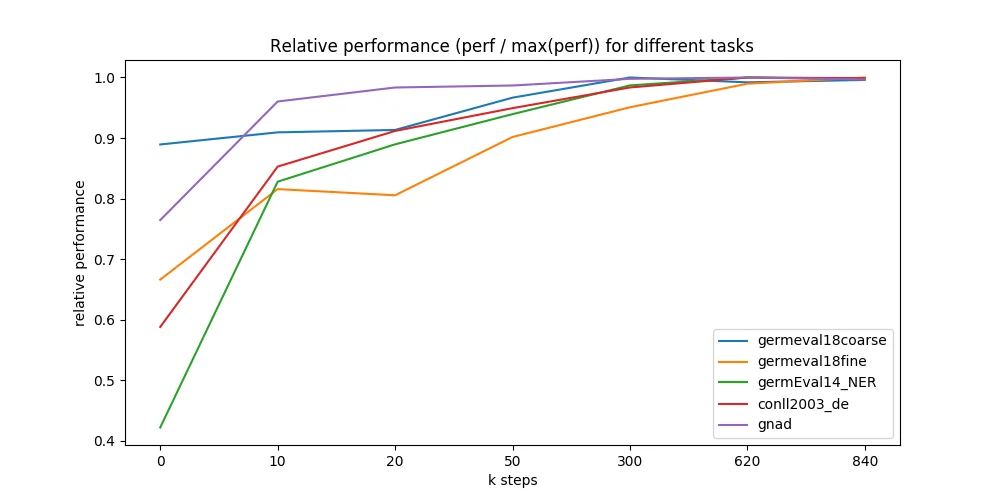
|
||||
|
||||
## Authors
|
||||
Branden Chan: `branden.chan [at] deepset.ai`
|
||||
Timo Möller: `timo.moeller [at] deepset.ai`
|
||||
Malte Pietsch: `malte.pietsch [at] deepset.ai`
|
||||
Tanay Soni: `tanay.soni [at] deepset.ai`
|
||||
|
||||
## About us
|
||||

|
||||
|
||||
We bring NLP to the industry via open source!
|
||||
Our focus: Industry specific language models & large scale QA systems.
|
||||
|
||||
Some of our work:
|
||||
- [German BERT (aka "bert-base-german-cased")](https://deepset.ai/german-bert)
|
||||
- [FARM](https://github.com/deepset-ai/FARM)
|
||||
- [Haystack](https://github.com/deepset-ai/haystack/)
|
||||
|
||||
Get in touch:
|
||||
[Twitter](https://twitter.com/deepset_ai) | [LinkedIn](https://www.linkedin.com/company/deepset-ai/) | [Website](https://deepset.ai)
|
||||
@@ -1,5 +0,0 @@
|
||||
This model is pre-trained **XLNET** with 12 layers.
|
||||
|
||||
It comes with paper: SBERT-WK: A Sentence Embedding Method By Dissecting BERT-based Word Models
|
||||
|
||||
Project Page: [SBERT-WK](https://github.com/BinWang28/SBERT-WK-Sentence-Embedding)
|
||||
@@ -1,20 +0,0 @@
|
||||
---
|
||||
thumbnail: https://raw.githubusercontent.com/JetRunner/BERT-of-Theseus/master/bert-of-theseus.png
|
||||
---
|
||||
|
||||
# BERT-of-Theseus
|
||||
See our paper ["BERT-of-Theseus: Compressing BERT by Progressive Module Replacing"](http://arxiv.org/abs/2002.02925).
|
||||
|
||||
BERT-of-Theseus is a new compressed BERT by progressively replacing the components of the original BERT.
|
||||
|
||||

|
||||
|
||||
## Load Pretrained Model on MNLI
|
||||
|
||||
We provide a 6-layer pretrained model on MNLI as a general-purpose model, which can transfer to other sentence classification tasks, outperforming DistillBERT (with the same 6-layer structure) on six tasks of GLUE (dev set).
|
||||
|
||||
| Method | MNLI | MRPC | QNLI | QQP | RTE | SST-2 | STS-B |
|
||||
|-----------------|------|------|------|------|------|-------|-------|
|
||||
| BERT-base | 83.5 | 89.5 | 91.2 | 89.8 | 71.1 | 91.5 | 88.9 |
|
||||
| DistillBERT | 79.0 | 87.5 | 85.3 | 84.9 | 59.9 | 90.7 | 81.2 |
|
||||
| BERT-of-Theseus | 82.1 | 87.5 | 88.8 | 88.8 | 70.1 | 91.8 | 87.8 |
|
||||
@@ -1,7 +1,3 @@
|
||||
---
|
||||
language: german
|
||||
---
|
||||
|
||||
# 🤗 + 📚 dbmdz German BERT models
|
||||
|
||||
In this repository the MDZ Digital Library team (dbmdz) at the Bavarian State
|
||||
|
||||
@@ -1,61 +0,0 @@
|
||||
---
|
||||
language: german
|
||||
tags:
|
||||
- "historic german"
|
||||
---
|
||||
|
||||
# 🤗 + 📚 dbmdz BERT models
|
||||
|
||||
In this repository the MDZ Digital Library team (dbmdz) at the Bavarian State
|
||||
Library open sources German Europeana BERT models 🎉
|
||||
|
||||
# German Europeana BERT
|
||||
|
||||
We use the open source [Europeana newspapers](http://www.europeana-newspapers.eu/)
|
||||
that were provided by *The European Library*. The final
|
||||
training corpus has a size of 51GB and consists of 8,035,986,369 tokens.
|
||||
|
||||
Detailed information about the data and pretraining steps can be found in
|
||||
[this repository](https://github.com/stefan-it/europeana-bert).
|
||||
|
||||
## Model weights
|
||||
|
||||
Currently only PyTorch-[Transformers](https://github.com/huggingface/transformers)
|
||||
compatible weights are available. If you need access to TensorFlow checkpoints,
|
||||
please raise an issue!
|
||||
|
||||
| Model | Downloads
|
||||
| ------------------------------------------ | ---------------------------------------------------------------------------------------------------------------
|
||||
| `dbmdz/bert-base-german-europeana-cased` | [`config.json`](https://cdn.huggingface.co/dbmdz/bert-base-german-europeana-cased/config.json) • [`pytorch_model.bin`](https://cdn.huggingface.co/dbmdz/bert-base-german-europeana-cased/pytorch_model.bin) • [`vocab.txt`](https://cdn.huggingface.co/dbmdz/bert-base-german-europeana-cased/vocab.txt)
|
||||
|
||||
## Results
|
||||
|
||||
For results on Historic NER, please refer to [this repository](https://github.com/stefan-it/europeana-bert).
|
||||
|
||||
## Usage
|
||||
|
||||
With Transformers >= 2.3 our German Europeana BERT models can be loaded like:
|
||||
|
||||
```python
|
||||
from transformers import AutoModel, AutoTokenizer
|
||||
|
||||
tokenizer = AutoTokenizer.from_pretrained("dbmdz/bert-base-german-europeana-cased")
|
||||
model = AutoModel.from_pretrained("dbmdz/bert-base-german-europeana-cased")
|
||||
```
|
||||
|
||||
# Huggingface model hub
|
||||
|
||||
All models are available on the [Huggingface model hub](https://huggingface.co/dbmdz).
|
||||
|
||||
# Contact (Bugs, Feedback, Contribution and more)
|
||||
|
||||
For questions about our BERT models just open an issue
|
||||
[here](https://github.com/dbmdz/berts/issues/new) 🤗
|
||||
|
||||
# Acknowledgments
|
||||
|
||||
Research supported with Cloud TPUs from Google's TensorFlow Research Cloud (TFRC).
|
||||
Thanks for providing access to the TFRC ❤️
|
||||
|
||||
Thanks to the generous support from the [Hugging Face](https://huggingface.co/) team,
|
||||
it is possible to download both cased and uncased models from their S3 storage 🤗
|
||||
@@ -1,61 +0,0 @@
|
||||
---
|
||||
language: german
|
||||
tags:
|
||||
- "historic german"
|
||||
---
|
||||
|
||||
# 🤗 + 📚 dbmdz BERT models
|
||||
|
||||
In this repository the MDZ Digital Library team (dbmdz) at the Bavarian State
|
||||
Library open sources German Europeana BERT models 🎉
|
||||
|
||||
# German Europeana BERT
|
||||
|
||||
We use the open source [Europeana newspapers](http://www.europeana-newspapers.eu/)
|
||||
that were provided by *The European Library*. The final
|
||||
training corpus has a size of 51GB and consists of 8,035,986,369 tokens.
|
||||
|
||||
Detailed information about the data and pretraining steps can be found in
|
||||
[this repository](https://github.com/stefan-it/europeana-bert).
|
||||
|
||||
## Model weights
|
||||
|
||||
Currently only PyTorch-[Transformers](https://github.com/huggingface/transformers)
|
||||
compatible weights are available. If you need access to TensorFlow checkpoints,
|
||||
please raise an issue!
|
||||
|
||||
| Model | Downloads
|
||||
| ------------------------------------------ | ---------------------------------------------------------------------------------------------------------------
|
||||
| `dbmdz/bert-base-german-europeana-uncased` | [`config.json`](https://cdn.huggingface.co/dbmdz/bert-base-german-europeana-uncased/config.json) • [`pytorch_model.bin`](https://cdn.huggingface.co/dbmdz/bert-base-german-europeana-uncased/pytorch_model.bin) • [`vocab.txt`](https://cdn.huggingface.co/dbmdz/bert-base-german-europeana-uncased/vocab.txt)
|
||||
|
||||
## Results
|
||||
|
||||
For results on Historic NER, please refer to [this repository](https://github.com/stefan-it/europeana-bert).
|
||||
|
||||
## Usage
|
||||
|
||||
With Transformers >= 2.3 our German Europeana BERT models can be loaded like:
|
||||
|
||||
```python
|
||||
from transformers import AutoModel, AutoTokenizer
|
||||
|
||||
tokenizer = AutoTokenizer.from_pretrained("dbmdz/bert-base-german-europeana-uncased")
|
||||
model = AutoModel.from_pretrained("dbmdz/bert-base-german-europeana-uncased")
|
||||
```
|
||||
|
||||
# Huggingface model hub
|
||||
|
||||
All models are available on the [Huggingface model hub](https://huggingface.co/dbmdz).
|
||||
|
||||
# Contact (Bugs, Feedback, Contribution and more)
|
||||
|
||||
For questions about our BERT models just open an issue
|
||||
[here](https://github.com/dbmdz/berts/issues/new) 🤗
|
||||
|
||||
# Acknowledgments
|
||||
|
||||
Research supported with Cloud TPUs from Google's TensorFlow Research Cloud (TFRC).
|
||||
Thanks for providing access to the TFRC ❤️
|
||||
|
||||
Thanks to the generous support from the [Hugging Face](https://huggingface.co/) team,
|
||||
it is possible to download both cased and uncased models from their S3 storage 🤗
|
||||
@@ -1,7 +1,3 @@
|
||||
---
|
||||
language: german
|
||||
---
|
||||
|
||||
# 🤗 + 📚 dbmdz German BERT models
|
||||
|
||||
In this repository the MDZ Digital Library team (dbmdz) at the Bavarian State
|
||||
|
||||
@@ -1,7 +1,3 @@
|
||||
---
|
||||
language: italian
|
||||
---
|
||||
|
||||
# 🤗 + 📚 dbmdz BERT models
|
||||
|
||||
In this repository the MDZ Digital Library team (dbmdz) at the Bavarian State
|
||||
|
||||
@@ -1,7 +1,3 @@
|
||||
---
|
||||
language: italian
|
||||
---
|
||||
|
||||
# 🤗 + 📚 dbmdz BERT models
|
||||
|
||||
In this repository the MDZ Digital Library team (dbmdz) at the Bavarian State
|
||||
|
||||
@@ -1,7 +1,3 @@
|
||||
---
|
||||
language: italian
|
||||
---
|
||||
|
||||
# 🤗 + 📚 dbmdz BERT models
|
||||
|
||||
In this repository the MDZ Digital Library team (dbmdz) at the Bavarian State
|
||||
|
||||
@@ -1,7 +1,3 @@
|
||||
---
|
||||
language: italian
|
||||
---
|
||||
|
||||
# 🤗 + 📚 dbmdz BERT models
|
||||
|
||||
In this repository the MDZ Digital Library team (dbmdz) at the Bavarian State
|
||||
|
||||
@@ -1,74 +0,0 @@
|
||||
---
|
||||
language: turkish
|
||||
---
|
||||
|
||||
# 🤗 + 📚 dbmdz Turkish BERT model
|
||||
|
||||
In this repository the MDZ Digital Library team (dbmdz) at the Bavarian State
|
||||
Library open sources a cased model for Turkish 🎉
|
||||
|
||||
# 🇹🇷 BERTurk
|
||||
|
||||
BERTurk is a community-driven cased BERT model for Turkish.
|
||||
|
||||
Some datasets used for pretraining and evaluation are contributed from the
|
||||
awesome Turkish NLP community, as well as the decision for the model name: BERTurk.
|
||||
|
||||
## Stats
|
||||
|
||||
The current version of the model is trained on a filtered and sentence
|
||||
segmented version of the Turkish [OSCAR corpus](https://traces1.inria.fr/oscar/),
|
||||
a recent Wikipedia dump, various [OPUS corpora](http://opus.nlpl.eu/) and a
|
||||
special corpus provided by [Kemal Oflazer](http://www.andrew.cmu.edu/user/ko/).
|
||||
|
||||
The final training corpus has a size of 35GB and 44,04,976,662 tokens.
|
||||
|
||||
Thanks to Google's TensorFlow Research Cloud (TFRC) we could train a cased model
|
||||
on a TPU v3-8 for 2M steps.
|
||||
|
||||
## Model weights
|
||||
|
||||
Currently only PyTorch-[Transformers](https://github.com/huggingface/transformers)
|
||||
compatible weights are available. If you need access to TensorFlow checkpoints,
|
||||
please raise an issue!
|
||||
|
||||
| Model | Downloads
|
||||
| --------------------------------- | ---------------------------------------------------------------------------------------------------------------
|
||||
| `dbmdz/bert-base-turkish-cased` | [`config.json`](https://cdn.huggingface.co/dbmdz/bert-base-turkish-cased/config.json) • [`pytorch_model.bin`](https://cdn.huggingface.co/dbmdz/bert-base-turkish-cased/pytorch_model.bin) • [`vocab.txt`](https://cdn.huggingface.co/dbmdz/bert-base-turkish-cased/vocab.txt)
|
||||
|
||||
## Usage
|
||||
|
||||
With Transformers >= 2.3 our BERTurk cased model can be loaded like:
|
||||
|
||||
```python
|
||||
from transformers import AutoModel, AutoTokenizer
|
||||
|
||||
tokenizer = AutoTokenizer.from_pretrained("dbmdz/bert-base-turkish-cased")
|
||||
model = AutoModel.from_pretrained("dbmdz/bert-base-turkish-cased")
|
||||
```
|
||||
|
||||
## Results
|
||||
|
||||
For results on PoS tagging or NER tasks, please refer to
|
||||
[this repository](https://github.com/stefan-it/turkish-bert).
|
||||
|
||||
# Huggingface model hub
|
||||
|
||||
All models are available on the [Huggingface model hub](https://huggingface.co/dbmdz).
|
||||
|
||||
# Contact (Bugs, Feedback, Contribution and more)
|
||||
|
||||
For questions about our BERT models just open an issue
|
||||
[here](https://github.com/dbmdz/berts/issues/new) 🤗
|
||||
|
||||
# Acknowledgments
|
||||
|
||||
Thanks to [Kemal Oflazer](http://www.andrew.cmu.edu/user/ko/) for providing us
|
||||
additional large corpora for Turkish. Many thanks to Reyyan Yeniterzi for providing
|
||||
us the Turkish NER dataset for evaluation.
|
||||
|
||||
Research supported with Cloud TPUs from Google's TensorFlow Research Cloud (TFRC).
|
||||
Thanks for providing access to the TFRC ❤️
|
||||
|
||||
Thanks to the generous support from the [Hugging Face](https://huggingface.co/) team,
|
||||
it is possible to download both cased and uncased models from their S3 storage 🤗
|
||||
@@ -1,104 +0,0 @@
|
||||
# roberta-base for QA
|
||||
|
||||
## Overview
|
||||
**Language model:** roberta-base
|
||||
**Language:** English
|
||||
**Downstream-task:** Extractive QA
|
||||
**Training data:** SQuAD 2.0
|
||||
**Eval data:** SQuAD 2.0
|
||||
**Code:** See [example](https://github.com/deepset-ai/FARM/blob/master/examples/question_answering.py) in [FARM](https://github.com/deepset-ai/FARM/blob/master/examples/question_answering.py)
|
||||
**Infrastructure**: 4x Tesla v100
|
||||
|
||||
## Hyperparameters
|
||||
|
||||
```
|
||||
batch_size = 50
|
||||
n_epochs = 3
|
||||
base_LM_model = "roberta-base"
|
||||
max_seq_len = 384
|
||||
learning_rate = 3e-5
|
||||
lr_schedule = LinearWarmup
|
||||
warmup_proportion = 0.2
|
||||
doc_stride=128
|
||||
max_query_length=64
|
||||
```
|
||||
|
||||
## Performance
|
||||
Evaluated on the SQuAD 2.0 dev set with the [official eval script](https://worksheets.codalab.org/rest/bundles/0x6b567e1cf2e041ec80d7098f031c5c9e/contents/blob/).
|
||||
```
|
||||
"exact": 78.49743114629833,
|
||||
"f1": 81.73092721240889
|
||||
```
|
||||
|
||||
## Usage
|
||||
|
||||
### In Transformers
|
||||
```python
|
||||
from transformers.pipelines import pipeline
|
||||
from transformers.modeling_auto import AutoModelForQuestionAnswering
|
||||
from transformers.tokenization_auto import AutoTokenizer
|
||||
|
||||
model_name = "deepset/roberta-base-squad2"
|
||||
|
||||
# a) Get predictions
|
||||
nlp = pipeline('question-answering', model=model_name, tokenizer=model_name)
|
||||
QA_input = {
|
||||
'question': 'Why is model conversion important?',
|
||||
'context': 'The option to convert models between FARM and transformers gives freedom to the user and let people easily switch between frameworks.'
|
||||
}
|
||||
res = nlp(QA_input)
|
||||
|
||||
# b) Load model & tokenizer
|
||||
model = AutoModelForQuestionAnswering.from_pretrained(model_name)
|
||||
tokenizer = AutoTokenizer.from_pretrained(model_name)
|
||||
```
|
||||
|
||||
### In FARM
|
||||
|
||||
```python
|
||||
from farm.modeling.adaptive_model import AdaptiveModel
|
||||
from farm.modeling.tokenization import Tokenizer
|
||||
from farm.infer import Inferencer
|
||||
|
||||
model_name = "deepset/roberta-base-squad2"
|
||||
|
||||
# a) Get predictions
|
||||
nlp = Inferencer.load(model_name, task_type="question_answering")
|
||||
QA_input = [{"questions": ["Why is model conversion important?"],
|
||||
"text": "The option to convert models between FARM and transformers gives freedom to the user and let people easily switch between frameworks."}]
|
||||
res = nlp.inference_from_dicts(dicts=QA_input, rest_api_schema=True)
|
||||
|
||||
# b) Load model & tokenizer
|
||||
model = AdaptiveModel.convert_from_transformers(model_name, device="cpu", task_type="question_answering")
|
||||
tokenizer = Tokenizer.load(model_name)
|
||||
```
|
||||
|
||||
### In haystack
|
||||
For doing QA at scale (i.e. many docs instead of single paragraph), you can load the model also in [haystack](https://github.com/deepset-ai/haystack/):
|
||||
```python
|
||||
reader = FARMReader(model_name_or_path="deepset/roberta-base-squad2")
|
||||
# or
|
||||
reader = TransformersReader(model="deepset/roberta-base-squad2",tokenizer="deepset/roberta-base-squad2")
|
||||
```
|
||||
|
||||
|
||||
## Authors
|
||||
Branden Chan: `branden.chan [at] deepset.ai`
|
||||
Timo Möller: `timo.moeller [at] deepset.ai`
|
||||
Malte Pietsch: `malte.pietsch [at] deepset.ai`
|
||||
Tanay Soni: `tanay.soni [at] deepset.ai`
|
||||
|
||||
## About us
|
||||

|
||||
|
||||
We bring NLP to the industry via open source!
|
||||
Our focus: Industry specific language models & large scale QA systems.
|
||||
|
||||
Some of our work:
|
||||
- [German BERT (aka "bert-base-german-cased")](https://deepset.ai/german-bert)
|
||||
- [FARM](https://github.com/deepset-ai/FARM)
|
||||
- [Haystack](https://github.com/deepset-ai/haystack/)
|
||||
|
||||
Get in touch:
|
||||
[Twitter](https://twitter.com/deepset_ai) | [LinkedIn](https://www.linkedin.com/company/deepset-ai/) | [Website](https://deepset.ai)
|
||||
|
||||
@@ -1,48 +0,0 @@
|
||||
---
|
||||
language: french
|
||||
---
|
||||
|
||||
# flaubert-base-uncased-squad
|
||||
|
||||
## Description
|
||||
|
||||
A baseline model for question-answering in french ([flaubert](https://github.com/getalp/Flaubert) model fine-tuned on [french-translated SQuAD 1.1 dataset](https://github.com/Alikabbadj/French-SQuAD))
|
||||
|
||||
## Training hyperparameters
|
||||
|
||||
```shell
|
||||
python3 ./examples/run_squad.py \
|
||||
--model_type flaubert \
|
||||
--model_name_or_path flaubert-base-uncased \
|
||||
--do_train \
|
||||
--do_eval \
|
||||
--do_lower_case \
|
||||
--train_file SQuAD-v1.1-train_fr_ss999_awstart2_net.json \
|
||||
--predict_file SQuAD-v1.1-dev_fr_ss999_awstart2_net.json \
|
||||
--learning_rate 3e-5 \
|
||||
--num_train_epochs 2 \
|
||||
--max_seq_length 384 \
|
||||
--doc_stride 128 \
|
||||
--output_dir output \
|
||||
--per_gpu_eval_batch_size=3 \
|
||||
--per_gpu_train_batch_size=3
|
||||
```
|
||||
|
||||
## Evaluation results
|
||||
|
||||
```shell
|
||||
{"f1": 68.66174806561969, "exact_match": 49.299692063176714}
|
||||
```
|
||||
|
||||
## Usage
|
||||
|
||||
```python
|
||||
from transformers import pipeline
|
||||
|
||||
nlp = pipeline('question-answering', model='fmikaelian/flaubert-base-uncased-squad', tokenizer='fmikaelian/flaubert-base-uncased-squad')
|
||||
|
||||
nlp({
|
||||
'question': "Qui est Claude Monet?",
|
||||
'context': "Claude Monet, né le 14 novembre 1840 à Paris et mort le 5 décembre 1926 à Giverny, est un peintre français et l’un des fondateurs de l'impressionnisme."
|
||||
})
|
||||
```
|
||||
@@ -1,7 +1,3 @@
|
||||
---
|
||||
language: dutch
|
||||
---
|
||||
|
||||
# Multilingual + Dutch SQuAD2.0
|
||||
|
||||
This model is the multilingual model provided by the Google research team with a fine-tuned dutch Q&A downstream task.
|
||||
|
||||
@@ -1,40 +0,0 @@
|
||||
---
|
||||
language: esperanto
|
||||
thumbnail: https://huggingface.co/blog/assets/EsperBERTo-thumbnail-v2.png
|
||||
---
|
||||
|
||||
# EsperBERTo: RoBERTa-like Language model trained on Esperanto
|
||||
|
||||
**Companion model to blog post https://huggingface.co/blog/how-to-train** 🔥
|
||||
|
||||
## Training Details
|
||||
|
||||
- current checkpoint: 566000
|
||||
- machine name: `galinette`
|
||||
|
||||
|
||||

|
||||
|
||||
## Example pipeline
|
||||
|
||||
```python
|
||||
from transformers import TokenClassificationPipeline, pipeline
|
||||
|
||||
|
||||
MODEL_PATH = "./models/EsperBERTo-small-pos/"
|
||||
|
||||
nlp = pipeline(
|
||||
"ner",
|
||||
model=MODEL_PATH,
|
||||
tokenizer=MODEL_PATH,
|
||||
)
|
||||
# or instantiate a TokenClassificationPipeline directly.
|
||||
|
||||
nlp("Mi estas viro kej estas tago varma.")
|
||||
|
||||
# {'entity': 'PRON', 'score': 0.9979867339134216, 'word': ' Mi'}
|
||||
# {'entity': 'VERB', 'score': 0.9683094620704651, 'word': ' estas'}
|
||||
# {'entity': 'VERB', 'score': 0.9797462821006775, 'word': ' estas'}
|
||||
# {'entity': 'NOUN', 'score': 0.8509314060211182, 'word': ' tago'}
|
||||
# {'entity': 'ADJ', 'score': 0.9996201395988464, 'word': ' varma'}
|
||||
```
|
||||
@@ -1,59 +0,0 @@
|
||||
---
|
||||
language: esperanto
|
||||
thumbnail: https://huggingface.co/blog/assets/EsperBERTo-thumbnail-v2.png
|
||||
---
|
||||
|
||||
# EsperBERTo: RoBERTa-like Language model trained on Esperanto
|
||||
|
||||
**Companion model to blog post https://huggingface.co/blog/how-to-train** 🔥
|
||||
|
||||
## Training Details
|
||||
|
||||
- current checkpoint: 566000
|
||||
- machine name: `galinette`
|
||||
|
||||
|
||||

|
||||
|
||||
## Example pipeline
|
||||
|
||||
```python
|
||||
from transformers import pipeline
|
||||
|
||||
fill_mask = pipeline(
|
||||
"fill-mask",
|
||||
model="julien-c/EsperBERTo-small",
|
||||
tokenizer="julien-c/EsperBERTo-small"
|
||||
)
|
||||
|
||||
fill_mask("Jen la komenco de bela <mask>.")
|
||||
|
||||
# This is the beginning of a beautiful <mask>.
|
||||
# =>
|
||||
|
||||
# {
|
||||
# 'score':0.06502299010753632
|
||||
# 'sequence':'<s> Jen la komenco de bela vivo.</s>'
|
||||
# 'token':1099
|
||||
# }
|
||||
# {
|
||||
# 'score':0.0421181358397007
|
||||
# 'sequence':'<s> Jen la komenco de bela vespero.</s>'
|
||||
# 'token':5100
|
||||
# }
|
||||
# {
|
||||
# 'score':0.024884626269340515
|
||||
# 'sequence':'<s> Jen la komenco de bela laboro.</s>'
|
||||
# 'token':1570
|
||||
# }
|
||||
# {
|
||||
# 'score':0.02324388362467289
|
||||
# 'sequence':'<s> Jen la komenco de bela tago.</s>'
|
||||
# 'token':1688
|
||||
# }
|
||||
# {
|
||||
# 'score':0.020378097891807556
|
||||
# 'sequence':'<s> Jen la komenco de bela festo.</s>'
|
||||
# 'token':4580
|
||||
# }
|
||||
```
|
||||
@@ -1,10 +1,3 @@
|
||||
---
|
||||
tags:
|
||||
- ci
|
||||
---
|
||||
|
||||
## Dummy model used for unit testing and CI
|
||||
|
||||
|
||||
```python
|
||||
import json
|
||||
|
||||
@@ -1,7 +0,0 @@
|
||||
# ArXiv-NLP GPT-2 checkpoint
|
||||
|
||||
This is a GPT-2 small checkpoint for PyTorch. It is the official `gpt2-small` fine-tuned to ArXiv paper on the computational linguistics field.
|
||||
|
||||
## Training data
|
||||
|
||||
This model was trained on a subset of ArXiv papers that were parsed from PDF to txt. The resulting data is made of 80MB of text from the computational linguistics (cs.CL) field.
|
||||
@@ -1,7 +0,0 @@
|
||||
# ArXiv GPT-2 checkpoint
|
||||
|
||||
This is a GPT-2 small checkpoint for PyTorch. It is the official `gpt2-small` finetuned to ArXiv paper on physics fields.
|
||||
|
||||
## Training data
|
||||
|
||||
This model was trained on a subset of ArXiv papers that were parsed from PDF to txt. The resulting data is made of 130MB of text, mostly from quantum physics (quant-ph) and other physics sub-fields.
|
||||
@@ -1,91 +0,0 @@
|
||||
---
|
||||
language: spanish
|
||||
thumbnail: https://i.imgur.com/jgBdimh.png
|
||||
---
|
||||
|
||||
# BETO (Spanish BERT) + Spanish SQuAD2.0
|
||||
|
||||
This model is provided by [BETO team](https://github.com/dccuchile/beto) and fine-tuned on [SQuAD-es-v2.0](https://github.com/ccasimiro88/TranslateAlignRetrieve) for **Q&A** downstream task.
|
||||
|
||||
## Details of the language model('dccuchile/bert-base-spanish-wwm-cased')
|
||||
|
||||
Language model ([**'dccuchile/bert-base-spanish-wwm-cased'**](https://github.com/dccuchile/beto/blob/master/README.md)):
|
||||
|
||||
BETO is a [BERT model](https://github.com/google-research/bert) trained on a [big Spanish corpus](https://github.com/josecannete/spanish-corpora). BETO is of size similar to a BERT-Base and was trained with the Whole Word Masking technique. Below you find Tensorflow and Pytorch checkpoints for the uncased and cased versions, as well as some results for Spanish benchmarks comparing BETO with [Multilingual BERT](https://github.com/google-research/bert/blob/master/multilingual.md) as well as other (not BERT-based) models.
|
||||
|
||||
## Details of the downstream task (Q&A) - Dataset
|
||||
[SQuAD-es-v2.0](https://github.com/ccasimiro88/TranslateAlignRetrieve)
|
||||
|
||||
| Dataset | # Q&A |
|
||||
| ---------------------- | ----- |
|
||||
| SQuAD2.0 Train | 130 K |
|
||||
| SQuAD2.0-es-v2.0 | 111 K |
|
||||
| SQuAD2.0 Dev | 12 K |
|
||||
| SQuAD-es-v2.0-small Dev| 69 K |
|
||||
|
||||
## Model training
|
||||
|
||||
The model was trained on a Tesla P100 GPU and 25GB of RAM with the following command:
|
||||
|
||||
```bash
|
||||
export SQUAD_DIR=path/to/nl_squad
|
||||
python transformers/examples/run_squad.py \
|
||||
--model_type bert \
|
||||
--model_name_or_path dccuchile/bert-base-spanish-wwm-cased \
|
||||
--do_train \
|
||||
--do_eval \
|
||||
--do_lower_case \
|
||||
--train_file $SQUAD_DIR/train_nl-v2.0.json \
|
||||
--predict_file $SQUAD_DIR/dev_nl-v2.0.json \
|
||||
--per_gpu_train_batch_size 12 \
|
||||
--learning_rate 3e-5 \
|
||||
--num_train_epochs 2.0 \
|
||||
--max_seq_length 384 \
|
||||
--doc_stride 128 \
|
||||
--output_dir /content/model_output \
|
||||
--save_steps 5000 \
|
||||
--threads 4 \
|
||||
--version_2_with_negative
|
||||
```
|
||||
|
||||
## Results:
|
||||
|
||||
|
||||
| Metric | # Value |
|
||||
| ---------------------- | ----- |
|
||||
| **Exact** | **76.50**50 |
|
||||
| **F1** | **86.07**81 |
|
||||
|
||||
```json
|
||||
{
|
||||
"exact": 76.50501430594491,
|
||||
"f1": 86.07818773108252,
|
||||
"total": 69202,
|
||||
"HasAns_exact": 67.93020719738277,
|
||||
"HasAns_f1": 82.37912207996466,
|
||||
"HasAns_total": 45850,
|
||||
"NoAns_exact": 93.34104145255225,
|
||||
"NoAns_f1": 93.34104145255225,
|
||||
"NoAns_total": 23352,
|
||||
"best_exact": 76.51223953064941,
|
||||
"best_exact_thresh": 0.0,
|
||||
"best_f1": 86.08541295578848,
|
||||
"best_f1_thresh": 0.0
|
||||
}
|
||||
```
|
||||
|
||||
### Model in action (in a Colab Notebook)
|
||||
<details>
|
||||
|
||||
1. Set the context and ask some questions:
|
||||
|
||||
|
||||
|
||||
2. Run predictions:
|
||||
|
||||
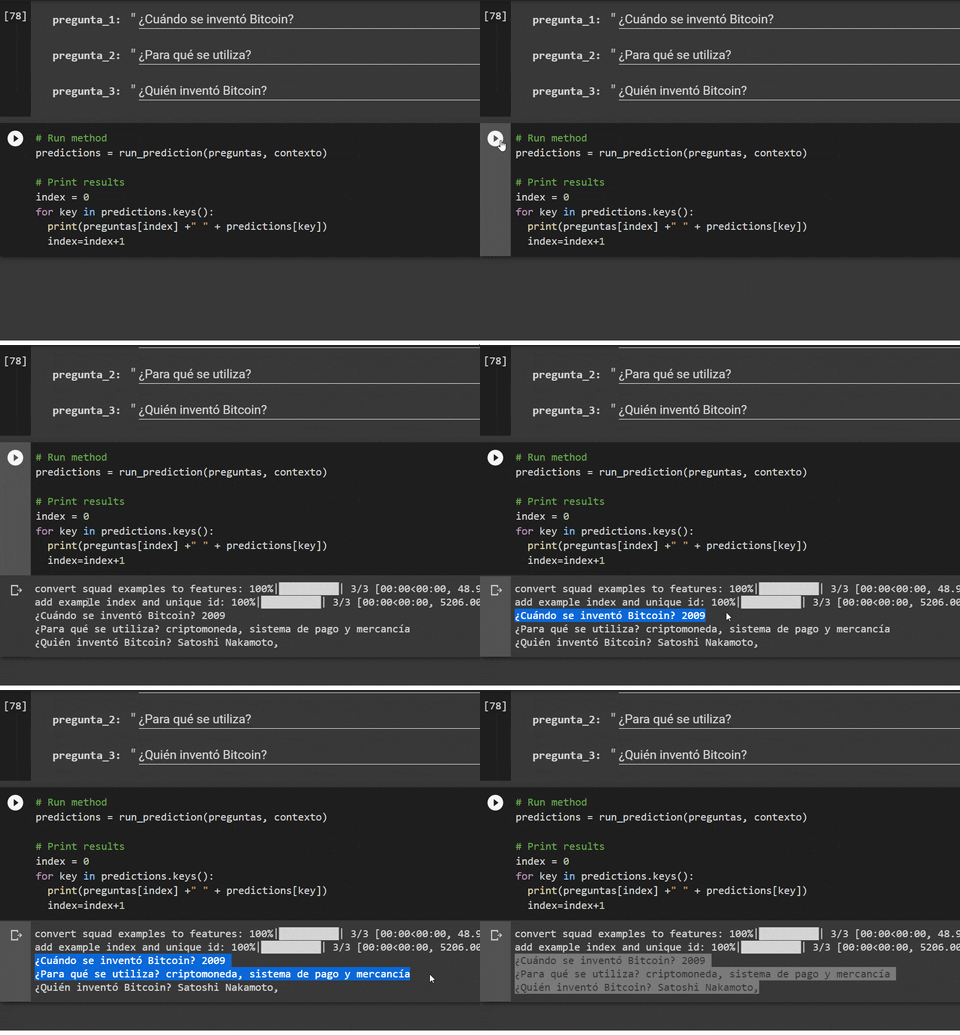
|
||||
</details>
|
||||
|
||||
> Created by [Manuel Romero/@mrm8488](https://twitter.com/mrm8488)
|
||||
|
||||
> Made with <span style="color: #e25555;">♥</span> in Spain
|
||||
@@ -1,58 +0,0 @@
|
||||
---
|
||||
language: spanish
|
||||
thumbnail: https://i.imgur.com/jgBdimh.png
|
||||
---
|
||||
|
||||
# Spanish BERT (BETO) + NER
|
||||
|
||||
This model is a fine-tuned on [NER-C](https://www.kaggle.com/nltkdata/conll-corpora) of the Spanish BERT cased [(BETO)](https://github.com/dccuchile/beto) for **NER** downstream task.
|
||||
|
||||
## Details of the downstream task (NER) - Dataset
|
||||
|
||||
- [Dataset: CONLL Corpora ES](https://www.kaggle.com/nltkdata/conll-corpora)
|
||||
|
||||
I preprocessed the dataset and splitted it as train / dev (80/20)
|
||||
|
||||
| Dataset | # Examples |
|
||||
| ---------------------- | ----- |
|
||||
| Train | 8.7 K |
|
||||
| Dev | 2.2 K |
|
||||
|
||||
|
||||
- [Fine-tune on NER script](https://github.com/huggingface/transformers/blob/master/examples/run_ner.py)
|
||||
|
||||
```bash
|
||||
!export NER_DIR='/content/ner_dataset'
|
||||
!python /content/transformers/examples/run_ner.py \
|
||||
--model_type bert \
|
||||
--model_name_or_path dccuchile/bert-base-spanish-wwm-cased \
|
||||
--do_train \
|
||||
--do_eval \
|
||||
--data_dir '/content/ner_dataset' \
|
||||
--num_train_epochs 15.0 \
|
||||
--max_seq_length 384 \
|
||||
--output_dir /content/model_output \
|
||||
--save_steps 5000 \
|
||||
|
||||
```
|
||||
|
||||
## Comparison:
|
||||
|
||||
| Model | # score |
|
||||
| :--------------------------------------------------------------------------------------------------------------: | :-------: |
|
||||
| bert-base-spanish-wwm-cased (BETO) | 88.43 |
|
||||
| [bert-spanish-cased-finetuned-ner (this one)](https://huggingface.co/mrm8488/bert-spanish-cased-finetuned-ner) | **89.65** |
|
||||
| Best Multilingual BERT | 87.38 |
|
||||
|
||||
```
|
||||
***** All metrics on Eval results *****
|
||||
|
||||
f1 = 0.8965040489828165
|
||||
loss = 0.11504213575173258
|
||||
precision = 0.893679858239811
|
||||
recall = 0.8993461462254805
|
||||
```
|
||||
|
||||
> Created by [Manuel Romero/@mrm8488](https://twitter.com/mrm8488)
|
||||
|
||||
> Made with <span style="color: #e25555;">♥</span> in Spain
|
||||
-112
@@ -1,112 +0,0 @@
|
||||
---
|
||||
language: spanish
|
||||
thumbnail: https://i.imgur.com/jgBdimh.png
|
||||
---
|
||||
|
||||
# BETO (Spanish BERT) + Spanish SQuAD2.0 + distillation using 'bert-base-multilingual-cased' as teacher
|
||||
|
||||
This model is a fine-tuned on [SQuAD-es-v2.0](https://github.com/ccasimiro88/TranslateAlignRetrieve) and **distilled** version of [BETO](https://github.com/dccuchile/beto) for **Q&A**.
|
||||
|
||||
Distillation makes the model **smaller, faster, cheaper and lighter** than [bert-base-spanish-wwm-cased-finetuned-spa-squad2-es](https://github.com/huggingface/transformers/blob/master/model_cards/mrm8488/bert-base-spanish-wwm-cased-finetuned-spa-squad2-es/README.md)
|
||||
|
||||
This model was fine-tuned on the same dataset but using **distillation** during the process as mentioned above (and one more train epoch).
|
||||
|
||||
The **teacher model** for the distillation was `bert-base-multilingual-cased`. It is the same teacher used for `distilbert-base-multilingual-cased` AKA [**DistilmBERT**](https://github.com/huggingface/transformers/tree/master/examples/distillation) (on average is twice as fast as **mBERT-base**).
|
||||
|
||||
## Details of the downstream task (Q&A) - Dataset
|
||||
|
||||
<details>
|
||||
|
||||
[SQuAD-es-v2.0](https://github.com/ccasimiro88/TranslateAlignRetrieve)
|
||||
|
||||
| Dataset | # Q&A |
|
||||
| ----------------------- | ----- |
|
||||
| SQuAD2.0 Train | 130 K |
|
||||
| SQuAD2.0-es-v2.0 | 111 K |
|
||||
| SQuAD2.0 Dev | 12 K |
|
||||
| SQuAD-es-v2.0-small Dev | 69 K |
|
||||
|
||||
</details>
|
||||
|
||||
## Model training
|
||||
|
||||
The model was trained on a Tesla P100 GPU and 25GB of RAM with the following command:
|
||||
|
||||
```bash
|
||||
!export SQUAD_DIR=/path/to/squad-v2_spanish \
|
||||
&& python transformers/examples/distillation/run_squad_w_distillation.py \
|
||||
--model_type bert \
|
||||
--model_name_or_path dccuchile/bert-base-spanish-wwm-cased \
|
||||
--teacher_type bert \
|
||||
--teacher_name_or_path bert-base-multilingual-cased \
|
||||
--do_train \
|
||||
--do_eval \
|
||||
--do_lower_case \
|
||||
--train_file $SQUAD_DIR/train-v2.json \
|
||||
--predict_file $SQUAD_DIR/dev-v2.json \
|
||||
--per_gpu_train_batch_size 12 \
|
||||
--learning_rate 3e-5 \
|
||||
--num_train_epochs 5.0 \
|
||||
--max_seq_length 384 \
|
||||
--doc_stride 128 \
|
||||
--output_dir /content/model_output \
|
||||
--save_steps 5000 \
|
||||
--threads 4 \
|
||||
--version_2_with_negative
|
||||
```
|
||||
|
||||
## Results:
|
||||
|
||||
| Metric | # Value |
|
||||
| --------- | ----------- |
|
||||
| **Exact** | **90.77**48 |
|
||||
| **F1** | **94.94**71 |
|
||||
|
||||
```json
|
||||
{
|
||||
"exact": 90.77483309730933,
|
||||
"f1": 94.94714391266254,
|
||||
"total": 69202,
|
||||
"HasAns_exact": 86.60850599781898,
|
||||
"HasAns_f1": 92.90582885592328,
|
||||
"HasAns_total": 45850,
|
||||
"NoAns_exact": 98.95512161699212,
|
||||
"NoAns_f1": 98.95512161699212,
|
||||
"NoAns_total": 23352,
|
||||
"best_exact": 90.77483309730933,
|
||||
"best_exact_thresh": 0.0,
|
||||
"best_f1": 94.94714391266305,
|
||||
"best_f1_thresh": 0.0
|
||||
}
|
||||
```
|
||||
|
||||
## Comparison:
|
||||
|
||||
| Model | f1 score |
|
||||
| :-------------------------------------------------------------: | :-------: |
|
||||
| bert-base-spanish-wwm-cased-finetuned-spa-squad2-es | 86.07 |
|
||||
| **distill**-bert-base-spanish-wwm-cased-finetuned-spa-squad2-es | **94.94** |
|
||||
|
||||
So, yes, this version is even more accurate.
|
||||
|
||||
### Model in action (in a Colab Notebook)
|
||||
|
||||
<details>
|
||||
|
||||
1. Set the context and ask some questions:
|
||||
|
||||

|
||||
|
||||
2. Run predictions:
|
||||
|
||||

|
||||
|
||||
3. Using **Pipelines**
|
||||
|
||||
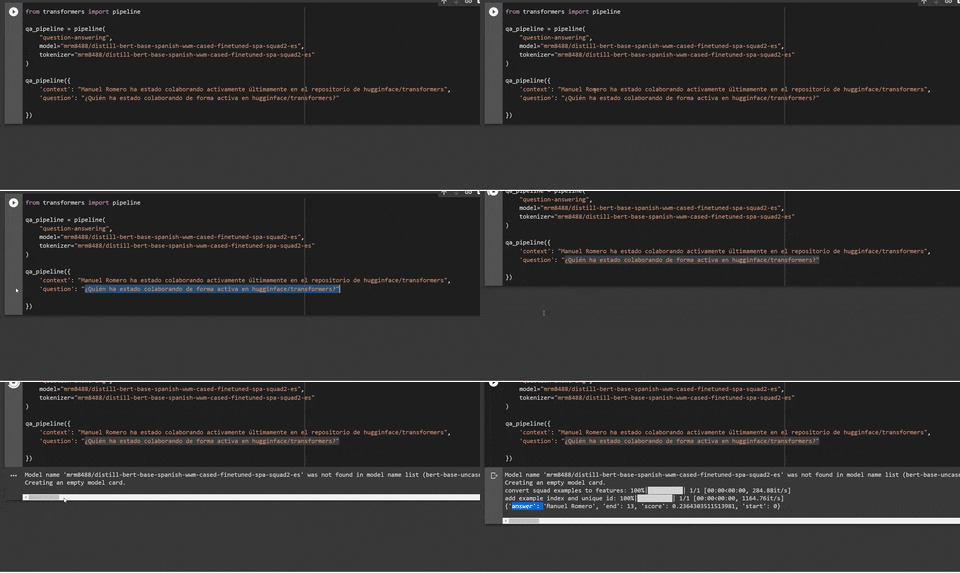
|
||||
|
||||
</details>
|
||||
|
||||
> Created by [Manuel Romero/@mrm8488](https://twitter.com/mrm8488)
|
||||
|
||||
> Made with <span style="color: #e25555;">♥</span> in Spain
|
||||
@@ -1,134 +0,0 @@
|
||||
---
|
||||
language: greek
|
||||
thumbnail: https://github.com/nlpaueb/GreekBERT/raw/master/greek-bert-logo.png
|
||||
---
|
||||
|
||||
# GreekBERT
|
||||
|
||||
A Greek version of BERT pre-trained language model.
|
||||
|
||||
<img src="https://github.com/nlpaueb/GreekBERT/raw/master/greek-bert-logo.png" width="600"/>
|
||||
|
||||
|
||||
## Pre-training corpora
|
||||
|
||||
The pre-training corpora of `bert-base-greek-uncased-v1` include:
|
||||
|
||||
* The Greek part of [Wikipedia](https://el.wikipedia.org/wiki/Βικιπαίδεια:Αντίγραφα_της_βάσης_δεδομένων),
|
||||
* The Greek part of [European Parliament Proceedings Parallel Corpus](https://www.statmt.org/europarl/), and
|
||||
* The Greek part of [OSCAR](https://traces1.inria.fr/oscar/), a cleansed version of [Common Crawl](https://commoncrawl.org).
|
||||
|
||||
Future release will also include:
|
||||
|
||||
* The entire corpus of Greek legislation, as published by the [National Publication Office](http://www.et.gr),
|
||||
* The entire corpus of EU legislation (Greek translation), as published in [Eur-Lex](https://eur-lex.europa.eu/homepage.html?locale=en).
|
||||
|
||||
## Pre-training details
|
||||
|
||||
* We trained BERT using the official code provided in Google BERT's github repository (https://github.com/google-research/bert). We then used [Hugging Face](https://huggingface.co)'s [Transformers](https://github.com/huggingface/transformers) conversion script to convert the TF checkpoint and vocabulary in the desirable format in order to be able to load the model in two lines of code for both PyTorch and TF2 users.
|
||||
* We released a model similar to the English `bert-base-uncased` model (12-layer, 768-hidden, 12-heads, 110M parameters).
|
||||
* We chose to follow the same training set-up: 1 million training steps with batches of 256 sequences of length 512 with an initial learning rate 1e-4.
|
||||
* We were able to use a single Google Cloud TPU v3-8 provided for free from [TensorFlow Research Cloud (TFRC)](https://www.tensorflow.org/tfrc), while also utilizing [GCP research credits](https://edu.google.com/programs/credits/research). Huge thanks to both Google programs for supporting us!
|
||||
|
||||
|
||||
## Requirements
|
||||
|
||||
We published `bert-base-greek-uncased-v1` as part of [Hugging Face](https://huggingface.co)'s [Transformers](https://github.com/huggingface/transformers) repository. So, you need to install the transfomers library through pip along with PyTorch or Tensorflow 2.
|
||||
|
||||
```
|
||||
pip install transfomers
|
||||
pip install (torch|tensorflow)
|
||||
```
|
||||
|
||||
## Pre-process text (Deaccent - Lower)
|
||||
|
||||
In order to use `bert-base-greek-uncased-v1`, you have to pre-process texts to lowercase letters and remove all Greek diacritics.
|
||||
|
||||
```python
|
||||
|
||||
import unicodedata
|
||||
|
||||
def strip_accents_and_lowercase(s):
|
||||
return ''.join(c for c in unicodedata.normalize('NFD', s)
|
||||
if unicodedata.category(c) != 'Mn').lower()
|
||||
|
||||
accented_string = "Αυτή είναι η Ελληνική έκδοση του BERT."
|
||||
unaccented_string = strip_accents_and_lowercase(accented_string)
|
||||
|
||||
print(unaccented_string) # αυτη ειναι η ελληνικη εκδοση του bert.
|
||||
|
||||
```
|
||||
|
||||
## Load Pretrained Model
|
||||
|
||||
```python
|
||||
from transformers import AutoTokenizer, AutoModel
|
||||
|
||||
tokenizer = AutoTokenizer.from_pretrained("nlpaueb/bert-base-greek-uncased-v1")
|
||||
model = AutoModel.from_pretrained("nlpaueb/bert-base-greek-uncased-v1")
|
||||
```
|
||||
|
||||
## Use Pretrained Model as a Language Model
|
||||
|
||||
```python
|
||||
import torch
|
||||
from transformers import *
|
||||
|
||||
# Load model and tokenizer
|
||||
tokenizer_greek = AutoTokenizer.from_pretrained('nlpaueb/bert-base-greek-uncased-v1')
|
||||
lm_model_greek = AutoModelWithLMHead.from_pretrained('nlpaueb/bert-base-greek-uncased-v1')
|
||||
|
||||
# ================ EXAMPLE 1 ================
|
||||
text_1 = 'O ποιητής έγραψε ένα [MASK] .'
|
||||
# EN: 'The poet wrote a [MASK].'
|
||||
input_ids = tokenizer_greek.encode(text_1)
|
||||
print(tokenizer_greek.convert_ids_to_tokens(input_ids))
|
||||
# ['[CLS]', 'o', 'ποιητης', 'εγραψε', 'ενα', '[MASK]', '.', '[SEP]']
|
||||
outputs = lm_model_greek(torch.tensor([input_ids]))[0]
|
||||
print(tokenizer_greek.convert_ids_to_tokens(outputs[0, 5].max(0)[1].item()))
|
||||
# the most plausible prediction for [MASK] is "song"
|
||||
|
||||
# ================ EXAMPLE 2 ================
|
||||
text_2 = 'Είναι ένας [MASK] άνθρωπος.'
|
||||
# EN: 'He is a [MASK] person.'
|
||||
input_ids = tokenizer_greek.encode(text_1)
|
||||
print(tokenizer_greek.convert_ids_to_tokens(input_ids))
|
||||
# ['[CLS]', 'ειναι', 'ενας', '[MASK]', 'ανθρωπος', '.', '[SEP]']
|
||||
outputs = lm_model_greek(torch.tensor([input_ids]))[0]
|
||||
print(tokenizer_greek.convert_ids_to_tokens(outputs[0, 3].max(0)[1].item()))
|
||||
# the most plausible prediction for [MASK] is "good"
|
||||
|
||||
# ================ EXAMPLE 3 ================
|
||||
text_3 = 'Είναι ένας [MASK] άνθρωπος και κάνει συχνά [MASK].'
|
||||
# EN: 'He is a [MASK] person he does frequently [MASK].'
|
||||
input_ids = tokenizer_greek.encode(text_3)
|
||||
print(tokenizer_greek.convert_ids_to_tokens(input_ids))
|
||||
# ['[CLS]', 'ειναι', 'ενας', '[MASK]', 'ανθρωπος', 'και', 'κανει', 'συχνα', '[MASK]', '.', '[SEP]']
|
||||
outputs = lm_model_greek(torch.tensor([input_ids]))[0]
|
||||
print(tokenizer_greek.convert_ids_to_tokens(outputs[0, 8].max(0)[1].item()))
|
||||
# the most plausible prediction for the second [MASK] is "trips"
|
||||
```
|
||||
|
||||
## Evaluation on downstream tasks
|
||||
|
||||
TBA
|
||||
|
||||
## Author
|
||||
|
||||
Ilias Chalkidis on behalf of [AUEB's Natural Language Processing Group](http://nlp.cs.aueb.gr)
|
||||
|
||||
| Github: [@ilias.chalkidis](https://github.com/seolhokim) | Twitter: [@KiddoThe2B](https://twitter.com/KiddoThe2B) |
|
||||
|
||||
## About Us
|
||||
|
||||
[AUEB's Natural Language Processing Group](http://nlp.cs.aueb.gr) develops algorithms, models, and systems that allow computers to process and generate natural language texts.
|
||||
|
||||
The group's current research interests include:
|
||||
* question answering systems for databases, ontologies, document collections, and the Web, especially biomedical question answering,
|
||||
* natural language generation from databases and ontologies, especially Semantic Web ontologies,
|
||||
text classification, including filtering spam and abusive content,
|
||||
* information extraction and opinion mining, including legal text analytics and sentiment analysis,
|
||||
* natural language processing tools for Greek, for example parsers and named-entity recognizers,
|
||||
machine learning in natural language processing, especially deep learning.
|
||||
|
||||
The group is part of the Information Processing Laboratory of the Department of Informatics of the Athens University of Economics and Business.
|
||||
@@ -1,49 +0,0 @@
|
||||
---
|
||||
language:
|
||||
- english
|
||||
- dutch
|
||||
- german
|
||||
- french
|
||||
- italian
|
||||
- spanish
|
||||
---
|
||||
|
||||
# bert-base-multilingual-uncased-sentiment
|
||||
|
||||
This a bert-base-multilingual-uncased model finetuned for sentiment analysis on product reviews in six languages: English, Dutch, German, French, Spanish and Italian. It predicts the sentiment of the review as a number of stars (between 1 and 5).
|
||||
|
||||
This model is intended for direct use as a sentiment analysis model for product reviews in any of the six languages above, or for further finetuning on related sentiment analysis tasks.
|
||||
|
||||
## Training data
|
||||
|
||||
Here is the number of product reviews we used for finetuning the model:
|
||||
|
||||
| Language | Number of reviews |
|
||||
| -------- | ----------------- |
|
||||
| English | 150k |
|
||||
| Dutch | 80k |
|
||||
| German | 137k |
|
||||
| French | 140k |
|
||||
| Italian | 72k |
|
||||
| Spanish | 50k |
|
||||
|
||||
## Accuracy
|
||||
|
||||
The finetuned model obtained the following accuracy on 5,000 held-out product reviews in each of the languages:
|
||||
|
||||
- Accuracy (exact) is the exact match on the number of stars.
|
||||
- Accuracy (off-by-1) is the percentage of reviews where the number of stars the model predicts differs by a maximum of 1 from the number given by the human reviewer.
|
||||
|
||||
|
||||
| Language | Accuracy (exact) | Accuracy (off-by-1) |
|
||||
| -------- | ---------------------- | ------------------- |
|
||||
| English | 67% | 95%
|
||||
| Dutch | 57% | 93%
|
||||
| German | 61% | 94%
|
||||
| French | 59% | 94%
|
||||
| Italian | 59% | 95%
|
||||
| Spanish | 58% | 95%
|
||||
|
||||
## Contact
|
||||
|
||||
Contact [NLP Town](https://www.nlp.town) for questions, feedback and/or requests for similar models.
|
||||
@@ -1,51 +0,0 @@
|
||||
---
|
||||
language: german
|
||||
thumbnail: kfold.png
|
||||
---
|
||||
|
||||
# German BERT for literary texts
|
||||
|
||||
This German BERT is based on `bert-base-german-dbmdz-cased`, and has been adapted to the domain of literary texts by fine-tuning the language modeling task on the [Corpus of German-Language Fiction](https://figshare.com/articles/Corpus_of_German-Language_Fiction_txt_/4524680/1). Afterwards the model was fine-tuned for named entity recognition on the [DROC](https://gitlab2.informatik.uni-wuerzburg.de/kallimachos/DROC-Release) corpus, so you can use it to recognize protagonists in German novels.
|
||||
|
||||
|
||||
# Stats
|
||||
|
||||
## Language modeling
|
||||
|
||||
The [Corpus of German-Language Fiction](https://figshare.com/articles/Corpus_of_German-Language_Fiction_txt_/4524680/1) consists of 3,194 documents with 203,516,988 tokens or 1,520,855 types. The publication year of the texts ranges from the 18th to the 20th century:
|
||||
|
||||

|
||||
|
||||
|
||||
### Results
|
||||
|
||||
After one epoch:
|
||||
|
||||
| Model | Perplexity |
|
||||
| ---------------- | ---------- |
|
||||
| Vanilla BERT | 6.82 |
|
||||
| Fine-tuned BERT | 4.98 |
|
||||
|
||||
|
||||
## Named entity recognition
|
||||
|
||||
The provided model was also fine-tuned for two epochs on 10,799 sentences for training, validated on 547 and tested on 1,845 with three labels: `B-PER`, `I-PER` and `O`.
|
||||
|
||||
|
||||
## Results
|
||||
|
||||
| Dataset | Precision | Recall | F1 |
|
||||
| ------- | --------- | ------ | ---- |
|
||||
| Dev | 96.4 | 87.3 | 91.6 |
|
||||
| Test | 92.8 | 94.9 | 93.8 |
|
||||
|
||||
The model has also been evaluated using 10-fold cross validation and compared with a classic Conditional Random Field baseline described in [Jannidis et al.](https://opus.bibliothek.uni-wuerzburg.de/opus4-wuerzburg/frontdoor/deliver/index/docId/14333/file/Jannidis_Figurenerkennung_Roman.pdf) (2015):
|
||||
|
||||

|
||||
|
||||
|
||||
# References
|
||||
|
||||
Markus Krug, Lukas Weimer, Isabella Reger, Luisa Macharowsky, Stephan Feldhaus, Frank Puppe, Fotis Jannidis, [Description of a Corpus of Character References in German Novels](http://webdoc.sub.gwdg.de/pub/mon/dariah-de/dwp-2018-27.pdf), 2018.
|
||||
|
||||
Fotis Jannidis, Isabella Reger, Lukas Weimer, Markus Krug, Martin Toepfer, Frank Puppe, [Automatische Erkennung von Figuren in deutschsprachigen Romanen](https://opus.bibliothek.uni-wuerzburg.de/opus4-wuerzburg/frontdoor/deliver/index/docId/14333/file/Jannidis_Figurenerkennung_Roman.pdf), 2015.
|
||||

Binary file not shown.
|
Before Width: | Height: | Size: 5.6 KiB |

Binary file not shown.
|
Before Width: | Height: | Size: 21 KiB |
@@ -15,7 +15,6 @@ known_third_party =
|
||||
packaging
|
||||
PIL
|
||||
psutil
|
||||
pytorch_lightning
|
||||
seqeval
|
||||
sklearn
|
||||
tensorboardX
|
||||
@@ -24,7 +23,6 @@ known_third_party =
|
||||
torch
|
||||
torchtext
|
||||
torchvision
|
||||
torch_xla
|
||||
|
||||
line_length = 119
|
||||
lines_after_imports = 2
|
||||
|
||||
@@ -34,9 +34,6 @@ To create the package for pypi.
|
||||
|
||||
7. Copy the release notes from RELEASE.md to the tag in github once everything is looking hunky-dory.
|
||||
|
||||
8. Update the documentation commit in .circleci/deploy.sh for the accurate documentation to be displayed
|
||||
|
||||
9. Update README.md to redirect to correct documentation.
|
||||
"""
|
||||
|
||||
import shutil
|
||||
@@ -66,7 +63,6 @@ extras = {}
|
||||
extras["mecab"] = ["mecab-python3"]
|
||||
extras["sklearn"] = ["scikit-learn"]
|
||||
extras["tf"] = ["tensorflow"]
|
||||
extras["tf-cpu"] = ["tensorflow-cpu"]
|
||||
extras["torch"] = ["torch"]
|
||||
|
||||
extras["serving"] = ["pydantic", "uvicorn", "fastapi", "starlette"]
|
||||
@@ -79,8 +75,8 @@ extras["dev"] = extras["testing"] + extras["quality"] + ["mecab-python3", "sciki
|
||||
|
||||
setup(
|
||||
name="transformers",
|
||||
version="2.5.0",
|
||||
author="Thomas Wolf, Lysandre Debut, Victor Sanh, Julien Chaumond, Sam Shleifer, Google AI Language Team Authors, Open AI team Authors, Facebook AI Authors, Carnegie Mellon University Authors",
|
||||
version="2.4.1",
|
||||
author="Thomas Wolf, Lysandre Debut, Victor Sanh, Julien Chaumond, Google AI Language Team Authors, Open AI team Authors, Facebook AI Authors, Carnegie Mellon University Authors",
|
||||
author_email="thomas@huggingface.co",
|
||||
description="State-of-the-art Natural Language Processing for TensorFlow 2.0 and PyTorch",
|
||||
long_description=open("README.md", "r", encoding="utf-8").read(),
|
||||
@@ -92,7 +88,7 @@ setup(
|
||||
packages=find_packages("src"),
|
||||
install_requires=[
|
||||
"numpy",
|
||||
"tokenizers == 0.5.0",
|
||||
"tokenizers == 0.0.11",
|
||||
# accessing files from S3 directly
|
||||
"boto3",
|
||||
# filesystem locks e.g. to prevent parallel downloads
|
||||
|
||||
@@ -2,7 +2,7 @@
|
||||
# There's no way to ignore "F401 '...' imported but unused" warnings in this
|
||||
# module, but to preserve other warnings. So, don't check this module at all.
|
||||
|
||||
__version__ = "2.5.0"
|
||||
__version__ = "2.4.1"
|
||||
|
||||
# Work around to update TensorFlow's absl.logging threshold which alters the
|
||||
# default Python logging output behavior when present.
|
||||
@@ -21,7 +21,6 @@ import logging
|
||||
|
||||
from .configuration_albert import ALBERT_PRETRAINED_CONFIG_ARCHIVE_MAP, AlbertConfig
|
||||
from .configuration_auto import ALL_PRETRAINED_CONFIG_ARCHIVE_MAP, AutoConfig
|
||||
from .configuration_bart import BartConfig
|
||||
from .configuration_bert import BERT_PRETRAINED_CONFIG_ARCHIVE_MAP, BertConfig
|
||||
from .configuration_camembert import CAMEMBERT_PRETRAINED_CONFIG_ARCHIVE_MAP, CamembertConfig
|
||||
from .configuration_ctrl import CTRL_PRETRAINED_CONFIG_ARCHIVE_MAP, CTRLConfig
|
||||
@@ -102,23 +101,21 @@ from .pipelines import (
|
||||
PipelineDataFormat,
|
||||
QuestionAnsweringPipeline,
|
||||
TextClassificationPipeline,
|
||||
TokenClassificationPipeline,
|
||||
pipeline,
|
||||
)
|
||||
from .tokenization_albert import AlbertTokenizer
|
||||
from .tokenization_auto import AutoTokenizer
|
||||
from .tokenization_bart import BartTokenizer
|
||||
from .tokenization_bert import BasicTokenizer, BertTokenizer, BertTokenizerFast, WordpieceTokenizer
|
||||
from .tokenization_bert_japanese import BertJapaneseTokenizer, CharacterTokenizer, MecabTokenizer
|
||||
from .tokenization_camembert import CamembertTokenizer
|
||||
from .tokenization_ctrl import CTRLTokenizer
|
||||
from .tokenization_distilbert import DistilBertTokenizer, DistilBertTokenizerFast
|
||||
from .tokenization_distilbert import DistilBertTokenizer
|
||||
from .tokenization_flaubert import FlaubertTokenizer
|
||||
from .tokenization_gpt2 import GPT2Tokenizer, GPT2TokenizerFast
|
||||
from .tokenization_openai import OpenAIGPTTokenizer, OpenAIGPTTokenizerFast
|
||||
from .tokenization_roberta import RobertaTokenizer, RobertaTokenizerFast
|
||||
from .tokenization_openai import OpenAIGPTTokenizer
|
||||
from .tokenization_roberta import RobertaTokenizer
|
||||
from .tokenization_t5 import T5Tokenizer
|
||||
from .tokenization_transfo_xl import TransfoXLCorpus, TransfoXLTokenizer, TransfoXLTokenizerFast
|
||||
from .tokenization_transfo_xl import TransfoXLCorpus, TransfoXLTokenizer
|
||||
|
||||
# Tokenizers
|
||||
from .tokenization_utils import PreTrainedTokenizer
|
||||
@@ -206,7 +203,6 @@ if is_torch_available():
|
||||
XLMForQuestionAnsweringSimple,
|
||||
XLM_PRETRAINED_MODEL_ARCHIVE_MAP,
|
||||
)
|
||||
from .modeling_bart import BartForSequenceClassification, BartModel, BartForMaskedLM
|
||||
from .modeling_roberta import (
|
||||
RobertaForMaskedLM,
|
||||
RobertaModel,
|
||||
@@ -221,7 +217,6 @@ if is_torch_available():
|
||||
CamembertModel,
|
||||
CamembertForSequenceClassification,
|
||||
CamembertForTokenClassification,
|
||||
CamembertForQuestionAnswering,
|
||||
CAMEMBERT_PRETRAINED_MODEL_ARCHIVE_MAP,
|
||||
)
|
||||
from .modeling_distilbert import (
|
||||
|
||||
@@ -1,51 +0,0 @@
|
||||
import math
|
||||
|
||||
import torch
|
||||
import torch.nn.functional as F
|
||||
|
||||
|
||||
def swish(x):
|
||||
return x * torch.sigmoid(x)
|
||||
|
||||
|
||||
def _gelu_python(x):
|
||||
""" Original Implementation of the gelu activation function in Google Bert repo when initially created.
|
||||
For information: OpenAI GPT's gelu is slightly different (and gives slightly different results):
|
||||
0.5 * x * (1 + torch.tanh(math.sqrt(2 / math.pi) * (x + 0.044715 * torch.pow(x, 3))))
|
||||
This is now written in C in torch.nn.functional
|
||||
Also see https://arxiv.org/abs/1606.08415
|
||||
"""
|
||||
return x * 0.5 * (1.0 + torch.erf(x / math.sqrt(2.0)))
|
||||
|
||||
|
||||
if torch.__version__ < "1.4.0":
|
||||
gelu = _gelu_python
|
||||
else:
|
||||
gelu = F.gelu
|
||||
|
||||
|
||||
def gelu_new(x):
|
||||
""" Implementation of the gelu activation function currently in Google Bert repo (identical to OpenAI GPT).
|
||||
Also see https://arxiv.org/abs/1606.08415
|
||||
"""
|
||||
return 0.5 * x * (1 + torch.tanh(math.sqrt(2 / math.pi) * (x + 0.044715 * torch.pow(x, 3))))
|
||||
|
||||
|
||||
ACT2FN = {
|
||||
"relu": F.relu,
|
||||
"swish": swish,
|
||||
"gelu": gelu,
|
||||
"tanh": F.tanh,
|
||||
"gelu_new": gelu_new,
|
||||
}
|
||||
|
||||
|
||||
def get_activation(activation_string):
|
||||
if activation_string in ACT2FN:
|
||||
return ACT2FN[activation_string]
|
||||
else:
|
||||
raise KeyError(
|
||||
"function {} not found in ACT2FN mapping {} or torch.nn.functional".format(
|
||||
activation_string, list(ACT2FN.keys())
|
||||
)
|
||||
)
|
||||
@@ -19,7 +19,6 @@ import logging
|
||||
from collections import OrderedDict
|
||||
|
||||
from .configuration_albert import ALBERT_PRETRAINED_CONFIG_ARCHIVE_MAP, AlbertConfig
|
||||
from .configuration_bart import BART_PRETRAINED_CONFIG_ARCHIVE_MAP, BartConfig
|
||||
from .configuration_bert import BERT_PRETRAINED_CONFIG_ARCHIVE_MAP, BertConfig
|
||||
from .configuration_camembert import CAMEMBERT_PRETRAINED_CONFIG_ARCHIVE_MAP, CamembertConfig
|
||||
from .configuration_ctrl import CTRL_PRETRAINED_CONFIG_ARCHIVE_MAP, CTRLConfig
|
||||
@@ -43,7 +42,6 @@ ALL_PRETRAINED_CONFIG_ARCHIVE_MAP = dict(
|
||||
(key, value)
|
||||
for pretrained_map in [
|
||||
BERT_PRETRAINED_CONFIG_ARCHIVE_MAP,
|
||||
BART_PRETRAINED_CONFIG_ARCHIVE_MAP,
|
||||
OPENAI_GPT_PRETRAINED_CONFIG_ARCHIVE_MAP,
|
||||
TRANSFO_XL_PRETRAINED_CONFIG_ARCHIVE_MAP,
|
||||
GPT2_PRETRAINED_CONFIG_ARCHIVE_MAP,
|
||||
@@ -69,7 +67,6 @@ CONFIG_MAPPING = OrderedDict(
|
||||
("albert", AlbertConfig,),
|
||||
("camembert", CamembertConfig,),
|
||||
("xlm-roberta", XLMRobertaConfig,),
|
||||
("bart", BartConfig,),
|
||||
("roberta", RobertaConfig,),
|
||||
("flaubert", FlaubertConfig,),
|
||||
("bert", BertConfig,),
|
||||
|
||||
@@ -1,101 +0,0 @@
|
||||
# coding=utf-8
|
||||
# Copyright 2020 The Fairseq Authors and The HuggingFace Inc. team.
|
||||
#
|
||||
# Licensed under the Apache License, Version 2.0 (the "License");
|
||||
# you may not use this file except in compliance with the License.
|
||||
# You may obtain a copy of the License at
|
||||
#
|
||||
# http://www.apache.org/licenses/LICENSE-2.0
|
||||
#
|
||||
# Unless required by applicable law or agreed to in writing, software
|
||||
# distributed under the License is distributed on an "AS IS" BASIS,
|
||||
# WITHOUT WARRANTIES OR CONDITIONS OF ANY KIND, either express or implied.
|
||||
# See the License for the specific language governing permissions and
|
||||
# limitations under the License.
|
||||
""" BART configuration """
|
||||
|
||||
|
||||
import logging
|
||||
|
||||
from .configuration_utils import PretrainedConfig
|
||||
|
||||
|
||||
logger = logging.getLogger(__name__)
|
||||
|
||||
_bart_large_url = "https://s3.amazonaws.com/models.huggingface.co/bert/facebook/bart-large/config.json"
|
||||
BART_PRETRAINED_CONFIG_ARCHIVE_MAP = {
|
||||
"bart-large": _bart_large_url,
|
||||
"bart-large-mnli": _bart_large_url, # fine as same
|
||||
"bart-cnn": None, # not done
|
||||
}
|
||||
|
||||
|
||||
class BartConfig(PretrainedConfig):
|
||||
r"""
|
||||
Configuration class for Bart. Parameters are renamed from the fairseq implementation
|
||||
"""
|
||||
model_type = "bart"
|
||||
pretrained_config_archive_map = BART_PRETRAINED_CONFIG_ARCHIVE_MAP
|
||||
|
||||
def __init__(
|
||||
self,
|
||||
activation_dropout=0.0,
|
||||
vocab_size=50265,
|
||||
pad_token_id=1,
|
||||
eos_token_id=2,
|
||||
d_model=1024,
|
||||
encoder_ffn_dim=4096,
|
||||
encoder_layers=12,
|
||||
encoder_attention_heads=16,
|
||||
decoder_ffn_dim=4096,
|
||||
decoder_layers=12,
|
||||
decoder_attention_heads=16,
|
||||
encoder_layerdrop=0.0,
|
||||
decoder_layerdrop=0.0,
|
||||
attention_dropout=0.0,
|
||||
dropout=0.1,
|
||||
max_position_embeddings=1024,
|
||||
init_std=0.02,
|
||||
classifier_dropout=0.0,
|
||||
output_past=False,
|
||||
num_labels=3,
|
||||
**common_kwargs
|
||||
):
|
||||
r"""
|
||||
:class:`~transformers.BartConfig` is the configuration class for `BartModel`.
|
||||
Examples:
|
||||
config = BartConfig.from_pretrained('bart-large')
|
||||
model = BartModel(config)
|
||||
"""
|
||||
super().__init__(num_labels=num_labels, output_past=output_past, pad_token_id=pad_token_id, **common_kwargs)
|
||||
|
||||
self.vocab_size = vocab_size
|
||||
self.d_model = d_model # encoder_embed_dim and decoder_embed_dim
|
||||
self.eos_token_id = eos_token_id
|
||||
|
||||
self.encoder_ffn_dim = encoder_ffn_dim
|
||||
self.encoder_layers = self.num_hidden_layers = encoder_layers
|
||||
self.encoder_attention_heads = encoder_attention_heads
|
||||
self.encoder_layerdrop = encoder_layerdrop
|
||||
self.decoder_layerdrop = decoder_layerdrop
|
||||
self.decoder_ffn_dim = decoder_ffn_dim
|
||||
self.decoder_layers = decoder_layers
|
||||
self.decoder_attention_heads = decoder_attention_heads
|
||||
self.max_position_embeddings = max_position_embeddings
|
||||
self.init_std = init_std # Normal(0, this parameter)
|
||||
|
||||
# 3 Types of Dropout
|
||||
self.attention_dropout = attention_dropout
|
||||
self.activation_dropout = activation_dropout
|
||||
self.dropout = dropout
|
||||
|
||||
# Classifier stuff
|
||||
self.classif_dropout = classifier_dropout
|
||||
|
||||
@property
|
||||
def num_attention_heads(self):
|
||||
return self.encoder_attention_heads
|
||||
|
||||
@property
|
||||
def hidden_size(self):
|
||||
return self.d_model
|
||||
@@ -25,8 +25,6 @@ logger = logging.getLogger(__name__)
|
||||
DISTILBERT_PRETRAINED_CONFIG_ARCHIVE_MAP = {
|
||||
"distilbert-base-uncased": "https://s3.amazonaws.com/models.huggingface.co/bert/distilbert-base-uncased-config.json",
|
||||
"distilbert-base-uncased-distilled-squad": "https://s3.amazonaws.com/models.huggingface.co/bert/distilbert-base-uncased-distilled-squad-config.json",
|
||||
"distilbert-base-cased": "https://s3.amazonaws.com/models.huggingface.co/bert/distilbert-base-cased-config.json",
|
||||
"distilbert-base-cased-distilled-squad": "https://s3.amazonaws.com/models.huggingface.co/bert/distilbert-base-cased-distilled-squad-config.json",
|
||||
"distilbert-base-german-cased": "https://s3.amazonaws.com/models.huggingface.co/bert/distilbert-base-german-cased-config.json",
|
||||
"distilbert-base-multilingual-cased": "https://s3.amazonaws.com/models.huggingface.co/bert/distilbert-base-multilingual-cased-config.json",
|
||||
"distilbert-base-uncased-finetuned-sst-2-english": "https://s3.amazonaws.com/models.huggingface.co/bert/distilbert-base-uncased-finetuned-sst-2-english-config.json",
|
||||
@@ -60,7 +58,7 @@ class DistilBertConfig(PretrainedConfig):
|
||||
Number of attention heads for each attention layer in the Transformer encoder.
|
||||
dim (:obj:`int`, optional, defaults to 768):
|
||||
Dimensionality of the encoder layers and the pooler layer.
|
||||
hidden_dim (:obj:`int`, optional, defaults to 3072):
|
||||
intermediate_size (:obj:`int`, optional, defaults to 3072):
|
||||
The size of the "intermediate" (i.e., feed-forward) layer in the Transformer encoder.
|
||||
dropout (:obj:`float`, optional, defaults to 0.1):
|
||||
The dropout probabilitiy for all fully connected layers in the embeddings, encoder, and pooler.
|
||||
|
||||
@@ -75,9 +75,9 @@ class PretrainedConfig(object):
|
||||
self.top_k = kwargs.pop("top_k", 50)
|
||||
self.top_p = kwargs.pop("top_p", 1.0)
|
||||
self.repetition_penalty = kwargs.pop("repetition_penalty", 1.0)
|
||||
self.bos_token_id = kwargs.pop("bos_token_id", None)
|
||||
self.pad_token_id = kwargs.pop("pad_token_id", None)
|
||||
self.eos_token_ids = kwargs.pop("eos_token_ids", None)
|
||||
self.bos_token_id = kwargs.pop("bos_token_id", 0)
|
||||
self.pad_token_id = kwargs.pop("pad_token_id", 0)
|
||||
self.eos_token_ids = kwargs.pop("eos_token_ids", 0)
|
||||
self.length_penalty = kwargs.pop("length_penalty", 1.0)
|
||||
self.num_return_sequences = kwargs.pop("num_return_sequences", 1)
|
||||
|
||||
|
||||
@@ -1,100 +0,0 @@
|
||||
# coding=utf-8
|
||||
# Copyright 2020 The HuggingFace Inc. team.
|
||||
#
|
||||
# Licensed under the Apache License, Version 2.0 (the "License");
|
||||
# you may not use this file except in compliance with the License.
|
||||
# You may obtain a copy of the License at
|
||||
#
|
||||
# http://www.apache.org/licenses/LICENSE-2.0
|
||||
#
|
||||
# Unless required by applicable law or agreed to in writing, software
|
||||
# distributed under the License is distributed on an "AS IS" BASIS,
|
||||
# WITHOUT WARRANTIES OR CONDITIONS OF ANY KIND, either express or implied.
|
||||
# See the License for the specific language governing permissions and
|
||||
# limitations under the License.
|
||||
"""Convert BART checkpoint."""
|
||||
|
||||
|
||||
import argparse
|
||||
import logging
|
||||
from pathlib import Path
|
||||
|
||||
import fairseq
|
||||
import torch
|
||||
from packaging import version
|
||||
|
||||
from transformers import BartConfig, BartForSequenceClassification, BartModel, BartTokenizer
|
||||
|
||||
|
||||
if version.parse(fairseq.__version__) < version.parse("0.9.0"):
|
||||
raise Exception("requires fairseq >= 0.9.0")
|
||||
|
||||
|
||||
logging.basicConfig(level=logging.INFO)
|
||||
logger = logging.getLogger(__name__)
|
||||
|
||||
SAMPLE_TEXT = "Hello world! cécé herlolip"
|
||||
|
||||
rename_keys = [
|
||||
("model.classification_heads.mnli.dense.weight", "classification_head.dense.weight"),
|
||||
("model.classification_heads.mnli.dense.bias", "classification_head.dense.bias"),
|
||||
("model.classification_heads.mnli.out_proj.weight", "classification_head.out_proj.weight"),
|
||||
("model.classification_heads.mnli.out_proj.bias", "classification_head.out_proj.bias"),
|
||||
]
|
||||
IGNORE_KEYS = ["encoder.version", "decoder.version", "model.encoder.version", "model.decoder.version"]
|
||||
|
||||
|
||||
def rename_key(dct, old, new):
|
||||
val = dct.pop(old)
|
||||
dct[new] = val
|
||||
|
||||
|
||||
def convert_bart_checkpoint(checkpoint_path, pytorch_dump_folder_path):
|
||||
"""
|
||||
Copy/paste/tweak model's weights to our BERT structure.
|
||||
"""
|
||||
b2 = torch.hub.load("pytorch/fairseq", checkpoint_path)
|
||||
b2.eval() # disable dropout
|
||||
b2.model.upgrade_state_dict(b2.model.state_dict())
|
||||
config = BartConfig()
|
||||
tokens = b2.encode(SAMPLE_TEXT).unsqueeze(0)
|
||||
tokens2 = BartTokenizer.from_pretrained("bart-large").encode(SAMPLE_TEXT).unsqueeze(0)
|
||||
assert torch.eq(tokens, tokens2).all()
|
||||
|
||||
# assert their_output.size() == (1, 11, 1024)
|
||||
|
||||
if checkpoint_path == "bart.large":
|
||||
state_dict = b2.model.state_dict()
|
||||
state_dict["shared.weight"] = state_dict["decoder.embed_tokens.weight"]
|
||||
model = BartModel(config)
|
||||
their_output = b2.extract_features(tokens)
|
||||
|
||||
else: # MNLI Case
|
||||
state_dict = b2.state_dict()
|
||||
state_dict["model.shared.weight"] = state_dict["model.decoder.embed_tokens.weight"]
|
||||
for src, dest in rename_keys:
|
||||
rename_key(state_dict, src, dest)
|
||||
state_dict.pop("_float_tensor", None)
|
||||
model = BartForSequenceClassification(config)
|
||||
their_output = b2.predict("mnli", tokens, return_logits=True)
|
||||
for k in IGNORE_KEYS:
|
||||
state_dict.pop(k, None)
|
||||
model.load_state_dict(state_dict)
|
||||
model.eval()
|
||||
our_outputs = model.forward(tokens)[0]
|
||||
|
||||
assert their_output.shape == our_outputs.shape
|
||||
assert (their_output == our_outputs).all().item()
|
||||
Path(pytorch_dump_folder_path).mkdir(exist_ok=True)
|
||||
model.save_pretrained(pytorch_dump_folder_path)
|
||||
|
||||
|
||||
if __name__ == "__main__":
|
||||
parser = argparse.ArgumentParser()
|
||||
# Required parameters
|
||||
parser.add_argument("fairseq_path", choices=["bart.large", "bart.large.mnli"], type=str, help="")
|
||||
parser.add_argument("pytorch_dump_folder_path", default=None, type=str, help="Path to the output PyTorch model.")
|
||||
args = parser.parse_args()
|
||||
convert_bart_checkpoint(
|
||||
args.fairseq_path, args.pytorch_dump_folder_path,
|
||||
)
|
||||
@@ -277,7 +277,7 @@ MODEL_CLASSES = {
|
||||
DISTILBERT_PRETRAINED_MODEL_ARCHIVE_MAP,
|
||||
DISTILBERT_PRETRAINED_CONFIG_ARCHIVE_MAP,
|
||||
),
|
||||
"distilbert-base-distilled-squad": (
|
||||
"distilbert-base-uncased-distilled-squad": (
|
||||
DistilBertConfig,
|
||||
TFDistilBertForQuestionAnswering,
|
||||
DistilBertForQuestionAnswering,
|
||||
|
||||
@@ -123,7 +123,7 @@ def squad_convert_example_to_features(example, max_seq_length, doc_stride, max_q
|
||||
truncated_query = tokenizer.encode(example.question_text, add_special_tokens=False, max_length=max_query_length)
|
||||
sequence_added_tokens = (
|
||||
tokenizer.max_len - tokenizer.max_len_single_sentence + 1
|
||||
if "roberta" in str(type(tokenizer)) or "camembert" in str(type(tokenizer))
|
||||
if "roberta" in str(type(tokenizer))
|
||||
else tokenizer.max_len - tokenizer.max_len_single_sentence
|
||||
)
|
||||
sequence_pair_added_tokens = tokenizer.max_len - tokenizer.max_len_sentences_pair
|
||||
@@ -147,14 +147,7 @@ def squad_convert_example_to_features(example, max_seq_length, doc_stride, max_q
|
||||
)
|
||||
|
||||
if tokenizer.pad_token_id in encoded_dict["input_ids"]:
|
||||
if tokenizer.padding_side == "right":
|
||||
non_padded_ids = encoded_dict["input_ids"][: encoded_dict["input_ids"].index(tokenizer.pad_token_id)]
|
||||
else:
|
||||
last_padding_id_position = (
|
||||
len(encoded_dict["input_ids"]) - 1 - encoded_dict["input_ids"][::-1].index(tokenizer.pad_token_id)
|
||||
)
|
||||
non_padded_ids = encoded_dict["input_ids"][last_padding_id_position + 1 :]
|
||||
|
||||
non_padded_ids = encoded_dict["input_ids"][: encoded_dict["input_ids"].index(tokenizer.pad_token_id)]
|
||||
else:
|
||||
non_padded_ids = encoded_dict["input_ids"]
|
||||
|
||||
@@ -628,7 +621,7 @@ class SquadExample(object):
|
||||
self.doc_tokens = doc_tokens
|
||||
self.char_to_word_offset = char_to_word_offset
|
||||
|
||||
# Start and end positions only has a value during evaluation.
|
||||
# Start end end positions only has a value during evaluation.
|
||||
if start_position_character is not None and not is_impossible:
|
||||
self.start_position = char_to_word_offset[start_position_character]
|
||||
self.end_position = char_to_word_offset[
|
||||
|
||||
@@ -32,11 +32,11 @@ class InputExample(object):
|
||||
Args:
|
||||
guid: Unique id for the example.
|
||||
text_a: string. The untokenized text of the first sequence. For single
|
||||
sequence tasks, only this sequence must be specified.
|
||||
sequence tasks, only this sequence must be specified.
|
||||
text_b: (Optional) string. The untokenized text of the second sequence.
|
||||
Only must be specified for sequence pair tasks.
|
||||
Only must be specified for sequence pair tasks.
|
||||
label: (Optional) string. The label of the example. This should be
|
||||
specified for train and dev examples, but not for test examples.
|
||||
specified for train and dev examples, but not for test examples.
|
||||
"""
|
||||
|
||||
def __init__(self, guid, text_a, text_b=None, label=None):
|
||||
|
||||
@@ -8,16 +8,13 @@ import fnmatch
|
||||
import json
|
||||
import logging
|
||||
import os
|
||||
import shutil
|
||||
import sys
|
||||
import tarfile
|
||||
import tempfile
|
||||
from contextlib import contextmanager
|
||||
from functools import partial, wraps
|
||||
from hashlib import sha256
|
||||
from typing import Optional
|
||||
from urllib.parse import urlparse
|
||||
from zipfile import ZipFile, is_zipfile
|
||||
|
||||
import boto3
|
||||
import requests
|
||||
@@ -206,14 +203,7 @@ def filename_to_url(filename, cache_dir=None):
|
||||
|
||||
|
||||
def cached_path(
|
||||
url_or_filename,
|
||||
cache_dir=None,
|
||||
force_download=False,
|
||||
proxies=None,
|
||||
resume_download=False,
|
||||
user_agent=None,
|
||||
extract_compressed_file=False,
|
||||
force_extract=False,
|
||||
url_or_filename, cache_dir=None, force_download=False, proxies=None, resume_download=False, user_agent=None
|
||||
) -> Optional[str]:
|
||||
"""
|
||||
Given something that might be a URL (or might be a local path),
|
||||
@@ -225,10 +215,6 @@ def cached_path(
|
||||
force_download: if True, re-dowload the file even if it's already cached in the cache dir.
|
||||
resume_download: if True, resume the download if incompletly recieved file is found.
|
||||
user_agent: Optional string or dict that will be appended to the user-agent on remote requests.
|
||||
extract_compressed_file: if True and the path point to a zip or tar file, extract the compressed
|
||||
file in a folder along the archive.
|
||||
force_extract: if True when extract_compressed_file is True and the archive was already extracted,
|
||||
re-extract the archive and overide the folder where it was extracted.
|
||||
|
||||
Return:
|
||||
None in case of non-recoverable file (non-existent or inaccessible url + no cache on disk).
|
||||
@@ -243,7 +229,7 @@ def cached_path(
|
||||
|
||||
if is_remote_url(url_or_filename):
|
||||
# URL, so get it from the cache (downloading if necessary)
|
||||
output_path = get_from_cache(
|
||||
return get_from_cache(
|
||||
url_or_filename,
|
||||
cache_dir=cache_dir,
|
||||
force_download=force_download,
|
||||
@@ -253,7 +239,7 @@ def cached_path(
|
||||
)
|
||||
elif os.path.exists(url_or_filename):
|
||||
# File, and it exists.
|
||||
output_path = url_or_filename
|
||||
return url_or_filename
|
||||
elif urlparse(url_or_filename).scheme == "":
|
||||
# File, but it doesn't exist.
|
||||
raise EnvironmentError("file {} not found".format(url_or_filename))
|
||||
@@ -261,39 +247,6 @@ def cached_path(
|
||||
# Something unknown
|
||||
raise ValueError("unable to parse {} as a URL or as a local path".format(url_or_filename))
|
||||
|
||||
if extract_compressed_file:
|
||||
if not is_zipfile(output_path) and not tarfile.is_tarfile(output_path):
|
||||
return output_path
|
||||
|
||||
# Path where we extract compressed archives
|
||||
# We avoid '.' in dir name and add "-extracted" at the end: "./model.zip" => "./model-zip-extracted/"
|
||||
output_dir, output_file = os.path.split(output_path)
|
||||
output_extract_dir_name = output_file.replace(".", "-") + "-extracted"
|
||||
output_path_extracted = os.path.join(output_dir, output_extract_dir_name)
|
||||
|
||||
if os.path.isdir(output_path_extracted) and os.listdir(output_path_extracted) and not force_extract:
|
||||
return output_path_extracted
|
||||
|
||||
# Prevent parallel extractions
|
||||
lock_path = output_path + ".lock"
|
||||
with FileLock(lock_path):
|
||||
shutil.rmtree(output_path_extracted, ignore_errors=True)
|
||||
os.makedirs(output_path_extracted)
|
||||
if is_zipfile(output_path):
|
||||
with ZipFile(output_path, "r") as zip_file:
|
||||
zip_file.extractall(output_path_extracted)
|
||||
zip_file.close()
|
||||
elif tarfile.is_tarfile(output_path):
|
||||
tar_file = tarfile.open(output_path)
|
||||
tar_file.extractall(output_path_extracted)
|
||||
tar_file.close()
|
||||
else:
|
||||
raise EnvironmentError("Archive format of {} could not be identified".format(output_path))
|
||||
|
||||
return output_path_extracted
|
||||
|
||||
return output_path
|
||||
|
||||
|
||||
def split_s3_path(url):
|
||||
"""Split a full s3 path into the bucket name and path."""
|
||||
|
||||
@@ -117,13 +117,7 @@ def load_tf_weights_in_albert(model, config, tf_checkpoint_path):
|
||||
name = name.split("/")
|
||||
|
||||
# Ignore the gradients applied by the LAMB/ADAM optimizers.
|
||||
if (
|
||||
"adam_m" in name
|
||||
or "adam_v" in name
|
||||
or "AdamWeightDecayOptimizer" in name
|
||||
or "AdamWeightDecayOptimizer_1" in name
|
||||
or "global_step" in name
|
||||
):
|
||||
if "adam_m" in name or "adam_v" in name or "global_step" in name:
|
||||
logger.info("Skipping {}".format("/".join(name)))
|
||||
continue
|
||||
|
||||
@@ -600,7 +594,7 @@ class AlbertMLMHead(nn.Module):
|
||||
hidden_states = self.LayerNorm(hidden_states)
|
||||
hidden_states = self.decoder(hidden_states)
|
||||
|
||||
prediction_scores = hidden_states
|
||||
prediction_scores = hidden_states + self.bias
|
||||
|
||||
return prediction_scores
|
||||
|
||||
|
||||
@@ -21,7 +21,6 @@ from collections import OrderedDict
|
||||
from .configuration_auto import (
|
||||
AlbertConfig,
|
||||
AutoConfig,
|
||||
BartConfig,
|
||||
BertConfig,
|
||||
CamembertConfig,
|
||||
CTRLConfig,
|
||||
@@ -44,7 +43,6 @@ from .modeling_albert import (
|
||||
AlbertForSequenceClassification,
|
||||
AlbertModel,
|
||||
)
|
||||
from .modeling_bart import BART_PRETRAINED_MODEL_ARCHIVE_MAP, BartForMaskedLM, BartForSequenceClassification, BartModel
|
||||
from .modeling_bert import (
|
||||
BERT_PRETRAINED_MODEL_ARCHIVE_MAP,
|
||||
BertForMaskedLM,
|
||||
@@ -120,7 +118,6 @@ ALL_PRETRAINED_MODEL_ARCHIVE_MAP = dict(
|
||||
(key, value)
|
||||
for pretrained_map in [
|
||||
BERT_PRETRAINED_MODEL_ARCHIVE_MAP,
|
||||
BART_PRETRAINED_MODEL_ARCHIVE_MAP,
|
||||
OPENAI_GPT_PRETRAINED_MODEL_ARCHIVE_MAP,
|
||||
TRANSFO_XL_PRETRAINED_MODEL_ARCHIVE_MAP,
|
||||
GPT2_PRETRAINED_MODEL_ARCHIVE_MAP,
|
||||
@@ -145,7 +142,6 @@ MODEL_MAPPING = OrderedDict(
|
||||
(AlbertConfig, AlbertModel),
|
||||
(CamembertConfig, CamembertModel),
|
||||
(XLMRobertaConfig, XLMRobertaModel),
|
||||
(BartConfig, BartModel),
|
||||
(RobertaConfig, RobertaModel),
|
||||
(BertConfig, BertModel),
|
||||
(OpenAIGPTConfig, OpenAIGPTModel),
|
||||
@@ -165,7 +161,6 @@ MODEL_FOR_PRETRAINING_MAPPING = OrderedDict(
|
||||
(AlbertConfig, AlbertForMaskedLM),
|
||||
(CamembertConfig, CamembertForMaskedLM),
|
||||
(XLMRobertaConfig, XLMRobertaForMaskedLM),
|
||||
(BartConfig, BartForMaskedLM),
|
||||
(RobertaConfig, RobertaForMaskedLM),
|
||||
(BertConfig, BertForPreTraining),
|
||||
(OpenAIGPTConfig, OpenAIGPTLMHeadModel),
|
||||
@@ -185,7 +180,6 @@ MODEL_WITH_LM_HEAD_MAPPING = OrderedDict(
|
||||
(AlbertConfig, AlbertForMaskedLM),
|
||||
(CamembertConfig, CamembertForMaskedLM),
|
||||
(XLMRobertaConfig, XLMRobertaForMaskedLM),
|
||||
(BartConfig, BartForMaskedLM),
|
||||
(RobertaConfig, RobertaForMaskedLM),
|
||||
(BertConfig, BertForMaskedLM),
|
||||
(OpenAIGPTConfig, OpenAIGPTLMHeadModel),
|
||||
@@ -204,7 +198,6 @@ MODEL_FOR_SEQUENCE_CLASSIFICATION_MAPPING = OrderedDict(
|
||||
(AlbertConfig, AlbertForSequenceClassification),
|
||||
(CamembertConfig, CamembertForSequenceClassification),
|
||||
(XLMRobertaConfig, XLMRobertaForSequenceClassification),
|
||||
(BartConfig, BartForSequenceClassification),
|
||||
(RobertaConfig, RobertaForSequenceClassification),
|
||||
(BertConfig, BertForSequenceClassification),
|
||||
(XLNetConfig, XLNetForSequenceClassification),
|
||||
|
||||
File diff suppressed because it is too large.
Load diff
@@ -24,7 +24,6 @@ import torch
|
||||
from torch import nn
|
||||
from torch.nn import CrossEntropyLoss, MSELoss
|
||||
|
||||
from .activations import gelu, gelu_new, swish
|
||||
from .configuration_bert import BertConfig
|
||||
from .file_utils import add_start_docstrings, add_start_docstrings_to_callable
|
||||
from .modeling_utils import PreTrainedModel, prune_linear_layer
|
||||
@@ -87,10 +86,7 @@ def load_tf_weights_in_bert(model, config, tf_checkpoint_path):
|
||||
name = name.split("/")
|
||||
# adam_v and adam_m are variables used in AdamWeightDecayOptimizer to calculated m and v
|
||||
# which are not required for using pretrained model
|
||||
if any(
|
||||
n in ["adam_v", "adam_m", "AdamWeightDecayOptimizer", "AdamWeightDecayOptimizer_1", "global_step"]
|
||||
for n in name
|
||||
):
|
||||
if any(n in ["adam_v", "adam_m", "global_step"] for n in name):
|
||||
logger.info("Skipping {}".format("/".join(name)))
|
||||
continue
|
||||
pointer = model
|
||||
@@ -130,6 +126,26 @@ def load_tf_weights_in_bert(model, config, tf_checkpoint_path):
|
||||
return model
|
||||
|
||||
|
||||
def gelu(x):
|
||||
""" Original Implementation of the gelu activation function in Google Bert repo when initially created.
|
||||
For information: OpenAI GPT's gelu is slightly different (and gives slightly different results):
|
||||
0.5 * x * (1 + torch.tanh(math.sqrt(2 / math.pi) * (x + 0.044715 * torch.pow(x, 3))))
|
||||
Also see https://arxiv.org/abs/1606.08415
|
||||
"""
|
||||
return x * 0.5 * (1.0 + torch.erf(x / math.sqrt(2.0)))
|
||||
|
||||
|
||||
def gelu_new(x):
|
||||
""" Implementation of the gelu activation function currently in Google Bert repo (identical to OpenAI GPT).
|
||||
Also see https://arxiv.org/abs/1606.08415
|
||||
"""
|
||||
return 0.5 * x * (1 + torch.tanh(math.sqrt(2 / math.pi) * (x + 0.044715 * torch.pow(x, 3))))
|
||||
|
||||
|
||||
def swish(x):
|
||||
return x * torch.sigmoid(x)
|
||||
|
||||
|
||||
def mish(x):
|
||||
return x * torch.tanh(nn.functional.softplus(x))
|
||||
|
||||
@@ -471,7 +487,7 @@ class BertLMPredictionHead(nn.Module):
|
||||
|
||||
def forward(self, hidden_states):
|
||||
hidden_states = self.transform(hidden_states)
|
||||
hidden_states = self.decoder(hidden_states)
|
||||
hidden_states = self.decoder(hidden_states) + self.bias
|
||||
return hidden_states
|
||||
|
||||
|
||||
@@ -714,8 +730,8 @@ class BertModel(BertPreTrainedModel):
|
||||
seq_ids = torch.arange(seq_length, device=device)
|
||||
causal_mask = seq_ids[None, None, :].repeat(batch_size, seq_length, 1) <= seq_ids[None, :, None]
|
||||
causal_mask = causal_mask.to(
|
||||
attention_mask.dtype
|
||||
) # causal and attention masks must have same type with pytorch version < 1.3
|
||||
torch.long
|
||||
) # not converting to long will cause errors with pytorch version < 1.3
|
||||
extended_attention_mask = causal_mask[:, None, :, :] * attention_mask[:, None, None, :]
|
||||
else:
|
||||
extended_attention_mask = attention_mask[:, None, None, :]
|
||||
|
||||
@@ -15,6 +15,7 @@
|
||||
# limitations under the License.
|
||||
"""PyTorch CamemBERT model. """
|
||||
|
||||
|
||||
import logging
|
||||
|
||||
from .configuration_camembert import CamembertConfig
|
||||
@@ -22,7 +23,6 @@ from .file_utils import add_start_docstrings
|
||||
from .modeling_roberta import (
|
||||
RobertaForMaskedLM,
|
||||
RobertaForMultipleChoice,
|
||||
RobertaForQuestionAnswering,
|
||||
RobertaForSequenceClassification,
|
||||
RobertaForTokenClassification,
|
||||
RobertaModel,
|
||||
@@ -37,6 +37,7 @@ CAMEMBERT_PRETRAINED_MODEL_ARCHIVE_MAP = {
|
||||
"umberto-wikipedia-uncased-v1": "https://s3.amazonaws.com/models.huggingface.co/bert/Musixmatch/umberto-wikipedia-uncased-v1/pytorch_model.bin",
|
||||
}
|
||||
|
||||
|
||||
CAMEMBERT_START_DOCSTRING = r"""
|
||||
|
||||
This model is a PyTorch `torch.nn.Module <https://pytorch.org/docs/stable/nn.html#torch.nn.Module>`_ sub-class.
|
||||
@@ -45,8 +46,7 @@ CAMEMBERT_START_DOCSTRING = r"""
|
||||
|
||||
Parameters:
|
||||
config (:class:`~transformers.CamembertConfig`): Model configuration class with all the parameters of the
|
||||
model. Initializing with a config file does not load the weights associated with the model, only the
|
||||
configuration.
|
||||
model. Initializing with a config file does not load the weights associated with the model, only the configuration.
|
||||
Check out the :meth:`~transformers.PreTrainedModel.from_pretrained` method to load the model weights.
|
||||
"""
|
||||
|
||||
@@ -121,18 +121,3 @@ class CamembertForTokenClassification(RobertaForTokenClassification):
|
||||
|
||||
config_class = CamembertConfig
|
||||
pretrained_model_archive_map = CAMEMBERT_PRETRAINED_MODEL_ARCHIVE_MAP
|
||||
|
||||
|
||||
@add_start_docstrings(
|
||||
"""CamemBERT Model with a span classification head on top for extractive question-answering tasks like SQuAD
|
||||
(a linear layers on top of the hidden-states output to compute `span start logits` and `span end logits` """,
|
||||
CAMEMBERT_START_DOCSTRING,
|
||||
)
|
||||
class CamembertForQuestionAnswering(RobertaForQuestionAnswering):
|
||||
"""
|
||||
This class overrides :class:`~transformers.RobertaForQuestionAnswering`. Please check the
|
||||
superclass for the appropriate documentation alongside usage examples.
|
||||
"""
|
||||
|
||||
config_class = CamembertConfig
|
||||
pretrained_model_archive_map = CAMEMBERT_PRETRAINED_MODEL_ARCHIVE_MAP
|
||||
@@ -27,7 +27,6 @@ import torch
|
||||
import torch.nn as nn
|
||||
from torch.nn import CrossEntropyLoss
|
||||
|
||||
from .activations import gelu
|
||||
from .configuration_distilbert import DistilBertConfig
|
||||
from .file_utils import add_start_docstrings, add_start_docstrings_to_callable
|
||||
from .modeling_utils import PreTrainedModel, prune_linear_layer
|
||||
@@ -39,8 +38,6 @@ logger = logging.getLogger(__name__)
|
||||
DISTILBERT_PRETRAINED_MODEL_ARCHIVE_MAP = {
|
||||
"distilbert-base-uncased": "https://s3.amazonaws.com/models.huggingface.co/bert/distilbert-base-uncased-pytorch_model.bin",
|
||||
"distilbert-base-uncased-distilled-squad": "https://s3.amazonaws.com/models.huggingface.co/bert/distilbert-base-uncased-distilled-squad-pytorch_model.bin",
|
||||
"distilbert-base-cased": "https://s3.amazonaws.com/models.huggingface.co/bert/distilbert-base-cased-pytorch_model.bin",
|
||||
"distilbert-base-cased-distilled-squad": "https://s3.amazonaws.com/models.huggingface.co/bert/distilbert-base-cased-distilled-squad-pytorch_model.bin",
|
||||
"distilbert-base-german-cased": "https://s3.amazonaws.com/models.huggingface.co/bert/distilbert-base-german-cased-pytorch_model.bin",
|
||||
"distilbert-base-multilingual-cased": "https://s3.amazonaws.com/models.huggingface.co/bert/distilbert-base-multilingual-cased-pytorch_model.bin",
|
||||
"distilbert-base-uncased-finetuned-sst-2-english": "https://s3.amazonaws.com/models.huggingface.co/bert/distilbert-base-uncased-finetuned-sst-2-english-pytorch_model.bin",
|
||||
@@ -48,6 +45,8 @@ DISTILBERT_PRETRAINED_MODEL_ARCHIVE_MAP = {
|
||||
|
||||
|
||||
# UTILS AND BUILDING BLOCKS OF THE ARCHITECTURE #
|
||||
def gelu(x):
|
||||
return 0.5 * x * (1.0 + torch.erf(x / math.sqrt(2.0)))
|
||||
|
||||
|
||||
def create_sinusoidal_embeddings(n_pos, dim, out):
|
||||
@@ -217,6 +216,11 @@ class TransformerBlock(nn.Module):
|
||||
def __init__(self, config):
|
||||
super().__init__()
|
||||
|
||||
self.n_heads = config.n_heads
|
||||
self.dim = config.dim
|
||||
self.hidden_dim = config.hidden_dim
|
||||
self.dropout = nn.Dropout(p=config.dropout)
|
||||
self.activation = config.activation
|
||||
self.output_attentions = config.output_attentions
|
||||
|
||||
assert config.dim % config.n_heads == 0
|
||||
@@ -436,8 +440,8 @@ class DistilBertModel(DistilBertPreTrainedModel):
|
||||
from transformers import DistilBertTokenizer, DistilBertModel
|
||||
import torch
|
||||
|
||||
tokenizer = DistilBertTokenizer.from_pretrained('distilbert-base-cased')
|
||||
model = DistilBertModel.from_pretrained('distilbert-base-cased')
|
||||
tokenizer = DistilBertTokenizer.from_pretrained('distilbert-base-uncased')
|
||||
model = DistilBertModel.from_pretrained('distilbert-base-uncased')
|
||||
|
||||
input_ids = torch.tensor(tokenizer.encode("Hello, my dog is cute", add_special_tokens=True)).unsqueeze(0) # Batch size 1
|
||||
outputs = model(input_ids)
|
||||
@@ -540,8 +544,8 @@ class DistilBertForMaskedLM(DistilBertPreTrainedModel):
|
||||
from transformers import DistilBertTokenizer, DistilBertForMaskedLM
|
||||
import torch
|
||||
|
||||
tokenizer = DistilBertTokenizer.from_pretrained('distilbert-base-cased')
|
||||
model = DistilBertForMaskedLM.from_pretrained('distilbert-base-cased')
|
||||
tokenizer = DistilBertTokenizer.from_pretrained('distilbert-base-uncased')
|
||||
model = DistilBertForMaskedLM.from_pretrained('distilbert-base-uncased')
|
||||
input_ids = torch.tensor(tokenizer.encode("Hello, my dog is cute", add_special_tokens=True)).unsqueeze(0) # Batch size 1
|
||||
outputs = model(input_ids, masked_lm_labels=input_ids)
|
||||
loss, prediction_scores = outputs[:2]
|
||||
@@ -615,8 +619,8 @@ class DistilBertForSequenceClassification(DistilBertPreTrainedModel):
|
||||
from transformers import DistilBertTokenizer, DistilBertForSequenceClassification
|
||||
import torch
|
||||
|
||||
tokenizer = DistilBertTokenizer.from_pretrained('distilbert-base-cased')
|
||||
model = DistilBertForSequenceClassification.from_pretrained('distilbert-base-cased')
|
||||
tokenizer = DistilBertTokenizer.from_pretrained('distilbert-base-uncased')
|
||||
model = DistilBertForSequenceClassification.from_pretrained('distilbert-base-uncased')
|
||||
input_ids = torch.tensor(tokenizer.encode("Hello, my dog is cute", add_special_tokens=True)).unsqueeze(0) # Batch size 1
|
||||
labels = torch.tensor([1]).unsqueeze(0) # Batch size 1
|
||||
outputs = model(input_ids, labels=labels)
|
||||
@@ -707,8 +711,8 @@ class DistilBertForQuestionAnswering(DistilBertPreTrainedModel):
|
||||
from transformers import DistilBertTokenizer, DistilBertForQuestionAnswering
|
||||
import torch
|
||||
|
||||
tokenizer = DistilBertTokenizer.from_pretrained('distilbert-base-cased')
|
||||
model = DistilBertForQuestionAnswering.from_pretrained('distilbert-base-cased')
|
||||
tokenizer = DistilBertTokenizer.from_pretrained('distilbert-base-uncased')
|
||||
model = DistilBertForQuestionAnswering.from_pretrained('distilbert-base-uncased')
|
||||
input_ids = torch.tensor(tokenizer.encode("Hello, my dog is cute", add_special_tokens=True)).unsqueeze(0) # Batch size 1
|
||||
start_positions = torch.tensor([1])
|
||||
end_positions = torch.tensor([3])
|
||||
@@ -794,8 +798,8 @@ class DistilBertForTokenClassification(DistilBertPreTrainedModel):
|
||||
from transformers import DistilBertTokenizer, DistilBertForTokenClassification
|
||||
import torch
|
||||
|
||||
tokenizer = DistilBertTokenizer.from_pretrained('distilbert-base-cased')
|
||||
model = DistilBertForTokenClassification.from_pretrained('distilbert-base-cased')
|
||||
tokenizer = DistilBertTokenizer.from_pretrained('distilbert-base-uncased')
|
||||
model = DistilBertForTokenClassification.from_pretrained('distilbert-base-uncased')
|
||||
input_ids = torch.tensor(tokenizer.encode("Hello, my dog is cute")).unsqueeze(0) # Batch size 1
|
||||
labels = torch.tensor([1] * input_ids.size(1)).unsqueeze(0) # Batch size 1
|
||||
outputs = model(input_ids, labels=labels)
|
||||
|
||||
@@ -236,6 +236,42 @@ class PreTrainedEncoderDecoder(nn.Module):
|
||||
|
||||
return decoder_outputs + encoder_outputs
|
||||
|
||||
@staticmethod
|
||||
def prepare_model_kwargs(**kwargs):
|
||||
""" Prepare the encoder and decoder's keyword arguments.
|
||||
|
||||
Keyword arguments come in 3 flavors:
|
||||
- encoder-specific (prefixed by `encoder_`)
|
||||
- decoder-specific (prefixed by `decoder_`)
|
||||
- those that apply to the model as whole.
|
||||
|
||||
We let the specific kwargs override the common ones in case of
|
||||
conflict.
|
||||
"""
|
||||
kwargs_common = {
|
||||
argument: value
|
||||
for argument, value in kwargs.items()
|
||||
if not argument.startswith("encoder_") and not argument.startswith("decoder_")
|
||||
}
|
||||
decoder_kwargs = kwargs_common.copy()
|
||||
encoder_kwargs = kwargs_common.copy()
|
||||
encoder_kwargs.update(
|
||||
{
|
||||
argument[len("encoder_") :]: value
|
||||
for argument, value in kwargs.items()
|
||||
if argument.startswith("encoder_")
|
||||
}
|
||||
)
|
||||
decoder_kwargs.update(
|
||||
{
|
||||
argument[len("decoder_") :]: value
|
||||
for argument, value in kwargs.items()
|
||||
if argument.startswith("decoder_")
|
||||
}
|
||||
)
|
||||
decoder_kwargs["encoder_attention_mask"] = encoder_kwargs.get("attention_mask", None)
|
||||
return encoder_kwargs, decoder_kwargs
|
||||
|
||||
|
||||
class Model2Model(PreTrainedEncoderDecoder):
|
||||
r"""
|
||||
|
||||
@@ -231,7 +231,7 @@ class FlaubertModel(XLMModel):
|
||||
inputs_embeds = self.embeddings(input_ids)
|
||||
|
||||
tensor = inputs_embeds + self.position_embeddings(position_ids).expand_as(inputs_embeds)
|
||||
if langs is not None and self.use_lang_emb and self.config.n_langs > 1:
|
||||
if langs is not None and self.use_lang_emb:
|
||||
tensor = tensor + self.lang_embeddings(langs)
|
||||
if token_type_ids is not None:
|
||||
tensor = tensor + self.embeddings(token_type_ids)
|
||||
|
||||
@@ -24,7 +24,6 @@ import torch
|
||||
import torch.nn as nn
|
||||
from torch.nn import CrossEntropyLoss
|
||||
|
||||
from .activations import gelu_new
|
||||
from .configuration_gpt2 import GPT2Config
|
||||
from .file_utils import add_start_docstrings, add_start_docstrings_to_callable
|
||||
from .modeling_utils import Conv1D, PreTrainedModel, SequenceSummary, prune_conv1d_layer
|
||||
@@ -96,6 +95,10 @@ def load_tf_weights_in_gpt2(model, config, gpt2_checkpoint_path):
|
||||
return model
|
||||
|
||||
|
||||
def gelu(x):
|
||||
return 0.5 * x * (1 + torch.tanh(math.sqrt(2 / math.pi) * (x + 0.044715 * torch.pow(x, 3))))
|
||||
|
||||
|
||||
class Attention(nn.Module):
|
||||
def __init__(self, nx, n_ctx, config, scale=False):
|
||||
super().__init__()
|
||||
@@ -203,7 +206,7 @@ class MLP(nn.Module):
|
||||
nx = config.n_embd
|
||||
self.c_fc = Conv1D(n_state, nx)
|
||||
self.c_proj = Conv1D(nx, n_state)
|
||||
self.act = gelu_new
|
||||
self.act = gelu
|
||||
self.dropout = nn.Dropout(config.resid_pdrop)
|
||||
|
||||
def forward(self, x):
|
||||
|
||||
@@ -25,7 +25,6 @@ import torch
|
||||
import torch.nn as nn
|
||||
from torch.nn import CrossEntropyLoss
|
||||
|
||||
from .activations import gelu_new, swish
|
||||
from .configuration_openai import OpenAIGPTConfig
|
||||
from .file_utils import add_start_docstrings, add_start_docstrings_to_callable
|
||||
from .modeling_utils import Conv1D, PreTrainedModel, SequenceSummary, prune_conv1d_layer
|
||||
@@ -115,7 +114,15 @@ def load_tf_weights_in_openai_gpt(model, config, openai_checkpoint_folder_path):
|
||||
return model
|
||||
|
||||
|
||||
ACT_FNS = {"relu": nn.ReLU, "swish": swish, "gelu": gelu_new}
|
||||
def gelu(x):
|
||||
return 0.5 * x * (1 + torch.tanh(math.sqrt(2 / math.pi) * (x + 0.044715 * torch.pow(x, 3))))
|
||||
|
||||
|
||||
def swish(x):
|
||||
return x * torch.sigmoid(x)
|
||||
|
||||
|
||||
ACT_FNS = {"relu": nn.ReLU, "swish": swish, "gelu": gelu}
|
||||
|
||||
|
||||
class Attention(nn.Module):
|
||||
|
||||
@@ -25,7 +25,6 @@ from torch.nn import CrossEntropyLoss, MSELoss
|
||||
from .configuration_roberta import RobertaConfig
|
||||
from .file_utils import add_start_docstrings, add_start_docstrings_to_callable
|
||||
from .modeling_bert import BertEmbeddings, BertLayerNorm, BertModel, BertPreTrainedModel, gelu
|
||||
from .modeling_utils import create_position_ids_from_input_ids
|
||||
|
||||
|
||||
logger = logging.getLogger(__name__)
|
||||
@@ -57,7 +56,7 @@ class RobertaEmbeddings(BertEmbeddings):
|
||||
if position_ids is None:
|
||||
if input_ids is not None:
|
||||
# Create the position ids from the input token ids. Any padded tokens remain padded.
|
||||
position_ids = create_position_ids_from_input_ids(input_ids, self.padding_idx).to(input_ids.device)
|
||||
position_ids = self.create_position_ids_from_input_ids(input_ids).to(input_ids.device)
|
||||
else:
|
||||
position_ids = self.create_position_ids_from_inputs_embeds(inputs_embeds)
|
||||
|
||||
@@ -65,6 +64,18 @@ class RobertaEmbeddings(BertEmbeddings):
|
||||
input_ids, token_type_ids=token_type_ids, position_ids=position_ids, inputs_embeds=inputs_embeds
|
||||
)
|
||||
|
||||
def create_position_ids_from_input_ids(self, x):
|
||||
""" Replace non-padding symbols with their position numbers. Position numbers begin at
|
||||
padding_idx+1. Padding symbols are ignored. This is modified from fairseq's
|
||||
`utils.make_positions`.
|
||||
|
||||
:param torch.Tensor x:
|
||||
:return torch.Tensor:
|
||||
"""
|
||||
mask = x.ne(self.padding_idx).long()
|
||||
incremental_indicies = torch.cumsum(mask, dim=1) * mask
|
||||
return incremental_indicies + self.padding_idx
|
||||
|
||||
def create_position_ids_from_inputs_embeds(self, inputs_embeds):
|
||||
""" We are provided embeddings directly. We cannot infer which are padded so just generate
|
||||
sequential position ids.
|
||||
@@ -264,7 +275,7 @@ class RobertaLMHead(nn.Module):
|
||||
x = self.layer_norm(x)
|
||||
|
||||
# project back to size of vocabulary with bias
|
||||
x = self.decoder(x)
|
||||
x = self.decoder(x) + self.bias
|
||||
|
||||
return x
|
||||
|
||||
|
||||
@@ -79,10 +79,7 @@ def load_tf_weights_in_t5(model, config, tf_checkpoint_path):
|
||||
name = txt_name.split("/")
|
||||
# adam_v and adam_m are variables used in AdamWeightDecayOptimizer to calculated m and v
|
||||
# which are not required for using pretrained model
|
||||
if any(
|
||||
n in ["adam_v", "adam_m", "AdamWeightDecayOptimizer", "AdamWeightDecayOptimizer_1", "global_step"]
|
||||
for n in name
|
||||
):
|
||||
if any(n in ["adam_v", "adam_m", "global_step"] for n in name):
|
||||
logger.info("Skipping {}".format("/".join(name)))
|
||||
tf_weights.pop(txt_name, None)
|
||||
continue
|
||||
|
||||
@@ -29,14 +29,14 @@ from .modeling_tf_utils import TFPreTrainedModel, get_initializer, shape_list
|
||||
logger = logging.getLogger(__name__)
|
||||
|
||||
TF_ALBERT_PRETRAINED_MODEL_ARCHIVE_MAP = {
|
||||
"albert-base-v1": "https://s3.amazonaws.com/models.huggingface.co/bert/albert-base-v1-with-prefix-tf_model.h5",
|
||||
"albert-large-v1": "https://s3.amazonaws.com/models.huggingface.co/bert/albert-large-v1-with-prefix-tf_model.h5",
|
||||
"albert-xlarge-v1": "https://s3.amazonaws.com/models.huggingface.co/bert/albert-xlarge-v1-with-prefix-tf_model.h5",
|
||||
"albert-xxlarge-v1": "https://s3.amazonaws.com/models.huggingface.co/bert/albert-xxlarge-v1-with-prefix-tf_model.h5",
|
||||
"albert-base-v2": "https://s3.amazonaws.com/models.huggingface.co/bert/albert-base-v2-with-prefix-tf_model.h5",
|
||||
"albert-large-v2": "https://s3.amazonaws.com/models.huggingface.co/bert/albert-large-v2-with-prefix-tf_model.h5",
|
||||
"albert-xlarge-v2": "https://s3.amazonaws.com/models.huggingface.co/bert/albert-xlarge-v2-with-prefix-tf_model.h5",
|
||||
"albert-xxlarge-v2": "https://s3.amazonaws.com/models.huggingface.co/bert/albert-xxlarge-v2-with-prefix-tf_model.h5",
|
||||
"albert-base-v1": "https://s3.amazonaws.com/models.huggingface.co/bert/albert-base-v1-tf_model.h5",
|
||||
"albert-large-v1": "https://s3.amazonaws.com/models.huggingface.co/bert/albert-large-v1-tf_model.h5",
|
||||
"albert-xlarge-v1": "https://s3.amazonaws.com/models.huggingface.co/bert/albert-xlarge-v1-tf_model.h5",
|
||||
"albert-xxlarge-v1": "https://s3.amazonaws.com/models.huggingface.co/bert/albert-xxlarge-v1-tf_model.h5",
|
||||
"albert-base-v2": "https://s3.amazonaws.com/models.huggingface.co/bert/albert-base-v2-tf_model.h5",
|
||||
"albert-large-v2": "https://s3.amazonaws.com/models.huggingface.co/bert/albert-large-v2-tf_model.h5",
|
||||
"albert-xlarge-v2": "https://s3.amazonaws.com/models.huggingface.co/bert/albert-xlarge-v2-tf_model.h5",
|
||||
"albert-xxlarge-v2": "https://s3.amazonaws.com/models.huggingface.co/bert/albert-xxlarge-v2-tf_model.h5",
|
||||
}
|
||||
|
||||
|
||||
@@ -478,115 +478,6 @@ class TFAlbertMLMHead(tf.keras.layers.Layer):
|
||||
return hidden_states
|
||||
|
||||
|
||||
class TFAlbertMainLayer(tf.keras.layers.Layer):
|
||||
def __init__(self, config, **kwargs):
|
||||
super().__init__(config, **kwargs)
|
||||
self.num_hidden_layers = config.num_hidden_layers
|
||||
|
||||
self.embeddings = TFAlbertEmbeddings(config, name="embeddings")
|
||||
self.encoder = TFAlbertTransformer(config, name="encoder")
|
||||
self.pooler = tf.keras.layers.Dense(
|
||||
config.hidden_size,
|
||||
kernel_initializer=get_initializer(config.initializer_range),
|
||||
activation="tanh",
|
||||
name="pooler",
|
||||
)
|
||||
|
||||
def get_input_embeddings(self):
|
||||
return self.embeddings
|
||||
|
||||
def _resize_token_embeddings(self, new_num_tokens):
|
||||
raise NotImplementedError
|
||||
|
||||
def _prune_heads(self, heads_to_prune):
|
||||
""" Prunes heads of the model.
|
||||
heads_to_prune: dict of {layer_num: list of heads to prune in this layer}
|
||||
See base class PreTrainedModel
|
||||
"""
|
||||
raise NotImplementedError
|
||||
|
||||
def call(
|
||||
self,
|
||||
inputs,
|
||||
attention_mask=None,
|
||||
token_type_ids=None,
|
||||
position_ids=None,
|
||||
head_mask=None,
|
||||
inputs_embeds=None,
|
||||
training=False,
|
||||
):
|
||||
if isinstance(inputs, (tuple, list)):
|
||||
input_ids = inputs[0]
|
||||
attention_mask = inputs[1] if len(inputs) > 1 else attention_mask
|
||||
token_type_ids = inputs[2] if len(inputs) > 2 else token_type_ids
|
||||
position_ids = inputs[3] if len(inputs) > 3 else position_ids
|
||||
head_mask = inputs[4] if len(inputs) > 4 else head_mask
|
||||
inputs_embeds = inputs[5] if len(inputs) > 5 else inputs_embeds
|
||||
assert len(inputs) <= 6, "Too many inputs."
|
||||
elif isinstance(inputs, dict):
|
||||
input_ids = inputs.get("input_ids")
|
||||
attention_mask = inputs.get("attention_mask", attention_mask)
|
||||
token_type_ids = inputs.get("token_type_ids", token_type_ids)
|
||||
position_ids = inputs.get("position_ids", position_ids)
|
||||
head_mask = inputs.get("head_mask", head_mask)
|
||||
inputs_embeds = inputs.get("inputs_embeds", inputs_embeds)
|
||||
assert len(inputs) <= 6, "Too many inputs."
|
||||
else:
|
||||
input_ids = inputs
|
||||
|
||||
if input_ids is not None and inputs_embeds is not None:
|
||||
raise ValueError("You cannot specify both input_ids and inputs_embeds at the same time")
|
||||
elif input_ids is not None:
|
||||
input_shape = shape_list(input_ids)
|
||||
elif inputs_embeds is not None:
|
||||
input_shape = shape_list(inputs_embeds)[:-1]
|
||||
else:
|
||||
raise ValueError("You have to specify either input_ids or inputs_embeds")
|
||||
|
||||
if attention_mask is None:
|
||||
attention_mask = tf.fill(input_shape, 1)
|
||||
if token_type_ids is None:
|
||||
token_type_ids = tf.fill(input_shape, 0)
|
||||
|
||||
# We create a 3D attention mask from a 2D tensor mask.
|
||||
# Sizes are [batch_size, 1, 1, to_seq_length]
|
||||
# So we can broadcast to [batch_size, num_heads, from_seq_length, to_seq_length]
|
||||
# this attention mask is more simple than the triangular masking of causal attention
|
||||
# used in OpenAI GPT, we just need to prepare the broadcast dimension here.
|
||||
extended_attention_mask = attention_mask[:, tf.newaxis, tf.newaxis, :]
|
||||
|
||||
# Since attention_mask is 1.0 for positions we want to attend and 0.0 for
|
||||
# masked positions, this operation will create a tensor which is 0.0 for
|
||||
# positions we want to attend and -10000.0 for masked positions.
|
||||
# Since we are adding it to the raw scores before the softmax, this is
|
||||
# effectively the same as removing these entirely.
|
||||
|
||||
extended_attention_mask = tf.cast(extended_attention_mask, tf.float32)
|
||||
extended_attention_mask = (1.0 - extended_attention_mask) * -10000.0
|
||||
|
||||
# Prepare head mask if needed
|
||||
# 1.0 in head_mask indicate we keep the head
|
||||
# attention_probs has shape bsz x n_heads x N x N
|
||||
# input head_mask has shape [num_heads] or [num_hidden_layers x num_heads]
|
||||
# and head_mask is converted to shape [num_hidden_layers x batch x num_heads x seq_length x seq_length]
|
||||
if head_mask is not None:
|
||||
raise NotImplementedError
|
||||
else:
|
||||
head_mask = [None] * self.num_hidden_layers
|
||||
# head_mask = tf.constant([0] * self.num_hidden_layers)
|
||||
|
||||
embedding_output = self.embeddings([input_ids, position_ids, token_type_ids, inputs_embeds], training=training)
|
||||
encoder_outputs = self.encoder([embedding_output, extended_attention_mask, head_mask], training=training)
|
||||
|
||||
sequence_output = encoder_outputs[0]
|
||||
pooled_output = self.pooler(sequence_output[:, 0])
|
||||
|
||||
# add hidden_states and attentions if they are here
|
||||
outputs = (sequence_output, pooled_output,) + encoder_outputs[1:]
|
||||
# sequence_output, pooled_output, (hidden_states), (attentions)
|
||||
return outputs
|
||||
|
||||
|
||||
ALBERT_START_DOCSTRING = r"""
|
||||
This model is a `tf.keras.Model <https://www.tensorflow.org/api_docs/python/tf/keras/Model>`__ sub-class.
|
||||
Use it as a regular TF 2.0 Keras Model and
|
||||
@@ -669,48 +560,147 @@ ALBERT_INPUTS_DOCSTRING = r"""
|
||||
ALBERT_START_DOCSTRING,
|
||||
)
|
||||
class TFAlbertModel(TFAlbertPreTrainedModel):
|
||||
def __init__(self, config, *inputs, **kwargs):
|
||||
super().__init__(config, *inputs, **kwargs)
|
||||
self.albert = TFAlbertMainLayer(config, name="albert")
|
||||
def __init__(self, config, **kwargs):
|
||||
super().__init__(config, **kwargs)
|
||||
self.num_hidden_layers = config.num_hidden_layers
|
||||
|
||||
self.embeddings = TFAlbertEmbeddings(config, name="embeddings")
|
||||
self.encoder = TFAlbertTransformer(config, name="encoder")
|
||||
self.pooler = tf.keras.layers.Dense(
|
||||
config.hidden_size,
|
||||
kernel_initializer=get_initializer(config.initializer_range),
|
||||
activation="tanh",
|
||||
name="pooler",
|
||||
)
|
||||
|
||||
def get_input_embeddings(self):
|
||||
return self.embeddings
|
||||
|
||||
def _resize_token_embeddings(self, new_num_tokens):
|
||||
raise NotImplementedError
|
||||
|
||||
def _prune_heads(self, heads_to_prune):
|
||||
""" Prunes heads of the model.
|
||||
heads_to_prune: dict of {layer_num: list of heads to prune in this layer}
|
||||
See base class PreTrainedModel
|
||||
"""
|
||||
raise NotImplementedError
|
||||
|
||||
@add_start_docstrings_to_callable(ALBERT_INPUTS_DOCSTRING)
|
||||
def call(self, inputs, **kwargs):
|
||||
def call(
|
||||
self,
|
||||
inputs,
|
||||
attention_mask=None,
|
||||
token_type_ids=None,
|
||||
position_ids=None,
|
||||
head_mask=None,
|
||||
inputs_embeds=None,
|
||||
training=False,
|
||||
):
|
||||
r"""
|
||||
Returns:
|
||||
:obj:`tuple(tf.Tensor)` comprising various elements depending on the configuration (:class:`~transformers.AlbertConfig`) and inputs:
|
||||
last_hidden_state (:obj:`tf.Tensor` of shape :obj:`(batch_size, sequence_length, hidden_size)`):
|
||||
Sequence of hidden-states at the output of the last layer of the model.
|
||||
pooler_output (:obj:`tf.Tensor` of shape :obj:`(batch_size, hidden_size)`):
|
||||
Last layer hidden-state of the first token of the sequence (classification token)
|
||||
further processed by a Linear layer and a Tanh activation function. The Linear
|
||||
layer weights are trained from the next sentence prediction (classification)
|
||||
objective during Albert pretraining. This output is usually *not* a good summary
|
||||
of the semantic content of the input, you're often better with averaging or pooling
|
||||
the sequence of hidden-states for the whole input sequence.
|
||||
hidden_states (:obj:`tuple(tf.Tensor)`, `optional`, returned when :obj:`config.output_hidden_states=True`):
|
||||
tuple of :obj:`tf.Tensor` (one for the output of the embeddings + one for the output of each layer)
|
||||
of shape :obj:`(batch_size, sequence_length, hidden_size)`.
|
||||
Returns:
|
||||
:obj:`tuple(tf.Tensor)` comprising various elements depending on the configuration (:class:`~transformers.AlbertConfig`) and inputs:
|
||||
last_hidden_state (:obj:`tf.Tensor` of shape :obj:`(batch_size, sequence_length, hidden_size)`):
|
||||
Sequence of hidden-states at the output of the last layer of the model.
|
||||
pooler_output (:obj:`tf.Tensor` of shape :obj:`(batch_size, hidden_size)`):
|
||||
Last layer hidden-state of the first token of the sequence (classification token)
|
||||
further processed by a Linear layer and a Tanh activation function. The Linear
|
||||
layer weights are trained from the next sentence prediction (classification)
|
||||
objective during Albert pretraining. This output is usually *not* a good summary
|
||||
of the semantic content of the input, you're often better with averaging or pooling
|
||||
the sequence of hidden-states for the whole input sequence.
|
||||
hidden_states (:obj:`tuple(tf.Tensor)`, `optional`, returned when :obj:`config.output_hidden_states=True`):
|
||||
tuple of :obj:`tf.Tensor` (one for the output of the embeddings + one for the output of each layer)
|
||||
of shape :obj:`(batch_size, sequence_length, hidden_size)`.
|
||||
|
||||
Hidden-states of the model at the output of each layer plus the initial embedding outputs.
|
||||
attentions (:obj:`tuple(tf.Tensor)`, `optional`, returned when ``config.output_attentions=True``):
|
||||
tuple of :obj:`tf.Tensor` (one for each layer) of shape
|
||||
:obj:`(batch_size, num_heads, sequence_length, sequence_length)`:
|
||||
Hidden-states of the model at the output of each layer plus the initial embedding outputs.
|
||||
attentions (:obj:`tuple(tf.Tensor)`, `optional`, returned when ``config.output_attentions=True``):
|
||||
tuple of :obj:`tf.Tensor` (one for each layer) of shape
|
||||
:obj:`(batch_size, num_heads, sequence_length, sequence_length)`:
|
||||
|
||||
Attentions weights after the attention softmax, used to compute the weighted average in the self-attention heads.
|
||||
Attentions weights after the attention softmax, used to compute the weighted average in the self-attention heads.
|
||||
|
||||
Examples::
|
||||
Examples::
|
||||
|
||||
import tensorflow as tf
|
||||
from transformers import AlbertTokenizer, TFAlbertModel
|
||||
import tensorflow as tf
|
||||
from transformers import AlbertTokenizer, TFAlbertModel
|
||||
|
||||
tokenizer = AlbertTokenizer.from_pretrained('albert-base-v2')
|
||||
model = TFAlbertModel.from_pretrained('albert-base-v2')
|
||||
input_ids = tf.constant(tokenizer.encode("Hello, my dog is cute"))[None, :] # Batch size 1
|
||||
outputs = model(input_ids)
|
||||
last_hidden_states = outputs[0] # The last hidden-state is the first element of the output tuple
|
||||
tokenizer = AlbertTokenizer.from_pretrained('albert-base-v2')
|
||||
model = TFAlbertModel.from_pretrained('albert-base-v2')
|
||||
input_ids = tf.constant(tokenizer.encode("Hello, my dog is cute"))[None, :] # Batch size 1
|
||||
outputs = model(input_ids)
|
||||
last_hidden_states = outputs[0] # The last hidden-state is the first element of the output tuple
|
||||
|
||||
"""
|
||||
outputs = self.albert(inputs, **kwargs)
|
||||
if isinstance(inputs, (tuple, list)):
|
||||
input_ids = inputs[0]
|
||||
attention_mask = inputs[1] if len(inputs) > 1 else attention_mask
|
||||
token_type_ids = inputs[2] if len(inputs) > 2 else token_type_ids
|
||||
position_ids = inputs[3] if len(inputs) > 3 else position_ids
|
||||
head_mask = inputs[4] if len(inputs) > 4 else head_mask
|
||||
inputs_embeds = inputs[5] if len(inputs) > 5 else inputs_embeds
|
||||
assert len(inputs) <= 6, "Too many inputs."
|
||||
elif isinstance(inputs, dict):
|
||||
input_ids = inputs.get("input_ids")
|
||||
attention_mask = inputs.get("attention_mask", attention_mask)
|
||||
token_type_ids = inputs.get("token_type_ids", token_type_ids)
|
||||
position_ids = inputs.get("position_ids", position_ids)
|
||||
head_mask = inputs.get("head_mask", head_mask)
|
||||
inputs_embeds = inputs.get("inputs_embeds", inputs_embeds)
|
||||
assert len(inputs) <= 6, "Too many inputs."
|
||||
else:
|
||||
input_ids = inputs
|
||||
|
||||
if input_ids is not None and inputs_embeds is not None:
|
||||
raise ValueError("You cannot specify both input_ids and inputs_embeds at the same time")
|
||||
elif input_ids is not None:
|
||||
input_shape = shape_list(input_ids)
|
||||
elif inputs_embeds is not None:
|
||||
input_shape = shape_list(inputs_embeds)[:-1]
|
||||
else:
|
||||
raise ValueError("You have to specify either input_ids or inputs_embeds")
|
||||
|
||||
if attention_mask is None:
|
||||
attention_mask = tf.fill(input_shape, 1)
|
||||
if token_type_ids is None:
|
||||
token_type_ids = tf.fill(input_shape, 0)
|
||||
|
||||
# We create a 3D attention mask from a 2D tensor mask.
|
||||
# Sizes are [batch_size, 1, 1, to_seq_length]
|
||||
# So we can broadcast to [batch_size, num_heads, from_seq_length, to_seq_length]
|
||||
# this attention mask is more simple than the triangular masking of causal attention
|
||||
# used in OpenAI GPT, we just need to prepare the broadcast dimension here.
|
||||
extended_attention_mask = attention_mask[:, tf.newaxis, tf.newaxis, :]
|
||||
|
||||
# Since attention_mask is 1.0 for positions we want to attend and 0.0 for
|
||||
# masked positions, this operation will create a tensor which is 0.0 for
|
||||
# positions we want to attend and -10000.0 for masked positions.
|
||||
# Since we are adding it to the raw scores before the softmax, this is
|
||||
# effectively the same as removing these entirely.
|
||||
|
||||
extended_attention_mask = tf.cast(extended_attention_mask, tf.float32)
|
||||
extended_attention_mask = (1.0 - extended_attention_mask) * -10000.0
|
||||
|
||||
# Prepare head mask if needed
|
||||
# 1.0 in head_mask indicate we keep the head
|
||||
# attention_probs has shape bsz x n_heads x N x N
|
||||
# input head_mask has shape [num_heads] or [num_hidden_layers x num_heads]
|
||||
# and head_mask is converted to shape [num_hidden_layers x batch x num_heads x seq_length x seq_length]
|
||||
if head_mask is not None:
|
||||
raise NotImplementedError
|
||||
else:
|
||||
head_mask = [None] * self.num_hidden_layers
|
||||
# head_mask = tf.constant([0] * self.num_hidden_layers)
|
||||
|
||||
embedding_output = self.embeddings([input_ids, position_ids, token_type_ids, inputs_embeds], training=training)
|
||||
encoder_outputs = self.encoder([embedding_output, extended_attention_mask, head_mask], training=training)
|
||||
|
||||
sequence_output = encoder_outputs[0]
|
||||
pooled_output = self.pooler(sequence_output[:, 0])
|
||||
|
||||
# add hidden_states and attentions if they are here
|
||||
outputs = (sequence_output, pooled_output,) + encoder_outputs[1:]
|
||||
# sequence_output, pooled_output, (hidden_states), (attentions)
|
||||
return outputs
|
||||
|
||||
|
||||
@@ -719,7 +709,7 @@ class TFAlbertForMaskedLM(TFAlbertPreTrainedModel):
|
||||
def __init__(self, config, *inputs, **kwargs):
|
||||
super(TFAlbertForMaskedLM, self).__init__(config, *inputs, **kwargs)
|
||||
|
||||
self.albert = TFAlbertMainLayer(config, name="albert")
|
||||
self.albert = TFAlbertModel(config, name="albert")
|
||||
self.predictions = TFAlbertMLMHead(config, self.albert.embeddings, name="predictions")
|
||||
|
||||
def get_output_embeddings(self):
|
||||
@@ -776,7 +766,7 @@ class TFAlbertForSequenceClassification(TFAlbertPreTrainedModel):
|
||||
super(TFAlbertForSequenceClassification, self).__init__(config, *inputs, **kwargs)
|
||||
self.num_labels = config.num_labels
|
||||
|
||||
self.albert = TFAlbertMainLayer(config, name="albert")
|
||||
self.albert = TFAlbertModel(config, name="albert")
|
||||
self.dropout = tf.keras.layers.Dropout(config.hidden_dropout_prob)
|
||||
self.classifier = tf.keras.layers.Dense(
|
||||
config.num_labels, kernel_initializer=get_initializer(config.initializer_range), name="classifier"
|
||||
|
||||
@@ -33,8 +33,6 @@ logger = logging.getLogger(__name__)
|
||||
TF_DISTILBERT_PRETRAINED_MODEL_ARCHIVE_MAP = {
|
||||
"distilbert-base-uncased": "https://s3.amazonaws.com/models.huggingface.co/bert/distilbert-base-uncased-tf_model.h5",
|
||||
"distilbert-base-uncased-distilled-squad": "https://s3.amazonaws.com/models.huggingface.co/bert/distilbert-base-uncased-distilled-squad-tf_model.h5",
|
||||
"distilbert-base-cased": "https://s3.amazonaws.com/models.huggingface.co/bert/distilbert-base-cased-tf_model.h5",
|
||||
"distilbert-base-cased-distilled-squad": "https://s3.amazonaws.com/models.huggingface.co/bert/distilbert-base-cased-distilled-squad-tf_model.h5",
|
||||
"distilbert-base-multilingual-cased": "https://s3.amazonaws.com/models.huggingface.co/bert/distilbert-base-multilingual-cased-tf_model.h5",
|
||||
"distilbert-base-uncased-finetuned-sst-2-english": "https://s3.amazonaws.com/models.huggingface.co/bert/distilbert-base-uncased-finetuned-sst-2-english-tf_model.h5",
|
||||
}
|
||||
@@ -80,6 +78,8 @@ class TFEmbeddings(tf.keras.layers.Layer):
|
||||
embeddings_initializer=get_initializer(config.initializer_range),
|
||||
name="position_embeddings",
|
||||
)
|
||||
if config.sinusoidal_pos_embds:
|
||||
raise NotImplementedError
|
||||
|
||||
self.LayerNorm = tf.keras.layers.LayerNormalization(epsilon=1e-12, name="LayerNorm")
|
||||
self.dropout = tf.keras.layers.Dropout(config.dropout)
|
||||
@@ -563,8 +563,8 @@ class TFDistilBertModel(TFDistilBertPreTrainedModel):
|
||||
import tensorflow as tf
|
||||
from transformers import DistilBertTokenizer, TFDistilBertModel
|
||||
|
||||
tokenizer = DistilBertTokenizer.from_pretrained('distilbert-base-cased')
|
||||
model = TFDistilBertModel.from_pretrained('distilbert-base-cased')
|
||||
tokenizer = DistilBertTokenizer.from_pretrained('distilbert-base-uncased')
|
||||
model = TFDistilBertModel.from_pretrained('distilbert-base-uncased')
|
||||
input_ids = tf.constant(tokenizer.encode("Hello, my dog is cute"))[None, :] # Batch size 1
|
||||
outputs = model(input_ids)
|
||||
last_hidden_states = outputs[0] # The last hidden-state is the first element of the output tuple
|
||||
@@ -637,8 +637,8 @@ class TFDistilBertForMaskedLM(TFDistilBertPreTrainedModel):
|
||||
import tensorflow as tf
|
||||
from transformers import DistilBertTokenizer, TFDistilBertForMaskedLM
|
||||
|
||||
tokenizer = DistilBertTokenizer.from_pretrained('distilbert-base-cased')
|
||||
model = TFDistilBertForMaskedLM.from_pretrained('distilbert-base-cased')
|
||||
tokenizer = DistilBertTokenizer.from_pretrained('distilbert-base-uncased')
|
||||
model = TFDistilBertForMaskedLM.from_pretrained('distilbert-base-uncased')
|
||||
input_ids = tf.constant(tokenizer.encode("Hello, my dog is cute"))[None, :] # Batch size 1
|
||||
outputs = model(input_ids)
|
||||
prediction_scores = outputs[0]
|
||||
@@ -701,8 +701,8 @@ class TFDistilBertForSequenceClassification(TFDistilBertPreTrainedModel):
|
||||
import tensorflow as tf
|
||||
from transformers import DistilBertTokenizer, TFDistilBertForSequenceClassification
|
||||
|
||||
tokenizer = DistilBertTokenizer.from_pretrained('distilbert-base-cased')
|
||||
model = TFDistilBertForSequenceClassification.from_pretrained('distilbert-base-cased')
|
||||
tokenizer = DistilBertTokenizer.from_pretrained('distilbert-base-uncased')
|
||||
model = TFDistilBertForSequenceClassification.from_pretrained('distilbert-base-uncased')
|
||||
input_ids = tf.constant(tokenizer.encode("Hello, my dog is cute"))[None, :] # Batch size 1
|
||||
outputs = model(input_ids)
|
||||
logits = outputs[0]
|
||||
@@ -759,8 +759,8 @@ class TFDistilBertForTokenClassification(TFDistilBertPreTrainedModel):
|
||||
import tensorflow as tf
|
||||
from transformers import DistilBertTokenizer, TFDistilBertForTokenClassification
|
||||
|
||||
tokenizer = DistilBertTokenizer.from_pretrained('distilbert-base-cased')
|
||||
model = TFDistilBertForTokenClassification.from_pretrained('distilbert-base-cased')
|
||||
tokenizer = DistilBertTokenizer.from_pretrained('distilbert-base-uncased')
|
||||
model = TFDistilBertForTokenClassification.from_pretrained('distilbert-base-uncased')
|
||||
input_ids = tf.constant(tokenizer.encode("Hello, my dog is cute"))[None, :] # Batch size 1
|
||||
outputs = model(input_ids)
|
||||
scores = outputs[0]
|
||||
@@ -818,8 +818,8 @@ class TFDistilBertForQuestionAnswering(TFDistilBertPreTrainedModel):
|
||||
import tensorflow as tf
|
||||
from transformers import DistilBertTokenizer, TFDistilBertForQuestionAnswering
|
||||
|
||||
tokenizer = DistilBertTokenizer.from_pretrained('distilbert-base-cased')
|
||||
model = TFDistilBertForQuestionAnswering.from_pretrained('distilbert-base-cased')
|
||||
tokenizer = DistilBertTokenizer.from_pretrained('distilbert-base-uncased')
|
||||
model = TFDistilBertForQuestionAnswering.from_pretrained('distilbert-base-uncased')
|
||||
input_ids = tf.constant(tokenizer.encode("Hello, my dog is cute"))[None, :] # Batch size 1
|
||||
outputs = model(input_ids)
|
||||
start_scores, end_scores = outputs[:2]
|
||||
|
||||
@@ -198,7 +198,7 @@ class TFBlock(tf.keras.layers.Layer):
|
||||
|
||||
class TFGPT2MainLayer(tf.keras.layers.Layer):
|
||||
def __init__(self, config, *inputs, **kwargs):
|
||||
super().__init__(*inputs, **kwargs)
|
||||
super().__init__(config, *inputs, **kwargs)
|
||||
self.output_hidden_states = config.output_hidden_states
|
||||
self.output_attentions = config.output_attentions
|
||||
self.num_hidden_layers = config.n_layer
|
||||
|
||||
@@ -192,6 +192,9 @@ class TFPreTrainedModel(tf.keras.Model, TFModelUtilsMixin):
|
||||
def from_pretrained(cls, pretrained_model_name_or_path, *model_args, **kwargs):
|
||||
r"""Instantiate a pretrained TF 2.0 model from a pre-trained model configuration.
|
||||
|
||||
The model is set in evaluation mode by default using ``model.eval()`` (Dropout modules are deactivated)
|
||||
To train the model, you should first set it back in training mode with ``model.train()``
|
||||
|
||||
The warning ``Weights from XXX not initialized from pretrained model`` means that the weights of XXX do not come pre-trained with the rest of the model.
|
||||
It is up to you to train those weights with a downstream fine-tuning task.
|
||||
|
||||
@@ -300,9 +303,11 @@ class TFPreTrainedModel(tf.keras.Model, TFModelUtilsMixin):
|
||||
elif os.path.isfile(pretrained_model_name_or_path + ".index"):
|
||||
archive_file = pretrained_model_name_or_path + ".index"
|
||||
else:
|
||||
archive_file = hf_bucket_url(
|
||||
pretrained_model_name_or_path, postfix=(WEIGHTS_NAME if from_pt else TF2_WEIGHTS_NAME)
|
||||
)
|
||||
archive_file = hf_bucket_url(pretrained_model_name_or_path, postfix=TF2_WEIGHTS_NAME)
|
||||
if from_pt:
|
||||
raise EnvironmentError(
|
||||
"Loading a TF model from a PyTorch checkpoint is not supported when using a model identifier name."
|
||||
)
|
||||
|
||||
# redirect to the cache, if necessary
|
||||
try:
|
||||
|
||||
@@ -90,9 +90,9 @@ class ProjectedAdaptiveLogSoftmax(nn.Module):
|
||||
labels :: [len*bsz]
|
||||
Return:
|
||||
if labels is None:
|
||||
out :: [len*bsz x n_tokens] log probabilities of tokens over the vocabulary
|
||||
else:
|
||||
out :: [len*bsz] Negative log likelihood
|
||||
else:
|
||||
out :: [len*bsz x n_tokens] log probabilities of tokens over the vocabulary
|
||||
We could replace this implementation by the native PyTorch one
|
||||
if their's had an option to set bias on all clusters in the native one.
|
||||
here: https://github.com/pytorch/pytorch/blob/dbe6a7a9ff1a364a8706bf5df58a1ca96d2fd9da/torch/nn/modules/adaptive.py#L138
|
||||
|
||||
Loaded 100 of 132 files, more files were not shown because too many files have changed in this diff.
Show more
Reference in new issue
Block a user