Compare commits
1
Commits
| Author | SHA1 | Date | |
|---|---|---|---|
 Thomas Wolf Thomas Wolf
|
4344c34e11 |
No files matched your search
@@ -164,9 +164,8 @@ At some point in the future, you'll be able to seamlessly move from pre-training
|
||||
14. **[MMBT](https://github.com/facebookresearch/mmbt/)** (from Facebook), released together with the paper a [Supervised Multimodal Bitransformers for Classifying Images and Text](https://arxiv.org/pdf/1909.02950.pdf) by Douwe Kiela, Suvrat Bhooshan, Hamed Firooz, Davide Testuggine.
|
||||
15. **[FlauBERT](https://github.com/getalp/Flaubert)** (from CNRS) released with the paper [FlauBERT: Unsupervised Language Model Pre-training for French](https://arxiv.org/abs/1912.05372) by Hang Le, Loïc Vial, Jibril Frej, Vincent Segonne, Maximin Coavoux, Benjamin Lecouteux, Alexandre Allauzen, Benoît Crabbé, Laurent Besacier, Didier Schwab.
|
||||
16. **[BART](https://github.com/pytorch/fairseq/tree/master/examples/bart)** (from Facebook) released with the paper [BART: Denoising Sequence-to-Sequence Pre-training for Natural Language Generation, Translation, and Comprehension](https://arxiv.org/pdf/1910.13461.pdf) by Mike Lewis, Yinhan Liu, Naman Goyal, Marjan Ghazvininejad, Abdelrahman Mohamed, Omer Levy, Ves Stoyanov and Luke Zettlemoyer.
|
||||
17. **[ELECTRA](https://github.com/google-research/electra)** (from Google Research/Stanford University) released with the paper [ELECTRA: Pre-training text encoders as discriminators rather than generators](https://arxiv.org/abs/2003.10555) by Kevin Clark, Minh-Thang Luong, Quoc V. Le, Christopher D. Manning.
|
||||
18. **[Other community models](https://huggingface.co/models)**, contributed by the [community](https://huggingface.co/users).
|
||||
19. Want to contribute a new model? We have added a **detailed guide and templates** to guide you in the process of adding a new model. You can find them in the [`templates`](./templates) folder of the repository. Be sure to check the [contributing guidelines](./CONTRIBUTING.md) and contact the maintainers or open an issue to collect feedbacks before starting your PR.
|
||||
17. **[Other community models](https://huggingface.co/models)**, contributed by the [community](https://huggingface.co/users).
|
||||
18. Want to contribute a new model? We have added a **detailed guide and templates** to guide you in the process of adding a new model. You can find them in the [`templates`](./templates) folder of the repository. Be sure to check the [contributing guidelines](./CONTRIBUTING.md) and contact the maintainers or open an issue to collect feedbacks before starting your PR.
|
||||
|
||||
These implementations have been tested on several datasets (see the example scripts) and should match the performances of the original implementations (e.g. ~93 F1 on SQuAD for BERT Whole-Word-Masking, ~88 F1 on RocStories for OpenAI GPT, ~18.3 perplexity on WikiText 103 for Transformer-XL, ~0.916 Peason R coefficient on STS-B for XLNet). You can find more details on the performances in the Examples section of the [documentation](https://huggingface.co/transformers/examples.html).
|
||||
|
||||
|
||||
@@ -47,8 +47,6 @@ Once you have setup `sphinx`, you can build the documentation by running the fol
|
||||
make html
|
||||
```
|
||||
|
||||
A folder called ``_build/html`` should have been created. You can now open the file ``_build/html/index.html`` in your browser.
|
||||
|
||||
---
|
||||
**NOTE**
|
||||
|
||||
|
||||
+1
-1
@@ -26,7 +26,7 @@ author = u'huggingface'
|
||||
# The short X.Y version
|
||||
version = u''
|
||||
# The full version, including alpha/beta/rc tags
|
||||
release = u'2.8.0'
|
||||
release = u'2.6.0'
|
||||
|
||||
|
||||
# -- General configuration ---------------------------------------------------
|
||||
|
||||
@@ -103,5 +103,3 @@ The library currently contains PyTorch and Tensorflow implementations, pre-train
|
||||
model_doc/xlmroberta
|
||||
model_doc/flaubert
|
||||
model_doc/bart
|
||||
model_doc/t5
|
||||
model_doc/electra
|
||||
@@ -27,7 +27,7 @@ loss = outputs[0]
|
||||
# In transformers you can also have access to the logits:
|
||||
loss, logits = outputs[:2]
|
||||
|
||||
# And even the attention weights if you configure the model to output them (and other outputs too, see the docstrings and documentation)
|
||||
# And even the attention weigths if you configure the model to output them (and other outputs too, see the docstrings and documentation)
|
||||
model = BertForSequenceClassification.from_pretrained('bert-base-uncased', output_attentions=True)
|
||||
outputs = model(input_ids, labels=labels)
|
||||
loss, logits, attentions = outputs
|
||||
|
||||
@@ -1,115 +0,0 @@
|
||||
ELECTRA
|
||||
----------------------------------------------------
|
||||
|
||||
The ELECTRA model was proposed in the paper.
|
||||
`ELECTRA: Pre-training Text Encoders as Discriminators Rather Than Generators <https://openreview.net/pdf?id=r1xMH1BtvB>`__.
|
||||
ELECTRA is a new pre-training approach which trains two transformer models: the generator and the discriminator. The
|
||||
generator's role is to replace tokens in a sequence, and is therefore trained as a masked language model. The discriminator,
|
||||
which is the model we're interested in, tries to identify which tokens were replaced by the generator in the sequence.
|
||||
|
||||
The abstract from the paper is the following:
|
||||
|
||||
*Masked language modeling (MLM) pre-training methods such as BERT corrupt
|
||||
the input by replacing some tokens with [MASK] and then train a model to
|
||||
reconstruct the original tokens. While they produce good results when transferred
|
||||
to downstream NLP tasks, they generally require large amounts of compute to be
|
||||
effective. As an alternative, we propose a more sample-efficient pre-training task
|
||||
called replaced token detection. Instead of masking the input, our approach
|
||||
corrupts it by replacing some tokens with plausible alternatives sampled from a small
|
||||
generator network. Then, instead of training a model that predicts the original
|
||||
identities of the corrupted tokens, we train a discriminative model that predicts
|
||||
whether each token in the corrupted input was replaced by a generator sample
|
||||
or not. Thorough experiments demonstrate this new pre-training task is more
|
||||
efficient than MLM because the task is defined over all input tokens rather than
|
||||
just the small subset that was masked out. As a result, the contextual representations
|
||||
learned by our approach substantially outperform the ones learned by BERT
|
||||
given the same model size, data, and compute. The gains are particularly strong
|
||||
for small models; for example, we train a model on one GPU for 4 days that
|
||||
outperforms GPT (trained using 30x more compute) on the GLUE natural language
|
||||
understanding benchmark. Our approach also works well at scale, where it
|
||||
performs comparably to RoBERTa and XLNet while using less than 1/4 of their
|
||||
compute and outperforms them when using the same amount of compute.*
|
||||
|
||||
Tips:
|
||||
|
||||
- ELECTRA is the pre-training approach, therefore there is nearly no changes done to the underlying model: BERT. The
|
||||
only change is the separation of the embedding size and the hidden size -> The embedding size is generally smaller,
|
||||
while the hidden size is larger. An additional projection layer (linear) is used to project the embeddings from
|
||||
their embedding size to the hidden size. In the case where the embedding size is the same as the hidden size, no
|
||||
projection layer is used.
|
||||
- The ELECTRA checkpoints saved using `Google Research's implementation <https://github.com/google-research/electra>`__
|
||||
contain both the generator and discriminator. The conversion script requires the user to name which model to export
|
||||
into the correct architecture. Once converted to the HuggingFace format, these checkpoints may be loaded into all
|
||||
available ELECTRA models, however. This means that the discriminator may be loaded in the `ElectraForMaskedLM` model,
|
||||
and the generator may be loaded in the `ElectraForPreTraining` model (the classification head will be randomly
|
||||
initialized as it doesn't exist in the generator).
|
||||
|
||||
|
||||
ElectraConfig
|
||||
~~~~~~~~~~~~~~~~~~~~~~~~~~~~~~~~
|
||||
|
||||
.. autoclass:: transformers.ElectraConfig
|
||||
:members:
|
||||
|
||||
|
||||
ElectraTokenizer
|
||||
~~~~~~~~~~~~~~~~~~~~~~~~~~~~~~~~
|
||||
|
||||
.. autoclass:: transformers.ElectraTokenizer
|
||||
:members:
|
||||
|
||||
|
||||
ElectraModel
|
||||
~~~~~~~~~~~~~~~~~~~~~~~~~~~~~~~
|
||||
|
||||
.. autoclass:: transformers.ElectraModel
|
||||
:members:
|
||||
|
||||
|
||||
ElectraForPreTraining
|
||||
~~~~~~~~~~~~~~~~~~~~~~~~~~~~~~~
|
||||
|
||||
.. autoclass:: transformers.ElectraForPreTraining
|
||||
:members:
|
||||
|
||||
|
||||
ElectraForMaskedLM
|
||||
~~~~~~~~~~~~~~~~~~~~~~~~~~~~~~~~~~~~~
|
||||
|
||||
.. autoclass:: transformers.ElectraForMaskedLM
|
||||
:members:
|
||||
|
||||
|
||||
ElectraForTokenClassification
|
||||
~~~~~~~~~~~~~~~~~~~~~~~~~~~~~~~~~~~~~~~~
|
||||
|
||||
.. autoclass:: transformers.ElectraForTokenClassification
|
||||
:members:
|
||||
|
||||
|
||||
TFElectraModel
|
||||
~~~~~~~~~~~~~~~~~~~~~~~~~~~~~~~
|
||||
|
||||
.. autoclass:: transformers.TFElectraModel
|
||||
:members:
|
||||
|
||||
|
||||
TFElectraForPreTraining
|
||||
~~~~~~~~~~~~~~~~~~~~~~~~~~~~~~~
|
||||
|
||||
.. autoclass:: transformers.TFElectraForPreTraining
|
||||
:members:
|
||||
|
||||
|
||||
TFElectraForMaskedLM
|
||||
~~~~~~~~~~~~~~~~~~~~~~~~~~~~~~~~~~~~~
|
||||
|
||||
.. autoclass:: transformers.TFElectraForMaskedLM
|
||||
:members:
|
||||
|
||||
|
||||
TFElectraForTokenClassification
|
||||
~~~~~~~~~~~~~~~~~~~~~~~~~~~~~~~~~~~~~~~~
|
||||
|
||||
.. autoclass:: transformers.TFElectraForTokenClassification
|
||||
:members:
|
||||
@@ -1,101 +0,0 @@
|
||||
T5
|
||||
----------------------------------------------------
|
||||
**DISCLAIMER:** This model is still a work in progress, if you see something strange,
|
||||
file a `Github Issue <https://github.com/huggingface/transformers/issues/new?assignees=&labels=&template=bug-report.md&title>`_
|
||||
|
||||
Overview
|
||||
~~~~~
|
||||
The T5 model was presented in `Exploring the Limits of Transfer Learning with a Unified Text-to-Text Transformer <https://arxiv.org/pdf/1910.10683.pdf>`_ by Colin Raffel, Noam Shazeer, Adam Roberts, Katherine Lee, Sharan Narang, Michael Matena, Yanqi Zhou, Wei Li, Peter J. Liu in
|
||||
Here the abstract:
|
||||
|
||||
*Transfer learning, where a model is first pre-trained on a data-rich task before being fine-tuned on a downstream task, has emerged as a powerful technique in natural language processing (NLP). The effectiveness of transfer learning has given rise to a diversity of approaches, methodology, and practice.
|
||||
In this paper, we explore the landscape of transfer learning techniques for NLP by introducing a unified framework that converts every language problem into a text-to-text format.
|
||||
Our systematic study compares pre-training objectives, architectures, unlabeled datasets, transfer approaches, and other factors on dozens of language understanding tasks.
|
||||
By combining the insights from our exploration with scale and our new "Colossal Clean Crawled Corpus", we achieve state-of-the-art results on many benchmarks covering summarization, question answering, text classification, and more.
|
||||
To facilitate future work on transfer learning for NLP, we release our dataset, pre-trained models, and code.*
|
||||
|
||||
The Authors' code can be found `here <https://github.com/google-research/text-to-text-transfer-transformer>`_ .
|
||||
|
||||
Training
|
||||
~~~~~~~~~~~~~~~~~~~~
|
||||
T5 is an encoder-decoder model and converts all NLP problems into a text-to-text format. It is trained using teacher forcing.
|
||||
This means that for training we always need an input sequence and a target sequence.
|
||||
The input sequence is fed to the model using ``input_ids``. The target sequence is shifted to the right, *i.e.* perprended by a start-sequence token and fed to the decoder using the `decoder_input_ids`. In teacher-forcing style, the target sequence is then appended by the EOS token and corresponds to the ``lm_labels``. The PAD token is hereby used as the start-sequence token.
|
||||
T5 can be trained / fine-tuned both in a supervised and unsupervised fashion.
|
||||
|
||||
- Unsupervised denoising training
|
||||
In this setup spans of the input sequence are masked by so-called sentinel tokens (*a.k.a* unique mask tokens)
|
||||
and the output sequence is formed as a concatenation of the same sentinel tokens and the *real* masked tokens.
|
||||
Each sentinel tokens represents a unique mask token for this sentence and should start with ``<extra_id_1>``, ``<extrac_id_2>``, ... up to ``<extra_id_100>``. As a default 100 sentinel tokens are available in ``T5Tokenizer``.
|
||||
*E.g.* the sentence "The cute dog walks in the park" with the masks put on "cute dog" and "the" should be processed as follows:
|
||||
|
||||
::
|
||||
|
||||
input_ids = tokenizer.encode('The <extra_id_1> walks in <extra_id_2> park', return_tensors='pt')
|
||||
lm_labels = tokenizer.encode('<extra_id_1> cute dog <extra_id_2> the <extra_id_3> </s>', return_tensors='pt')
|
||||
# the forward function automatically creates the correct decoder_input_ids
|
||||
model(input_ids=input_ids, lm_labels=lm_labels)
|
||||
|
||||
- Supervised training
|
||||
In this setup the input sequence and output sequence are standard sequence to sequence input output mapping.
|
||||
In translation, *e.g.* the input sequence "The house is wonderful." and output sequence "Das Haus ist wunderbar." should
|
||||
be processed as follows:
|
||||
|
||||
::
|
||||
|
||||
input_ids = tokenizer.encode('translate English to German: The house is wonderful. </s>', return_tensors='pt')
|
||||
lm_labels = tokenizer.encode('Das Haus ist wunderbar. </s>', return_tensors='pt')
|
||||
# the forward function automatically creates the correct decoder_input_ids
|
||||
model(input_ids=input_ids, lm_labels=lm_labels)
|
||||
|
||||
Tips
|
||||
~~~~~~~~~~~~~~~~~~~~
|
||||
- T5 is an encoder-decoder model pre-trained on a multi-task mixture of unsupervised
|
||||
and supervised tasks and for which each task is converted into a text-to-text format.
|
||||
T5 works well on a variety of tasks out-of-the-box by prepending a different prefix to the input corresponding to each task, e.g.: for translation: *translate English to German: ..., summarize: ...*.
|
||||
For more information about which prefix to use, it is easiest to look into Appendix D of the `paper <https://arxiv.org/pdf/1910.10683.pdf>`_ .
|
||||
- For sequence to sequence generation, it is recommended to use ``T5ForConditionalGeneration.generate()``. The method takes care of feeding the encoded input via cross-attention layers to the decoder and auto-regressively generates the decoder output.
|
||||
- T5 uses relative scalar embeddings. Encoder input padding can be done on the left and on the right.
|
||||
|
||||
|
||||
T5Config
|
||||
~~~~~~~~~~~~~~~~~~~~~
|
||||
|
||||
.. autoclass:: transformers.T5Config
|
||||
:members:
|
||||
|
||||
|
||||
T5Tokenizer
|
||||
~~~~~~~~~~~~~~~~~~~~~
|
||||
|
||||
.. autoclass:: transformers.T5Tokenizer
|
||||
:members: build_inputs_with_special_tokens, get_special_tokens_mask,
|
||||
create_token_type_ids_from_sequences, save_vocabulary
|
||||
|
||||
|
||||
T5Model
|
||||
~~~~~~~~~~~~~~~~~~~~
|
||||
|
||||
.. autoclass:: transformers.T5Model
|
||||
:members:
|
||||
|
||||
|
||||
T5ForConditionalGeneration
|
||||
~~~~~~~~~~~~~~~~~~~~~~~~~~~~~~~~~~~~~~~~
|
||||
|
||||
.. autoclass:: transformers.T5ForConditionalGeneration
|
||||
:members:
|
||||
|
||||
|
||||
TFT5Model
|
||||
~~~~~~~~~~~~~~~~~~~~
|
||||
|
||||
.. autoclass:: transformers.TFT5Model
|
||||
:members:
|
||||
|
||||
|
||||
TFT5ForConditionalGeneration
|
||||
~~~~~~~~~~~~~~~~~~~~~~~~~~
|
||||
|
||||
.. autoclass:: transformers.TFT5ForConditionalGeneration
|
||||
:members:
|
||||
@@ -275,6 +275,7 @@ For a list that includes community-uploaded models, refer to `https://huggingfac
|
||||
| | | | FlauBERT large architecture |
|
||||
| | | (see `details <https://github.com/getalp/Flaubert>`__) |
|
||||
+-------------------+------------------------------------------------------------+---------------------------------------------------------------------------------------------------------------------------------------+
|
||||
+-------------------+------------------------------------------------------------+---------------------------------------------------------------------------------------------------------------------------------------+
|
||||
| Bart | ``bart-large`` | | 12-layer, 1024-hidden, 16-heads, 406M parameters |
|
||||
| | | (see `details <https://github.com/pytorch/fairseq/tree/master/examples/bart>`_) |
|
||||
| +------------------------------------------------------------+---------------------------------------------------------------------------------------------------------------------------------------+
|
||||
@@ -284,3 +285,6 @@ For a list that includes community-uploaded models, refer to `https://huggingfac
|
||||
| | ``bart-large-cnn`` | | 12-layer, 1024-hidden, 16-heads, 406M parameters (same as base) |
|
||||
| | | | bart-large base architecture finetuned on cnn summarization task |
|
||||
+-------------------+------------------------------------------------------------+---------------------------------------------------------------------------------------------------------------------------------------+
|
||||
|
||||
|
||||
.. <https://huggingface.co/transformers/examples.html>`__
|
||||
+9
-139
@@ -420,7 +420,7 @@ to generate the tokens following the initial sequence in PyTorch, and creating a
|
||||
sequence = f"Hugging Face is based in DUMBO, New York City, and is"
|
||||
|
||||
input = tokenizer.encode(sequence, return_tensors="pt")
|
||||
generated = model.generate(input, max_length=50, do_sample=True)
|
||||
generated = model.generate(input, max_length=50)
|
||||
|
||||
resulting_string = tokenizer.decode(generated.tolist()[0])
|
||||
print(resulting_string)
|
||||
@@ -432,10 +432,14 @@ to generate the tokens following the initial sequence in PyTorch, and creating a
|
||||
model = TFAutoModelWithLMHead.from_pretrained("gpt2")
|
||||
|
||||
sequence = f"Hugging Face is based in DUMBO, New York City, and is"
|
||||
input = tokenizer.encode(sequence, return_tensors="tf")
|
||||
generated = model.generate(input, max_length=50, do_sample=True)
|
||||
generated = tokenizer.encode(sequence)
|
||||
|
||||
resulting_string = tokenizer.decode(generated.tolist()[0])
|
||||
for i in range(50):
|
||||
predictions = model(tf.constant([generated]))[0]
|
||||
token = tf.argmax(predictions[0], axis=1)[-1].numpy()
|
||||
generated += [token]
|
||||
|
||||
resulting_string = tokenizer.decode(generated)
|
||||
print(resulting_string)
|
||||
|
||||
|
||||
@@ -590,138 +594,4 @@ following array should be the output:
|
||||
|
||||
::
|
||||
|
||||
[('[CLS]', 'O'), ('Hu', 'I-ORG'), ('##gging', 'I-ORG'), ('Face', 'I-ORG'), ('Inc', 'I-ORG'), ('.', 'O'), ('is', 'O'), ('a', 'O'), ('company', 'O'), ('based', 'O'), ('in', 'O'), ('New', 'I-LOC'), ('York', 'I-LOC'), ('City', 'I-LOC'), ('.', 'O'), ('Its', 'O'), ('headquarters', 'O'), ('are', 'O'), ('in', 'O'), ('D', 'I-LOC'), ('##UM', 'I-LOC'), ('##BO', 'I-LOC'), (',', 'O'), ('therefore', 'O'), ('very', 'O'), ('##c', 'O'), ('##lose', 'O'), ('to', 'O'), ('the', 'O'), ('Manhattan', 'I-LOC'), ('Bridge', 'I-LOC'), ('.', 'O'), ('[SEP]', 'O')]
|
||||
Summarization
|
||||
----------------------------------------------------
|
||||
|
||||
Summarization is the task of summarizing a text / an article into a shorter text.
|
||||
|
||||
An example of a summarization dataset is the CNN / Daily Mail dataset, which consists of long news articles and was created for the task of summarization.
|
||||
If you would like to fine-tune a model on a summarization task, you may leverage the ``examples/summarization/bart/run_train.sh`` (leveraging pytorch-lightning) script.
|
||||
|
||||
Here is an example using the pipelines do to summarization.
|
||||
It leverages a Bart model that was fine-tuned on the CNN / Daily Mail data set.
|
||||
|
||||
::
|
||||
|
||||
from transformers import pipeline
|
||||
|
||||
summarizer = pipeline("summarization")
|
||||
|
||||
ARTICLE = """ New York (CNN)When Liana Barrientos was 23 years old, she got married in Westchester County, New York.
|
||||
A year later, she got married again in Westchester County, but to a different man and without divorcing her first husband.
|
||||
Only 18 days after that marriage, she got hitched yet again. Then, Barrientos declared "I do" five more times, sometimes only within two weeks of each other.
|
||||
In 2010, she married once more, this time in the Bronx. In an application for a marriage license, she stated it was her "first and only" marriage.
|
||||
Barrientos, now 39, is facing two criminal counts of "offering a false instrument for filing in the first degree," referring to her false statements on the
|
||||
2010 marriage license application, according to court documents.
|
||||
Prosecutors said the marriages were part of an immigration scam.
|
||||
On Friday, she pleaded not guilty at State Supreme Court in the Bronx, according to her attorney, Christopher Wright, who declined to comment further.
|
||||
After leaving court, Barrientos was arrested and charged with theft of service and criminal trespass for allegedly sneaking into the New York subway through an emergency exit, said Detective
|
||||
Annette Markowski, a police spokeswoman. In total, Barrientos has been married 10 times, with nine of her marriages occurring between 1999 and 2002.
|
||||
All occurred either in Westchester County, Long Island, New Jersey or the Bronx. She is believed to still be married to four men, and at one time, she was married to eight men at once, prosecutors say.
|
||||
Prosecutors said the immigration scam involved some of her husbands, who filed for permanent residence status shortly after the marriages.
|
||||
Any divorces happened only after such filings were approved. It was unclear whether any of the men will be prosecuted.
|
||||
The case was referred to the Bronx District Attorney\'s Office by Immigration and Customs Enforcement and the Department of Homeland Security\'s
|
||||
Investigation Division. Seven of the men are from so-called "red-flagged" countries, including Egypt, Turkey, Georgia, Pakistan and Mali.
|
||||
Her eighth husband, Rashid Rajput, was deported in 2006 to his native Pakistan after an investigation by the Joint Terrorism Task Force.
|
||||
If convicted, Barrientos faces up to four years in prison. Her next court appearance is scheduled for May 18.
|
||||
"""
|
||||
|
||||
print(summarizer(ARTICLE, max_length=130, min_length=30))
|
||||
|
||||
Because the summarization pipeline depends on the ``PretrainedModel.generate()`` method, we can override the default arguments
|
||||
of ``PretrainedModel.generate()`` directly in the pipeline as is shown for ``max_length`` and ``min_length`` above.
|
||||
This outputs the following summary:
|
||||
|
||||
::
|
||||
|
||||
Liana Barrientos has been married 10 times, sometimes within two weeks of each other. Prosecutors say the marriages were part of an immigration scam. She pleaded not guilty at State Supreme Court in the Bronx on Friday.
|
||||
|
||||
Here is an example doing summarization using a model and a tokenizer. The process is the following:
|
||||
|
||||
- Instantiate a tokenizer and a model from the checkpoint name. Summarization is usually done using an encoder-decoder model, such as ``Bart`` or ``T5``.
|
||||
- Define the article that should be summarizaed.
|
||||
- Leverage the ``PretrainedModel.generate()`` method.
|
||||
- Add the T5 specific prefix "summarize: ".
|
||||
|
||||
Here Google`s T5 model is used that was only pre-trained on a multi-task mixed data set (including CNN / Daily Mail), but nevertheless yields very good results.
|
||||
::
|
||||
|
||||
## PYTORCH CODE
|
||||
from transformers import AutoModelWithLMHead, AutoTokenizer
|
||||
|
||||
model = AutoModelWithLMHead.from_pretrained("t5-base")
|
||||
tokenizer = AutoTokenizer.from_pretrained("t5-base")
|
||||
|
||||
# T5 uses a max_length of 512 so we cut the article to 512 tokens.
|
||||
inputs = tokenizer.encode("summarize: " + ARTICLE, return_tensors="pt", max_length=512)
|
||||
outputs = model.generate(inputs, max_length=150, min_length=40, length_penalty=2.0, num_beams=4, early_stopping=True)
|
||||
print(outputs)
|
||||
|
||||
## TENSORFLOW CODE
|
||||
from transformers import TFAutoModelWithLMHead, AutoTokenizer
|
||||
|
||||
model = TFAutoModelWithLMHead.from_pretrained("t5-base")
|
||||
tokenizer = AutoTokenizer.from_pretrained("t5-base")
|
||||
|
||||
# T5 uses a max_length of 512 so we cut the article to 512 tokens.
|
||||
inputs = tokenizer.encode("summarize: " + ARTICLE, return_tensors="tf", max_length=512)
|
||||
outputs = model.generate(inputs, max_length=150, min_length=40, length_penalty=2.0, num_beams=4, early_stopping=True)
|
||||
print(outputs)
|
||||
Translation
|
||||
----------------------------------------------------
|
||||
|
||||
Translation is the task of translating a text from one language to another.
|
||||
|
||||
An example of a translation dataset is the WMT English to German dataset, which has English sentences as the input data
|
||||
and German sentences as the target data.
|
||||
|
||||
Here is an example using the pipelines do to translation.
|
||||
It leverages a T5 model that was only pre-trained on a multi-task mixture dataset (including WMT), but yields impressive
|
||||
translation results nevertheless.
|
||||
|
||||
::
|
||||
|
||||
from transformers import pipeline
|
||||
|
||||
translator = pipeline("translation_en_to_de")
|
||||
print(translator("Hugging Face is a technology company based in New York and Paris", max_length=40))
|
||||
|
||||
Because the translation pipeline depends on the ``PretrainedModel.generate()`` method, we can override the default arguments
|
||||
of ``PretrainedModel.generate()`` directly in the pipeline as is shown for ``max_length`` above.
|
||||
This outputs the following translation into German:
|
||||
|
||||
::
|
||||
|
||||
Hugging Face ist ein Technologieunternehmen mit Sitz in New York und Paris.
|
||||
|
||||
Here is an example doing translation using a model and a tokenizer. The process is the following:
|
||||
|
||||
- Instantiate a tokenizer and a model from the checkpoint name. Summarization is usually done using an encoder-decoder model, such as ``Bart`` or ``T5``.
|
||||
- Define the article that should be summarizaed.
|
||||
- Leverage the ``PretrainedModel.generate()`` method.
|
||||
- Add the T5 specific prefix "translate English to German: "
|
||||
|
||||
::
|
||||
|
||||
## PYTORCH CODE
|
||||
from transformers import AutoModelWithLMHead, AutoTokenizer
|
||||
|
||||
model = AutoModelWithLMHead.from_pretrained("t5-base")
|
||||
tokenizer = AutoTokenizer.from_pretrained("t5-base")
|
||||
|
||||
inputs = tokenizer.encode("translate English to German: Hugging Face is a technology company based in New York and Paris", return_tensors="pt")
|
||||
outputs = model.generate(inputs, max_length=40, num_beams=4, early_stopping=True)
|
||||
|
||||
print(outputs)
|
||||
|
||||
## TENSORFLOW CODE
|
||||
from transformers import TFAutoModelWithLMHead, AutoTokenizer
|
||||
|
||||
model = TFAutoModelWithLMHead.from_pretrained("t5-base")
|
||||
tokenizer = AutoTokenizer.from_pretrained("t5-base")
|
||||
|
||||
inputs = tokenizer.encode("translate English to German: Hugging Face is a technology company based in New York and Paris", return_tensors="tf")
|
||||
outputs = model.generate(inputs, max_length=40, num_beams=4, early_stopping=True)
|
||||
|
||||
print(outputs)
|
||||
[('[CLS]', 'O'), ('Hu', 'I-ORG'), ('##gging', 'I-ORG'), ('Face', 'I-ORG'), ('Inc', 'I-ORG'), ('.', 'O'), ('is', 'O'), ('a', 'O'), ('company', 'O'), ('based', 'O'), ('in', 'O'), ('New', 'I-LOC'), ('York', 'I-LOC'), ('City', 'I-LOC'), ('.', 'O'), ('Its', 'O'), ('headquarters', 'O'), ('are', 'O'), ('in', 'O'), ('D', 'I-LOC'), ('##UM', 'I-LOC'), ('##BO', 'I-LOC'), (',', 'O'), ('therefore', 'O'), ('very', 'O'), ('##c', 'O'), ('##lose', 'O'), ('to', 'O'), ('the', 'O'), ('Manhattan', 'I-LOC'), ('Bridge', 'I-LOC'), ('.', 'O'), ('[SEP]', 'O')]
|
||||
+16
-9
@@ -375,24 +375,31 @@ def print_summary_statistics(summary: MemorySummary):
|
||||
"\nLines by line memory consumption:\n"
|
||||
+ "\n".join(
|
||||
f"{state.frame.filename}:{state.frame.line_number}: mem {state.cpu_gpu}: {state.frame.line_text}"
|
||||
for state in summary.sequential
|
||||
for state in summary.relative_mem_list
|
||||
)
|
||||
)
|
||||
print(
|
||||
"\nLines with top memory consumption:\n"
|
||||
"\nLines with top memory increase:\n"
|
||||
+ "\n".join(
|
||||
f"=> {state.frame.filename}:{state.frame.line_number}: mem {state.cpu_gpu}: {state.frame.line_text}"
|
||||
for state in summary.cumulative[:6]
|
||||
f"=> {state.frame.filename}:{state.frame.line_number}: mem {state.cpu_gpu_with_units}: {state.frame.line_text}"
|
||||
for state in summary.relative_mem_sorted[:6]
|
||||
)
|
||||
)
|
||||
print(
|
||||
"\nLines with lowest memory consumption:\n"
|
||||
"\nLines with lowest memory increase:\n"
|
||||
+ "\n".join(
|
||||
f"=> {state.frame.filename}:{state.frame.line_number}: mem {state.cpu_gpu}: {state.frame.line_text}"
|
||||
for state in summary.cumulative[-6:]
|
||||
f"=> {state.frame.filename}:{state.frame.line_number}: mem {state.cpu_gpu_with_units}: {state.frame.line_text}"
|
||||
for state in summary.relative_mem_sorted[-6:]
|
||||
)
|
||||
)
|
||||
print(f"\nTotal memory increase: {summary.total}")
|
||||
print(
|
||||
"\nLines with peak memory used:\n"
|
||||
+ "\n".join(
|
||||
f"=> {state.frame.filename}:{state.frame.line_number}: mem {state.cpu_gpu_with_units}: {state.frame.line_text}"
|
||||
for state in summary.absolute_mem_sorted[:6]
|
||||
)
|
||||
)
|
||||
print(f"\nTotal memory increase: {summary.relative_mem_total.cpu_gpu_with_units}")
|
||||
|
||||
|
||||
def _compute_pytorch(
|
||||
@@ -453,7 +460,7 @@ def _compute_pytorch(
|
||||
if verbose:
|
||||
print_summary_statistics(summary)
|
||||
|
||||
dictionary[model_name]["memory"][batch_size][slice_size] = str(summary.total)
|
||||
dictionary[model_name]["memory"][batch_size][slice_size] = summary.relative_mem_total.cpu_gpu_with_units
|
||||
else:
|
||||
dictionary[model_name]["memory"][batch_size][slice_size] = "N/A"
|
||||
|
||||
|
||||
@@ -68,7 +68,7 @@ class GLUETransformer(BaseTransformer):
|
||||
output_mode=args.glue_output_mode,
|
||||
pad_on_left=bool(args.model_type in ["xlnet"]), # pad on the left for xlnet
|
||||
pad_token=self.tokenizer.convert_tokens_to_ids([self.tokenizer.pad_token])[0],
|
||||
pad_token_segment_id=self.tokenizer.pad_token_type_id,
|
||||
pad_token_segment_id=4 if args.model_type in ["xlnet"] else 0,
|
||||
)
|
||||
logger.info("Saving features into cached file %s", cached_features_file)
|
||||
torch.save(features, cached_features_file)
|
||||
@@ -192,5 +192,5 @@ if __name__ == "__main__":
|
||||
# Optionally, predict on dev set and write to output_dir
|
||||
if args.do_predict:
|
||||
checkpoints = list(sorted(glob.glob(os.path.join(args.output_dir, "checkpointepoch=*.ckpt"), recursive=True)))
|
||||
model = model.load_from_checkpoint(checkpoints[-1])
|
||||
GLUETransformer.load_from_checkpoint(checkpoints[-1])
|
||||
trainer.test(model)
|
||||
@@ -342,8 +342,8 @@ def load_and_cache_examples(args, task, tokenizer, evaluate=False):
|
||||
max_length=args.max_seq_length,
|
||||
output_mode=output_mode,
|
||||
pad_on_left=bool(args.model_type in ["xlnet"]), # pad on the left for xlnet
|
||||
pad_token=tokenizer.pad_token_id,
|
||||
pad_token_segment_id=tokenizer.pad_token_type_id,
|
||||
pad_token=tokenizer.convert_tokens_to_ids([tokenizer.pad_token])[0],
|
||||
pad_token_segment_id=4 if args.model_type in ["xlnet"] else 0,
|
||||
)
|
||||
if args.local_rank in [-1, 0]:
|
||||
logger.info("Saving features into cached file %s", cached_features_file)
|
||||
|
||||
@@ -348,8 +348,8 @@ def load_and_cache_examples(args, tokenizer, labels, pad_token_label_id, mode):
|
||||
# roberta uses an extra separator b/w pairs of sentences, cf. github.com/pytorch/fairseq/commit/1684e166e3da03f5b600dbb7855cb98ddfcd0805
|
||||
pad_on_left=bool(args.model_type in ["xlnet"]),
|
||||
# pad on the left for xlnet
|
||||
pad_token=tokenizer.pad_token_id,
|
||||
pad_token_segment_id=tokenizer.pad_token_type_id,
|
||||
pad_token=tokenizer.convert_tokens_to_ids([tokenizer.pad_token])[0],
|
||||
pad_token_segment_id=4 if args.model_type in ["xlnet"] else 0,
|
||||
pad_token_label_id=pad_token_label_id,
|
||||
)
|
||||
if args.local_rank in [-1, 0]:
|
||||
|
||||
@@ -64,8 +64,8 @@ class NERTransformer(BaseTransformer):
|
||||
sep_token=self.tokenizer.sep_token,
|
||||
sep_token_extra=bool(args.model_type in ["roberta"]),
|
||||
pad_on_left=bool(args.model_type in ["xlnet"]),
|
||||
pad_token=self.tokenizer.pad_token_id,
|
||||
pad_token_segment_id=self.tokenizer.pad_token_type_id,
|
||||
pad_token=self.tokenizer.convert_tokens_to_ids([self.tokenizer.pad_token])[0],
|
||||
pad_token_segment_id=4 if args.model_type in ["xlnet"] else 0,
|
||||
pad_token_label_id=self.pad_token_label_id,
|
||||
)
|
||||
logger.info("Saving features into cached file %s", cached_features_file)
|
||||
@@ -192,5 +192,5 @@ if __name__ == "__main__":
|
||||
# https://github.com/PyTorchLightning/pytorch-lightning/blob/master\
|
||||
# /pytorch_lightning/callbacks/model_checkpoint.py#L169
|
||||
checkpoints = list(sorted(glob.glob(os.path.join(args.output_dir, "checkpointepoch=*.ckpt"), recursive=True)))
|
||||
model = model.load_from_checkpoint(checkpoints[-1])
|
||||
NERTransformer.load_from_checkpoint(checkpoints[-1])
|
||||
trainer.test(model)
|
||||
+16
-13
@@ -157,9 +157,7 @@ def train(
|
||||
writer = tf.summary.create_file_writer("/tmp/mylogs")
|
||||
|
||||
with strategy.scope():
|
||||
loss_fct = tf.keras.losses.SparseCategoricalCrossentropy(
|
||||
from_logits=True, reduction=tf.keras.losses.Reduction.NONE
|
||||
)
|
||||
loss_fct = tf.keras.losses.SparseCategoricalCrossentropy(reduction=tf.keras.losses.Reduction.NONE)
|
||||
optimizer = create_optimizer(args["learning_rate"], num_train_steps, args["warmup_steps"])
|
||||
|
||||
if args["fp16"]:
|
||||
@@ -207,9 +205,11 @@ def train(
|
||||
|
||||
with tf.GradientTape() as tape:
|
||||
logits = model(train_features["input_ids"], **inputs)[0]
|
||||
active_loss = tf.reshape(train_labels, (-1,)) != pad_token_label_id
|
||||
active_logits = tf.boolean_mask(tf.reshape(logits, (-1, len(labels))), active_loss)
|
||||
active_labels = tf.boolean_mask(tf.reshape(train_labels, (-1,)), active_loss)
|
||||
logits = tf.reshape(logits, (-1, len(labels) + 1))
|
||||
active_loss = tf.reshape(train_features["input_mask"], (-1,))
|
||||
active_logits = tf.boolean_mask(logits, active_loss)
|
||||
train_labels = tf.reshape(train_labels, (-1,))
|
||||
active_labels = tf.boolean_mask(train_labels, active_loss)
|
||||
cross_entropy = loss_fct(active_labels, active_logits)
|
||||
loss = tf.reduce_sum(cross_entropy) * (1.0 / train_batch_size)
|
||||
grads = tape.gradient(loss, model.trainable_variables)
|
||||
@@ -329,9 +329,11 @@ def evaluate(args, strategy, model, tokenizer, labels, pad_token_label_id, mode)
|
||||
|
||||
with strategy.scope():
|
||||
logits = model(eval_features["input_ids"], **inputs)[0]
|
||||
active_loss = tf.reshape(eval_labels, (-1,)) != pad_token_label_id
|
||||
active_logits = tf.boolean_mask(tf.reshape(logits, (-1, len(labels))), active_loss)
|
||||
active_labels = tf.boolean_mask(tf.reshape(eval_labels, (-1,)), active_loss)
|
||||
tmp_logits = tf.reshape(logits, (-1, len(labels) + 1))
|
||||
active_loss = tf.reshape(eval_features["input_mask"], (-1,))
|
||||
active_logits = tf.boolean_mask(tmp_logits, active_loss)
|
||||
tmp_eval_labels = tf.reshape(eval_labels, (-1,))
|
||||
active_labels = tf.boolean_mask(tmp_eval_labels, active_loss)
|
||||
cross_entropy = loss_fct(active_labels, active_logits)
|
||||
loss += tf.reduce_sum(cross_entropy) * (1.0 / eval_batch_size)
|
||||
|
||||
@@ -434,8 +436,8 @@ def load_and_cache_examples(args, tokenizer, labels, pad_token_label_id, batch_s
|
||||
# roberta uses an extra separator b/w pairs of sentences, cf. github.com/pytorch/fairseq/commit/1684e166e3da03f5b600dbb7855cb98ddfcd0805
|
||||
pad_on_left=bool(args["model_type"] in ["xlnet"]),
|
||||
# pad on the left for xlnet
|
||||
pad_token=tokenizer.pad_token_id,
|
||||
pad_token_segment_id=tokenizer.pad_token_type_id,
|
||||
pad_token=tokenizer.convert_tokens_to_ids([tokenizer.pad_token])[0],
|
||||
pad_token_segment_id=4 if args["model_type"] in ["xlnet"] else 0,
|
||||
pad_token_label_id=pad_token_label_id,
|
||||
)
|
||||
logging.info("Saving features into cached file %s", cached_features_file)
|
||||
@@ -495,8 +497,8 @@ def main(_):
|
||||
)
|
||||
|
||||
labels = get_labels(args["labels"])
|
||||
num_labels = len(labels)
|
||||
pad_token_label_id = -1
|
||||
num_labels = len(labels) + 1
|
||||
pad_token_label_id = 0
|
||||
config = AutoConfig.from_pretrained(
|
||||
args["config_name"] if args["config_name"] else args["model_name_or_path"],
|
||||
num_labels=num_labels,
|
||||
@@ -520,6 +522,7 @@ def main(_):
|
||||
config=config,
|
||||
cache_dir=args["cache_dir"] if args["cache_dir"] else None,
|
||||
)
|
||||
model.layers[-1].activation = tf.keras.activations.softmax
|
||||
|
||||
train_batch_size = args["per_device_train_batch_size"] * args["n_device"]
|
||||
train_dataset, num_train_examples = load_and_cache_examples(
|
||||
|
||||
@@ -112,15 +112,12 @@ def convert_examples_to_features(
|
||||
label_ids = []
|
||||
for word, label in zip(example.words, example.labels):
|
||||
word_tokens = tokenizer.tokenize(word)
|
||||
|
||||
# bert-base-multilingual-cased sometimes output "nothing ([]) when calling tokenize with just a space.
|
||||
if len(word_tokens) > 0:
|
||||
tokens.extend(word_tokens)
|
||||
# Use the real label id for the first token of the word, and padding ids for the remaining tokens
|
||||
label_ids.extend([label_map[label]] + [pad_token_label_id] * (len(word_tokens) - 1))
|
||||
tokens.extend(word_tokens)
|
||||
# Use the real label id for the first token of the word, and padding ids for the remaining tokens
|
||||
label_ids.extend([label_map[label]] + [pad_token_label_id] * (len(word_tokens) - 1))
|
||||
|
||||
# Account for [CLS] and [SEP] with "- 2" and with "- 3" for RoBERTa.
|
||||
special_tokens_count = tokenizer.num_added_tokens()
|
||||
special_tokens_count = 3 if sep_token_extra else 2
|
||||
if len(tokens) > max_seq_length - special_tokens_count:
|
||||
tokens = tokens[: (max_seq_length - special_tokens_count)]
|
||||
label_ids = label_ids[: (max_seq_length - special_tokens_count)]
|
||||
|
||||
@@ -3,6 +3,3 @@ tensorboard
|
||||
scikit-learn
|
||||
seqeval
|
||||
psutil
|
||||
sacrebleu
|
||||
rouge-score
|
||||
tensorflow_datasets
|
||||
@@ -360,8 +360,8 @@ def load_and_cache_examples(args, task, tokenizer, evaluate=False):
|
||||
max_length=args.max_seq_length,
|
||||
output_mode=output_mode,
|
||||
pad_on_left=bool(args.model_type in ["xlnet"]), # pad on the left for xlnet
|
||||
pad_token=tokenizer.pad_token_id,
|
||||
pad_token_segment_id=tokenizer.pad_token_type_id,
|
||||
pad_token=tokenizer.convert_tokens_to_ids([tokenizer.pad_token])[0],
|
||||
pad_token_segment_id=4 if args.model_type in ["xlnet"] else 0,
|
||||
)
|
||||
if args.local_rank in [-1, 0]:
|
||||
logger.info("Saving features into cached file %s", cached_features_file)
|
||||
|
||||
@@ -233,9 +233,6 @@ def train(args, train_dataset, model: PreTrainedModel, tokenizer: PreTrainedToke
|
||||
else:
|
||||
t_total = len(train_dataloader) // args.gradient_accumulation_steps * args.num_train_epochs
|
||||
|
||||
model = model.module if hasattr(model, "module") else model # Take care of distributed/parallel training
|
||||
model.resize_token_embeddings(len(tokenizer))
|
||||
|
||||
# Prepare optimizer and schedule (linear warmup and decay)
|
||||
no_decay = ["bias", "LayerNorm.weight"]
|
||||
optimizer_grouped_parameters = [
|
||||
@@ -312,6 +309,9 @@ def train(args, train_dataset, model: PreTrainedModel, tokenizer: PreTrainedToke
|
||||
|
||||
tr_loss, logging_loss = 0.0, 0.0
|
||||
|
||||
model_to_resize = model.module if hasattr(model, "module") else model # Take care of distributed/parallel training
|
||||
model_to_resize.resize_token_embeddings(len(tokenizer))
|
||||
|
||||
model.zero_grad()
|
||||
train_iterator = trange(
|
||||
epochs_trained, int(args.num_train_epochs), desc="Epoch", disable=args.local_rank not in [-1, 0]
|
||||
@@ -624,7 +624,6 @@ def main():
|
||||
and os.listdir(args.output_dir)
|
||||
and args.do_train
|
||||
and not args.overwrite_output_dir
|
||||
and not args.should_continue
|
||||
):
|
||||
raise ValueError(
|
||||
"Output directory ({}) already exists and is not empty. Use --overwrite_output_dir to overcome.".format(
|
||||
|
||||
@@ -361,7 +361,7 @@ def load_and_cache_examples(args, task, tokenizer, evaluate=False, test=False):
|
||||
args.max_seq_length,
|
||||
tokenizer,
|
||||
pad_on_left=bool(args.model_type in ["xlnet"]), # pad on the left for xlnet
|
||||
pad_token_segment_id=tokenizer.pad_token_type_id,
|
||||
pad_token_segment_id=4 if args.model_type in ["xlnet"] else 0,
|
||||
)
|
||||
if args.local_rank in [-1, 0]:
|
||||
logger.info("Saving features into cached file %s", cached_features_file)
|
||||
|
||||
@@ -350,8 +350,8 @@ def load_and_cache_examples(args, task, tokenizer, evaluate=False):
|
||||
max_length=args.max_seq_length,
|
||||
output_mode=output_mode,
|
||||
pad_on_left=False,
|
||||
pad_token=tokenizer.pad_token_id,
|
||||
pad_token_segment_id=tokenizer.pad_token_type_id,
|
||||
pad_token=tokenizer.convert_tokens_to_ids([tokenizer.pad_token])[0],
|
||||
pad_token_segment_id=0,
|
||||
)
|
||||
if args.local_rank in [-1, 0]:
|
||||
logger.info("Saving features into cached file %s", cached_features_file)
|
||||
|
||||
@@ -1,15 +1,13 @@
|
||||
### Get Preprocessed CNN Data
|
||||
### Get the CNN Data
|
||||
To be able to reproduce the authors' results on the CNN/Daily Mail dataset you first need to download both CNN and Daily Mail datasets [from Kyunghyun Cho's website](https://cs.nyu.edu/~kcho/DMQA/) (the links next to "Stories") in the same folder. Then uncompress the archives by running:
|
||||
|
||||
```bash
|
||||
wget https://s3.amazonaws.com/datasets.huggingface.co/summarization/cnn_dm.tgz
|
||||
tar -xzvf cnn_dm.tgz
|
||||
tar -xvf cnn_stories.tgz && tar -xvf dailymail_stories.tgz
|
||||
```
|
||||
|
||||
this should make a directory called cnn_dm/ with files like `test.source`.
|
||||
To use your own data, copy that files format. Each article to be summarized is on its own line.
|
||||
|
||||
### Evaluation
|
||||
### Usage
|
||||
To create summaries for each article in dataset, run:
|
||||
```bash
|
||||
python evaluate_cnn.py <path_to_test.source> cnn_test_summaries.txt
|
||||
@@ -18,12 +16,21 @@ the default batch size, 8, fits in 16GB GPU memory, but may need to be adjusted
|
||||
|
||||
|
||||
### Training
|
||||
Run/modify `run_train.sh`
|
||||
|
||||
|
||||
|
||||
|
||||
After downloading the CNN and Daily Mail datasets, preprocess the dataset:
|
||||
```commandline
|
||||
git clone https://github.com/artmatsak/cnn-dailymail
|
||||
cd cnn-dailymail && python make_datafiles.py ../cnn/stories/ ../dailymail/stories/
|
||||
```
|
||||
|
||||
Run the training script: `run_train.sh`
|
||||
|
||||
### Where is the code?
|
||||
The core model is in `src/transformers/modeling_bart.py`. This directory only contains examples.
|
||||
|
||||
## (WIP) Rouge Scores
|
||||
### (WIP) Rouge Scores
|
||||
|
||||
### Stanford CoreNLP Setup
|
||||
```
|
||||
|
||||
@@ -16,17 +16,15 @@ def chunks(lst, n):
|
||||
yield lst[i : i + n]
|
||||
|
||||
|
||||
def generate_summaries(
|
||||
examples: list, out_file: str, model_name: str, batch_size: int = 8, device: str = DEFAULT_DEVICE
|
||||
):
|
||||
def generate_summaries(lns, out_file, batch_size=8, device=DEFAULT_DEVICE):
|
||||
fout = Path(out_file).open("w")
|
||||
model = BartForConditionalGeneration.from_pretrained(model_name, output_past=True,).to(device)
|
||||
model = BartForConditionalGeneration.from_pretrained("bart-large-cnn", output_past=True,).to(device)
|
||||
tokenizer = BartTokenizer.from_pretrained("bart-large")
|
||||
|
||||
max_length = 140
|
||||
min_length = 55
|
||||
|
||||
for batch in tqdm(list(chunks(examples, batch_size))):
|
||||
for batch in tqdm(list(chunks(lns, batch_size))):
|
||||
dct = tokenizer.batch_encode_plus(batch, max_length=1024, return_tensors="pt", pad_to_max_length=True)
|
||||
summaries = model.generate(
|
||||
input_ids=dct["input_ids"].to(device),
|
||||
@@ -45,7 +43,7 @@ def generate_summaries(
|
||||
fout.flush()
|
||||
|
||||
|
||||
def run_generate():
|
||||
def _run_generate():
|
||||
parser = argparse.ArgumentParser()
|
||||
parser.add_argument(
|
||||
"source_path", type=str, help="like cnn_dm/test.source",
|
||||
@@ -53,9 +51,6 @@ def run_generate():
|
||||
parser.add_argument(
|
||||
"output_path", type=str, help="where to save summaries",
|
||||
)
|
||||
parser.add_argument(
|
||||
"model_name", type=str, default="bart-large-cnn", help="like bart-large-cnn",
|
||||
)
|
||||
parser.add_argument(
|
||||
"--device", type=str, required=False, default=DEFAULT_DEVICE, help="cuda, cuda:1, cpu etc.",
|
||||
)
|
||||
@@ -63,9 +58,9 @@ def run_generate():
|
||||
"--bs", type=int, default=8, required=False, help="batch size: how many to summarize at a time",
|
||||
)
|
||||
args = parser.parse_args()
|
||||
examples = [" " + x.rstrip() for x in open(args.source_path).readlines()]
|
||||
generate_summaries(examples, args.output_path, args.model_name, batch_size=args.bs, device=args.device)
|
||||
lns = [" " + x.rstrip() for x in open(args.source_path).readlines()]
|
||||
generate_summaries(lns, args.output_path, batch_size=args.bs, device=args.device)
|
||||
|
||||
|
||||
if __name__ == "__main__":
|
||||
run_generate()
|
||||
_run_generate()
|
||||
@@ -5,7 +5,7 @@ import unittest
|
||||
from pathlib import Path
|
||||
from unittest.mock import patch
|
||||
|
||||
from .evaluate_cnn import run_generate
|
||||
from .evaluate_cnn import _run_generate
|
||||
|
||||
|
||||
articles = [" New York (CNN)When Liana Barrientos was 23 years old, she got married in Westchester County."]
|
||||
@@ -19,14 +19,10 @@ class TestBartExamples(unittest.TestCase):
|
||||
def test_bart_cnn_cli(self):
|
||||
stream_handler = logging.StreamHandler(sys.stdout)
|
||||
logger.addHandler(stream_handler)
|
||||
tmp = Path(tempfile.gettempdir()) / "utest_generations_bart_sum.hypo"
|
||||
tmp = Path(tempfile.gettempdir()) / "utest_generations.hypo"
|
||||
with tmp.open("w") as f:
|
||||
f.write("\n".join(articles))
|
||||
|
||||
output_file_name = Path(tempfile.gettempdir()) / "utest_output_bart_sum.hypo"
|
||||
|
||||
testargs = ["evaluate_cnn.py", str(tmp), str(output_file_name), "sshleifer/bart-tiny-random"]
|
||||
|
||||
testargs = ["evaluate_cnn.py", str(tmp), "output.txt"]
|
||||
with patch.object(sys, "argv", testargs):
|
||||
run_generate()
|
||||
self.assertTrue(Path(output_file_name).exists())
|
||||
_run_generate()
|
||||
self.assertTrue(Path("output.txt").exists())
|
||||
@@ -1,25 +0,0 @@
|
||||
***This script evaluates the the multitask pre-trained checkpoint for ``t5-base`` (see paper [here](https://arxiv.org/pdf/1910.10683.pdf)) on the CNN/Daily Mail test dataset. Please note that the results in the paper were attained using a model fine-tuned on summarization, so that results will be worse here by approx. 0.5 ROUGE points***
|
||||
|
||||
### Get the CNN Data
|
||||
First, you need to download the CNN data. It's about ~400 MB and can be downloaded by
|
||||
running
|
||||
|
||||
```bash
|
||||
python download_cnn_daily_mail.py cnn_articles_input_data.txt cnn_articles_reference_summaries.txt
|
||||
```
|
||||
|
||||
You should confirm that each file has 11490 lines:
|
||||
|
||||
```bash
|
||||
wc -l cnn_articles_input_data.txt # should print 11490
|
||||
wc -l cnn_articles_reference_summaries.txt # should print 11490
|
||||
```
|
||||
|
||||
### Usage
|
||||
|
||||
To create summaries for each article in dataset, run:
|
||||
```bash
|
||||
python evaluate_cnn.py cnn_articles_input_data.txt cnn_generated_articles_summaries.txt cnn_articles_reference_summaries.txt rouge_score.txt
|
||||
```
|
||||
The default batch size, 8, fits in 16GB GPU memory, but may need to be adjusted to fit your system.
|
||||
The rouge scores "rouge1, rouge2, rougeL" are automatically created and saved in ``rouge_score.txt``.
|
||||
Whitespace-only changes.
@@ -1,31 +0,0 @@
|
||||
import argparse
|
||||
from pathlib import Path
|
||||
|
||||
import tensorflow_datasets as tfds
|
||||
|
||||
|
||||
def main(input_path, reference_path, data_dir):
|
||||
cnn_ds = tfds.load("cnn_dailymail", split="test", shuffle_files=False, data_dir=data_dir)
|
||||
cnn_ds_iter = tfds.as_numpy(cnn_ds)
|
||||
|
||||
test_articles_file = Path(input_path).open("w")
|
||||
test_summaries_file = Path(reference_path).open("w")
|
||||
|
||||
for example in cnn_ds_iter:
|
||||
test_articles_file.write(example["article"].decode("utf-8") + "\n")
|
||||
test_articles_file.flush()
|
||||
test_summaries_file.write(example["highlights"].decode("utf-8").replace("\n", " ") + "\n")
|
||||
test_summaries_file.flush()
|
||||
|
||||
|
||||
if __name__ == "__main__":
|
||||
parser = argparse.ArgumentParser()
|
||||
parser.add_argument("input_path", type=str, help="where to save the articles input data")
|
||||
parser.add_argument(
|
||||
"reference_path", type=str, help="where to save the reference summaries",
|
||||
)
|
||||
parser.add_argument(
|
||||
"--data_dir", type=str, default="~/tensorflow_datasets", help="where to save the tensorflow datasets.",
|
||||
)
|
||||
args = parser.parse_args()
|
||||
main(args.input_path, args.reference_path, args.data_dir)
|
||||
@@ -1,101 +0,0 @@
|
||||
import argparse
|
||||
from pathlib import Path
|
||||
|
||||
import torch
|
||||
from tqdm import tqdm
|
||||
|
||||
from rouge_score import rouge_scorer, scoring
|
||||
from transformers import T5ForConditionalGeneration, T5Tokenizer
|
||||
|
||||
|
||||
def chunks(lst, n):
|
||||
"""Yield successive n-sized chunks from lst."""
|
||||
for i in range(0, len(lst), n):
|
||||
yield lst[i : i + n]
|
||||
|
||||
|
||||
def generate_summaries(lns, output_file_path, model_size, batch_size, device):
|
||||
output_file = Path(output_file_path).open("w")
|
||||
|
||||
model = T5ForConditionalGeneration.from_pretrained(model_size)
|
||||
model.to(device)
|
||||
|
||||
tokenizer = T5Tokenizer.from_pretrained(model_size)
|
||||
|
||||
# update config with summarization specific params
|
||||
task_specific_params = model.config.task_specific_params
|
||||
if task_specific_params is not None:
|
||||
model.config.update(task_specific_params.get("summarization", {}))
|
||||
|
||||
for batch in tqdm(list(chunks(lns, batch_size))):
|
||||
batch = [model.config.prefix + text for text in batch]
|
||||
|
||||
dct = tokenizer.batch_encode_plus(batch, max_length=512, return_tensors="pt", pad_to_max_length=True)
|
||||
input_ids = dct["input_ids"].to(device)
|
||||
attention_mask = dct["attention_mask"].to(device)
|
||||
|
||||
summaries = model.generate(input_ids=input_ids, attention_mask=attention_mask)
|
||||
dec = [tokenizer.decode(g, skip_special_tokens=True, clean_up_tokenization_spaces=False) for g in summaries]
|
||||
|
||||
for hypothesis in dec:
|
||||
output_file.write(hypothesis + "\n")
|
||||
output_file.flush()
|
||||
|
||||
|
||||
def calculate_rouge(output_lns, reference_lns, score_path):
|
||||
score_file = Path(score_path).open("w")
|
||||
scorer = rouge_scorer.RougeScorer(["rouge1", "rouge2", "rougeL"], use_stemmer=True)
|
||||
aggregator = scoring.BootstrapAggregator()
|
||||
|
||||
for reference_ln, output_ln in zip(reference_lns, output_lns):
|
||||
scores = scorer.score(reference_ln, output_ln)
|
||||
aggregator.add_scores(scores)
|
||||
|
||||
result = aggregator.aggregate()
|
||||
score_file.write(
|
||||
"ROUGE_1: \n{} \n\n ROUGE_2: \n{} \n\n ROUGE_L: \n{} \n\n".format(
|
||||
result["rouge1"], result["rouge2"], result["rougeL"]
|
||||
)
|
||||
)
|
||||
|
||||
|
||||
def run_generate():
|
||||
parser = argparse.ArgumentParser()
|
||||
parser.add_argument(
|
||||
"model_size",
|
||||
type=str,
|
||||
help="T5 model size, either 't5-small', 't5-base', 't5-large', 't5-3b', 't5-11b'. Defaults to 't5-base'.",
|
||||
default="t5-base",
|
||||
)
|
||||
parser.add_argument(
|
||||
"input_path", type=str, help="like cnn_dm/test_articles_input.txt",
|
||||
)
|
||||
parser.add_argument(
|
||||
"output_path", type=str, help="where to save summaries",
|
||||
)
|
||||
parser.add_argument("reference_path", type=str, help="like cnn_dm/test_reference_summaries.txt")
|
||||
parser.add_argument(
|
||||
"score_path", type=str, help="where to save the rouge score",
|
||||
)
|
||||
parser.add_argument(
|
||||
"--batch_size", type=int, default=8, required=False, help="batch size: how many to summarize at a time",
|
||||
)
|
||||
parser.add_argument(
|
||||
"--no_cuda", default=False, type=bool, help="Whether to force the execution on CPU.",
|
||||
)
|
||||
|
||||
args = parser.parse_args()
|
||||
args.device = torch.device("cuda" if torch.cuda.is_available() and not args.no_cuda else "cpu")
|
||||
|
||||
source_lns = [x.rstrip() for x in open(args.input_path).readlines()]
|
||||
|
||||
generate_summaries(source_lns, args.output_path, args.model_size, args.batch_size, args.device)
|
||||
|
||||
output_lns = [x.rstrip() for x in open(args.output_path).readlines()]
|
||||
reference_lns = [x.rstrip() for x in open(args.reference_path).readlines()]
|
||||
|
||||
calculate_rouge(output_lns, reference_lns, args.score_path)
|
||||
|
||||
|
||||
if __name__ == "__main__":
|
||||
run_generate()
|
||||
@@ -1,44 +0,0 @@
|
||||
import logging
|
||||
import sys
|
||||
import tempfile
|
||||
import unittest
|
||||
from pathlib import Path
|
||||
from unittest.mock import patch
|
||||
|
||||
from .evaluate_cnn import run_generate
|
||||
|
||||
|
||||
output_file_name = "output_t5_sum.txt"
|
||||
score_file_name = "score_t5_sum.txt"
|
||||
|
||||
articles = ["New York (CNN)When Liana Barrientos was 23 years old, she got married in Westchester County."]
|
||||
|
||||
logging.basicConfig(level=logging.DEBUG)
|
||||
|
||||
logger = logging.getLogger()
|
||||
|
||||
|
||||
class TestT5Examples(unittest.TestCase):
|
||||
def test_t5_cli(self):
|
||||
stream_handler = logging.StreamHandler(sys.stdout)
|
||||
logger.addHandler(stream_handler)
|
||||
tmp = Path(tempfile.gettempdir()) / "utest_generations_t5_sum.hypo"
|
||||
with tmp.open("w") as f:
|
||||
f.write("\n".join(articles))
|
||||
|
||||
output_file_name = Path(tempfile.gettempdir()) / "utest_output_t5_sum.hypo"
|
||||
score_file_name = Path(tempfile.gettempdir()) / "utest_score_t5_sum.hypo"
|
||||
|
||||
testargs = [
|
||||
"evaluate_cnn.py",
|
||||
"patrickvonplaten/t5-tiny-random",
|
||||
str(tmp),
|
||||
str(output_file_name),
|
||||
str(tmp),
|
||||
str(score_file_name),
|
||||
]
|
||||
|
||||
with patch.object(sys, "argv", testargs):
|
||||
run_generate()
|
||||
self.assertTrue(Path(output_file_name).exists())
|
||||
self.assertTrue(Path(score_file_name).exists())
|
||||
@@ -1,51 +0,0 @@
|
||||
***This script evaluates the multitask pre-trained checkpoint for ``t5-base`` (see paper [here](https://arxiv.org/pdf/1910.10683.pdf)) on the English to German WMT dataset. Please note that the results in the paper were attained using a model fine-tuned on translation, so that results will be worse here by approx. 1.5 BLEU points***
|
||||
|
||||
### Intro
|
||||
|
||||
This example shows how T5 (here the official [paper](https://arxiv.org/abs/1910.10683)) can be
|
||||
evaluated on the WMT English-German dataset.
|
||||
|
||||
### Get the WMT Data
|
||||
|
||||
To be able to reproduce the authors' results on WMT English to German, you first need to download
|
||||
the WMT14 en-de news datasets.
|
||||
Go on Stanford's official NLP [website](https://nlp.stanford.edu/projects/nmt/) and find "newstest2013.en" and "newstest2013.de" under WMT'14 English-German data or download the dataset directly via:
|
||||
|
||||
```bash
|
||||
curl https://nlp.stanford.edu/projects/nmt/data/wmt14.en-de/newstest2013.en > newstest2013.en
|
||||
curl https://nlp.stanford.edu/projects/nmt/data/wmt14.en-de/newstest2013.de > newstest2013.de
|
||||
```
|
||||
|
||||
You should have 3000 sentence in each file. You can verify this by running:
|
||||
|
||||
```bash
|
||||
wc -l newstest2013.en # should give 3000
|
||||
```
|
||||
|
||||
### Usage
|
||||
|
||||
Let's check the longest and shortest sentence in our file to find reasonable decoding hyperparameters:
|
||||
|
||||
Get the longest and shortest sentence:
|
||||
|
||||
```bash
|
||||
awk '{print NF}' newstest2013.en | sort -n | head -1 # shortest sentence has 1 word
|
||||
awk '{print NF}' newstest2013.en | sort -n | tail -1 # longest sentence has 106 words
|
||||
```
|
||||
|
||||
We will set our `max_length` to ~3 times the longest sentence and leave `min_length` to its default value of 0.
|
||||
We decode with beam search `num_beams=4` as proposed in the paper. Also as is common in beam search we set `early_stopping=True` and `length_penalty=2.0`.
|
||||
|
||||
To create translation for each in dataset and get a final BLEU score, run:
|
||||
```bash
|
||||
python evaluate_wmt.py <path_to_newstest2013.en> newstest2013_de_translations.txt <path_to_newstest2013.de> newsstest2013_en_de_bleu.txt
|
||||
```
|
||||
the default batch size, 16, fits in 16GB GPU memory, but may need to be adjusted to fit your system.
|
||||
|
||||
### Where is the code?
|
||||
The core model is in `src/transformers/modeling_t5.py`. This directory only contains examples.
|
||||
|
||||
### BLEU Scores
|
||||
|
||||
The BLEU score is calculated using [sacrebleu](https://github.com/mjpost/sacreBLEU) by mjpost.
|
||||
To get the BLEU score we used
|
||||
Whitespace-only changes.
@@ -1,96 +0,0 @@
|
||||
import argparse
|
||||
from pathlib import Path
|
||||
|
||||
import torch
|
||||
from tqdm import tqdm
|
||||
|
||||
from sacrebleu import corpus_bleu
|
||||
from transformers import T5ForConditionalGeneration, T5Tokenizer
|
||||
|
||||
|
||||
def chunks(lst, n):
|
||||
"""Yield successive n-sized chunks from lst."""
|
||||
for i in range(0, len(lst), n):
|
||||
yield lst[i : i + n]
|
||||
|
||||
|
||||
def generate_translations(lns, output_file_path, model_size, batch_size, device):
|
||||
output_file = Path(output_file_path).open("w")
|
||||
|
||||
model = T5ForConditionalGeneration.from_pretrained(model_size)
|
||||
model.to(device)
|
||||
|
||||
tokenizer = T5Tokenizer.from_pretrained(model_size)
|
||||
|
||||
# update config with summarization specific params
|
||||
task_specific_params = model.config.task_specific_params
|
||||
if task_specific_params is not None:
|
||||
model.config.update(task_specific_params.get("translation_en_to_de", {}))
|
||||
|
||||
for batch in tqdm(list(chunks(lns, batch_size))):
|
||||
batch = [model.config.prefix + text for text in batch]
|
||||
|
||||
dct = tokenizer.batch_encode_plus(batch, max_length=512, return_tensors="pt", pad_to_max_length=True)
|
||||
|
||||
input_ids = dct["input_ids"].to(device)
|
||||
attention_mask = dct["attention_mask"].to(device)
|
||||
|
||||
translations = model.generate(input_ids=input_ids, attention_mask=attention_mask)
|
||||
dec = [tokenizer.decode(g, skip_special_tokens=True, clean_up_tokenization_spaces=False) for g in translations]
|
||||
|
||||
for hypothesis in dec:
|
||||
output_file.write(hypothesis + "\n")
|
||||
output_file.flush()
|
||||
|
||||
|
||||
def calculate_bleu_score(output_lns, refs_lns, score_path):
|
||||
bleu = corpus_bleu(output_lns, [refs_lns])
|
||||
result = "BLEU score: {}".format(bleu.score)
|
||||
score_file = Path(score_path).open("w")
|
||||
score_file.write(result)
|
||||
|
||||
|
||||
def run_generate():
|
||||
parser = argparse.ArgumentParser()
|
||||
parser.add_argument(
|
||||
"model_size",
|
||||
type=str,
|
||||
help="T5 model size, either 't5-small', 't5-base', 't5-large', 't5-3b', 't5-11b'. Defaults to 't5-base'.",
|
||||
default="t5-base",
|
||||
)
|
||||
parser.add_argument(
|
||||
"input_path", type=str, help="like wmt/newstest2013.en",
|
||||
)
|
||||
parser.add_argument(
|
||||
"output_path", type=str, help="where to save translation",
|
||||
)
|
||||
parser.add_argument(
|
||||
"reference_path", type=str, help="like wmt/newstest2013.de",
|
||||
)
|
||||
parser.add_argument(
|
||||
"score_path", type=str, help="where to save the bleu score",
|
||||
)
|
||||
parser.add_argument(
|
||||
"--batch_size", type=int, default=16, required=False, help="batch size: how many to summarize at a time",
|
||||
)
|
||||
parser.add_argument(
|
||||
"--no_cuda", default=False, type=bool, help="Whether to force the execution on CPU.",
|
||||
)
|
||||
|
||||
args = parser.parse_args()
|
||||
args.device = torch.device("cuda" if torch.cuda.is_available() and not args.no_cuda else "cpu")
|
||||
|
||||
dash_pattern = (" ##AT##-##AT## ", "-")
|
||||
|
||||
input_lns = [x.strip().replace(dash_pattern[0], dash_pattern[1]) for x in open(args.input_path).readlines()]
|
||||
|
||||
generate_translations(input_lns, args.output_path, args.model_size, args.batch_size, args.device)
|
||||
|
||||
output_lns = [x.strip() for x in open(args.output_path).readlines()]
|
||||
refs_lns = [x.strip().replace(dash_pattern[0], dash_pattern[1]) for x in open(args.reference_path).readlines()]
|
||||
|
||||
calculate_bleu_score(output_lns, refs_lns, args.score_path)
|
||||
|
||||
|
||||
if __name__ == "__main__":
|
||||
run_generate()
|
||||
@@ -1,50 +0,0 @@
|
||||
import logging
|
||||
import sys
|
||||
import tempfile
|
||||
import unittest
|
||||
from pathlib import Path
|
||||
from unittest.mock import patch
|
||||
|
||||
from .evaluate_wmt import run_generate
|
||||
|
||||
|
||||
text = ["When Liana Barrientos was 23 years old, she got married in Westchester County."]
|
||||
translation = ["Als Liana Barrientos 23 Jahre alt war, heiratete sie in Westchester County."]
|
||||
|
||||
output_file_name = "output_t5_trans.txt"
|
||||
score_file_name = "score_t5_trans.txt"
|
||||
|
||||
logging.basicConfig(level=logging.DEBUG)
|
||||
|
||||
logger = logging.getLogger()
|
||||
|
||||
|
||||
class TestT5Examples(unittest.TestCase):
|
||||
def test_t5_cli(self):
|
||||
stream_handler = logging.StreamHandler(sys.stdout)
|
||||
logger.addHandler(stream_handler)
|
||||
|
||||
tmp_source = Path(tempfile.gettempdir()) / "utest_generations_t5_trans.hypo"
|
||||
with tmp_source.open("w") as f:
|
||||
f.write("\n".join(text))
|
||||
|
||||
tmp_target = Path(tempfile.gettempdir()) / "utest_generations_t5_trans.target"
|
||||
with tmp_target.open("w") as f:
|
||||
f.write("\n".join(translation))
|
||||
|
||||
output_file_name = Path(tempfile.gettempdir()) / "utest_output_trans.hypo"
|
||||
score_file_name = Path(tempfile.gettempdir()) / "utest_score.hypo"
|
||||
|
||||
testargs = [
|
||||
"evaluate_wmt.py",
|
||||
"patrickvonplaten/t5-tiny-random",
|
||||
str(tmp_source),
|
||||
str(output_file_name),
|
||||
str(tmp_target),
|
||||
str(score_file_name),
|
||||
]
|
||||
|
||||
with patch.object(sys, "argv", testargs):
|
||||
run_generate()
|
||||
self.assertTrue(Path(output_file_name).exists())
|
||||
self.assertTrue(Path(score_file_name).exists())
|
||||
@@ -64,8 +64,27 @@ TensorFlow: 2.1.0
|
||||
Python: 3.7.6
|
||||
```
|
||||
|
||||
### Access this albert_xxlargev1_sqd2_512 fine-tuned model with:
|
||||
### Inferencing / prediction works with the current Transformers v2.4.1
|
||||
|
||||
### Access this albert_xxlargev1_sqd2_512 fine-tuned model with "tried & true" code:
|
||||
|
||||
```python
|
||||
tokenizer = AutoTokenizer.from_pretrained("ahotrod/albert_xxlargev1_squad2_512")
|
||||
model = AutoModelForQuestionAnswering.from_pretrained("ahotrod/albert_xxlargev1_squad2_512")
|
||||
config_class, model_class, tokenizer_class = \
|
||||
AlbertConfig, AlbertForQuestionAnswering, AlbertTokenizer
|
||||
|
||||
model_name_or_path = "ahotrod/albert_xxlargev1_squad2_512"
|
||||
config = config_class.from_pretrained(model_name_or_path)
|
||||
tokenizer = tokenizer_class.from_pretrained(model_name_or_path, do_lower_case=True)
|
||||
model = model_class.from_pretrained(model_name_or_path, config=config)
|
||||
```
|
||||
|
||||
### or the AutoModels (AutoConfig, AutoTokenizer & AutoModel) should also work, however I have yet to use them in my app & confirm:
|
||||
|
||||
```python
|
||||
from transformers import AutoConfig, AutoTokenizer, AutoModel
|
||||
|
||||
model_name_or_path = "ahotrod/albert_xxlargev1_squad2_512"
|
||||
config = AutoConfig.from_pretrained(model_name_or_path)
|
||||
tokenizer = AutoTokenizer.from_pretrained(model_name_or_path, do_lower_case=True)
|
||||
model = AutoModel.from_pretrained(model_name_or_path, config=config)
|
||||
```
|
||||
@@ -1,68 +0,0 @@
|
||||
## RoBERTa-large language model fine-tuned on SQuAD2.0
|
||||
|
||||
### with the following results:
|
||||
|
||||
```
|
||||
"exact": 84.02257222269014,
|
||||
"f1": 87.47063479332766,
|
||||
"total": 11873,
|
||||
"HasAns_exact": 81.19095816464238,
|
||||
"HasAns_f1": 88.0969714745582,
|
||||
"HasAns_total": 5928,
|
||||
"NoAns_exact": 86.84608915054667,
|
||||
"NoAns_f1": 86.84608915054667,
|
||||
"NoAns_total": 5945,
|
||||
"best_exact": 84.02257222269014,
|
||||
"best_exact_thresh": 0.0,
|
||||
"best_f1": 87.47063479332759,
|
||||
"best_f1_thresh": 0.0
|
||||
```
|
||||
### from script:
|
||||
```
|
||||
python -m torch.distributed.launch --nproc_per_node=2 ${RUN_SQUAD_DIR}/run_squad.py \
|
||||
--model_type roberta \
|
||||
--model_name_or_path roberta-large \
|
||||
--do_train \
|
||||
--train_file ${SQUAD_DIR}/train-v2.0.json \
|
||||
--predict_file ${SQUAD_DIR}/dev-v2.0.json \
|
||||
--version_2_with_negative \
|
||||
--num_train_epochs 2 \
|
||||
--warmup_steps 328 \
|
||||
--weight_decay 0.01 \
|
||||
--do_lower_case \
|
||||
--learning_rate 1.5e-5 \
|
||||
--max_seq_length 512 \
|
||||
--doc_stride 128 \
|
||||
--save_steps 1000 \
|
||||
--per_gpu_train_batch_size 1 \
|
||||
--gradient_accumulation_steps 24 \
|
||||
--logging_steps 50 \
|
||||
--threads 10 \
|
||||
--overwrite_cache \
|
||||
--overwrite_output_dir \
|
||||
--output_dir ${MODEL_PATH}
|
||||
|
||||
python ${RUN_SQUAD_DIR}/run_squad.py \
|
||||
--model_type roberta \
|
||||
--model_name_or_path ${MODEL_PATH} \
|
||||
--do_eval \
|
||||
--train_file ${SQUAD_DIR}/train-v2.0.json \
|
||||
--predict_file ${SQUAD_DIR}/dev-v2.0.json \
|
||||
--version_2_with_negative \
|
||||
--do_lower_case \
|
||||
--max_seq_length 512 \
|
||||
--per_gpu_eval_batch_size 24 \
|
||||
--eval_all_checkpoints \
|
||||
--overwrite_output_dir \
|
||||
--output_dir ${MODEL_PATH}
|
||||
$@
|
||||
```
|
||||
### using the following system & software:
|
||||
```
|
||||
OS/Platform: Linux-4.15.0-91-generic-x86_64-with-debian-buster-sid
|
||||
GPU/CPU: 2 x NVIDIA 1080Ti / Intel i7-8700
|
||||
Transformers: 2.7.0
|
||||
PyTorch: 1.4.0
|
||||
TensorFlow: 2.1.0
|
||||
Python: 3.7.7
|
||||
```
|
||||
@@ -56,8 +56,22 @@ PyTorch: 1.4.0
|
||||
TensorFlow: 2.1.0
|
||||
Python: 3.7.6
|
||||
```
|
||||
### Inferencing / prediction works with Transformers v2.4.1, the latest version tested
|
||||
|
||||
### Utilize this xlnet_large_squad2_512 fine-tuned model with:
|
||||
```python
|
||||
tokenizer = AutoTokenizer.from_pretrained("ahotrod/xlnet_large_squad2_512")
|
||||
model = AutoModelForQuestionAnswering.from_pretrained("ahotrod/xlnet_large_squad2_512")
|
||||
config_class, model_class, tokenizer_class = \
|
||||
XLNetConfig, XLNetforQuestionAnswering, XLNetTokenizer
|
||||
model_name_or_path = "ahotrod/xlnet_large_squad2_512"
|
||||
config = config_class.from_pretrained(model_name_or_path)
|
||||
tokenizer = tokenizer_class.from_pretrained(model_name_or_path, do_lower_case=True)
|
||||
model = model_class.from_pretrained(model_name_or_path, config=config)
|
||||
```
|
||||
### or the AutoModels (AutoConfig, AutoTokenizer & AutoModel) should also work, however I have yet to use them in my apps & confirm:
|
||||
```python
|
||||
from transformers import AutoConfig, AutoTokenizer, AutoModel
|
||||
model_name_or_path = "ahotrod/xlnet_large_squad2_512"
|
||||
config = AutoConfig.from_pretrained(model_name_or_path)
|
||||
tokenizer = AutoTokenizer.from_pretrained(model_name_or_path, do_lower_case=True)
|
||||
model = AutoModel.from_pretrained(model_name_or_path, config=config)
|
||||
```
|
||||
@@ -1,6 +0,0 @@
|
||||
---
|
||||
tags:
|
||||
- exbert
|
||||
---
|
||||
|
||||
[](https://huggingface.co/exbert/?model=albert-base-v1)
|
||||
@@ -1,6 +0,0 @@
|
||||
---
|
||||
tags:
|
||||
- exbert
|
||||
---
|
||||
|
||||
[](https://huggingface.co/exbert/?model=albert-xxlarge-v2)
|
||||
@@ -1,6 +0,0 @@
|
||||
---
|
||||
tags:
|
||||
- exbert
|
||||
---
|
||||
|
||||
[](https://huggingface.co/exbert/?model=bert-base-cased)
|
||||
@@ -1,12 +1,8 @@
|
||||
---
|
||||
language: german
|
||||
thumbnail: https://static.tildacdn.com/tild6438-3730-4164-b266-613634323466/german_bert.png
|
||||
tags:
|
||||
- exbert
|
||||
---
|
||||
|
||||
[](https://huggingface.co/exbert/?model=bert-base-german-cased)
|
||||
|
||||
# German BERT
|
||||

|
||||
## Overview
|
||||
@@ -22,7 +18,6 @@ tags:
|
||||
- We trained 810k steps with a batch size of 1024 for sequence length 128 and 30k steps with sequence length 512. Training took about 9 days.
|
||||
- As training data we used the latest German Wikipedia dump (6GB of raw txt files), the OpenLegalData dump (2.4 GB) and news articles (3.6 GB).
|
||||
- We cleaned the data dumps with tailored scripts and segmented sentences with spacy v2.1. To create tensorflow records we used the recommended sentencepiece library for creating the word piece vocabulary and tensorflow scripts to convert the text to data usable by BERT.
|
||||
- Update April 3rd, 2020: updated the vocab file on deepset s3 to adjust tokenization of punctuation.
|
||||
|
||||
See https://deepset.ai/german-bert for more details
|
||||
|
||||
|
||||
@@ -1,6 +0,0 @@
|
||||
---
|
||||
tags:
|
||||
- exbert
|
||||
---
|
||||
|
||||
[](https://huggingface.co/exbert/?model=bert-base-uncased)
|
||||
@@ -1,7 +1,3 @@
|
||||
---
|
||||
language: french
|
||||
---
|
||||
|
||||
# CamemBERT
|
||||
|
||||
CamemBERT is a state-of-the-art language model for French based on the RoBERTa architecture pretrained on the French subcorpus of the newly available multilingual corpus OSCAR.
|
||||
|
||||
@@ -1,6 +1,5 @@
|
||||
---
|
||||
language: german
|
||||
license: mit
|
||||
---
|
||||
|
||||
# 🤗 + 📚 dbmdz German BERT models
|
||||
|
||||
@@ -1,6 +1,5 @@
|
||||
---
|
||||
language: german
|
||||
license: mit
|
||||
tags:
|
||||
- "historic german"
|
||||
---
|
||||
|
||||
@@ -1,6 +1,5 @@
|
||||
---
|
||||
language: german
|
||||
license: mit
|
||||
tags:
|
||||
- "historic german"
|
||||
---
|
||||
|
||||
@@ -1,6 +1,5 @@
|
||||
---
|
||||
language: german
|
||||
license: mit
|
||||
---
|
||||
|
||||
# 🤗 + 📚 dbmdz German BERT models
|
||||
|
||||
@@ -1,6 +1,5 @@
|
||||
---
|
||||
language: italian
|
||||
license: mit
|
||||
---
|
||||
|
||||
# 🤗 + 📚 dbmdz BERT models
|
||||
|
||||
@@ -1,6 +1,5 @@
|
||||
---
|
||||
language: italian
|
||||
license: mit
|
||||
---
|
||||
|
||||
# 🤗 + 📚 dbmdz BERT models
|
||||
|
||||
@@ -1,6 +1,5 @@
|
||||
---
|
||||
language: italian
|
||||
license: mit
|
||||
---
|
||||
|
||||
# 🤗 + 📚 dbmdz BERT models
|
||||
|
||||
@@ -1,6 +1,5 @@
|
||||
---
|
||||
language: italian
|
||||
license: mit
|
||||
---
|
||||
|
||||
# 🤗 + 📚 dbmdz BERT models
|
||||
|
||||
@@ -1,6 +1,5 @@
|
||||
---
|
||||
language: turkish
|
||||
license: mit
|
||||
---
|
||||
|
||||
# 🤗 + 📚 dbmdz Turkish BERT model
|
||||
|
||||
@@ -1,6 +1,5 @@
|
||||
---
|
||||
language: turkish
|
||||
license: mit
|
||||
---
|
||||
|
||||
# 🤗 + 📚 dbmdz Turkish BERT model
|
||||
|
||||
@@ -1,6 +1,5 @@
|
||||
---
|
||||
language: turkish
|
||||
license: mit
|
||||
---
|
||||
|
||||
# 🤗 + 📚 dbmdz Turkish BERT model
|
||||
|
||||
@@ -1,6 +1,5 @@
|
||||
---
|
||||
language: turkish
|
||||
license: mit
|
||||
---
|
||||
|
||||
# 🤗 + 📚 dbmdz Turkish BERT model
|
||||
|
||||
@@ -1,6 +1,5 @@
|
||||
---
|
||||
language: turkish
|
||||
license: mit
|
||||
---
|
||||
|
||||
# 🤗 + 📚 dbmdz Distilled Turkish BERT model
|
||||
|
||||
@@ -1,59 +0,0 @@
|
||||
This language model is trained using sentence_transformers (https://github.com/UKPLab/sentence-transformers)
|
||||
Started with bert-base-nli-stsb-mean-tokens
|
||||
Continue training on quora questions deduplication dataset (https://www.kaggle.com/c/quora-question-pairs)
|
||||
See train_script.py for script used
|
||||
|
||||
Below is the performance over the course of training
|
||||
epoch,steps,cosine_pearson,cosine_spearman,euclidean_pearson,euclidean_spearman,manhattan_pearson,manhattan_spearman,dot_pearson,dot_spearman
|
||||
0,1000,0.5944576426835938,0.6010801382777033,0.5942803776859142,0.5934485776801595,0.5939676679774666,0.593162725602328,0.5905591590826669,0.5921674789994058
|
||||
0,2000,0.6404080440207146,0.6416811632113405,0.6384419354012121,0.6352050423100778,0.6379917744471867,0.6347884067391001,0.6410544760582826,0.6379252046791412
|
||||
0,3000,0.6710168301884945,0.6676529324662036,0.6660195209784969,0.6618423144808695,0.6656461098096684,0.6615366331956389,0.6724401903484759,0.666073727723655
|
||||
0,4000,0.6886373265097949,0.6808948140300153,0.67907655686838,0.6714218133850957,0.6786809551564443,0.6711577956884357,0.6926435869763303,0.68190855298609
|
||||
0,5000,0.6991409753700026,0.6919630610321864,0.6991041519437052,0.6868961486499775,0.6987076032270729,0.6865385550504007,0.7035518148330993,0.6916275246101342
|
||||
0,6000,0.7120367327025509,0.6975005265298305,0.7065567493967201,0.6922375503495235,0.7060005509843024,0.6916475765570651,0.7147094303373102,0.6981390706722722
|
||||
0,7000,0.7254672394728687,0.7130118465900485,0.7261844956277705,0.7086213543110718,0.7257479964972307,0.7079315661881832,0.728729909455115,0.7122743793160531
|
||||
0,8000,0.7402421930101399,0.7216774208330149,0.7367901914441078,0.7166256588352043,0.7362607046874481,0.7158881916281887,0.7433902441373252,0.7220998491980078
|
||||
0,9000,0.7381005358120434,0.7197216844469877,0.7343228719349923,0.7139462687943793,0.7345247569255238,0.7145106206467152,0.7421843672419275,0.720686853053079
|
||||
0,10000,0.7465436564646095,0.7260327107480364,0.7467524239596304,0.7230195666847953,0.7467721566237211,0.7231367593302213,0.749792199122442,0.7263143296580317
|
||||
0,11000,0.7521805421706547,0.7323771570146701,0.7530672061250105,0.729223203496722,0.7530616532823367,0.7293818369675622,0.7552399002305836,0.7320808333541338
|
||||
0,12000,0.7579359969644401,0.7340677616737238,0.7570017235719905,0.7305965412825544,0.7570601853520393,0.730718189957289,0.7611254136080384,0.7351501229591327
|
||||
0,-1,0.7573407371218097,0.7329952035782198,0.755595312163209,0.7291445551777086,0.7557737117990928,0.7295404703700227,0.7607276219361719,0.7342415455980179
|
||||
1,1000,0.7619907683805341,0.7374667949734767,0.7629820517114324,0.7330364216044966,0.7628369522755882,0.7331912674450544,0.7658583898073758,0.7381503446695727
|
||||
1,2000,0.7618972640071228,0.7362151058969478,0.764582212425539,0.7335856230046062,0.7643125513700815,0.7334501607097152,0.7652852805583232,0.7369104639809163
|
||||
1,3000,0.7687362955240467,0.7404674623181671,0.7708304819979073,0.7380959815601529,0.7707835692712482,0.7379796800453193,0.772074854759756,0.7414513460702766
|
||||
1,4000,0.7685047787908202,0.7403088288815168,0.7703522257474043,0.7379787888808298,0.7701221475099808,0.7377898546753812,0.7713755359045312,0.7409415801952219
|
||||
1,5000,0.7696438109797803,0.7410393893292365,0.773270389327895,0.7392953127251652,0.7729880866533291,0.7389853982789335,0.7726236305835863,0.7416278035580925
|
||||
1,6000,0.7749538363837081,0.7436499342062207,0.774879168058157,0.7401827241766746,0.7745754601165837,0.739763415043146,0.7788801166152383,0.7446249060022169
|
||||
1,7000,0.7794560817870597,0.7480970176267153,0.7803506944510302,0.7453305130502859,0.7799867949176531,0.7447100155494814,0.7828208193123926,0.7486740690324809
|
||||
1,8000,0.7855844359073243,0.7496742172376921,0.7828816645965887,0.747176409009761,0.7827584875358967,0.7471037762845532,0.7879159073496309,0.7507349669102151
|
||||
1,9000,0.7844110753729492,0.7507746252693759,0.7847208586489722,0.7485172180290892,0.7846408087474059,0.748491818820158,0.7872061334510225,0.7514470349769437
|
||||
1,10000,0.7881311227435004,0.7530048509727403,0.7886917756879734,0.7508018068765787,0.7883332502188707,0.7505037008187275,0.7910707228932787,0.7537200382362567
|
||||
1,11000,0.7883300109606874,0.7513494487126553,0.7879329130497712,0.749818368689255,0.7876525616593218,0.7494872882301785,0.7911454269743292,0.7522843165147303
|
||||
1,12000,0.7853334933336618,0.7516809747712728,0.7893895316714998,0.749780492728257,0.7890075986655403,0.7494079715118533,0.7885959664070629,0.7523827940133203
|
||||
1,-1,0.7887529238148887,0.7534076729932393,0.7896864404801204,0.7513080079201105,0.7894077512343298,0.7510009899066772,0.7919617393746149,0.7542173273241598
|
||||
2,1000,0.7919209063905188,0.7550167329363414,0.7917464066515253,0.7523043685293455,0.7914371703225378,0.7520285423781206,0.7950297421784158,0.7562599556207076
|
||||
2,2000,0.7924507768792486,0.7542908512484463,0.7934519001953887,0.7517491515010692,0.7931885648751081,0.751521004535999,0.7951637852162545,0.7551495215642072
|
||||
2,3000,0.7937606244038364,0.755599577136169,0.7933633347508111,0.7527922999916203,0.7931581019714242,0.7527132061436363,0.797275652800117,0.7569827180764233
|
||||
2,4000,0.7938389298721445,0.7578716892320315,0.7963783770097079,0.7555928931784702,0.796150381773947,0.7555438771581088,0.7972911620482322,0.759178632650707
|
||||
2,5000,0.7935330563129844,0.7551129824372304,0.7970775059297484,0.7527285792572385,0.7967359830546507,0.7524478515463257,0.7966395126138969,0.756319220359678
|
||||
2,6000,0.7929852776759999,0.7525490026774382,0.7952484474454824,0.7503695753216607,0.7950784132079611,0.7503677929234961,0.7956152082976395,0.7535275392698093
|
||||
2,7000,0.794956504054517,0.756119591765251,0.7982025041673655,0.7532521587180684,0.7980261618830962,0.7532107179960499,0.7983222918908033,0.7571226363678287
|
||||
2,8000,0.7934568432535339,0.7538336661192452,0.797015698241178,0.7514773358161916,0.7968076980315735,0.7513458838811067,0.7960694134685949,0.754143803399873
|
||||
2,9000,0.7970040626682157,0.7576497805894974,0.7987855332059015,0.7550996144509958,0.7984693921009676,0.7548260162973456,0.7999509314900626,0.758347143906916
|
||||
2,10000,0.7979442987735523,0.7585338500791028,0.8018677081664496,0.7557412777548302,0.8015397301245205,0.7552916678886369,0.8007921348414564,0.7589772216225288
|
||||
2,11000,0.7985519561040211,0.7579986850302035,0.8021236875460913,0.7555826443181872,0.8019861620475348,0.7553763317660516,0.8009230128897853,0.7586541619907702
|
||||
2,12000,0.7986842143860736,0.7599570950134775,0.8029131054823838,0.7577678644678973,0.8027922603736795,0.7575152095990927,0.8020896747930555,0.7608540869254408
|
||||
2,-1,0.7994135319568432,0.7596286881516635,0.8022087183675333,0.7570593611974978,0.8020218401019292,0.7567291719729909,0.8026346812258125,0.7603928913647044
|
||||
3,1000,0.7985505039929134,0.7592588405681144,0.8023296699449267,0.7569345933969436,0.8023622066009718,0.7570237132696928,0.8013054275981851,0.759643838536062
|
||||
3,2000,0.7995482191699455,0.759205368623176,0.8026859405513612,0.7565709841358819,0.8024845263367439,0.7562920388231202,0.8021318586127523,0.7596496313300967
|
||||
3,3000,0.7991070423195897,0.7582027696555826,0.8016352550470427,0.7555585819429662,0.8014268261947898,0.7551838327642736,0.8013136081494014,0.7584429477727118
|
||||
3,4000,0.7999188836884763,0.7586764419322649,0.802987646214278,0.7561111254802977,0.8026549791861386,0.7556463650525692,0.8024068858366156,0.7591238238715613
|
||||
3,5000,0.7988075932525881,0.7583533823004922,0.8019498750207454,0.755792967372457,0.8016459824731964,0.7553834613587099,0.8015528810821693,0.7589527136833425
|
||||
3,6000,0.8003341798460688,0.7585432077405799,0.8032464035902267,0.7563722467405277,0.8028695045742804,0.7557626665682309,0.8027937010871594,0.7590404967573696
|
||||
3,7000,0.799187592384933,0.7579358555659604,0.8028413548398412,0.7555875459131398,0.8025187078191003,0.7551196665011402,0.8018680475193432,0.7585565756912578
|
||||
3,8000,0.797725037202641,0.757439012042047,0.802048241301358,0.7548888458326453,0.8017608103042271,0.7544606246736175,0.8005479449399782,0.758037452190282
|
||||
3,9000,0.7990232649360067,0.7573703896772077,0.8021375332910405,0.754873027155089,0.8018733796679427,0.7545680141630304,0.8016400687760605,0.7579461042843499
|
||||
3,10000,0.7994934439260372,0.758368978248884,0.8035693504115055,0.75619400688862,0.8032990505007025,0.7559016935896375,0.8022819185772518,0.7589558328445544
|
||||
3,11000,0.8002954591825011,0.758710753096932,0.8043310859792212,0.7566387152306694,0.8040865016706966,0.7564221538891368,0.8030873114870971,0.7592722085543488
|
||||
3,12000,0.8003726616196549,0.7588056657991931,0.8044000317617518,0.7566146528909147,0.8041705213966136,0.7563419459362758,0.8031760015719815,0.7593194421057111
|
||||
3,-1,0.8004926728141455,0.7587192194882135,0.8043340929890026,0.756546030526114,0.8041028559910275,0.7563103085106637,0.8032542493776693,0.7592325501951863
|
||||
@@ -1,6 +0,0 @@
|
||||
---
|
||||
tags:
|
||||
- exbert
|
||||
---
|
||||
|
||||
[](https://huggingface.co/exbert/?model=distilbert-base-uncased)
|
||||
@@ -1,6 +0,0 @@
|
||||
---
|
||||
tags:
|
||||
- exbert
|
||||
---
|
||||
|
||||
[](https://huggingface.co/exbert/?model=distilgpt2)
|
||||
@@ -1,6 +0,0 @@
|
||||
---
|
||||
tags:
|
||||
- exbert
|
||||
---
|
||||
|
||||
[](https://huggingface.co/exbert/?model=distilroberta-base)
|
||||
@@ -1,6 +0,0 @@
|
||||
---
|
||||
tags:
|
||||
- exbert
|
||||
---
|
||||
|
||||
[](https://huggingface.co/exbert/?model=gpt2)
|
||||
@@ -1,38 +0,0 @@
|
||||
# CovidBERT-NLI
|
||||
|
||||
This is the model **CovidBERT** trained by DeepSet on AllenAI's [CORD19 Dataset](https://pages.semanticscholar.org/coronavirus-research) of scientific articles about coronaviruses.
|
||||
|
||||
The model uses the original BERT wordpiece vocabulary and was subsequently fine-tuned on the [SNLI](https://nlp.stanford.edu/projects/snli/) and the [MultiNLI](https://www.nyu.edu/projects/bowman/multinli/) datasets using the [`sentence-transformers` library](https://github.com/UKPLab/sentence-transformers/) to produce universal sentence embeddings [1] using the **average pooling strategy** and a **softmax loss**.
|
||||
|
||||
Parameter details for the original training on CORD-19 are available on [DeepSet's MLFlow](https://public-mlflow.deepset.ai/#/experiments/2/runs/ba27d00c30044ef6a33b1d307b4a6cba)
|
||||
|
||||
**Base model**: `deepset/covid_bert_base` from HuggingFace's `AutoModel`.
|
||||
|
||||
**Training time**: ~6 hours on the NVIDIA Tesla P100 GPU provided in Kaggle Notebooks.
|
||||
|
||||
**Parameters**:
|
||||
|
||||
| Parameter | Value |
|
||||
|------------------|-------|
|
||||
| Batch size | 64 |
|
||||
| Training steps | 23000 |
|
||||
| Warmup steps | 1450 |
|
||||
| Lowercasing | True |
|
||||
| Max. Seq. Length | 128 |
|
||||
|
||||
**Performances**: The performance was evaluated on the test portion of the [STS dataset](http://ixa2.si.ehu.es/stswiki/index.php/STSbenchmark) using Spearman rank correlation and compared to the performances of similar models obtained with the same procedure to verify its performances.
|
||||
|
||||
| Model | Score |
|
||||
|-------------------------------|-------------|
|
||||
| `covidbert-nli` (this) | 67.52 |
|
||||
| `gsarti/biobert-nli` | 73.40 |
|
||||
| `gsarti/scibert-nli` | 74.50 |
|
||||
| `bert-base-nli-mean-tokens`[2]| 77.12 |
|
||||
|
||||
An example usage for similarity-based scientific paper retrieval is provided in the [Covid-19 Semantic Browser](https://github.com/gsarti/covid-papers-browser) repository.
|
||||
|
||||
**References:**
|
||||
|
||||
[1] A. Conneau et al., [Supervised Learning of Universal Sentence Representations from Natural Language Inference Data](https://www.aclweb.org/anthology/D17-1070/)
|
||||
|
||||
[2] N. Reimers et I. Gurevych, [Sentence-BERT: Sentence Embeddings using Siamese BERT-Networks](https://www.aclweb.org/anthology/D19-1410/)
|
||||
@@ -1,94 +0,0 @@
|
||||
---
|
||||
language: polish
|
||||
---
|
||||
|
||||
# Multilingual + Polish SQuAD1.1
|
||||
|
||||
This model is the multilingual model provided by the Google research team with a fine-tuned polish Q&A downstream task.
|
||||
|
||||
## Details of the language model
|
||||
|
||||
Language model ([**bert-base-multilingual-cased**](https://github.com/google-research/bert/blob/master/multilingual.md)):
|
||||
12-layer, 768-hidden, 12-heads, 110M parameters.
|
||||
Trained on cased text in the top 104 languages with the largest Wikipedias.
|
||||
|
||||
## Details of the downstream task
|
||||
Using the `mtranslate` Python module, [**SQuAD1.1**](https://rajpurkar.github.io/SQuAD-explorer/) was machine-translated. In order to find the start tokens, the direct translations of the answers were searched in the corresponding paragraphs. Due to the different translations depending on the context (missing context in the pure answer), the answer could not always be found in the text, and thus a loss of question-answer examples occurred. This is a potential problem where errors can occur in the data set.
|
||||
|
||||
| Dataset | # Q&A |
|
||||
| ---------------------- | ----- |
|
||||
| SQuAD1.1 Train | 87.7 K |
|
||||
| Polish SQuAD1.1 Train | 39.5 K |
|
||||
| SQuAD1.1 Dev | 10.6 K |
|
||||
| Polish SQuAD1.1 Dev | 2.6 K |
|
||||
|
||||
|
||||
## Model benchmark
|
||||
|
||||
| Model | EM | F1 |
|
||||
| ---------------------- | ----- | ----- |
|
||||
| [SlavicBERT](https://huggingface.co/DeepPavlov/bert-base-bg-cs-pl-ru-cased) | **60.89** | 71.68 |
|
||||
| [polBERT](https://huggingface.co/dkleczek/bert-base-polish-uncased-v1) | 57.46 | 68.87 |
|
||||
| [multiBERT](https://huggingface.co/bert-base-multilingual-cased) | 60.67 | **71.89** |
|
||||
| [xlm](https://huggingface.co/xlm-mlm-100-1280) | 47.98 | 59.42 |
|
||||
## Model training
|
||||
|
||||
The model was trained on a **Tesla V100** GPU with the following command:
|
||||
|
||||
```python
|
||||
export SQUAD_DIR=path/to/pl_squad
|
||||
|
||||
python run_squad.py
|
||||
--model_type bert \
|
||||
--model_name_or_path bert-base-multilingual-cased \
|
||||
--do_train \
|
||||
--do_eval \
|
||||
--train_file $SQUAD_DIR/pl_squadv1_train_clean.json \
|
||||
--predict_file $SQUAD_DIR/pl_squadv1_dev_clean.json \
|
||||
--num_train_epochs 2 \
|
||||
--max_seq_length 384 \
|
||||
--doc_stride 128 \
|
||||
--save_steps=8000 \
|
||||
--output_dir ../../output \
|
||||
--overwrite_cache \
|
||||
--overwrite_output_dir
|
||||
```
|
||||
|
||||
**Results**:
|
||||
|
||||
{'exact': 60.670731707317074, 'f1': 71.8952193697293, 'total': 2624, 'HasAns_exact': 60.670731707317074, 'HasAns_f1': 71.8952193697293,
|
||||
'HasAns_total': 2624, 'best_exact': 60.670731707317074, 'best_exact_thresh': 0.0, 'best_f1': 71.8952193697293, 'best_f1_thresh': 0.0}
|
||||
|
||||
## Model in action
|
||||
|
||||
Fast usage with **pipelines**:
|
||||
|
||||
```python
|
||||
from transformers import pipeline
|
||||
|
||||
qa_pipeline = pipeline(
|
||||
"question-answering",
|
||||
model="henryk/bert-base-multilingual-cased-finetuned-polish-squad1",
|
||||
tokenizer="henryk/bert-base-multilingual-cased-finetuned-polish-squad1"
|
||||
)
|
||||
|
||||
qa_pipeline({
|
||||
'context': "Warszawa jest największym miastem w Polsce pod względem liczby ludności i powierzchni",
|
||||
'question': "Jakie jest największe miasto w Polsce?"})
|
||||
|
||||
```
|
||||
|
||||
# Output:
|
||||
|
||||
```json
|
||||
{
|
||||
"score": 0.9988,
|
||||
"start": 0,
|
||||
"end": 8,
|
||||
"answer": "Warszawa"
|
||||
}
|
||||
```
|
||||
|
||||
## Contact
|
||||
|
||||
Please do not hesitate to contact me via [LinkedIn](https://www.linkedin.com/in/henryk-borzymowski-0755a2167/) if you want to discuss or get access to the Polish version of SQuAD.
|
||||
@@ -1,96 +0,0 @@
|
||||
---
|
||||
language: polish
|
||||
---
|
||||
|
||||
# Multilingual + Polish SQuAD2.0
|
||||
|
||||
This model is the multilingual model provided by the Google research team with a fine-tuned polish Q&A downstream task.
|
||||
|
||||
## Details of the language model
|
||||
|
||||
Language model ([**bert-base-multilingual-cased**](https://github.com/google-research/bert/blob/master/multilingual.md)):
|
||||
12-layer, 768-hidden, 12-heads, 110M parameters.
|
||||
Trained on cased text in the top 104 languages with the largest Wikipedias.
|
||||
|
||||
## Details of the downstream task
|
||||
Using the `mtranslate` Python module, [**SQuAD2.0**](https://rajpurkar.github.io/SQuAD-explorer/) was machine-translated. In order to find the start tokens, the direct translations of the answers were searched in the corresponding paragraphs. Due to the different translations depending on the context (missing context in the pure answer), the answer could not always be found in the text, and thus a loss of question-answer examples occurred. This is a potential problem where errors can occur in the data set.
|
||||
|
||||
| Dataset | # Q&A |
|
||||
| ---------------------- | ----- |
|
||||
| SQuAD2.0 Train | 130 K |
|
||||
| Polish SQuAD2.0 Train | 83.1 K |
|
||||
| SQuAD2.0 Dev | 12 K |
|
||||
| Polish SQuAD2.0 Dev | 8.5 K |
|
||||
|
||||
|
||||
## Model benchmark
|
||||
|
||||
| Model | EM/F1 |HasAns (EM/F1) | NoAns |
|
||||
| ---------------------- | ----- | ----- | ----- |
|
||||
| [SlavicBERT](https://huggingface.co/DeepPavlov/bert-base-bg-cs-pl-ru-cased) | 69.35/71.51 | 47.02/54.09 | 79.20 |
|
||||
| [polBERT](https://huggingface.co/dkleczek/bert-base-polish-uncased-v1) | 67.33/69.80| 45.73/53.80 | 76.87 |
|
||||
| [multiBERT](https://huggingface.co/bert-base-multilingual-cased) | **70.76**/**72.92** |45.00/52.04 | 82.13 |
|
||||
|
||||
## Model training
|
||||
|
||||
The model was trained on a **Tesla V100** GPU with the following command:
|
||||
|
||||
```python
|
||||
export SQUAD_DIR=path/to/pl_squad
|
||||
|
||||
python run_squad.py
|
||||
--model_type bert \
|
||||
--model_name_or_path bert-base-multilingual-cased \
|
||||
--do_train \
|
||||
--do_eval \
|
||||
--version_2_with_negative \
|
||||
--train_file $SQUAD_DIR/pl_squadv2_train.json \
|
||||
--predict_file $SQUAD_DIR/pl_squadv2_dev.json \
|
||||
--num_train_epochs 2 \
|
||||
--max_seq_length 384 \
|
||||
--doc_stride 128 \
|
||||
--save_steps=8000 \
|
||||
--output_dir ../../output \
|
||||
--overwrite_cache \
|
||||
--overwrite_output_dir
|
||||
```
|
||||
|
||||
**Results**:
|
||||
|
||||
{'exact': 70.76671723655035, 'f1': 72.92156947155917, 'total': 8569, 'HasAns_exact': 45.00762195121951, 'HasAns_f1': 52.04456128116991, 'HasAns_total': 2624, 'NoAns_exact': 82.13624894869638, '
|
||||
NoAns_f1': 82.13624894869638, 'NoAns_total': 5945, 'best_exact': 71.72365503559342, 'best_exact_thresh': 0.0, 'best_f1': 73.62662512059369, 'best_f1_thresh': 0.0}
|
||||
|
||||
|
||||
## Model in action
|
||||
|
||||
Fast usage with **pipelines**:
|
||||
|
||||
```python
|
||||
from transformers import pipeline
|
||||
|
||||
qa_pipeline = pipeline(
|
||||
"question-answering",
|
||||
model="henryk/bert-base-multilingual-cased-finetuned-polish-squad2",
|
||||
tokenizer="henryk/bert-base-multilingual-cased-finetuned-polish-squad2"
|
||||
)
|
||||
|
||||
qa_pipeline({
|
||||
'context': "Warszawa jest największym miastem w Polsce pod względem liczby ludności i powierzchni",
|
||||
'question': "Jakie jest największe miasto w Polsce?"})
|
||||
|
||||
```
|
||||
|
||||
# Output:
|
||||
|
||||
```json
|
||||
{
|
||||
"score": 0.9986,
|
||||
"start": 0,
|
||||
"end": 8,
|
||||
"answer": "Warszawa"
|
||||
}
|
||||
```
|
||||
|
||||
## Contact
|
||||
|
||||
Please do not hesitate to contact me via [LinkedIn](https://www.linkedin.com/in/henryk-borzymowski-0755a2167/) if you want to discuss or get access to the Polish version of SQuAD.
|
||||
@@ -1,86 +0,0 @@
|
||||
---
|
||||
language: malay
|
||||
---
|
||||
|
||||
# Bahasa Albert Model
|
||||
|
||||
Pretrained Albert base language model for Malay and Indonesian.
|
||||
|
||||
## Pretraining Corpus
|
||||
|
||||
`albert-base-bahasa-cased` model was pretrained on ~1.8 Billion words. We trained on both standard and social media language structures, and below is list of data we trained on,
|
||||
|
||||
1. [dumping wikipedia](https://github.com/huseinzol05/Malaya-Dataset#wikipedia-1).
|
||||
2. [local instagram](https://github.com/huseinzol05/Malaya-Dataset#instagram).
|
||||
3. [local twitter](https://github.com/huseinzol05/Malaya-Dataset#twitter-1).
|
||||
4. [local news](https://github.com/huseinzol05/Malaya-Dataset#public-news).
|
||||
5. [local parliament text](https://github.com/huseinzol05/Malaya-Dataset#parliament).
|
||||
6. [local singlish/manglish text](https://github.com/huseinzol05/Malaya-Dataset#singlish-text).
|
||||
7. [IIUM Confession](https://github.com/huseinzol05/Malaya-Dataset#iium-confession).
|
||||
8. [Wattpad](https://github.com/huseinzol05/Malaya-Dataset#wattpad).
|
||||
9. [Academia PDF](https://github.com/huseinzol05/Malaya-Dataset#academia-pdf).
|
||||
|
||||
Preprocessing steps can reproduce from here, [Malaya/pretrained-model/preprocess](https://github.com/huseinzol05/Malaya/tree/master/pretrained-model/preprocess).
|
||||
|
||||
## Pretraining details
|
||||
|
||||
- This model was trained using Google Albert's github [repository](https://github.com/google-research/ALBERT) on v3-8 TPU.
|
||||
- All steps can reproduce from here, [Malaya/pretrained-model/albert](https://github.com/huseinzol05/Malaya/tree/master/pretrained-model/albert).
|
||||
|
||||
## Load Pretrained Model
|
||||
|
||||
You can use this model by installing `torch` or `tensorflow` and Huggingface library `transformers`. And you can use it directly by initializing it like this:
|
||||
|
||||
```python
|
||||
from transformers import AlbertTokenizer, AlbertModel
|
||||
|
||||
model = BertModel.from_pretrained('huseinzol05/albert-base-bahasa-cased')
|
||||
tokenizer = AlbertTokenizer.from_pretrained(
|
||||
'huseinzol05/albert-base-bahasa-cased',
|
||||
do_lower_case = False,
|
||||
)
|
||||
```
|
||||
|
||||
## Example using AutoModelWithLMHead
|
||||
|
||||
```python
|
||||
from transformers import AlbertTokenizer, AutoModelWithLMHead, pipeline
|
||||
|
||||
model = AutoModelWithLMHead.from_pretrained('huseinzol05/albert-base-bahasa-cased')
|
||||
tokenizer = AlbertTokenizer.from_pretrained(
|
||||
'huseinzol05/albert-base-bahasa-cased',
|
||||
do_lower_case = False,
|
||||
)
|
||||
fill_mask = pipeline('fill-mask', model = model, tokenizer = tokenizer)
|
||||
print(fill_mask('makan ayam dengan [MASK]'))
|
||||
```
|
||||
|
||||
Output is,
|
||||
|
||||
```text
|
||||
[{'sequence': '[CLS] makan ayam dengan ayam[SEP]',
|
||||
'score': 0.044952988624572754,
|
||||
'token': 629},
|
||||
{'sequence': '[CLS] makan ayam dengan sayur[SEP]',
|
||||
'score': 0.03621877357363701,
|
||||
'token': 1639},
|
||||
{'sequence': '[CLS] makan ayam dengan ikan[SEP]',
|
||||
'score': 0.034429922699928284,
|
||||
'token': 758},
|
||||
{'sequence': '[CLS] makan ayam dengan nasi[SEP]',
|
||||
'score': 0.032447945326566696,
|
||||
'token': 453},
|
||||
{'sequence': '[CLS] makan ayam dengan rendang[SEP]',
|
||||
'score': 0.028885239735245705,
|
||||
'token': 2451}]
|
||||
```
|
||||
|
||||
## Results
|
||||
|
||||
For further details on the model performance, simply checkout accuracy page from Malaya, https://malaya.readthedocs.io/en/latest/Accuracy.html, we compared with traditional models.
|
||||
|
||||
## Acknowledgement
|
||||
|
||||
Thanks to [Im Big](https://www.facebook.com/imbigofficial/), [LigBlou](https://www.facebook.com/ligblou), [Mesolitica](https://mesolitica.com/) and [KeyReply](https://www.keyreply.com/) for sponsoring AWS, Google and GPU clouds to train Albert for Bahasa.
|
||||
|
||||
|
||||
@@ -1,92 +0,0 @@
|
||||
---
|
||||
language: malay
|
||||
---
|
||||
|
||||
# Bahasa Tiny-BERT Model
|
||||
|
||||
General Distilled Tiny BERT language model for Malay and Indonesian.
|
||||
|
||||
## Pretraining Corpus
|
||||
|
||||
`tiny-bert-bahasa-cased` model was distilled on ~1.8 Billion words. We distilled on both standard and social media language structures, and below is list of data we distilled on,
|
||||
|
||||
1. [dumping wikipedia](https://github.com/huseinzol05/Malaya-Dataset#wikipedia-1).
|
||||
2. [local instagram](https://github.com/huseinzol05/Malaya-Dataset#instagram).
|
||||
3. [local twitter](https://github.com/huseinzol05/Malaya-Dataset#twitter-1).
|
||||
4. [local news](https://github.com/huseinzol05/Malaya-Dataset#public-news).
|
||||
5. [local parliament text](https://github.com/huseinzol05/Malaya-Dataset#parliament).
|
||||
6. [local singlish/manglish text](https://github.com/huseinzol05/Malaya-Dataset#singlish-text).
|
||||
7. [IIUM Confession](https://github.com/huseinzol05/Malaya-Dataset#iium-confession).
|
||||
8. [Wattpad](https://github.com/huseinzol05/Malaya-Dataset#wattpad).
|
||||
9. [Academia PDF](https://github.com/huseinzol05/Malaya-Dataset#academia-pdf).
|
||||
|
||||
Preprocessing steps can reproduce from here, [Malaya/pretrained-model/preprocess](https://github.com/huseinzol05/Malaya/tree/master/pretrained-model/preprocess).
|
||||
|
||||
## Distilling details
|
||||
|
||||
- This model was distilled using huawei-noah Tiny-BERT's github [repository](https://github.com/huawei-noah/Pretrained-Language-Model/tree/master/TinyBERT) on 3 Titan V100 32GB VRAM.
|
||||
- All steps can reproduce from here, [Malaya/pretrained-model/tiny-bert](https://github.com/huseinzol05/Malaya/tree/master/pretrained-model/tiny-bert).
|
||||
|
||||
## Load Distilled Model
|
||||
|
||||
You can use this model by installing `torch` or `tensorflow` and Huggingface library `transformers`. And you can use it directly by initializing it like this:
|
||||
|
||||
```python
|
||||
from transformers import AlbertTokenizer, BertModel
|
||||
|
||||
model = BertModel.from_pretrained('huseinzol05/tiny-bert-bahasa-cased')
|
||||
tokenizer = AlbertTokenizer.from_pretrained(
|
||||
'huseinzol05/tiny-bert-bahasa-cased',
|
||||
unk_token = '[UNK]',
|
||||
pad_token = '[PAD]',
|
||||
do_lower_case = False,
|
||||
)
|
||||
```
|
||||
|
||||
We use [google/sentencepiece](https://github.com/google/sentencepiece) to train the tokenizer, so to use it, need to load from `AlbertTokenizer`.
|
||||
|
||||
## Example using AutoModelWithLMHead
|
||||
|
||||
```python
|
||||
from transformers import AlbertTokenizer, AutoModelWithLMHead, pipeline
|
||||
|
||||
model = AutoModelWithLMHead.from_pretrained('huseinzol05/tiny-bert-bahasa-cased')
|
||||
tokenizer = AlbertTokenizer.from_pretrained(
|
||||
'huseinzol05/tiny-bert-bahasa-cased',
|
||||
unk_token = '[UNK]',
|
||||
pad_token = '[PAD]',
|
||||
do_lower_case = False,
|
||||
)
|
||||
fill_mask = pipeline('fill-mask', model = model, tokenizer = tokenizer)
|
||||
print(fill_mask('makan ayam dengan [MASK]'))
|
||||
```
|
||||
|
||||
Output is,
|
||||
|
||||
```text
|
||||
[{'sequence': '[CLS] makan ayam dengan berbual[SEP]',
|
||||
'score': 0.00015769545279908925,
|
||||
'token': 17859},
|
||||
{'sequence': '[CLS] makan ayam dengan kembar[SEP]',
|
||||
'score': 0.0001448775001335889,
|
||||
'token': 8289},
|
||||
{'sequence': '[CLS] makan ayam dengan memaklumkan[SEP]',
|
||||
'score': 0.00013484008377417922,
|
||||
'token': 6881},
|
||||
{'sequence': '[CLS] makan ayam dengan Senarai[SEP]',
|
||||
'score': 0.00013061291247140616,
|
||||
'token': 11698},
|
||||
{'sequence': '[CLS] makan ayam dengan Tiga[SEP]',
|
||||
'score': 0.00012453157978598028,
|
||||
'token': 4232}]
|
||||
```
|
||||
|
||||
## Results
|
||||
|
||||
For further details on the model performance, simply checkout accuracy page from Malaya, https://malaya.readthedocs.io/en/latest/Accuracy.html, we compared with traditional models.
|
||||
|
||||
## Acknowledgement
|
||||
|
||||
Thanks to [Im Big](https://www.facebook.com/imbigofficial/), [LigBlou](https://www.facebook.com/ligblou), [Mesolitica](https://mesolitica.com/) and [KeyReply](https://www.keyreply.com/) for sponsoring AWS, Google and GPU clouds to train BERT for Bahasa.
|
||||
|
||||
|
||||
@@ -50,7 +50,7 @@ tokenizer = XLNetTokenizer.from_pretrained(
|
||||
'huseinzol05/xlnet-base-bahasa-cased', do_lower_case = False
|
||||
)
|
||||
fill_mask = pipeline('fill-mask', model = model, tokenizer = tokenizer)
|
||||
print(fill_mask('makan ayam dengan <mask>'))
|
||||
print(fill_mask('makan ayam dengan [MASK]'))
|
||||
```
|
||||
|
||||
## Results
|
||||
|
||||
@@ -1,61 +0,0 @@
|
||||
### Model
|
||||
**[`albert-xlarge-v2`](https://huggingface.co/albert-xlarge-v2)** fine-tuned on **[`SQuAD V2`](https://rajpurkar.github.io/SQuAD-explorer/)** using **[`run_squad.py`](https://github.com/huggingface/transformers/blob/master/examples/run_squad.py)**
|
||||
|
||||
### Training Parameters
|
||||
Trained on 4 NVIDIA GeForce RTX 2080 Ti 11Gb
|
||||
```bash
|
||||
BASE_MODEL=albert-xlarge-v2
|
||||
python run_squad.py \
|
||||
--version_2_with_negative \
|
||||
--model_type albert \
|
||||
--model_name_or_path $BASE_MODEL \
|
||||
--output_dir $OUTPUT_MODEL \
|
||||
--do_eval \
|
||||
--do_lower_case \
|
||||
--train_file $SQUAD_DIR/train-v2.0.json \
|
||||
--predict_file $SQUAD_DIR/dev-v2.0.json \
|
||||
--per_gpu_train_batch_size 3 \
|
||||
--per_gpu_eval_batch_size 64 \
|
||||
--learning_rate 3e-5 \
|
||||
--num_train_epochs 3.0 \
|
||||
--max_seq_length 384 \
|
||||
--doc_stride 128 \
|
||||
--save_steps 2000 \
|
||||
--threads 24 \
|
||||
--warmup_steps 814 \
|
||||
--gradient_accumulation_steps 4 \
|
||||
--fp16 \
|
||||
--do_train
|
||||
```
|
||||
|
||||
### Evaluation
|
||||
|
||||
Evaluation on the dev set. I did not sweep for best threshold.
|
||||
|
||||
| | val |
|
||||
|-------------------|-------------------|
|
||||
| exact | 84.41842836688285 |
|
||||
| f1 | 87.4628460501696 |
|
||||
| total | 11873.0 |
|
||||
| HasAns_exact | 80.68488529014844 |
|
||||
| HasAns_f1 | 86.78245127423482 |
|
||||
| HasAns_total | 5928.0 |
|
||||
| NoAns_exact | 88.1412952060555 |
|
||||
| NoAns_f1 | 88.1412952060555 |
|
||||
| NoAns_total | 5945.0 |
|
||||
| best_exact | 84.41842836688285 |
|
||||
| best_exact_thresh | 0.0 |
|
||||
| best_f1 | 87.46284605016956 |
|
||||
| best_f1_thresh | 0.0 |
|
||||
|
||||
|
||||
### Usage
|
||||
|
||||
See [huggingface documentation](https://huggingface.co/transformers/model_doc/albert.html#albertforquestionanswering). Training on `SQuAD V2` allows the model to score if a paragraph contains an answer:
|
||||
```python
|
||||
start_scores, end_scores = model(input_ids)
|
||||
span_scores = start_scores.softmax(dim=1).log()[:,:,None] + end_scores.softmax(dim=1).log()[:,None,:]
|
||||
ignore_score = span_scores[:,0,0] #no answer scores
|
||||
|
||||
```
|
||||
|
||||
@@ -1,61 +0,0 @@
|
||||
### Model
|
||||
**[`allenai/scibert_scivocab_uncased`](https://huggingface.co/allenai/scibert_scivocab_uncased)** fine-tuned on **[`SQuAD V2`](https://rajpurkar.github.io/SQuAD-explorer/)** using **[`run_squad.py`](https://github.com/huggingface/transformers/blob/master/examples/run_squad.py)**
|
||||
|
||||
### Training Parameters
|
||||
Trained on 4 NVIDIA GeForce RTX 2080 Ti 11Gb
|
||||
```bash
|
||||
BASE_MODEL=allenai/scibert_scivocab_uncased
|
||||
python run_squad.py \
|
||||
--version_2_with_negative \
|
||||
--model_type albert \
|
||||
--model_name_or_path $BASE_MODEL \
|
||||
--output_dir $OUTPUT_MODEL \
|
||||
--do_eval \
|
||||
--do_lower_case \
|
||||
--train_file $SQUAD_DIR/train-v2.0.json \
|
||||
--predict_file $SQUAD_DIR/dev-v2.0.json \
|
||||
--per_gpu_train_batch_size 18 \
|
||||
--per_gpu_eval_batch_size 64 \
|
||||
--learning_rate 3e-5 \
|
||||
--num_train_epochs 3.0 \
|
||||
--max_seq_length 384 \
|
||||
--doc_stride 128 \
|
||||
--save_steps 2000 \
|
||||
--threads 24 \
|
||||
--warmup_steps 550 \
|
||||
--gradient_accumulation_steps 1 \
|
||||
--fp16 \
|
||||
--logging_steps 50 \
|
||||
--do_train
|
||||
```
|
||||
|
||||
### Evaluation
|
||||
|
||||
Evaluation on the dev set. I did not sweep for best threshold.
|
||||
|
||||
| | val |
|
||||
|-------------------|-------------------|
|
||||
| exact | 75.07790785816559 |
|
||||
| f1 | 78.47735207283013 |
|
||||
| total | 11873.0 |
|
||||
| HasAns_exact | 70.76585695006747 |
|
||||
| HasAns_f1 | 77.57449412292718 |
|
||||
| HasAns_total | 5928.0 |
|
||||
| NoAns_exact | 79.37762825904122 |
|
||||
| NoAns_f1 | 79.37762825904122 |
|
||||
| NoAns_total | 5945.0 |
|
||||
| best_exact | 75.08633032931863 |
|
||||
| best_exact_thresh | 0.0 |
|
||||
| best_f1 | 78.48577454398324 |
|
||||
| best_f1_thresh | 0.0 |
|
||||
|
||||
### Usage
|
||||
|
||||
See [huggingface documentation](https://huggingface.co/transformers/model_doc/bert.html#bertforquestionanswering). Training on `SQuAD V2` allows the model to score if a paragraph contains an answer:
|
||||
```python
|
||||
start_scores, end_scores = model(input_ids)
|
||||
span_scores = start_scores.softmax(dim=1).log()[:,:,None] + end_scores.softmax(dim=1).log()[:,None,:]
|
||||
ignore_score = span_scores[:,0,0] #no answer scores
|
||||
|
||||
```
|
||||
|
||||
@@ -1,14 +0,0 @@
|
||||
# BERT-IMDB
|
||||
|
||||
## What is it?
|
||||
BERT (`bert-large-cased`) trained for sentiment classification on the [IMDB dataset](https://www.kaggle.com/lakshmi25npathi/imdb-dataset-of-50k-movie-reviews).
|
||||
|
||||
## Training setting
|
||||
|
||||
The model was trained on 80% of the IMDB dataset for sentiment classification for three epochs with a learning rate of `1e-5` with the `simpletransformers` library. The library uses a learning rate schedule.
|
||||
|
||||
## Result
|
||||
The model achieved 90% classification accuracy on the validation set.
|
||||
|
||||
## Reference
|
||||
The full experiment is available in the [tlr repo](https://lvwerra.github.io/trl/03-bert-imdb-training/).
|
||||
@@ -1,18 +0,0 @@
|
||||
# GPT2-IMDB-pos
|
||||
|
||||
## What is it?
|
||||
A small GPT2 (`lvwerra/gpt2-imdb`) language model fine-tuned to produce positive movie reviews based the [IMDB dataset](https://www.kaggle.com/lakshmi25npathi/imdb-dataset-of-50k-movie-reviews). The model is trained with rewards from a BERT sentiment classifier (`lvwerra/gpt2-imdb`) via PPO.
|
||||
|
||||
## Training setting
|
||||
The model was trained for `100` optimisation steps with a batch size of `256` which corresponds to `25600` training samples. The full experiment setup can be found in the Jupyter notebook in the [trl repo](https://lvwerra.github.io/trl/04-gpt2-sentiment-ppo-training/).
|
||||
|
||||
## Examples
|
||||
A few examples of the model response to a query before and after optimisation:
|
||||
|
||||
| query | response (before) | response (after) | rewards (before) | rewards (after) |
|
||||
|-------|-------------------|------------------|------------------|-----------------|
|
||||
|I'd never seen a |heavier, woodier example of Victorian archite... |film of this caliber, and I think it's wonder... |3.297736 |4.158653|
|
||||
|I love John's work |but I actually have to write language as in w... |and I hereby recommend this film. I am really... |-1.904006 |4.159198 |
|
||||
|I's a big struggle |to see anyone who acts in that way. by Jim Th... |, but overall I'm happy with the changes even ... |-1.595925 |2.651260|
|
||||
|
||||
|
||||
@@ -1,27 +0,0 @@
|
||||
# GPT2-IMDB
|
||||
|
||||
## What is it?
|
||||
A GPT2 (`gpt2`) language model fine-tuned on the [IMDB dataset](https://www.kaggle.com/lakshmi25npathi/imdb-dataset-of-50k-movie-reviews).
|
||||
|
||||
## Training setting
|
||||
|
||||
The GPT2 language model was fine-tuned for 1 epoch on the IMDB dataset. All comments were joined into a single text file separated by the EOS token:
|
||||
|
||||
```
|
||||
import pandas as pd
|
||||
df = pd.read_csv("imdb-dataset.csv")
|
||||
imdb_str = " <|endoftext|> ".join(df['review'].tolist())
|
||||
|
||||
with open ('imdb.txt', 'w') as f:
|
||||
f.write(imdb_str)
|
||||
```
|
||||
|
||||
To train the model the `run_language_modeling.py` script in the `transformer` library was used:
|
||||
|
||||
```
|
||||
python run_language_modeling.py
|
||||
--train_data_file imdb.txt
|
||||
--output_dir gpt2-imdb
|
||||
--model_type gpt2
|
||||
--model_name_or_path gpt2
|
||||
```
|
||||
@@ -5,16 +5,15 @@ thumbnail:
|
||||
|
||||
# GPT-2 + CORD19 dataset : 🦠 ✍ ⚕
|
||||
|
||||
**GPT-2** fine-tuned on **biorxiv_medrxiv**, **comm_use_subset** and **custom_license** files from [CORD-19](https://www.kaggle.com/allen-institute-for-ai/CORD-19-research-challenge) dataset.
|
||||
**GPT-2** fine-tuned on **biorxiv_medrxiv** and **comm_use_subset files** from [CORD-19](https://www.kaggle.com/allen-institute-for-ai/CORD-19-research-challenge) dataset.
|
||||
|
||||
|
||||
## Datasets details
|
||||
## Datasets details:
|
||||
|
||||
| Dataset | # Files |
|
||||
| ---------------------- | ----- |
|
||||
| biorxiv_medrxiv | 885 |
|
||||
| comm_use_subset | 9K |
|
||||
| custom_license | 20.6K |
|
||||
| comm_use_subse | 9K |
|
||||
|
||||
## Model training
|
||||
|
||||
@@ -38,7 +37,7 @@ python run_language_modeling.py \
|
||||
|
||||
<img alt="training loss" src="https://svgshare.com/i/JTf.svg' title='GTP-2-finetuned-CORDS19-loss" width="600" height="300" />
|
||||
|
||||
## Model in action / Example of usage ✒
|
||||
## Model in action / Example of usage: ✒
|
||||
|
||||
You can get the following script [here](https://github.com/huggingface/transformers/blob/master/examples/run_generation.py)
|
||||
|
||||
|
||||
@@ -1,62 +0,0 @@
|
||||
---
|
||||
language: english
|
||||
thumbnail:
|
||||
---
|
||||
|
||||
# GPT-2 + bio/medrxiv files from CORD19: 🦠 ✍ ⚕
|
||||
|
||||
**GPT-2** fine-tuned on **biorxiv_medrxiv** files from [CORD-19](https://www.kaggle.com/allen-institute-for-ai/CORD-19-research-challenge) dataset.
|
||||
|
||||
|
||||
## Datasets details:
|
||||
|
||||
| Dataset | # Files |
|
||||
| ---------------------- | ----- |
|
||||
| biorxiv_medrxiv | 885 |
|
||||
|
||||
|
||||
## Model training:
|
||||
|
||||
The model was trained on a Tesla P100 GPU and 25GB of RAM with the following command:
|
||||
|
||||
```bash
|
||||
|
||||
export TRAIN_FILE=/path/to/dataset/train.txt
|
||||
|
||||
python run_language_modeling.py \
|
||||
--model_type gpt2 \
|
||||
--model_name_or_path gpt2 \
|
||||
--do_train \
|
||||
--train_data_file $TRAIN_FILE \
|
||||
--num_train_epochs 4 \
|
||||
--output_dir model_output \
|
||||
--overwrite_output_dir \
|
||||
--save_steps 2000 \
|
||||
--per_gpu_train_batch_size 3
|
||||
```
|
||||
|
||||
## Model in action / Example of usage: ✒
|
||||
|
||||
You can get the following script [here](https://github.com/huggingface/transformers/blob/master/examples/run_generation.py)
|
||||
|
||||
```bash
|
||||
python run_generation.py \
|
||||
--model_type gpt2 \
|
||||
--model_name_or_path mrm8488/GPT-2-finetuned-CORD19 \
|
||||
--length 200
|
||||
```
|
||||
```txt
|
||||
👵👴🦠
|
||||
# Input: Old people with COVID-19 tends to suffer
|
||||
# Output: === GENERATED SEQUENCE 1 ===
|
||||
Old people with COVID-19 tends to suffer more symptom onset time and death. It is well known that many people with COVID-19 have high homozygous ZIKV infection in the face of severe symptoms in both severe and severe cases.
|
||||
The origin of Wuhan Fever was investigated by Prof. Shen Jiang at the outbreak of Wuhan Fever [34]. As Huanan Province is the epicenter of this outbreak, Huanan, the epicenter of epidemic Wuhan Fever, is the most potential location for the direct transmission of infection (source: Zhongzhen et al., 2020). A negative risk ratio indicates more frequent underlying signs in the people in Huanan Province with COVID-19 patients. Further analysis of reported Huanan Fever onset data in the past two years indicated that the intensity of exposure is the key risk factor for developing MERS-CoV infection in this region, especially among children and elderly. To be continued to develop infected patients would be a very important area for
|
||||
```
|
||||
|
||||
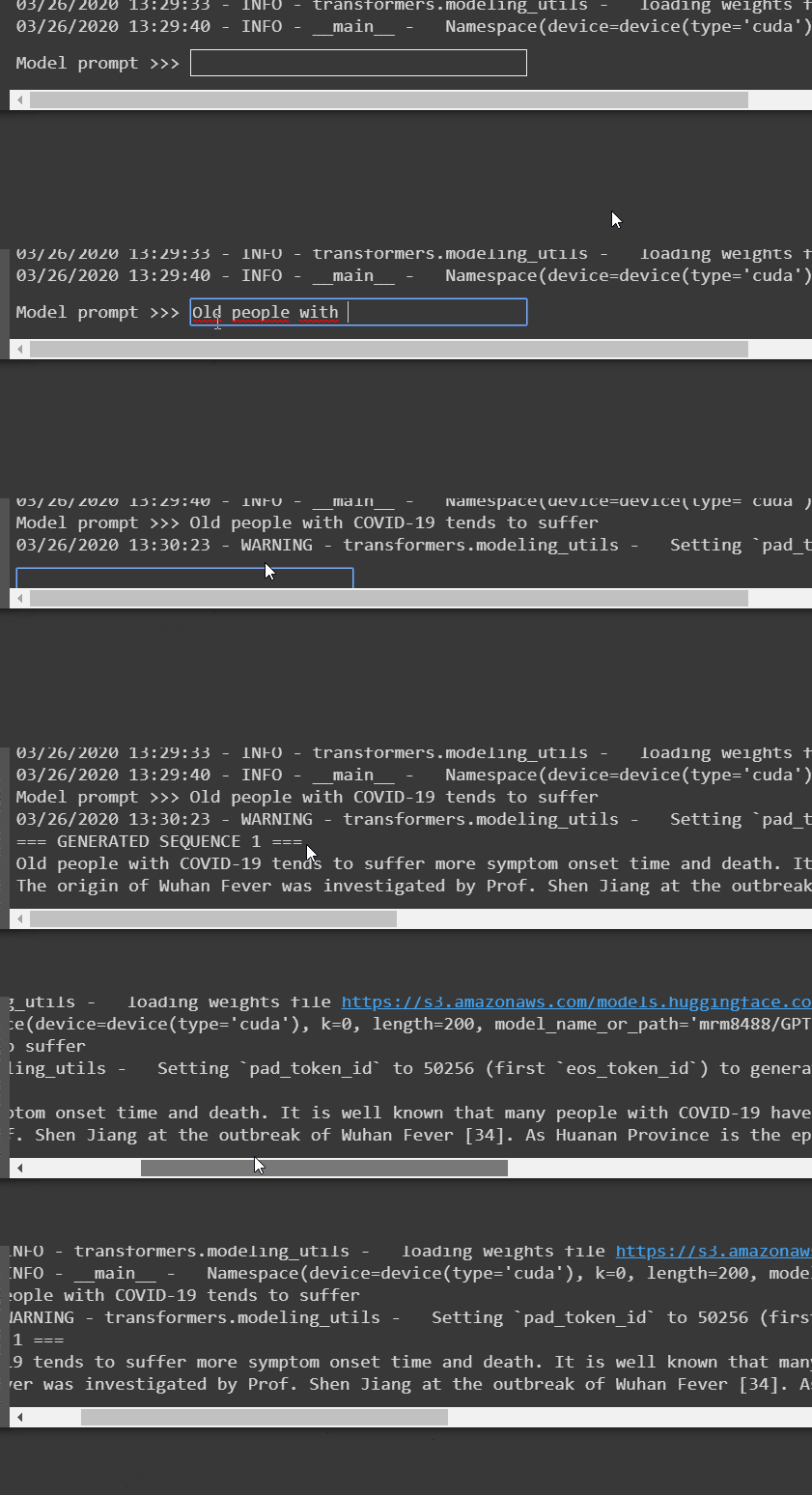
|
||||
|
||||
|
||||
|
||||
> Created by [Manuel Romero/@mrm8488](https://twitter.com/mrm8488) | [LinkedIn](https://www.linkedin.com/in/manuel-romero-cs/)
|
||||
|
||||
> Made with <span style="color: #e25555;">♥</span> in Spain
|
||||
@@ -66,8 +66,6 @@ nlp_ner = pipeline(
|
||||
{"use_fast": False}
|
||||
))
|
||||
|
||||
text = 'Mis amigos están pensando viajar a Londres este verano'
|
||||
|
||||
nlp_ner(text)
|
||||
|
||||
#Output: [{'entity': 'B-LOC', 'score': 0.9998720288276672, 'word': 'Londres'}]
|
||||
|
||||
@@ -1,83 +0,0 @@
|
||||
---
|
||||
language: spanish
|
||||
thumbnail:
|
||||
---
|
||||
|
||||
# Spanish BERT (BETO) + Syntax POS tagging ✍🏷
|
||||
|
||||
This model is a fine-tuned version of the Spanish BERT [(BETO)](https://github.com/dccuchile/beto) on Spanish **syntax** annotations in [CONLL CORPORA](https://www.kaggle.com/nltkdata/conll-corpora) dataset for **syntax POS** (Part of Speech tagging) downstream task.
|
||||
|
||||
## Details of the downstream task (Syntax POS) - Dataset
|
||||
|
||||
- [Dataset: CONLL Corpora ES](https://www.kaggle.com/nltkdata/conll-corpora)
|
||||
|
||||
#### [Fine-tune script on NER dataset provided by Huggingface](https://github.com/huggingface/transformers/blob/master/examples/run_ner.py)
|
||||
|
||||
#### 21 Syntax annotations (Labels) covered:
|
||||
|
||||
- \_
|
||||
- ATR
|
||||
- ATR.d
|
||||
- CAG
|
||||
- CC
|
||||
- CD
|
||||
- CD.Q
|
||||
- CI
|
||||
- CPRED
|
||||
- CPRED.CD
|
||||
- CPRED.SUJ
|
||||
- CREG
|
||||
- ET
|
||||
- IMPERS
|
||||
- MOD
|
||||
- NEG
|
||||
- PASS
|
||||
- PUNC
|
||||
- ROOT
|
||||
- SUJ
|
||||
- VOC
|
||||
|
||||
## Metrics on test set 📋
|
||||
|
||||
| Metric | # score |
|
||||
| :-------: | :-------: |
|
||||
| F1 | **89.27** |
|
||||
| Precision | **89.44** |
|
||||
| Recall | **89.11** |
|
||||
|
||||
## Model in action 🔨
|
||||
|
||||
Fast usage with **pipelines** 🧪
|
||||
|
||||
```python
|
||||
from transformers import pipeline
|
||||
|
||||
nlp_pos_syntax = pipeline(
|
||||
"ner",
|
||||
model="mrm8488/bert-spanish-cased-finetuned-pos-syntax",
|
||||
tokenizer="mrm8488/bert-spanish-cased-finetuned-pos-syntax"
|
||||
)
|
||||
|
||||
text = 'Mis amigos están pensando viajar a Londres este verano.'
|
||||
|
||||
nlp_pos_syntax(text)[1:len(nlp_pos_syntax(text))-1]
|
||||
```
|
||||
|
||||
```json
|
||||
[
|
||||
{ "entity": "_", "score": 0.9999216794967651, "word": "Mis" },
|
||||
{ "entity": "SUJ", "score": 0.999882698059082, "word": "amigos" },
|
||||
{ "entity": "_", "score": 0.9998869299888611, "word": "están" },
|
||||
{ "entity": "ROOT", "score": 0.9980518221855164, "word": "pensando" },
|
||||
{ "entity": "_", "score": 0.9998420476913452, "word": "viajar" },
|
||||
{ "entity": "CD", "score": 0.999351978302002, "word": "a" },
|
||||
{ "entity": "_", "score": 0.999959409236908, "word": "Londres" },
|
||||
{ "entity": "_", "score": 0.9998968839645386, "word": "este" },
|
||||
{ "entity": "CC", "score": 0.99931401014328, "word": "verano" },
|
||||
{ "entity": "PUNC", "score": 0.9998534917831421, "word": "." }
|
||||
]
|
||||
```
|
||||
|
||||
> Created by [Manuel Romero/@mrm8488](https://twitter.com/mrm8488)
|
||||
|
||||
> Made with <span style="color: #e25555;">♥</span> in Spain
|
||||
@@ -5,7 +5,7 @@ thumbnail: https://i.imgur.com/jgBdimh.png
|
||||
|
||||
# Spanish BERT (BETO) + POS
|
||||
|
||||
This model is a fine-tuned on Spanish [CONLL CORPORA](https://www.kaggle.com/nltkdata/conll-corpora) version of the Spanish BERT cased [(BETO)](https://github.com/dccuchile/beto) for **POS** (Part of Speech tagging) downstream task.
|
||||
This model is a fine-tuned on [NER-C](https://www.kaggle.com/nltkdata/conll-corpora) Of the Spanish BERT cased [(BETO)](https://github.com/dccuchile/beto) for **POS** (Part of Speech tagging) downstream task.
|
||||
|
||||
## Details of the downstream task (POS) - Dataset
|
||||
|
||||
@@ -21,7 +21,7 @@ I preprocessed the dataset and splitted it as train / dev (80/20)
|
||||
|
||||
- [Fine-tune on NER script provided by Huggingface](https://github.com/huggingface/transformers/blob/master/examples/run_ner.py)
|
||||
|
||||
- **60** Labels covered:
|
||||
- Labels covered:
|
||||
|
||||
```
|
||||
AO, AQ, CC, CS, DA, DD, DE, DI, DN, DP, DT, Faa, Fat, Fc, Fd, Fe, Fg, Fh, Fia, Fit, Fp, Fpa, Fpt, Fs, Ft, Fx, Fz, I, NC, NP, P0, PD, PI, PN, PP, PR, PT, PX, RG, RN, SP, VAI, VAM, VAN, VAP, VAS, VMG, VMI, VMM, VMN, VMP, VMS, VSG, VSI, VSM, VSN, VSP, VSS, Y and Z
|
||||
@@ -74,8 +74,6 @@ nlp_pos(text)
|
||||
```
|
||||
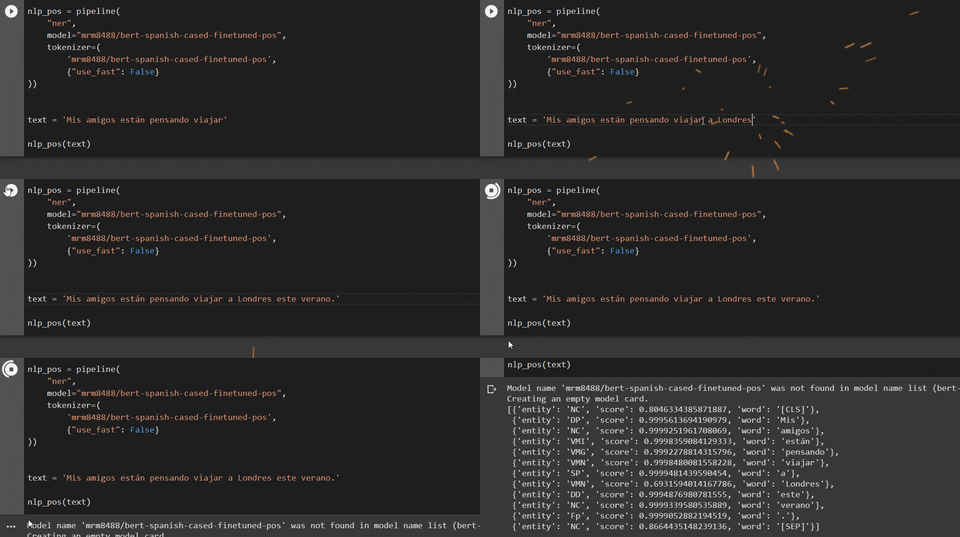
|
||||
|
||||
16 POS tags version also available [here](https://huggingface.co/mrm8488/bert-spanish-cased-finetuned-pos-16-tags)
|
||||
|
||||
|
||||
> Created by [Manuel Romero/@mrm8488](https://twitter.com/mrm8488)
|
||||
|
||||
|
||||
@@ -1,82 +0,0 @@
|
||||
---
|
||||
language: multilingual
|
||||
thumbnail:
|
||||
---
|
||||
|
||||
# DistilBERT multilingual fine-tuned on TydiQA (GoldP task) dataset for multilingual Q&A 😛🌍❓
|
||||
|
||||
|
||||
## Details of the language model
|
||||
|
||||
[distilbert-base-multilingual-cased](https://huggingface.co/distilbert-base-multilingual-cased)
|
||||
|
||||
|
||||
## Details of the Tydi QA dataset
|
||||
|
||||
TyDi QA contains 200k human-annotated question-answer pairs in 11 Typologically Diverse languages, written without seeing the answer and without the use of translation, and is designed for the **training and evaluation** of automatic question answering systems. This repository provides evaluation code and a baseline system for the dataset. https://ai.google.com/research/tydiqa
|
||||
|
||||
|
||||
## Details of the downstream task (Gold Passage or GoldP aka the secondary task)
|
||||
|
||||
Given a passage that is guaranteed to contain the answer, predict the single contiguous span of characters that answers the question. the gold passage task differs from the [primary task](https://github.com/google-research-datasets/tydiqa/blob/master/README.md#the-tasks) in several ways:
|
||||
* only the gold answer passage is provided rather than the entire Wikipedia article;
|
||||
* unanswerable questions have been discarded, similar to MLQA and XQuAD;
|
||||
* we evaluate with the SQuAD 1.1 metrics like XQuAD; and
|
||||
* Thai and Japanese are removed since the lack of whitespace breaks some tools.
|
||||
|
||||
|
||||
## Model training 💪🏋️
|
||||
|
||||
The model was fine-tuned on a Tesla P100 GPU and 25GB of RAM.
|
||||
The script is the following:
|
||||
|
||||
```python
|
||||
python transformers/examples/run_squad.py \
|
||||
--model_type distilbert \
|
||||
--model_name_or_path distilbert-base-multilingual-cased \
|
||||
--do_train \
|
||||
--do_eval \
|
||||
--train_file /path/to/dataset/train.json \
|
||||
--predict_file /path/to/dataset/dev.json \
|
||||
--per_gpu_train_batch_size 24 \
|
||||
--per_gpu_eval_batch_size 24 \
|
||||
--learning_rate 3e-5 \
|
||||
--num_train_epochs 5 \
|
||||
--max_seq_length 384 \
|
||||
--doc_stride 128 \
|
||||
--output_dir /content/model_output \
|
||||
--overwrite_output_dir \
|
||||
--save_steps 1000 \
|
||||
--threads 400
|
||||
```
|
||||
|
||||
## Global Results (dev set) 📝
|
||||
|
||||
| Metric | # Value |
|
||||
| --------- | ----------- |
|
||||
| **EM** | **63.85** |
|
||||
| **F1** | **75.70** |
|
||||
|
||||
## Specific Results (per language) 🌍📝
|
||||
|
||||
| Language | # Samples | # EM | # F1 |
|
||||
| --------- | ----------- |--------| ------ |
|
||||
| Arabic | 1314 | 66.66 | 80.02 |
|
||||
| Bengali | 180 | 53.09 | 63.50 |
|
||||
| English | 654 | 62.42 | 73.12 |
|
||||
| Finnish | 1031 | 64.57 | 75.15 |
|
||||
| Indonesian| 773 | 67.89 | 79.70 |
|
||||
| Korean | 414 | 51.29 | 61.73 |
|
||||
| Russian | 1079 | 55.42 | 70.08 |
|
||||
| Swahili | 596 | 74.51 | 81.15 |
|
||||
| Telegu | 874 | 66.21 | 79.85 |
|
||||
|
||||
|
||||
## Similar models
|
||||
|
||||
You can also try [bert-multi-cased-finedtuned-xquad-tydiqa-goldp](https://huggingface.co/mrm8488/bert-multi-cased-finedtuned-xquad-tydiqa-goldp) that achieves **F1 = 82.16** and **EM = 71.06** (And of course better marks per language).
|
||||
|
||||
|
||||
> Created by [Manuel Romero/@mrm8488](https://twitter.com/mrm8488)
|
||||
|
||||
> Made with <span style="color: #e25555;">♥</span> in Spain
|
||||
@@ -1,27 +0,0 @@
|
||||
# GPT2-IMDB-neg (LM + RL) 🎞😡✍
|
||||
|
||||
All credits to [@lvwerra](https://twitter.com/lvwerra)
|
||||
|
||||
## What is it?
|
||||
A small GPT2 (`lvwerra/gpt2-imdb`) language model fine-tuned to produce **negative** movie reviews based the [IMDB dataset](https://www.kaggle.com/lakshmi25npathi/imdb-dataset-of-50k-movie-reviews). The model is trained with rewards from a BERT sentiment classifier (`lvwerra/gpt2-imdb`) via **PPO**.
|
||||
|
||||
## Why?
|
||||
I wanted to reproduce the experiment [lvwerra/gpt2-imdb-pos](https://huggingface.co/lvwerra/gpt2-imdb-pos) but for generating **negative** movie reviews.
|
||||
|
||||
## Training setting
|
||||
The model was trained for `100` optimisation steps with a batch size of `256` which corresponds to `25600` training samples. The full experiment setup (for positive samples) in [trl repo](https://lvwerra.github.io/trl/04-gpt2-sentiment-ppo-training/).
|
||||
|
||||
## Examples
|
||||
A few examples of the model response to a query before and after optimisation:
|
||||
|
||||
| query | response (before) | response (after) | rewards (before) | rewards (after) |
|
||||
|-------|-------------------|------------------|------------------|-----------------|
|
||||
|This movie is a fine | attempt as far as live action is concerned, n...|example of how bad Hollywood in theatrics pla...| 2.118391 | -3.31625|
|
||||
|I have watched 3 episodes |with this guy and he is such a talented actor...| but the show is just plain awful and there ne...| 2.681171| -4.512792|
|
||||
|We know that firefighters and| police officers are forced to become populari...| other chains have going to get this disaster ...| 1.367811| -3.34017|
|
||||
|
||||
|
||||
|
||||
> Created by [Manuel Romero/@mrm8488](https://twitter.com/mrm8488)
|
||||
|
||||
> Made with <span style="color: #e25555;">♥</span> in Spain
|
||||
@@ -1,57 +0,0 @@
|
||||
---
|
||||
language: german
|
||||
---
|
||||
|
||||
# Model description
|
||||
## Dataset
|
||||
Trained on fictional and non-fictional German texts written between 1840 and 1920:
|
||||
* Narrative texts from Digitale Bibliothek (https://textgrid.de/digitale-bibliothek)
|
||||
* Fairy tales and sagas from Grimm Korpus (https://www1.ids-mannheim.de/kl/projekte/korpora/archiv/gri.html)
|
||||
* Newspaper and magazine article from Mannheimer Korpus Historischer Zeitungen und Zeitschriften (https://repos.ids-mannheim.de/mkhz-beschreibung.html)
|
||||
* Magazine article from the journal „Die Grenzboten“ (http://www.deutschestextarchiv.de/doku/textquellen#grenzboten)
|
||||
* Fictional and non-fictional texts from Projekt Gutenberg (https://www.projekt-gutenberg.org)
|
||||
|
||||
## Hardware used
|
||||
1 Tesla P4 GPU
|
||||
|
||||
## Hyperparameters
|
||||
|
||||
| Parameter | Value |
|
||||
|-------------------------------|----------|
|
||||
| Epochs | 3 |
|
||||
| Gradient_accumulation_steps | 1 |
|
||||
| Train_batch_size | 32 |
|
||||
| Learning_rate | 0.00003 |
|
||||
| Max_seq_len | 128 |
|
||||
|
||||
## Evaluation results: Automatic tagging of four forms of speech/thought/writing representation in historical fictional and non-fictional German texts
|
||||
|
||||
The language model was used in the task to tag direct, indirect, reported and free indirect speech/thought/writing representation in fictional and non-fictional German texts. The tagger is available and described in detail at https://github.com/redewiedergabe/tagger.
|
||||
|
||||
The tagging model was trained using the SequenceTagger Class of the Flair framework ([Akbik et al., 2019](https://www.aclweb.org/anthology/N19-4010)) which implements a BiLSTM-CRF architecture on top of a language embedding (as proposed by [Huang et al. (2015)](https://arxiv.org/abs/1508.01991)).
|
||||
|
||||
|
||||
Hyperparameters
|
||||
|
||||
| Parameter | Value |
|
||||
|-------------------------------|------------|
|
||||
| Hidden_size | 256 |
|
||||
| Learning_rate | 0.1 |
|
||||
| Mini_batch_size | 8 |
|
||||
| Max_epochs | 150 |
|
||||
|
||||
Results are reported below in comparison to a custom trained flair embedding, which was stacked onto a custom trained fastText-model. Both models were trained on the same dataset.
|
||||
|
||||
| | BERT ||| FastText+Flair |||Test data|
|
||||
|----------------|----------|-----------|----------|------|-----------|--------|--------|
|
||||
| | F1 | Precision | Recall | F1 | Precision | Recall ||
|
||||
| Direct | 0.80 | 0.86 | 0.74 | 0.84 | 0.90 | 0.79 |historical German, fictional & non-fictional|
|
||||
| Indirect | **0.76** | **0.79** | **0.73** | 0.73 | 0.78 | 0.68 |historical German, fictional & non-fictional|
|
||||
| Reported | **0.58** | **0.69** | **0.51** | 0.56 | 0.68 | 0.48 |historical German, fictional & non-fictional|
|
||||
| Free indirect | **0.57** | **0.80** | **0.44** | 0.47 | 0.78 | 0.34 |modern German, fictional|
|
||||
|
||||
## Intended use:
|
||||
Historical German Texts (1840 to 1920)
|
||||
|
||||
(Showed good performance with modern German fictional texts as well)
|
||||
|
||||
@@ -1,6 +0,0 @@
|
||||
---
|
||||
tags:
|
||||
- exbert
|
||||
---
|
||||
|
||||
[](https://huggingface.co/exbert/?model=roberta-base)
|
||||
@@ -1,60 +0,0 @@
|
||||
# ALECTRA-small-OWT
|
||||
|
||||
This is an extension of
|
||||
[ELECTRA](https://openreview.net/forum?id=r1xMH1BtvB) small model, trained on the
|
||||
[OpenWebText corpus](https://skylion007.github.io/OpenWebTextCorpus/).
|
||||
The training task (discriminative LM / replaced-token-detection) can be generalized to any transformer type. Here, we train an ALBERT model under the same scheme.
|
||||
|
||||
## Pretraining task
|
||||

|
||||
(figure from [Clark et al. 2020](https://openreview.net/pdf?id=r1xMH1BtvB))
|
||||
|
||||
ELECTRA uses discriminative LM / replaced-token-detection for pretraining.
|
||||
This involves a generator (a Masked LM model) creating examples for a discriminator
|
||||
to classify as original or replaced for each token.
|
||||
|
||||
The generator generalizes to any `*ForMaskedLM` model and the discriminator could be
|
||||
any `*ForTokenClassification` model. Therefore, we can extend the task to ALBERT models,
|
||||
not just BERT as in the original paper.
|
||||
|
||||
## Usage
|
||||
```python
|
||||
from transformers import AlbertForSequenceClassification, BertTokenizer
|
||||
|
||||
# Both models use the bert-base-uncased tokenizer and vocab.
|
||||
tokenizer = BertTokenizer.from_pretrained('bert-base-uncased')
|
||||
alectra = AlbertForSequenceClassification.from_pretrained('shoarora/alectra-small-owt')
|
||||
```
|
||||
NOTE: this ALBERT model uses a BERT WordPiece tokenizer.
|
||||
|
||||
## Code
|
||||
The pytorch module that implements this task is available [here](https://github.com/shoarora/lmtuners/blob/master/lmtuners/lightning_modules/discriminative_lm.py).
|
||||
|
||||
Further implementation information [here](https://github.com/shoarora/lmtuners/tree/master/experiments/disc_lm_small),
|
||||
and [here](https://github.com/shoarora/lmtuners/blob/master/experiments/disc_lm_small/train_alectra_small.py) is the script that created this model.
|
||||
|
||||
This specific model was trained with the following params:
|
||||
- `batch_size: 512`
|
||||
- `training_steps: 5e5`
|
||||
- `warmup_steps: 4e4`
|
||||
- `learning_rate: 2e-3`
|
||||
|
||||
|
||||
## Downstream tasks
|
||||
#### GLUE Dev results
|
||||
| Model | # Params | CoLA | SST | MRPC | STS | QQP | MNLI | QNLI | RTE |
|
||||
| --- | --- | --- | --- | --- | --- | --- | --- | --- | --- |
|
||||
| ELECTRA-Small++ | 14M | 57.0 | 91. | 88.0 | 87.5 | 89.0 | 81.3 | 88.4 | 66.7|
|
||||
| ELECTRA-Small-OWT | 14M | 56.8 | 88.3| 87.4 | 86.8 | 88.3 | 78.9 | 87.9 | 68.5|
|
||||
| ELECTRA-Small-OWT (ours) | 17M | 56.3 | 88.4| 75.0 | 86.1 | 89.1 | 77.9 | 83.0 | 67.1|
|
||||
| ALECTRA-Small-OWT (ours) | 4M | 50.6 | 89.1| 86.3 | 87.2 | 89.1 | 78.2 | 85.9 | 69.6|
|
||||
|
||||
|
||||
#### GLUE Test results
|
||||
| Model | # Params | CoLA | SST | MRPC | STS | QQP | MNLI | QNLI | RTE |
|
||||
| --- | --- | --- | --- | --- | --- | --- | --- | --- | --- |
|
||||
| BERT-Base | 110M | 52.1 | 93.5| 84.8 | 85.9 | 89.2 | 84.6 | 90.5 | 66.4|
|
||||
| GPT | 117M | 45.4 | 91.3| 75.7 | 80.0 | 88.5 | 82.1 | 88.1 | 56.0|
|
||||
| ELECTRA-Small++ | 14M | 57.0 | 91.2| 88.0 | 87.5 | 89.0 | 81.3 | 88.4 | 66.7|
|
||||
| ELECTRA-Small-OWT (ours) | 17M | 57.4 | 89.3| 76.2 | 81.9 | 87.5 | 78.1 | 82.4 | 68.1|
|
||||
| ALECTRA-Small-OWT (ours) | 4M | 43.9 | 87.9| 82.1 | 82.0 | 87.6 | 77.9 | 85.8 | 67.5|
|
||||
@@ -1,59 +0,0 @@
|
||||
# ELECTRA-small-OWT
|
||||
|
||||
This is an unnoficial implementation of an
|
||||
[ELECTRA](https://openreview.net/forum?id=r1xMH1BtvB) small model, trained on the
|
||||
[OpenWebText corpus](https://skylion007.github.io/OpenWebTextCorpus/).
|
||||
|
||||
Differences from official ELECTRA models:
|
||||
- we use a `BertForMaskedLM` as the generator and `BertForTokenClassification` as the discriminator
|
||||
- they use an embedding projection layer, but Bert doesn't have one
|
||||
|
||||
## Pretraining ttask
|
||||

|
||||
(figure from [Clark et al. 2020](https://openreview.net/pdf?id=r1xMH1BtvB))
|
||||
|
||||
ELECTRA uses discriminative LM / replaced-token-detection for pretraining.
|
||||
This involves a generator (a Masked LM model) creating examples for a discriminator
|
||||
to classify as original or replaced for each token.
|
||||
|
||||
|
||||
## Usage
|
||||
```python
|
||||
from transformers import BertForSequenceClassification, BertTokenizer
|
||||
|
||||
tokenizer = BertTokenizer.from_pretrained('bert-base-uncased')
|
||||
electra = BertForSequenceClassification.from_pretrained('shoarora/electra-small-owt')
|
||||
```
|
||||
|
||||
## Code
|
||||
The pytorch module that implements this task is available [here](https://github.com/shoarora/lmtuners/blob/master/lmtuners/lightning_modules/discriminative_lm.py).
|
||||
|
||||
Further implementation information [here](https://github.com/shoarora/lmtuners/tree/master/experiments/disc_lm_small),
|
||||
and [here](https://github.com/shoarora/lmtuners/blob/master/experiments/disc_lm_small/train_electra_small.py) is the script that created this model.
|
||||
|
||||
This specific model was trained with the following params:
|
||||
- `batch_size: 512`
|
||||
- `training_steps: 5e5`
|
||||
- `warmup_steps: 4e4`
|
||||
- `learning_rate: 2e-3`
|
||||
|
||||
|
||||
## Downstream tasks
|
||||
#### GLUE Dev results
|
||||
| Model | # Params | CoLA | SST | MRPC | STS | QQP | MNLI | QNLI | RTE |
|
||||
| --- | --- | --- | --- | --- | --- | --- | --- | --- | --- |
|
||||
| ELECTRA-Small++ | 14M | 57.0 | 91. | 88.0 | 87.5 | 89.0 | 81.3 | 88.4 | 66.7|
|
||||
| ELECTRA-Small-OWT | 14M | 56.8 | 88.3| 87.4 | 86.8 | 88.3 | 78.9 | 87.9 | 68.5|
|
||||
| ELECTRA-Small-OWT (ours) | 17M | 56.3 | 88.4| 75.0 | 86.1 | 89.1 | 77.9 | 83.0 | 67.1|
|
||||
| ALECTRA-Small-OWT (ours) | 4M | 50.6 | 89.1| 86.3 | 87.2 | 89.1 | 78.2 | 85.9 | 69.6|
|
||||
|
||||
- Table initialized from [ELECTRA github repo](https://github.com/google-research/electra)
|
||||
|
||||
#### GLUE Test results
|
||||
| Model | # Params | CoLA | SST | MRPC | STS | QQP | MNLI | QNLI | RTE |
|
||||
| --- | --- | --- | --- | --- | --- | --- | --- | --- | --- |
|
||||
| BERT-Base | 110M | 52.1 | 93.5| 84.8 | 85.9 | 89.2 | 84.6 | 90.5 | 66.4|
|
||||
| GPT | 117M | 45.4 | 91.3| 75.7 | 80.0 | 88.5 | 82.1 | 88.1 | 56.0|
|
||||
| ELECTRA-Small++ | 14M | 57.0 | 91.2| 88.0 | 87.5 | 89.0 | 81.3 | 88.4 | 66.7|
|
||||
| ELECTRA-Small-OWT (ours) | 17M | 57.4 | 89.3| 76.2 | 81.9 | 87.5 | 78.1 | 82.4 | 68.1|
|
||||
| ALECTRA-Small-OWT (ours) | 4M | 43.9 | 87.9| 82.1 | 82.0 | 87.6 | 77.9 | 85.8 | 67.5|
|
||||
@@ -1,6 +0,0 @@
|
||||
---
|
||||
tags:
|
||||
- exbert
|
||||
---
|
||||
|
||||
[](https://huggingface.co/exbert/?model=xlm-mlm-en-2048)
|
||||
@@ -1,6 +0,0 @@
|
||||
---
|
||||
tags:
|
||||
- exbert
|
||||
---
|
||||
|
||||
[](https://huggingface.co/exbert/?model=xlm-roberta-base)
|
||||
+505
-3044
File diff suppressed because it is too large.
Load diff
@@ -83,7 +83,7 @@ extras["dev"] = extras["testing"] + extras["quality"] + ["mecab-python3", "sciki
|
||||
|
||||
setup(
|
||||
name="transformers",
|
||||
version="2.8.0",
|
||||
version="2.6.0",
|
||||
author="Thomas Wolf, Lysandre Debut, Victor Sanh, Julien Chaumond, Sam Shleifer, Google AI Language Team Authors, Open AI team Authors, Facebook AI Authors, Carnegie Mellon University Authors",
|
||||
author_email="thomas@huggingface.co",
|
||||
description="State-of-the-art Natural Language Processing for TensorFlow 2.0 and PyTorch",
|
||||
|
||||
@@ -2,7 +2,7 @@
|
||||
# There's no way to ignore "F401 '...' imported but unused" warnings in this
|
||||
# module, but to preserve other warnings. So, don't check this module at all.
|
||||
|
||||
__version__ = "2.8.0"
|
||||
__version__ = "2.6.0"
|
||||
|
||||
# Work around to update TensorFlow's absl.logging threshold which alters the
|
||||
# default Python logging output behavior when present.
|
||||
@@ -22,11 +22,9 @@ import logging
|
||||
# Benchmarking
|
||||
from .benchmark_utils import (
|
||||
Frame,
|
||||
Memory,
|
||||
MemoryState,
|
||||
MemorySummary,
|
||||
MemoryTrace,
|
||||
UsedMemoryState,
|
||||
bytes_to_human_readable,
|
||||
start_memory_tracing,
|
||||
stop_memory_tracing,
|
||||
@@ -38,7 +36,6 @@ from .configuration_bert import BERT_PRETRAINED_CONFIG_ARCHIVE_MAP, BertConfig
|
||||
from .configuration_camembert import CAMEMBERT_PRETRAINED_CONFIG_ARCHIVE_MAP, CamembertConfig
|
||||
from .configuration_ctrl import CTRL_PRETRAINED_CONFIG_ARCHIVE_MAP, CTRLConfig
|
||||
from .configuration_distilbert import DISTILBERT_PRETRAINED_CONFIG_ARCHIVE_MAP, DistilBertConfig
|
||||
from .configuration_electra import ELECTRA_PRETRAINED_CONFIG_ARCHIVE_MAP, ElectraConfig
|
||||
from .configuration_flaubert import FLAUBERT_PRETRAINED_CONFIG_ARCHIVE_MAP, FlaubertConfig
|
||||
from .configuration_gpt2 import GPT2_PRETRAINED_CONFIG_ARCHIVE_MAP, GPT2Config
|
||||
from .configuration_mmbt import MMBTConfig
|
||||
@@ -128,7 +125,6 @@ from .tokenization_bert_japanese import BertJapaneseTokenizer, CharacterTokenize
|
||||
from .tokenization_camembert import CamembertTokenizer
|
||||
from .tokenization_ctrl import CTRLTokenizer
|
||||
from .tokenization_distilbert import DistilBertTokenizer, DistilBertTokenizerFast
|
||||
from .tokenization_electra import ElectraTokenizer, ElectraTokenizerFast
|
||||
from .tokenization_flaubert import FlaubertTokenizer
|
||||
from .tokenization_gpt2 import GPT2Tokenizer, GPT2TokenizerFast
|
||||
from .tokenization_openai import OpenAIGPTTokenizer, OpenAIGPTTokenizerFast
|
||||
@@ -224,7 +220,6 @@ if is_torch_available():
|
||||
XLMModel,
|
||||
XLMWithLMHeadModel,
|
||||
XLMForSequenceClassification,
|
||||
XLMForTokenClassification,
|
||||
XLMForQuestionAnswering,
|
||||
XLMForQuestionAnsweringSimple,
|
||||
XLM_PRETRAINED_MODEL_ARCHIVE_MAP,
|
||||
@@ -299,15 +294,6 @@ if is_torch_available():
|
||||
FLAUBERT_PRETRAINED_MODEL_ARCHIVE_MAP,
|
||||
)
|
||||
|
||||
from .modeling_electra import (
|
||||
ElectraForPreTraining,
|
||||
ElectraForMaskedLM,
|
||||
ElectraForTokenClassification,
|
||||
ElectraModel,
|
||||
load_tf_weights_in_electra,
|
||||
ELECTRA_PRETRAINED_MODEL_ARCHIVE_MAP,
|
||||
)
|
||||
|
||||
# Optimization
|
||||
from .optimization import (
|
||||
AdamW,
|
||||
@@ -474,15 +460,6 @@ if is_tf_available():
|
||||
TF_T5_PRETRAINED_MODEL_ARCHIVE_MAP,
|
||||
)
|
||||
|
||||
from .modeling_tf_electra import (
|
||||
TFElectraPreTrainedModel,
|
||||
TFElectraModel,
|
||||
TFElectraForPreTraining,
|
||||
TFElectraForMaskedLM,
|
||||
TFElectraForTokenClassification,
|
||||
TF_ELECTRA_PRETRAINED_MODEL_ARCHIVE_MAP,
|
||||
)
|
||||
|
||||
# Optimization
|
||||
from .optimization_tf import WarmUp, create_optimizer, AdamWeightDecay, GradientAccumulator
|
||||
|
||||
|
||||
@@ -18,6 +18,12 @@ def _gelu_python(x):
|
||||
return x * 0.5 * (1.0 + torch.erf(x / math.sqrt(2.0)))
|
||||
|
||||
|
||||
if torch.__version__ < "1.4.0":
|
||||
gelu = _gelu_python
|
||||
else:
|
||||
gelu = F.gelu
|
||||
|
||||
|
||||
def gelu_new(x):
|
||||
""" Implementation of the gelu activation function currently in Google Bert repo (identical to OpenAI GPT).
|
||||
Also see https://arxiv.org/abs/1606.08415
|
||||
@@ -25,12 +31,6 @@ def gelu_new(x):
|
||||
return 0.5 * x * (1 + torch.tanh(math.sqrt(2 / math.pi) * (x + 0.044715 * torch.pow(x, 3))))
|
||||
|
||||
|
||||
if torch.__version__ < "1.4.0":
|
||||
gelu = _gelu_python
|
||||
else:
|
||||
gelu = F.gelu
|
||||
gelu_new = torch.jit.script(gelu_new)
|
||||
|
||||
ACT2FN = {
|
||||
"relu": F.relu,
|
||||
"swish": swish,
|
||||
|
||||
@@ -9,7 +9,8 @@ import logging
|
||||
import os
|
||||
import sys
|
||||
from collections import defaultdict
|
||||
from typing import Iterable, List, NamedTuple, Optional, Union
|
||||
from dataclasses import dataclass
|
||||
from typing import Iterable, List, Optional, Union
|
||||
|
||||
from .file_utils import is_tf_available, is_torch_available
|
||||
|
||||
@@ -31,14 +32,14 @@ def is_memory_tracing_enabled():
|
||||
return _is_memory_tracing_enabled
|
||||
|
||||
|
||||
class Frame(NamedTuple):
|
||||
""" `Frame` is a NamedTuple used to gather the current frame state.
|
||||
`Frame` has the following fields:
|
||||
- 'filename' (string): Name of the file currently executed
|
||||
- 'module' (string): Name of the module currently executed
|
||||
- 'line_number' (int): Number of the line currently executed
|
||||
- 'event' (string): Event that triggered the tracing (default will be "line")
|
||||
- 'line_text' (string): Text of the line in the python script
|
||||
@dataclass(frozen=True)
|
||||
class Frame:
|
||||
""" `Frame` is used to gather the current frame state:
|
||||
- 'filename' (string): Name of the file currently executed
|
||||
- 'module' (string): Name of the module currently executed
|
||||
- 'line_number' (int): Number of the line currently executed
|
||||
- 'event' (string): Event that triggered the tracing (default will be "line")
|
||||
- 'line_text' (string): Text of the line in the python script
|
||||
"""
|
||||
|
||||
filename: str
|
||||
@@ -48,61 +49,67 @@ class Frame(NamedTuple):
|
||||
line_text: str
|
||||
|
||||
|
||||
class UsedMemoryState(NamedTuple):
|
||||
""" `UsedMemoryState` are named tuples with the following fields:
|
||||
- 'frame': a `Frame` namedtuple (see below) storing information on the current tracing frame (current file, location in current file)
|
||||
- 'cpu_memory': CPU RSS memory state *before* executing the line
|
||||
- 'gpu_memory': GPU used memory *before* executing the line (sum for all GPUs or for only `gpus_to_trace` if provided)
|
||||
@dataclass
|
||||
class MemoryState:
|
||||
""" `MemoryState` lists frame + CPU/GPU memory:
|
||||
- `cpu`: CPU memory at or before the current frame as a `Memory` named tuple
|
||||
- `gpu`: GPU memory at or before during the current frame as a `Memory` named tuple
|
||||
- `frame` (`Frame`): the current frame
|
||||
Also provide a few properties:
|
||||
`cpu_gpu`: sum of the CPU + GPU memory at or before during the current frame as a `Memory` named tuple
|
||||
`cpu_with_units`: CPU memory as a human readable string
|
||||
`gpu_with_units`: GPU memory as a human readable string
|
||||
`cpu_gpu_with_units`: CPU+GPU memory as a human readable string
|
||||
"""
|
||||
|
||||
frame: Frame
|
||||
cpu_memory: int
|
||||
gpu_memory: int
|
||||
cpu: int
|
||||
gpu: int
|
||||
frame: Optional[Frame] = None
|
||||
|
||||
@property
|
||||
def cpu_gpu(self) -> int:
|
||||
return self.cpu + self.gpu
|
||||
|
||||
@property
|
||||
def cpu_with_units(self) -> str:
|
||||
return bytes_to_human_readable(self.cpu)
|
||||
|
||||
@property
|
||||
def gpu_with_units(self) -> str:
|
||||
return bytes_to_human_readable(self.gpu)
|
||||
|
||||
@property
|
||||
def cpu_gpu_with_units(self) -> str:
|
||||
return bytes_to_human_readable(self.cpu + self.gpu)
|
||||
|
||||
|
||||
class Memory(NamedTuple):
|
||||
""" `Memory` NamedTuple have a single field `bytes` and
|
||||
you can get a human readable string of the number of bytes by calling `__repr__`
|
||||
- `byte` (integer): number of bytes,
|
||||
"""
|
||||
|
||||
bytes: int
|
||||
|
||||
def __repr__(self) -> str:
|
||||
return bytes_to_human_readable(self.bytes)
|
||||
|
||||
|
||||
class MemoryState(NamedTuple):
|
||||
""" `MemoryState` are namedtuples listing frame + CPU/GPU memory with the following fields:
|
||||
- `frame` (`Frame`): the current frame (see above)
|
||||
- `cpu`: CPU memory consumed at during the current frame as a `Memory` named tuple
|
||||
- `gpu`: GPU memory consumed at during the current frame as a `Memory` named tuple
|
||||
- `cpu_gpu`: CPU + GPU memory consumed at during the current frame as a `Memory` named tuple
|
||||
"""
|
||||
|
||||
frame: Frame
|
||||
cpu: Memory
|
||||
gpu: Memory
|
||||
cpu_gpu: Memory
|
||||
|
||||
|
||||
class MemorySummary(NamedTuple):
|
||||
@dataclass
|
||||
class MemorySummary:
|
||||
""" `MemorySummary` namedtuple otherwise with the fields:
|
||||
- `sequential`: a list of `MemoryState` namedtuple (see below) computed from the provided `memory_trace`
|
||||
- `absolute_mem_list`: total CPU/GPU memory used at each line
|
||||
a list of `MemoryState` namedtuple (see below)
|
||||
- `relative_mem_list`: relative difference in CPU/GPU memory at each line
|
||||
a list of `MemoryState` namedtuple (see below) computed from the provided `memory_trace`
|
||||
by substracting the memory after executing each line from the memory before executing said line.
|
||||
- `cumulative`: a list of `MemoryState` namedtuple (see below) with cumulative increase in memory for each line
|
||||
- `absolute_mem_sorted`: total CPU/GPU memory used at each line sorted by lines (max among all the times a line is executed)
|
||||
a list of `MemoryState` namedtuple (see below)
|
||||
The list is sorted from the frame with the largest memory consumption to the frame with the smallest (can be negative if memory is released)
|
||||
- `relative_mem_sorted`: relative difference in CPU/GPU memory sorted by lines (cumulative increase among all the times a line is executed)
|
||||
a list of `MemoryState` namedtuple (see below) with cumulative increase in memory for each line
|
||||
obtained by summing repeted memory increase for a line if it's executed several times.
|
||||
The list is sorted from the frame with the largest memory consumption to the frame with the smallest (can be negative if memory is released)
|
||||
- `total`: total memory increase during the full tracing as a `Memory` named tuple (see below).
|
||||
Line with memory release (negative consumption) are ignored if `ignore_released_memory` is `True` (default).
|
||||
"""
|
||||
|
||||
sequential: List[MemoryState]
|
||||
cumulative: List[MemoryState]
|
||||
total: Memory
|
||||
absolute_mem_list: List[MemoryState]
|
||||
relative_mem_list: List[MemoryState]
|
||||
absolute_mem_sorted: List[MemoryState]
|
||||
relative_mem_sorted: List[MemoryState]
|
||||
relative_mem_total: MemoryState
|
||||
|
||||
|
||||
MemoryTrace = List[UsedMemoryState]
|
||||
MemoryTrace = List[MemoryState]
|
||||
|
||||
|
||||
def start_memory_tracing(
|
||||
@@ -129,13 +136,14 @@ def start_memory_tracing(
|
||||
- `gpus_to_trace`: (optional list, default None) list of GPUs to trace. Default to tracing all GPUs
|
||||
|
||||
Return:
|
||||
- `memory_trace` is a list of `UsedMemoryState` for each event (default each line of the traced script).
|
||||
- `UsedMemoryState` are named tuples with the following fields:
|
||||
- `memory_trace` is a list of `MemoryState` for each event (default each line of the traced script).
|
||||
- `MemoryState` are simple classes with the following attributes:
|
||||
- 'frame': a `Frame` namedtuple (see below) storing information on the current tracing frame (current file, location in current file)
|
||||
- 'cpu_memory': CPU RSS memory state *before* executing the line
|
||||
- 'gpu_memory': GPU used memory *before* executing the line (sum for all GPUs or for only `gpus_to_trace` if provided)
|
||||
- 'cpu': CPU RSS memory state *before* executing the line
|
||||
- 'gpu': GPU used memory *before* executing the line (sum for all GPUs or for only `gpus_to_trace` if provided)
|
||||
- `cpu_gpu`: CPU + GPU memory *before* executing the line
|
||||
|
||||
`Frame` is a namedtuple used by `UsedMemoryState` to list the current frame state.
|
||||
`Frame` is a namedtuple used by `MemoryState` to list the current frame state.
|
||||
`Frame` has the following fields:
|
||||
- 'filename' (string): Name of the file currently executed
|
||||
- 'module' (string): Name of the module currently executed
|
||||
@@ -240,7 +248,7 @@ def start_memory_tracing(
|
||||
gpu_mem += meminfo.used
|
||||
py3nvml.nvmlShutdown()
|
||||
|
||||
mem_state = UsedMemoryState(traced_state, cpu_mem, gpu_mem)
|
||||
mem_state = MemoryState(cpu_mem, gpu_mem, traced_state)
|
||||
memory_trace.append(mem_state)
|
||||
|
||||
return traceit
|
||||
@@ -294,39 +302,38 @@ def stop_memory_tracing(
|
||||
_is_memory_tracing_enabled = False
|
||||
|
||||
if memory_trace is not None and len(memory_trace) > 1:
|
||||
memory_diff_trace = []
|
||||
cumulative_memory_dict = defaultdict(lambda: [0, 0, 0])
|
||||
for (frame, cpu_mem, gpu_mem), (next_frame, next_cpu_mem, next_gpu_mem) in zip(
|
||||
memory_trace[:-1], memory_trace[1:]
|
||||
):
|
||||
cpu_mem_inc = next_cpu_mem - cpu_mem
|
||||
gpu_mem_inc = next_gpu_mem - gpu_mem
|
||||
cpu_gpu_mem_inc = cpu_mem_inc + gpu_mem_inc
|
||||
memory_diff_trace.append(
|
||||
MemoryState(
|
||||
frame=frame, cpu=Memory(cpu_mem_inc), gpu=Memory(gpu_mem_inc), cpu_gpu=Memory(cpu_gpu_mem_inc),
|
||||
)
|
||||
)
|
||||
cumulative_memory_dict[frame][0] += cpu_mem_inc
|
||||
cumulative_memory_dict[frame][1] += gpu_mem_inc
|
||||
cumulative_memory_dict[frame][2] += cpu_gpu_mem_inc
|
||||
init_mem = memory_trace[0]
|
||||
absolute_mem_list = []
|
||||
relative_mem_list = []
|
||||
absolute_mem_dict = defaultdict(lambda: [])
|
||||
relative_mem_dict = defaultdict(lambda: [])
|
||||
for line, next_line in zip(memory_trace[:-1], memory_trace[1:]):
|
||||
absolute_mem = MemoryState(line.cpu - init_mem.cpu, line.gpu - init_mem.gpu, line.frame)
|
||||
relative_mem = MemoryState(next_line.cpu - line.cpu, next_line.gpu - line.gpu, line.frame)
|
||||
absolute_mem_list.append(absolute_mem)
|
||||
relative_mem_list.append(relative_mem)
|
||||
absolute_mem_dict[line.frame].append(absolute_mem)
|
||||
relative_mem_dict[line.frame].append(relative_mem)
|
||||
|
||||
cumulative_memory = sorted(
|
||||
list(cumulative_memory_dict.items()), key=lambda x: x[1][2], reverse=True
|
||||
) # order by the total CPU + GPU memory increase
|
||||
cumulative_memory = list(
|
||||
MemoryState(
|
||||
frame=frame, cpu=Memory(cpu_mem_inc), gpu=Memory(gpu_mem_inc), cpu_gpu=Memory(cpu_gpu_mem_inc),
|
||||
)
|
||||
for frame, (cpu_mem_inc, gpu_mem_inc, cpu_gpu_mem_inc) in cumulative_memory
|
||||
relative_mem_sorted = list(MemoryState(sum(v.cpu for v in l), sum(v.gpu for v in l), k) for k, l in relative_mem_dict.items())
|
||||
absolute_mem_sorted = list(MemoryState(max(v.cpu for v in l), max(v.gpu for v in l), k) for k, l in absolute_mem_dict.items())
|
||||
|
||||
relative_mem_sorted = sorted(relative_mem_sorted, key=lambda x: x.cpu_gpu, reverse=True)
|
||||
absolute_mem_sorted = sorted(absolute_mem_sorted, key=lambda x: x.cpu_gpu, reverse=True)
|
||||
|
||||
to_sum = (
|
||||
filter(lambda m: m.cpu_gpu > 0, relative_mem_list)
|
||||
if ignore_released_memory
|
||||
else relative_mem_list
|
||||
)
|
||||
relative_mem_total = MemoryState(sum(v.cpu for v in to_sum), sum(v.gpu for v in to_sum))
|
||||
return MemorySummary(
|
||||
absolute_mem_list=absolute_mem_list,
|
||||
relative_mem_list=relative_mem_list,
|
||||
relative_mem_sorted=relative_mem_sorted,
|
||||
absolute_mem_sorted=absolute_mem_sorted,
|
||||
relative_mem_total=relative_mem_total,
|
||||
)
|
||||
|
||||
if ignore_released_memory:
|
||||
total_memory = sum(max(0, step_trace.cpu_gpu.bytes) for step_trace in memory_diff_trace)
|
||||
else:
|
||||
total_memory = sum(step_trace.cpu_gpu.bytes for step_trace in memory_diff_trace)
|
||||
total_memory = Memory(total_memory)
|
||||
return MemorySummary(sequential=memory_diff_trace, cumulative=cumulative_memory, total=total_memory)
|
||||
|
||||
return None
|
||||
|
||||
|
||||
@@ -24,7 +24,6 @@ from .configuration_bert import BERT_PRETRAINED_CONFIG_ARCHIVE_MAP, BertConfig
|
||||
from .configuration_camembert import CAMEMBERT_PRETRAINED_CONFIG_ARCHIVE_MAP, CamembertConfig
|
||||
from .configuration_ctrl import CTRL_PRETRAINED_CONFIG_ARCHIVE_MAP, CTRLConfig
|
||||
from .configuration_distilbert import DISTILBERT_PRETRAINED_CONFIG_ARCHIVE_MAP, DistilBertConfig
|
||||
from .configuration_electra import ELECTRA_PRETRAINED_CONFIG_ARCHIVE_MAP, ElectraConfig
|
||||
from .configuration_flaubert import FLAUBERT_PRETRAINED_CONFIG_ARCHIVE_MAP, FlaubertConfig
|
||||
from .configuration_gpt2 import GPT2_PRETRAINED_CONFIG_ARCHIVE_MAP, GPT2Config
|
||||
from .configuration_openai import OPENAI_GPT_PRETRAINED_CONFIG_ARCHIVE_MAP, OpenAIGPTConfig
|
||||
@@ -58,7 +57,6 @@ ALL_PRETRAINED_CONFIG_ARCHIVE_MAP = dict(
|
||||
T5_PRETRAINED_CONFIG_ARCHIVE_MAP,
|
||||
XLM_ROBERTA_PRETRAINED_CONFIG_ARCHIVE_MAP,
|
||||
FLAUBERT_PRETRAINED_CONFIG_ARCHIVE_MAP,
|
||||
ELECTRA_PRETRAINED_CONFIG_ARCHIVE_MAP,
|
||||
]
|
||||
for key, value, in pretrained_map.items()
|
||||
)
|
||||
@@ -81,7 +79,6 @@ CONFIG_MAPPING = OrderedDict(
|
||||
("xlnet", XLNetConfig,),
|
||||
("xlm", XLMConfig,),
|
||||
("ctrl", CTRLConfig,),
|
||||
("electra", ElectraConfig,),
|
||||
]
|
||||
)
|
||||
|
||||
@@ -136,7 +133,6 @@ class AutoConfig:
|
||||
- contains `xlm`: :class:`~transformers.XLMConfig` (XLM model)
|
||||
- contains `ctrl` : :class:`~transformers.CTRLConfig` (CTRL model)
|
||||
- contains `flaubert` : :class:`~transformers.FlaubertConfig` (Flaubert model)
|
||||
- contains `electra` : :class:`~transformers.ElectraConfig` (ELECTRA model)
|
||||
|
||||
|
||||
Args:
|
||||
|
||||
@@ -26,7 +26,6 @@ BART_PRETRAINED_CONFIG_ARCHIVE_MAP = {
|
||||
"bart-large": "https://s3.amazonaws.com/models.huggingface.co/bert/facebook/bart-large/config.json",
|
||||
"bart-large-mnli": "https://s3.amazonaws.com/models.huggingface.co/bert/facebook/bart-large-mnli/config.json",
|
||||
"bart-large-cnn": "https://s3.amazonaws.com/models.huggingface.co/bert/facebook/bart-large-cnn/config.json",
|
||||
"bart-large-xsum": "https://s3.amazonaws.com/models.huggingface.co/bert/facebook/bart-large-xsum/config.json",
|
||||
}
|
||||
|
||||
|
||||
|
||||
@@ -1,132 +0,0 @@
|
||||
# coding=utf-8
|
||||
# Copyright 2018 The Google AI Language Team Authors and The HuggingFace Inc. team.
|
||||
# Copyright (c) 2018, NVIDIA CORPORATION. All rights reserved.
|
||||
#
|
||||
# Licensed under the Apache License, Version 2.0 (the "License");
|
||||
# you may not use this file except in compliance with the License.
|
||||
# You may obtain a copy of the License at
|
||||
#
|
||||
# http://www.apache.org/licenses/LICENSE-2.0
|
||||
#
|
||||
# Unless required by applicable law or agreed to in writing, software
|
||||
# distributed under the License is distributed on an "AS IS" BASIS,
|
||||
# WITHOUT WARRANTIES OR CONDITIONS OF ANY KIND, either express or implied.
|
||||
# See the License for the specific language governing permissions and
|
||||
# limitations under the License.
|
||||
""" ELECTRA model configuration """
|
||||
|
||||
|
||||
import logging
|
||||
|
||||
from .configuration_utils import PretrainedConfig
|
||||
|
||||
|
||||
logger = logging.getLogger(__name__)
|
||||
|
||||
ELECTRA_PRETRAINED_CONFIG_ARCHIVE_MAP = {
|
||||
"google/electra-small-generator": "https://s3.amazonaws.com/models.huggingface.co/bert/google/electra-small-generator/config.json",
|
||||
"google/electra-base-generator": "https://s3.amazonaws.com/models.huggingface.co/bert/google/electra-base-generator/config.json",
|
||||
"google/electra-large-generator": "https://s3.amazonaws.com/models.huggingface.co/bert/google/electra-large-generator/config.json",
|
||||
"google/electra-small-discriminator": "https://s3.amazonaws.com/models.huggingface.co/bert/google/electra-small-discriminator/config.json",
|
||||
"google/electra-base-discriminator": "https://s3.amazonaws.com/models.huggingface.co/bert/google/electra-base-discriminator/config.json",
|
||||
"google/electra-large-discriminator": "https://s3.amazonaws.com/models.huggingface.co/bert/google/electra-large-discriminator/config.json",
|
||||
}
|
||||
|
||||
|
||||
class ElectraConfig(PretrainedConfig):
|
||||
r"""
|
||||
This is the configuration class to store the configuration of a :class:`~transformers.ElectraModel`.
|
||||
It is used to instantiate an ELECTRA model according to the specified arguments, defining the model
|
||||
architecture. Instantiating a configuration with the defaults will yield a similar configuration to that of
|
||||
the ELECTRA `google/electra-small-discriminator <https://huggingface.co/google/electra-small-discriminator>`__
|
||||
architecture.
|
||||
|
||||
Configuration objects inherit from :class:`~transformers.PretrainedConfig` and can be used
|
||||
to control the model outputs. Read the documentation from :class:`~transformers.PretrainedConfig`
|
||||
for more information.
|
||||
|
||||
|
||||
Args:
|
||||
vocab_size (:obj:`int`, optional, defaults to 30522):
|
||||
Vocabulary size of the ELECTRA model. Defines the different tokens that
|
||||
can be represented by the `inputs_ids` passed to the forward method of :class:`~transformers.ElectraModel`.
|
||||
embedding_size (:obj:`int`, optional, defaults to 128):
|
||||
Dimensionality of the encoder layers and the pooler layer.
|
||||
hidden_size (:obj:`int`, optional, defaults to 256):
|
||||
Dimensionality of the encoder layers and the pooler layer.
|
||||
num_hidden_layers (:obj:`int`, optional, defaults to 12):
|
||||
Number of hidden layers in the Transformer encoder.
|
||||
num_attention_heads (:obj:`int`, optional, defaults to 4):
|
||||
Number of attention heads for each attention layer in the Transformer encoder.
|
||||
intermediate_size (:obj:`int`, optional, defaults to 1024):
|
||||
Dimensionality of the "intermediate" (i.e., feed-forward) layer in the Transformer encoder.
|
||||
hidden_act (:obj:`str` or :obj:`function`, optional, defaults to "gelu"):
|
||||
The non-linear activation function (function or string) in the encoder and pooler.
|
||||
If string, "gelu", "relu", "swish" and "gelu_new" are supported.
|
||||
hidden_dropout_prob (:obj:`float`, optional, defaults to 0.1):
|
||||
The dropout probabilitiy for all fully connected layers in the embeddings, encoder, and pooler.
|
||||
attention_probs_dropout_prob (:obj:`float`, optional, defaults to 0.1):
|
||||
The dropout ratio for the attention probabilities.
|
||||
max_position_embeddings (:obj:`int`, optional, defaults to 512):
|
||||
The maximum sequence length that this model might ever be used with.
|
||||
Typically set this to something large just in case (e.g., 512 or 1024 or 2048).
|
||||
type_vocab_size (:obj:`int`, optional, defaults to 2):
|
||||
The vocabulary size of the `token_type_ids` passed into :class:`~transformers.ElectraModel`.
|
||||
initializer_range (:obj:`float`, optional, defaults to 0.02):
|
||||
The standard deviation of the truncated_normal_initializer for initializing all weight matrices.
|
||||
layer_norm_eps (:obj:`float`, optional, defaults to 1e-12):
|
||||
The epsilon used by the layer normalization layers.
|
||||
|
||||
Example::
|
||||
|
||||
from transformers import ElectraModel, ElectraConfig
|
||||
|
||||
# Initializing a ELECTRA electra-base-uncased style configuration
|
||||
configuration = ElectraConfig()
|
||||
|
||||
# Initializing a model from the electra-base-uncased style configuration
|
||||
model = ElectraModel(configuration)
|
||||
|
||||
# Accessing the model configuration
|
||||
configuration = model.config
|
||||
|
||||
Attributes:
|
||||
pretrained_config_archive_map (Dict[str, str]):
|
||||
A dictionary containing all the available pre-trained checkpoints.
|
||||
"""
|
||||
pretrained_config_archive_map = ELECTRA_PRETRAINED_CONFIG_ARCHIVE_MAP
|
||||
model_type = "electra"
|
||||
|
||||
def __init__(
|
||||
self,
|
||||
vocab_size=30522,
|
||||
embedding_size=128,
|
||||
hidden_size=256,
|
||||
num_hidden_layers=12,
|
||||
num_attention_heads=4,
|
||||
intermediate_size=1024,
|
||||
hidden_act="gelu",
|
||||
hidden_dropout_prob=0.1,
|
||||
attention_probs_dropout_prob=0.1,
|
||||
max_position_embeddings=512,
|
||||
type_vocab_size=2,
|
||||
initializer_range=0.02,
|
||||
layer_norm_eps=1e-12,
|
||||
pad_token_id=0,
|
||||
**kwargs
|
||||
):
|
||||
super().__init__(pad_token_id=pad_token_id, **kwargs)
|
||||
|
||||
self.vocab_size = vocab_size
|
||||
self.embedding_size = embedding_size
|
||||
self.hidden_size = hidden_size
|
||||
self.num_hidden_layers = num_hidden_layers
|
||||
self.num_attention_heads = num_attention_heads
|
||||
self.intermediate_size = intermediate_size
|
||||
self.hidden_act = hidden_act
|
||||
self.hidden_dropout_prob = hidden_dropout_prob
|
||||
self.attention_probs_dropout_prob = attention_probs_dropout_prob
|
||||
self.max_position_embeddings = max_position_embeddings
|
||||
self.type_vocab_size = type_vocab_size
|
||||
self.initializer_range = initializer_range
|
||||
self.layer_norm_eps = layer_norm_eps
|
||||
@@ -80,7 +80,6 @@ class PretrainedConfig(object):
|
||||
self.repetition_penalty = kwargs.pop("repetition_penalty", 1.0)
|
||||
self.length_penalty = kwargs.pop("length_penalty", 1.0)
|
||||
self.no_repeat_ngram_size = kwargs.pop("no_repeat_ngram_size", 0)
|
||||
self.bad_words_ids = kwargs.pop("bad_words_ids", None)
|
||||
self.num_return_sequences = kwargs.pop("num_return_sequences", 1)
|
||||
|
||||
# Fine-tuning task arguments
|
||||
|
||||
@@ -17,7 +17,6 @@
|
||||
|
||||
import argparse
|
||||
import logging
|
||||
import os
|
||||
from pathlib import Path
|
||||
|
||||
import fairseq
|
||||
@@ -31,11 +30,10 @@ from transformers import (
|
||||
BartModel,
|
||||
BartTokenizer,
|
||||
)
|
||||
from transformers.modeling_bart import _make_linear_from_emb
|
||||
|
||||
|
||||
FAIRSEQ_MODELS = ["bart.large", "bart.large.mnli", "bart.large.cnn", "bart_xsum/model.pt"]
|
||||
extra_arch = {"bart.large": BartModel, "bart.large.mnli": BartForSequenceClassification}
|
||||
FAIRSEQ_MODELS = ["bart.large", "bart.large.mnli", "bart.large.cnn"]
|
||||
|
||||
if version.parse(fairseq.__version__) < version.parse("0.9.0"):
|
||||
raise Exception("requires fairseq >= 0.9.0")
|
||||
|
||||
@@ -59,79 +57,62 @@ def rename_key(dct, old, new):
|
||||
dct[new] = val
|
||||
|
||||
|
||||
def load_xsum_checkpoint(checkpoint_path):
|
||||
"""Checkpoint path should end in model.pt"""
|
||||
sd = torch.load(checkpoint_path, map_location="cpu")
|
||||
hub_interface = torch.hub.load("pytorch/fairseq", "bart.large.cnn").eval()
|
||||
hub_interface.model.load_state_dict(sd["model"])
|
||||
return hub_interface
|
||||
|
||||
|
||||
@torch.no_grad()
|
||||
def convert_bart_checkpoint(checkpoint_path, pytorch_dump_folder_path, hf_checkpoint_name=None):
|
||||
def convert_bart_checkpoint(checkpoint_path, pytorch_dump_folder_path):
|
||||
"""
|
||||
Copy/paste/tweak model's weights to our BERT structure.
|
||||
"""
|
||||
if not os.path.exists(checkpoint_path):
|
||||
bart = torch.hub.load("pytorch/fairseq", checkpoint_path).eval()
|
||||
else:
|
||||
bart = load_xsum_checkpoint(checkpoint_path)
|
||||
|
||||
bart = torch.hub.load("pytorch/fairseq", checkpoint_path)
|
||||
bart.eval() # disable dropout
|
||||
bart.model.upgrade_state_dict(bart.model.state_dict())
|
||||
if hf_checkpoint_name is None:
|
||||
hf_checkpoint_name = checkpoint_path.replace(".", "-")
|
||||
config = BartConfig.from_pretrained(hf_checkpoint_name)
|
||||
hf_model_name = checkpoint_path.replace(".", "-")
|
||||
config = BartConfig.from_pretrained(hf_model_name)
|
||||
tokens = bart.encode(SAMPLE_TEXT).unsqueeze(0)
|
||||
tokens2 = BartTokenizer.from_pretrained(hf_checkpoint_name).encode(SAMPLE_TEXT, return_tensors="pt").unsqueeze(0)
|
||||
tokens2 = BartTokenizer.from_pretrained(hf_model_name).encode(SAMPLE_TEXT, return_tensors="pt").unsqueeze(0)
|
||||
assert torch.eq(tokens, tokens2).all()
|
||||
|
||||
if checkpoint_path == "bart.large.mnli":
|
||||
if checkpoint_path in ["bart.large", "bart.large.cnn"]:
|
||||
state_dict = bart.model.state_dict()
|
||||
for k in IGNORE_KEYS:
|
||||
state_dict.pop(k, None)
|
||||
state_dict["shared.weight"] = state_dict["decoder.embed_tokens.weight"]
|
||||
model = BartModel(config)
|
||||
their_output = bart.extract_features(tokens)
|
||||
else: # MNLI Case
|
||||
state_dict = bart.state_dict()
|
||||
remove_ignore_keys_(state_dict)
|
||||
for k in IGNORE_KEYS:
|
||||
state_dict.pop(k, None)
|
||||
state_dict["model.shared.weight"] = state_dict["model.decoder.embed_tokens.weight"]
|
||||
for src, dest in rename_keys:
|
||||
rename_key(state_dict, src, dest)
|
||||
model = BartForSequenceClassification(config).eval()
|
||||
model.load_state_dict(state_dict)
|
||||
fairseq_output = bart.predict("mnli", tokens, return_logits=True)
|
||||
new_model_outputs = model(tokens)[0] # logits
|
||||
else: # no classification heads to worry about
|
||||
state_dict = bart.model.state_dict()
|
||||
remove_ignore_keys_(state_dict)
|
||||
state_dict["shared.weight"] = state_dict["decoder.embed_tokens.weight"]
|
||||
fairseq_output = bart.extract_features(tokens)
|
||||
if hf_checkpoint_name == "bart-large":
|
||||
model = BartModel(config).eval()
|
||||
model.load_state_dict(state_dict)
|
||||
new_model_outputs = model(tokens).model[0]
|
||||
else:
|
||||
model = BartForConditionalGeneration(config).eval() # an existing summarization ckpt
|
||||
model.model.load_state_dict(state_dict)
|
||||
if hasattr(model, "lm_head"):
|
||||
model.lm_head = _make_linear_from_emb(model.model.shared)
|
||||
new_model_outputs = model.model(tokens)[0]
|
||||
model = BartForSequenceClassification(config)
|
||||
their_output = bart.predict("mnli", tokens, return_logits=True)
|
||||
|
||||
# Load state dict
|
||||
model.load_state_dict(state_dict)
|
||||
model.eval()
|
||||
# Check results
|
||||
assert fairseq_output.shape == new_model_outputs.shape
|
||||
assert (fairseq_output == new_model_outputs).all().item()
|
||||
|
||||
if checkpoint_path == "bart.large.cnn":
|
||||
model = BartForConditionalGeneration(config, base_model=model)
|
||||
assert "lm_head.weight" in model.state_dict()
|
||||
assert model.lm_head.out_features == config.max_position_embeddings
|
||||
model.eval()
|
||||
our_outputs = model.model(tokens)[0]
|
||||
else:
|
||||
our_outputs = model(tokens)[0]
|
||||
assert their_output.shape == our_outputs.shape
|
||||
assert (their_output == our_outputs).all().item()
|
||||
Path(pytorch_dump_folder_path).mkdir(exist_ok=True)
|
||||
model.save_pretrained(pytorch_dump_folder_path)
|
||||
|
||||
|
||||
def remove_ignore_keys_(state_dict):
|
||||
for k in IGNORE_KEYS:
|
||||
state_dict.pop(k, None)
|
||||
|
||||
|
||||
if __name__ == "__main__":
|
||||
parser = argparse.ArgumentParser()
|
||||
# Required parameters
|
||||
parser.add_argument(
|
||||
"fairseq_path", type=str, help="bart.large, bart.large.cnn or a path to a model.pt on local filesystem."
|
||||
)
|
||||
parser.add_argument("fairseq_path", choices=FAIRSEQ_MODELS, type=str, help="")
|
||||
|
||||
parser.add_argument("pytorch_dump_folder_path", default=None, type=str, help="Path to the output PyTorch model.")
|
||||
parser.add_argument(
|
||||
"--hf_config", default=None, type=str, help="Which huggingface architecture to use: bart-large-xsum"
|
||||
)
|
||||
args = parser.parse_args()
|
||||
convert_bart_checkpoint(args.fairseq_path, args.pytorch_dump_folder_path, hf_checkpoint_name=args.hf_config)
|
||||
convert_bart_checkpoint(
|
||||
args.fairseq_path, args.pytorch_dump_folder_path,
|
||||
)
|
||||
@@ -1,79 +0,0 @@
|
||||
# coding=utf-8
|
||||
# Copyright 2018 The HuggingFace Inc. team.
|
||||
#
|
||||
# Licensed under the Apache License, Version 2.0 (the "License");
|
||||
# you may not use this file except in compliance with the License.
|
||||
# You may obtain a copy of the License at
|
||||
#
|
||||
# http://www.apache.org/licenses/LICENSE-2.0
|
||||
#
|
||||
# Unless required by applicable law or agreed to in writing, software
|
||||
# distributed under the License is distributed on an "AS IS" BASIS,
|
||||
# WITHOUT WARRANTIES OR CONDITIONS OF ANY KIND, either express or implied.
|
||||
# See the License for the specific language governing permissions and
|
||||
# limitations under the License.
|
||||
"""Convert ELECTRA checkpoint."""
|
||||
|
||||
|
||||
import argparse
|
||||
import logging
|
||||
|
||||
import torch
|
||||
|
||||
from transformers import ElectraConfig, ElectraForMaskedLM, ElectraForPreTraining, load_tf_weights_in_electra
|
||||
|
||||
|
||||
logging.basicConfig(level=logging.INFO)
|
||||
|
||||
|
||||
def convert_tf_checkpoint_to_pytorch(tf_checkpoint_path, config_file, pytorch_dump_path, discriminator_or_generator):
|
||||
# Initialise PyTorch model
|
||||
config = ElectraConfig.from_json_file(config_file)
|
||||
print("Building PyTorch model from configuration: {}".format(str(config)))
|
||||
|
||||
if discriminator_or_generator == "discriminator":
|
||||
model = ElectraForPreTraining(config)
|
||||
elif discriminator_or_generator == "generator":
|
||||
model = ElectraForMaskedLM(config)
|
||||
else:
|
||||
raise ValueError("The discriminator_or_generator argument should be either 'discriminator' or 'generator'")
|
||||
|
||||
# Load weights from tf checkpoint
|
||||
load_tf_weights_in_electra(
|
||||
model, config, tf_checkpoint_path, discriminator_or_generator=discriminator_or_generator
|
||||
)
|
||||
|
||||
# Save pytorch-model
|
||||
print("Save PyTorch model to {}".format(pytorch_dump_path))
|
||||
torch.save(model.state_dict(), pytorch_dump_path)
|
||||
|
||||
|
||||
if __name__ == "__main__":
|
||||
parser = argparse.ArgumentParser()
|
||||
# Required parameters
|
||||
parser.add_argument(
|
||||
"--tf_checkpoint_path", default=None, type=str, required=True, help="Path to the TensorFlow checkpoint path."
|
||||
)
|
||||
parser.add_argument(
|
||||
"--config_file",
|
||||
default=None,
|
||||
type=str,
|
||||
required=True,
|
||||
help="The config json file corresponding to the pre-trained model. \n"
|
||||
"This specifies the model architecture.",
|
||||
)
|
||||
parser.add_argument(
|
||||
"--pytorch_dump_path", default=None, type=str, required=True, help="Path to the output PyTorch model."
|
||||
)
|
||||
parser.add_argument(
|
||||
"--discriminator_or_generator",
|
||||
default=None,
|
||||
type=str,
|
||||
required=True,
|
||||
help="Whether to export the generator or the discriminator. Should be a string, either 'discriminator' or "
|
||||
"'generator'.",
|
||||
)
|
||||
args = parser.parse_args()
|
||||
convert_tf_checkpoint_to_pytorch(
|
||||
args.tf_checkpoint_path, args.config_file, args.pytorch_dump_path, args.discriminator_or_generator
|
||||
)
|
||||
@@ -25,7 +25,6 @@ from transformers import (
|
||||
CAMEMBERT_PRETRAINED_CONFIG_ARCHIVE_MAP,
|
||||
CTRL_PRETRAINED_CONFIG_ARCHIVE_MAP,
|
||||
DISTILBERT_PRETRAINED_CONFIG_ARCHIVE_MAP,
|
||||
ELECTRA_PRETRAINED_CONFIG_ARCHIVE_MAP,
|
||||
FLAUBERT_PRETRAINED_CONFIG_ARCHIVE_MAP,
|
||||
GPT2_PRETRAINED_CONFIG_ARCHIVE_MAP,
|
||||
OPENAI_GPT_PRETRAINED_CONFIG_ARCHIVE_MAP,
|
||||
@@ -40,7 +39,6 @@ from transformers import (
|
||||
CamembertConfig,
|
||||
CTRLConfig,
|
||||
DistilBertConfig,
|
||||
ElectraConfig,
|
||||
FlaubertConfig,
|
||||
GPT2Config,
|
||||
OpenAIGPTConfig,
|
||||
@@ -54,7 +52,6 @@ from transformers import (
|
||||
TFCTRLLMHeadModel,
|
||||
TFDistilBertForMaskedLM,
|
||||
TFDistilBertForQuestionAnswering,
|
||||
TFElectraForPreTraining,
|
||||
TFFlaubertWithLMHeadModel,
|
||||
TFGPT2LMHeadModel,
|
||||
TFOpenAIGPTLMHeadModel,
|
||||
@@ -113,8 +110,6 @@ if is_torch_available():
|
||||
ALBERT_PRETRAINED_MODEL_ARCHIVE_MAP,
|
||||
T5ForConditionalGeneration,
|
||||
T5_PRETRAINED_MODEL_ARCHIVE_MAP,
|
||||
ElectraForPreTraining,
|
||||
ELECTRA_PRETRAINED_MODEL_ARCHIVE_MAP,
|
||||
)
|
||||
else:
|
||||
(
|
||||
@@ -152,8 +147,6 @@ else:
|
||||
ALBERT_PRETRAINED_MODEL_ARCHIVE_MAP,
|
||||
T5ForConditionalGeneration,
|
||||
T5_PRETRAINED_MODEL_ARCHIVE_MAP,
|
||||
ElectraForPreTraining,
|
||||
ELECTRA_PRETRAINED_MODEL_ARCHIVE_MAP,
|
||||
) = (
|
||||
None,
|
||||
None,
|
||||
@@ -189,8 +182,6 @@ else:
|
||||
None,
|
||||
None,
|
||||
None,
|
||||
None,
|
||||
None,
|
||||
)
|
||||
|
||||
|
||||
@@ -330,13 +321,6 @@ MODEL_CLASSES = {
|
||||
T5_PRETRAINED_MODEL_ARCHIVE_MAP,
|
||||
T5_PRETRAINED_CONFIG_ARCHIVE_MAP,
|
||||
),
|
||||
"electra": (
|
||||
ElectraConfig,
|
||||
TFElectraForPreTraining,
|
||||
ElectraForPreTraining,
|
||||
ELECTRA_PRETRAINED_MODEL_ARCHIVE_MAP,
|
||||
ELECTRA_PRETRAINED_CONFIG_ARCHIVE_MAP,
|
||||
),
|
||||
}
|
||||
|
||||
|
||||
|
||||
@@ -28,7 +28,7 @@ from ...file_utils import is_tf_available, is_torch_available
|
||||
logger = logging.getLogger(__name__)
|
||||
|
||||
|
||||
@dataclass(frozen=False)
|
||||
@dataclass(frozen=True)
|
||||
class InputExample:
|
||||
"""
|
||||
A single training/test example for simple sequence classification.
|
||||
|
||||
@@ -26,7 +26,6 @@ from .configuration_auto import (
|
||||
CamembertConfig,
|
||||
CTRLConfig,
|
||||
DistilBertConfig,
|
||||
ElectraConfig,
|
||||
FlaubertConfig,
|
||||
GPT2Config,
|
||||
OpenAIGPTConfig,
|
||||
@@ -77,13 +76,6 @@ from .modeling_distilbert import (
|
||||
DistilBertForTokenClassification,
|
||||
DistilBertModel,
|
||||
)
|
||||
from .modeling_electra import (
|
||||
ELECTRA_PRETRAINED_MODEL_ARCHIVE_MAP,
|
||||
ElectraForMaskedLM,
|
||||
ElectraForPreTraining,
|
||||
ElectraForTokenClassification,
|
||||
ElectraModel,
|
||||
)
|
||||
from .modeling_flaubert import (
|
||||
FLAUBERT_PRETRAINED_MODEL_ARCHIVE_MAP,
|
||||
FlaubertForQuestionAnsweringSimple,
|
||||
@@ -107,7 +99,6 @@ from .modeling_xlm import (
|
||||
XLM_PRETRAINED_MODEL_ARCHIVE_MAP,
|
||||
XLMForQuestionAnsweringSimple,
|
||||
XLMForSequenceClassification,
|
||||
XLMForTokenClassification,
|
||||
XLMModel,
|
||||
XLMWithLMHeadModel,
|
||||
)
|
||||
@@ -149,7 +140,6 @@ ALL_PRETRAINED_MODEL_ARCHIVE_MAP = dict(
|
||||
T5_PRETRAINED_MODEL_ARCHIVE_MAP,
|
||||
FLAUBERT_PRETRAINED_MODEL_ARCHIVE_MAP,
|
||||
XLM_ROBERTA_PRETRAINED_MODEL_ARCHIVE_MAP,
|
||||
ELECTRA_PRETRAINED_MODEL_ARCHIVE_MAP,
|
||||
]
|
||||
for key, value, in pretrained_map.items()
|
||||
)
|
||||
@@ -171,7 +161,6 @@ MODEL_MAPPING = OrderedDict(
|
||||
(FlaubertConfig, FlaubertModel),
|
||||
(XLMConfig, XLMModel),
|
||||
(CTRLConfig, CTRLModel),
|
||||
(ElectraConfig, ElectraModel),
|
||||
]
|
||||
)
|
||||
|
||||
@@ -192,7 +181,6 @@ MODEL_FOR_PRETRAINING_MAPPING = OrderedDict(
|
||||
(FlaubertConfig, FlaubertWithLMHeadModel),
|
||||
(XLMConfig, XLMWithLMHeadModel),
|
||||
(CTRLConfig, CTRLLMHeadModel),
|
||||
(ElectraConfig, ElectraForPreTraining),
|
||||
]
|
||||
)
|
||||
|
||||
@@ -213,7 +201,6 @@ MODEL_WITH_LM_HEAD_MAPPING = OrderedDict(
|
||||
(FlaubertConfig, FlaubertWithLMHeadModel),
|
||||
(XLMConfig, XLMWithLMHeadModel),
|
||||
(CTRLConfig, CTRLLMHeadModel),
|
||||
(ElectraConfig, ElectraForMaskedLM),
|
||||
]
|
||||
)
|
||||
|
||||
@@ -248,13 +235,11 @@ MODEL_FOR_TOKEN_CLASSIFICATION_MAPPING = OrderedDict(
|
||||
[
|
||||
(DistilBertConfig, DistilBertForTokenClassification),
|
||||
(CamembertConfig, CamembertForTokenClassification),
|
||||
(XLMConfig, XLMForTokenClassification),
|
||||
(XLMRobertaConfig, XLMRobertaForTokenClassification),
|
||||
(RobertaConfig, RobertaForTokenClassification),
|
||||
(BertConfig, BertForTokenClassification),
|
||||
(XLNetConfig, XLNetForTokenClassification),
|
||||
(AlbertConfig, AlbertForTokenClassification),
|
||||
(ElectraConfig, ElectraForTokenClassification),
|
||||
]
|
||||
)
|
||||
|
||||
@@ -294,8 +279,7 @@ class AutoModel(object):
|
||||
- isInstance of `transfo-xl` configuration class: :class:`~transformers.TransfoXLModel` (Transformer-XL model)
|
||||
- isInstance of `xlnet` configuration class: :class:`~transformers.XLNetModel` (XLNet model)
|
||||
- isInstance of `xlm` configuration class: :class:`~transformers.XLMModel` (XLM model)
|
||||
- isInstance of `flaubert` configuration class: :class:`~transformers.FlaubertModel` (Flaubert model)
|
||||
- isInstance of `electra` configuration class: :class:`~transformers.ElectraModel` (Electra model)
|
||||
- isInstance of `flaubert` configuration class: :class:`~transformers.FlaubertModel` (XLM model)
|
||||
|
||||
Examples::
|
||||
|
||||
@@ -336,8 +320,7 @@ class AutoModel(object):
|
||||
- contains `xlnet`: :class:`~transformers.XLNetModel` (XLNet model)
|
||||
- contains `xlm`: :class:`~transformers.XLMModel` (XLM model)
|
||||
- contains `ctrl`: :class:`~transformers.CTRLModel` (Salesforce CTRL model)
|
||||
- contains `flaubert`: :class:`~transformers.FlaubertModel` (Flaubert model)
|
||||
- contains `electra`: :class:`~transformers.ElectraModel` (Electra model)
|
||||
- contains `flaubert`: :class:`~transformers.Flaubert` (Flaubert model)
|
||||
|
||||
The model is set in evaluation mode by default using `model.eval()` (Dropout modules are deactivated)
|
||||
To train the model, you should first set it back in training mode with `model.train()`
|
||||
@@ -435,17 +418,16 @@ class AutoModelForPreTraining(object):
|
||||
config (:class:`~transformers.PretrainedConfig`):
|
||||
The model class to instantiate is selected based on the configuration class:
|
||||
|
||||
- isInstance of `distilbert` configuration class: :class:`~transformers.DistilBertForMaskedLM` (DistilBERT model)
|
||||
- isInstance of `roberta` configuration class: :class:`~transformers.RobertaForMaskedLM` (RoBERTa model)
|
||||
- isInstance of `distilbert` configuration class: :class:`~transformers.DistilBertModelForMaskedLM` (DistilBERT model)
|
||||
- isInstance of `roberta` configuration class: :class:`~transformers.RobertaModelForMaskedLM` (RoBERTa model)
|
||||
- isInstance of `bert` configuration class: :class:`~transformers.BertForPreTraining` (Bert model)
|
||||
- isInstance of `openai-gpt` configuration class: :class:`~transformers.OpenAIGPTLMHeadModel` (OpenAI GPT model)
|
||||
- isInstance of `gpt2` configuration class: :class:`~transformers.GPT2LMHeadModel` (OpenAI GPT-2 model)
|
||||
- isInstance of `ctrl` configuration class: :class:`~transformers.CTRLLMHeadModel` (Salesforce CTRL model)
|
||||
- isInstance of `gpt2` configuration class: :class:`~transformers.GPT2ModelLMHeadModel` (OpenAI GPT-2 model)
|
||||
- isInstance of `ctrl` configuration class: :class:`~transformers.CTRLModelLMHeadModel` (Salesforce CTRL model)
|
||||
- isInstance of `transfo-xl` configuration class: :class:`~transformers.TransfoXLLMHeadModel` (Transformer-XL model)
|
||||
- isInstance of `xlnet` configuration class: :class:`~transformers.XLNetLMHeadModel` (XLNet model)
|
||||
- isInstance of `xlm` configuration class: :class:`~transformers.XLMWithLMHeadModel` (XLM model)
|
||||
- isInstance of `flaubert` configuration class: :class:`~transformers.FlaubertWithLMHeadModel` (Flaubert model)
|
||||
- isInstance of `electra` configuration class: :class:`~transformers.ElectraForPreTraining` (Electra model)
|
||||
|
||||
Examples::
|
||||
|
||||
@@ -486,7 +468,6 @@ class AutoModelForPreTraining(object):
|
||||
- contains `xlm`: :class:`~transformers.XLMWithLMHeadModel` (XLM model)
|
||||
- contains `ctrl`: :class:`~transformers.CTRLLMHeadModel` (Salesforce CTRL model)
|
||||
- contains `flaubert`: :class:`~transformers.FlaubertWithLMHeadModel` (Flaubert model)
|
||||
- contains `electra`: :class:`~transformers.ElectraForPreTraining` (Electra model)
|
||||
|
||||
The model is set in evaluation mode by default using `model.eval()` (Dropout modules are deactivated)
|
||||
To train the model, you should first set it back in training mode with `model.train()`
|
||||
@@ -578,17 +559,16 @@ class AutoModelWithLMHead(object):
|
||||
config (:class:`~transformers.PretrainedConfig`):
|
||||
The model class to instantiate is selected based on the configuration class:
|
||||
|
||||
- isInstance of `distilbert` configuration class: :class:`~transformers.DistilBertForMaskedLM` (DistilBERT model)
|
||||
- isInstance of `roberta` configuration class: :class:`~transformers.RobertaForMaskedLM` (RoBERTa model)
|
||||
- isInstance of `bert` configuration class: :class:`~transformers.BertForMaskedLM` (Bert model)
|
||||
- isInstance of `distilbert` configuration class: :class:`~transformers.DistilBertModelForMaskedLM` (DistilBERT model)
|
||||
- isInstance of `roberta` configuration class: :class:`~transformers.RobertaModelForMaskedLM` (RoBERTa model)
|
||||
- isInstance of `bert` configuration class: :class:`~transformers.BertModelForMaskedLM` (Bert model)
|
||||
- isInstance of `openai-gpt` configuration class: :class:`~transformers.OpenAIGPTLMHeadModel` (OpenAI GPT model)
|
||||
- isInstance of `gpt2` configuration class: :class:`~transformers.GPT2LMHeadModel` (OpenAI GPT-2 model)
|
||||
- isInstance of `ctrl` configuration class: :class:`~transformers.CTRLLMHeadModel` (Salesforce CTRL model)
|
||||
- isInstance of `gpt2` configuration class: :class:`~transformers.GPT2ModelLMHeadModel` (OpenAI GPT-2 model)
|
||||
- isInstance of `ctrl` configuration class: :class:`~transformers.CTRLModelLMHeadModel` (Salesforce CTRL model)
|
||||
- isInstance of `transfo-xl` configuration class: :class:`~transformers.TransfoXLLMHeadModel` (Transformer-XL model)
|
||||
- isInstance of `xlnet` configuration class: :class:`~transformers.XLNetLMHeadModel` (XLNet model)
|
||||
- isInstance of `xlm` configuration class: :class:`~transformers.XLMWithLMHeadModel` (XLM model)
|
||||
- isInstance of `flaubert` configuration class: :class:`~transformers.FlaubertWithLMHeadModel` (Flaubert model)
|
||||
- isInstance of `electra` configuration class: :class:`~transformers.ElectraForMaskedLM` (Electra model)
|
||||
|
||||
Examples::
|
||||
|
||||
@@ -630,7 +610,6 @@ class AutoModelWithLMHead(object):
|
||||
- contains `xlm`: :class:`~transformers.XLMWithLMHeadModel` (XLM model)
|
||||
- contains `ctrl`: :class:`~transformers.CTRLLMHeadModel` (Salesforce CTRL model)
|
||||
- contains `flaubert`: :class:`~transformers.FlaubertWithLMHeadModel` (Flaubert model)
|
||||
- contains `electra`: :class:`~transformers.ElectraForMaskedLM` (Electra model)
|
||||
|
||||
The model is set in evaluation mode by default using `model.eval()` (Dropout modules are deactivated)
|
||||
To train the model, you should first set it back in training mode with `model.train()`
|
||||
@@ -722,14 +701,14 @@ class AutoModelForSequenceClassification(object):
|
||||
config (:class:`~transformers.PretrainedConfig`):
|
||||
The model class to instantiate is selected based on the configuration class:
|
||||
|
||||
- isInstance of `distilbert` configuration class: :class:`~transformers.DistilBertForSequenceClassification` (DistilBERT model)
|
||||
- isInstance of `albert` configuration class: :class:`~transformers.AlbertForSequenceClassification` (ALBERT model)
|
||||
- isInstance of `camembert` configuration class: :class:`~transformers.CamembertForSequenceClassification` (CamemBERT model)
|
||||
- isInstance of `xlm roberta` configuration class: :class:`~transformers.XLMRobertaForSequenceClassification` (XLM-RoBERTa model)
|
||||
- isInstance of `roberta` configuration class: :class:`~transformers.RobertaForSequenceClassification` (RoBERTa model)
|
||||
- isInstance of `bert` configuration class: :class:`~transformers.BertForSequenceClassification` (Bert model)
|
||||
- isInstance of `xlnet` configuration class: :class:`~transformers.XLNetForSequenceClassification` (XLNet model)
|
||||
- isInstance of `xlm` configuration class: :class:`~transformers.XLMForSequenceClassification` (XLM model)
|
||||
- isInstance of `distilbert` configuration class: :class:`~transformers.DistilBertModelForSequenceClassification` (DistilBERT model)
|
||||
- isInstance of `albert` configuration class: :class:`~transformers.AlbertModelForSequenceClassification` (ALBERT model)
|
||||
- isInstance of `camembert` configuration class: :class:`~transformers.CamembertModelForSequenceClassification` (CamemBERT model)
|
||||
- isInstance of `xlm roberta` configuration class: :class:`~transformers.XLMRobertaModelForSequenceClassification` (XLM-RoBERTa model)
|
||||
- isInstance of `roberta` configuration class: :class:`~transformers.RobertaModelForSequenceClassification` (RoBERTa model)
|
||||
- isInstance of `bert` configuration class: :class:`~transformers.BertModelForSequenceClassification` (Bert model)
|
||||
- isInstance of `xlnet` configuration class: :class:`~transformers.XLNetModelForSequenceClassification` (XLNet model)
|
||||
- isInstance of `xlm` configuration class: :class:`~transformers.XLMModelForSequenceClassification` (XLM model)
|
||||
- isInstance of `flaubert` configuration class: :class:`~transformers.FlaubertForSequenceClassification` (Flaubert model)
|
||||
|
||||
|
||||
@@ -869,11 +848,11 @@ class AutoModelForQuestionAnswering(object):
|
||||
config (:class:`~transformers.PretrainedConfig`):
|
||||
The model class to instantiate is selected based on the configuration class:
|
||||
|
||||
- isInstance of `distilbert` configuration class: :class:`~transformers.DistilBertForQuestionAnswering` (DistilBERT model)
|
||||
- isInstance of `albert` configuration class: :class:`~transformers.AlbertForQuestionAnswering` (ALBERT model)
|
||||
- isInstance of `distilbert` configuration class: :class:`~transformers.DistilBertModelForQuestionAnswering` (DistilBERT model)
|
||||
- isInstance of `albert` configuration class: :class:`~transformers.AlbertModelForQuestionAnswering` (ALBERT model)
|
||||
- isInstance of `bert` configuration class: :class:`~transformers.BertModelForQuestionAnswering` (Bert model)
|
||||
- isInstance of `xlnet` configuration class: :class:`~transformers.XLNetForQuestionAnswering` (XLNet model)
|
||||
- isInstance of `xlm` configuration class: :class:`~transformers.XLMForQuestionAnswering` (XLM model)
|
||||
- isInstance of `xlnet` configuration class: :class:`~transformers.XLNetModelForQuestionAnswering` (XLNet model)
|
||||
- isInstance of `xlm` configuration class: :class:`~transformers.XLMModelForQuestionAnswering` (XLM model)
|
||||
- isInstance of `flaubert` configuration class: :class:`~transformers.FlaubertForQuestionAnswering` (XLM model)
|
||||
|
||||
Examples::
|
||||
@@ -1010,14 +989,11 @@ class AutoModelForTokenClassification:
|
||||
The model class to instantiate is selected based on the configuration class:
|
||||
|
||||
- isInstance of `distilbert` configuration class: :class:`~transformers.DistilBertModelForTokenClassification` (DistilBERT model)
|
||||
- isInstance of `xlm` configuration class: :class:`~transformers.XLMForTokenClassification` (XLM model)
|
||||
- isInstance of `xlm roberta` configuration class: :class:`~transformers.XLMRobertaModelForTokenClassification` (XLMRoberta model)
|
||||
- isInstance of `bert` configuration class: :class:`~transformers.BertModelForTokenClassification` (Bert model)
|
||||
- isInstance of `albert` configuration class: :class:`~transformers.AlbertForTokenClassification` (AlBert model)
|
||||
- isInstance of `xlnet` configuration class: :class:`~transformers.XLNetModelForTokenClassification` (XLNet model)
|
||||
- isInstance of `camembert` configuration class: :class:`~transformers.CamembertModelForTokenClassification` (Camembert model)
|
||||
- isInstance of `roberta` configuration class: :class:`~transformers.RobertaModelForTokenClassification` (Roberta model)
|
||||
- isInstance of `electra` configuration class: :class:`~transformers.ElectraForTokenClassification` (Electra model)
|
||||
|
||||
Examples::
|
||||
|
||||
@@ -1049,13 +1025,11 @@ class AutoModelForTokenClassification:
|
||||
The model class to instantiate is selected as the first pattern matching
|
||||
in the `pretrained_model_name_or_path` string (in the following order):
|
||||
- contains `distilbert`: :class:`~transformers.DistilBertForTokenClassification` (DistilBERT model)
|
||||
- contains `xlm`: :class:`~transformers.XLMForTokenClassification` (XLM model)
|
||||
- contains `xlm-roberta`: :class:`~transformers.XLMRobertaForTokenClassification` (XLM-RoBERTa?Para model)
|
||||
- contains `camembert`: :class:`~transformers.CamembertForTokenClassification` (Camembert model)
|
||||
- contains `bert`: :class:`~transformers.BertForTokenClassification` (Bert model)
|
||||
- contains `xlnet`: :class:`~transformers.XLNetForTokenClassification` (XLNet model)
|
||||
- contains `roberta`: :class:`~transformers.RobertaForTokenClassification` (Roberta model)
|
||||
- contains `electra`: :class:`~transformers.ElectraForTokenClassification` (Electra model)
|
||||
|
||||
The model is set in evaluation mode by default using `model.eval()` (Dropout modules are deactivated)
|
||||
To train the model, you should first set it back in training mode with `model.train()`
|
||||
|
||||
@@ -34,7 +34,6 @@ BART_PRETRAINED_MODEL_ARCHIVE_MAP = {
|
||||
"bart-large": "https://s3.amazonaws.com/models.huggingface.co/bert/facebook/bart-large/pytorch_model.bin",
|
||||
"bart-large-mnli": "https://s3.amazonaws.com/models.huggingface.co/bert/facebook/bart-large-mnli/pytorch_model.bin",
|
||||
"bart-large-cnn": "https://s3.amazonaws.com/models.huggingface.co/bert/facebook/bart-large-cnn/pytorch_model.bin",
|
||||
"bart-large-xsum": "https://s3.amazonaws.com/models.huggingface.co/bert/facebook/bart-large-xsum/pytorch_model.bin",
|
||||
}
|
||||
|
||||
BART_START_DOCSTRING = r"""
|
||||
@@ -73,43 +72,41 @@ BART_INPUTS_DOCSTRING = r"""
|
||||
Mask to avoid performing attention on padding token indices in input_ids.
|
||||
Mask values selected in ``[0, 1]``:
|
||||
``1`` for tokens that are NOT MASKED, ``0`` for MASKED tokens.
|
||||
encoder_outputs (:obj:`tuple(tuple(torch.FloatTensor)`, `optional`, defaults to :obj:`None`):
|
||||
Tuple consists of (`last_hidden_state`, `optional`: `hidden_states`, `optional`: `attentions`)
|
||||
`last_hidden_state` of shape :obj:`(batch_size, sequence_length, hidden_size)`, `optional`, defaults to :obj:`None`) is a sequence of hidden-states at the output of the last layer of the encoder.
|
||||
Used in the cross-attention of the decoder.
|
||||
decoder_input_ids (:obj:`torch.LongTensor` of shape :obj:`(batch_size, target_sequence_length)`, `optional`, defaults to :obj:`None`):
|
||||
Provide for translation and summarization training. By default, the model will create this tensor by shifting the input_ids right, following the paper.
|
||||
decoder_attention_mask (:obj:`torch.BoolTensor` of shape :obj:`(batch_size, tgt_seq_len)`, `optional`, defaults to :obj:`None`):
|
||||
Default behavior: generate a tensor that ignores pad tokens in decoder_input_ids. Causal mask will also be used by default.
|
||||
decoder_attention_mask (:obj:`torch.Tensor` of shape :obj:`(batch_size, 1, tgt_seq_len, tgt_seq_len)`, `optional`, defaults to :obj:`None`):
|
||||
Default behavior: generate a tensor that ignores pad tokens and future tokens, as in the paper.
|
||||
If you want to change padding behavior, you should read :func:`~transformers.modeling_bart._prepare_decoder_inputs` and modify.
|
||||
See diagram 1 in the paper for more info on the default strategy
|
||||
"""
|
||||
|
||||
|
||||
def invert_mask(attention_mask):
|
||||
assert attention_mask.dim() == 2
|
||||
return attention_mask.eq(0)
|
||||
LARGE_NEGATIVE = -1e8
|
||||
|
||||
|
||||
def _prepare_bart_decoder_inputs(
|
||||
config, input_ids, decoder_input_ids=None, decoder_padding_mask=None, causal_mask_dtype=torch.float32
|
||||
config, input_ids, decoder_input_ids=None, decoder_attn_mask=None, mask_dtype=None,
|
||||
):
|
||||
"""Prepare masks that ignore padding tokens in the decoder and a causal mask for the decoder if
|
||||
"""Prepare masks that ignore padding tokens in the decoder and a causal lm mask for the decoder if
|
||||
none are provided. This mimics the default behavior in fairseq. To override it pass in masks.
|
||||
Note: this is not called during generation
|
||||
"""
|
||||
pad_token_id = config.pad_token_id
|
||||
need_causal_mask = not config.output_past
|
||||
if decoder_input_ids is None:
|
||||
decoder_input_ids = shift_tokens_right(input_ids, pad_token_id)
|
||||
bsz, tgt_len = decoder_input_ids.size()
|
||||
if decoder_padding_mask is None:
|
||||
bsz, tgt_len = decoder_input_ids.size()[:2]
|
||||
if decoder_attn_mask is None:
|
||||
decoder_padding_mask = make_padding_mask(decoder_input_ids, pad_token_id)
|
||||
else:
|
||||
decoder_padding_mask = invert_mask(decoder_padding_mask)
|
||||
causal_mask = torch.triu(fill_with_neg_inf(torch.zeros(tgt_len, tgt_len)), 1).to(
|
||||
dtype=causal_mask_dtype, device=decoder_input_ids.device
|
||||
)
|
||||
return decoder_input_ids, decoder_padding_mask, causal_mask
|
||||
if need_causal_mask:
|
||||
causal_lm_mask = torch.triu(fill_with_neg_inf(torch.zeros(tgt_len, tgt_len)), 1)
|
||||
else:
|
||||
causal_lm_mask = None
|
||||
new_shape = (bsz, tgt_len, tgt_len)
|
||||
# make it broadcastable so can just be added to the attention coefficients
|
||||
decoder_attn_mask = _combine_masks(decoder_padding_mask, causal_lm_mask, new_shape).to(device=input_ids.device)
|
||||
if mask_dtype is not None:
|
||||
decoder_attn_mask = decoder_attn_mask.to(mask_dtype)
|
||||
assert decoder_attn_mask is None or decoder_attn_mask.shape == (bsz, 1, tgt_len, tgt_len)
|
||||
return decoder_input_ids, decoder_attn_mask
|
||||
|
||||
|
||||
class PretrainedBartModel(PreTrainedModel):
|
||||
@@ -131,10 +128,13 @@ class PretrainedBartModel(PreTrainedModel):
|
||||
@property
|
||||
def dummy_inputs(self):
|
||||
pad_token = self.config.pad_token_id
|
||||
input_ids = torch.tensor([[0, 6, 10, 4, 2], [0, 8, 12, 2, pad_token]], device=self.device)
|
||||
input_ids = torch.tensor([[0, 6, 10, 4, 2], [0, 8, 12, 2, pad_token]])
|
||||
decoder_input_ids, decoder_attn_mask = _prepare_bart_decoder_inputs(self.config, input_ids,)
|
||||
dummy_inputs = {
|
||||
"decoder_input_ids": decoder_input_ids,
|
||||
"attention_mask": input_ids.ne(pad_token),
|
||||
"input_ids": input_ids,
|
||||
"decoder_attention_mask": decoder_attn_mask,
|
||||
}
|
||||
return dummy_inputs
|
||||
|
||||
@@ -152,6 +152,21 @@ def _check_shapes(shape_1, shape2):
|
||||
raise AssertionError("shape mismatch: {} != {}".format(shape_1, shape2))
|
||||
|
||||
|
||||
def _combine_masks(key_padding_mask, causal_lm_mask, targ_size):
|
||||
"""Make one mask of shape (bsz, 1, tgt_len, src_len) """
|
||||
a = torch.zeros(targ_size) # targ_size is(bsz, tgt_len, src_len)
|
||||
b = torch.zeros(targ_size)
|
||||
if key_padding_mask is not None: # (bsz, tgt_len) -> targ_size
|
||||
_check_shapes(key_padding_mask.shape, targ_size[:2])
|
||||
reshaped = key_padding_mask.unsqueeze(2).expand(*targ_size)
|
||||
a[reshaped] = LARGE_NEGATIVE
|
||||
|
||||
if causal_lm_mask is not None: # (tgt_len, src_len) -> targ_size
|
||||
_check_shapes(causal_lm_mask.shape, targ_size[-2:])
|
||||
b = causal_lm_mask.unsqueeze(0).expand(*targ_size)
|
||||
return (a + b).unsqueeze(1).clamp(LARGE_NEGATIVE,)
|
||||
|
||||
|
||||
def shift_tokens_right(input_ids, pad_token_id):
|
||||
"""Shift input ids one token to the right, and wrap the last non pad token (usually <eos>)."""
|
||||
prev_output_tokens = input_ids.clone()
|
||||
@@ -201,9 +216,7 @@ class EncoderLayer(nn.Module):
|
||||
encoded output of shape `(seq_len, batch, embed_dim)`
|
||||
"""
|
||||
residual = x
|
||||
x, attn_weights = self.self_attn(
|
||||
query=x, key=x, key_padding_mask=encoder_padding_mask, need_weights=self.output_attentions
|
||||
)
|
||||
x, attn_weights = self.self_attn(query=x, key=x, key_padding_mask=encoder_padding_mask,)
|
||||
x = F.dropout(x, p=self.dropout, training=self.training)
|
||||
x = residual + x
|
||||
x = self.self_attn_layer_norm(x)
|
||||
@@ -265,7 +278,8 @@ class BartEncoder(nn.Module):
|
||||
"""
|
||||
# check attention mask and invert
|
||||
if attention_mask is not None:
|
||||
attention_mask = invert_mask(attention_mask)
|
||||
assert attention_mask.dim() == 2
|
||||
attention_mask = attention_mask.eq(0)
|
||||
|
||||
inputs_embeds = self.embed_tokens(input_ids)
|
||||
embed_pos = self.embed_positions(input_ids)
|
||||
@@ -293,10 +307,7 @@ class BartEncoder(nn.Module):
|
||||
if self.output_hidden_states:
|
||||
encoder_states.append(x)
|
||||
|
||||
# T x B x C -> B x T x C
|
||||
encoder_states = [hidden_state.transpose(0, 1) for hidden_state in encoder_states]
|
||||
x = x.transpose(0, 1)
|
||||
|
||||
return x, encoder_states, all_attentions
|
||||
|
||||
|
||||
@@ -304,7 +315,6 @@ class DecoderLayer(nn.Module):
|
||||
def __init__(self, config: BartConfig):
|
||||
super().__init__()
|
||||
self.embed_dim = config.d_model
|
||||
self.output_attentions = config.output_attentions
|
||||
self.self_attn = SelfAttention(
|
||||
embed_dim=self.embed_dim, num_heads=config.decoder_attention_heads, dropout=config.attention_dropout,
|
||||
)
|
||||
@@ -325,34 +335,21 @@ class DecoderLayer(nn.Module):
|
||||
self.final_layer_norm = LayerNorm(self.embed_dim)
|
||||
|
||||
def forward(
|
||||
self,
|
||||
x,
|
||||
encoder_hidden_states,
|
||||
encoder_attn_mask=None,
|
||||
layer_state=None,
|
||||
causal_mask=None,
|
||||
decoder_padding_mask=None,
|
||||
self, x, encoder_hidden_states, encoder_attn_mask=None, layer_state=None, attention_mask=None,
|
||||
):
|
||||
residual = x
|
||||
|
||||
if layer_state is None:
|
||||
layer_state = {}
|
||||
# next line mutates layer state
|
||||
x, self_attn_weights = self.self_attn(
|
||||
query=x,
|
||||
key=x,
|
||||
layer_state=layer_state,
|
||||
key_padding_mask=decoder_padding_mask,
|
||||
attn_mask=causal_mask,
|
||||
need_weights=self.output_attentions,
|
||||
)
|
||||
x, self_attn_weights = self.self_attn(query=x, key=x, layer_state=layer_state, attn_mask=attention_mask,)
|
||||
x = F.dropout(x, p=self.dropout, training=self.training)
|
||||
x = residual + x
|
||||
x = self.self_attn_layer_norm(x)
|
||||
residual = x
|
||||
assert self.encoder_attn.cache_key != self.self_attn.cache_key
|
||||
|
||||
x, _ = self.encoder_attn(
|
||||
x, encoder_attn_weights = self.encoder_attn(
|
||||
query=x,
|
||||
key=encoder_hidden_states,
|
||||
key_padding_mask=encoder_attn_mask,
|
||||
@@ -409,8 +406,7 @@ class BartDecoder(nn.Module):
|
||||
input_ids,
|
||||
encoder_hidden_states,
|
||||
encoder_padding_mask,
|
||||
decoder_padding_mask,
|
||||
decoder_causal_mask,
|
||||
combined_mask,
|
||||
decoder_cached_states=None,
|
||||
generation_mode=False,
|
||||
**unused
|
||||
@@ -435,7 +431,8 @@ class BartDecoder(nn.Module):
|
||||
"""
|
||||
# check attention mask and invert
|
||||
if encoder_padding_mask is not None:
|
||||
encoder_padding_mask = invert_mask(encoder_padding_mask)
|
||||
assert encoder_padding_mask.dim() == 2
|
||||
encoder_padding_mask = encoder_padding_mask.eq(0)
|
||||
|
||||
# embed positions
|
||||
positions = self.embed_positions(input_ids, generation_mode=generation_mode)
|
||||
@@ -450,15 +447,12 @@ class BartDecoder(nn.Module):
|
||||
|
||||
x = self.layernorm_embedding(x)
|
||||
x = F.dropout(x, p=self.dropout, training=self.training)
|
||||
|
||||
# Convert to Bart output format: (seq_len, BS, model_dim) -> (BS, seq_len, model_dim)
|
||||
x = x.transpose(0, 1)
|
||||
encoder_hidden_states = encoder_hidden_states.transpose(0, 1)
|
||||
|
||||
x = x.transpose(0, 1) # (seq_len, BS, model_dim)
|
||||
# decoder layers
|
||||
all_hidden_states = ()
|
||||
all_self_attns = ()
|
||||
next_decoder_cache = []
|
||||
|
||||
for i, decoder_layer in enumerate(self.layers):
|
||||
decoder_layer # type: DecoderLayer
|
||||
# add LayerDrop (see https://arxiv.org/abs/1909.11556 for description)
|
||||
@@ -468,12 +462,7 @@ class BartDecoder(nn.Module):
|
||||
|
||||
layer_state = decoder_cached_states[i] if decoder_cached_states is not None else None
|
||||
x, layer_self_attn, layer_past = decoder_layer(
|
||||
x,
|
||||
encoder_hidden_states,
|
||||
encoder_attn_mask=encoder_padding_mask,
|
||||
decoder_padding_mask=decoder_padding_mask,
|
||||
layer_state=layer_state,
|
||||
causal_mask=decoder_causal_mask,
|
||||
x, encoder_hidden_states, encoder_padding_mask, layer_state=layer_state, attention_mask=combined_mask,
|
||||
)
|
||||
|
||||
if self.output_past:
|
||||
@@ -483,10 +472,9 @@ class BartDecoder(nn.Module):
|
||||
if self.output_attentions:
|
||||
all_self_attns += (layer_self_attn,)
|
||||
|
||||
# Convert to standart output format: (seq_len, BS, model_dim) -> (BS, seq_len, model_dim)
|
||||
# Convert shapes from (seq_len, BS, model_dim) to (BS, seq_len, model_dim)
|
||||
all_hidden_states = [hidden_state.transpose(0, 1) for hidden_state in all_hidden_states]
|
||||
x = x.transpose(0, 1)
|
||||
encoder_hidden_states = encoder_hidden_states.transpose(0, 1)
|
||||
|
||||
if self.output_past:
|
||||
next_cache = ((encoder_hidden_states, encoder_padding_mask), next_decoder_cache)
|
||||
@@ -538,7 +526,6 @@ class SelfAttention(nn.Module):
|
||||
key_padding_mask: Optional[Tensor] = None,
|
||||
layer_state: Optional[Dict[str, Optional[Tensor]]] = None,
|
||||
attn_mask: Optional[Tensor] = None,
|
||||
need_weights=False,
|
||||
) -> Tuple[Tensor, Optional[Tensor]]:
|
||||
"""Input shape: Time(SeqLen) x Batch x Channel"""
|
||||
static_kv = self.encoder_decoder_attention # type: bool
|
||||
@@ -610,10 +597,7 @@ class SelfAttention(nn.Module):
|
||||
assert attn_output.size() == (bsz * self.num_heads, tgt_len, self.head_dim)
|
||||
attn_output = attn_output.transpose(0, 1).contiguous().view(tgt_len, bsz, embed_dim)
|
||||
attn_output = self.out_proj(attn_output)
|
||||
if need_weights:
|
||||
attn_weights = attn_weights.view(bsz, self.num_heads, tgt_len, src_len)
|
||||
else:
|
||||
attn_weights = None
|
||||
attn_weights = attn_weights.view(bsz, self.num_heads, tgt_len, src_len)
|
||||
return attn_output, attn_weights
|
||||
|
||||
def _use_saved_state(self, k, v, saved_state, key_padding_mask, static_kv, bsz):
|
||||
@@ -742,8 +726,6 @@ def _filter_out_falsey_values(tup) -> Tuple:
|
||||
|
||||
|
||||
# Public API
|
||||
def _get_shape(t):
|
||||
return getattr(t, "shape", None)
|
||||
|
||||
|
||||
@add_start_docstrings(
|
||||
@@ -777,16 +759,13 @@ class BartModel(PretrainedBartModel):
|
||||
|
||||
# make masks if user doesn't supply
|
||||
if not generation_mode:
|
||||
decoder_input_ids, decoder_padding_mask, causal_mask = _prepare_bart_decoder_inputs(
|
||||
decoder_input_ids, decoder_attention_mask = _prepare_bart_decoder_inputs(
|
||||
self.config,
|
||||
input_ids,
|
||||
decoder_input_ids=decoder_input_ids,
|
||||
decoder_padding_mask=decoder_attention_mask,
|
||||
causal_mask_dtype=self.shared.weight.dtype,
|
||||
decoder_attn_mask=decoder_attention_mask,
|
||||
mask_dtype=self.shared.weight.dtype,
|
||||
)
|
||||
else:
|
||||
decoder_padding_mask, causal_mask = None, None
|
||||
|
||||
assert decoder_input_ids is not None
|
||||
if encoder_outputs is None:
|
||||
encoder_outputs = self.encoder(input_ids=input_ids, attention_mask=attention_mask)
|
||||
@@ -796,8 +775,7 @@ class BartModel(PretrainedBartModel):
|
||||
decoder_input_ids,
|
||||
encoder_outputs[0],
|
||||
attention_mask,
|
||||
decoder_padding_mask,
|
||||
decoder_causal_mask=causal_mask,
|
||||
decoder_attention_mask,
|
||||
decoder_cached_states=decoder_cached_states,
|
||||
generation_mode=generation_mode,
|
||||
)
|
||||
@@ -812,8 +790,6 @@ class BartModel(PretrainedBartModel):
|
||||
|
||||
def set_input_embeddings(self, value):
|
||||
self.shared = value
|
||||
self.encoder.embed_tokens = self.shared
|
||||
self.decoder.embed_tokens = self.shared
|
||||
|
||||
def get_output_embeddings(self):
|
||||
return _make_linear_from_emb(self.shared) # make it on the fly
|
||||
@@ -828,8 +804,13 @@ class BartForConditionalGeneration(PretrainedBartModel):
|
||||
|
||||
def __init__(self, config: BartConfig):
|
||||
super().__init__(config)
|
||||
# if base_model is None:
|
||||
base_model = BartModel(config)
|
||||
self.model = base_model
|
||||
self.lm_head = _make_linear_from_emb(self.model.shared)
|
||||
|
||||
def tie_weights(self):
|
||||
pass # hack to prevent changing lm_head.out_features. The input and output embeddings are still the same.
|
||||
|
||||
@add_start_docstrings_to_callable(BART_INPUTS_DOCSTRING)
|
||||
def forward(
|
||||
@@ -894,7 +875,7 @@ class BartForConditionalGeneration(PretrainedBartModel):
|
||||
decoder_cached_states=decoder_cached_states,
|
||||
generation_mode=generation_mode,
|
||||
)
|
||||
lm_logits = F.linear(outputs[0], self.model.shared.weight)
|
||||
lm_logits = self.lm_head(outputs[0])
|
||||
outputs = (lm_logits,) + outputs[1:] # Add hidden states and attention if they are here
|
||||
if lm_labels is not None:
|
||||
loss_fct = nn.CrossEntropyLoss()
|
||||
@@ -912,6 +893,7 @@ class BartForConditionalGeneration(PretrainedBartModel):
|
||||
encoder_outputs, decoder_cached_states = past, None
|
||||
else:
|
||||
encoder_outputs, decoder_cached_states = past
|
||||
|
||||
return {
|
||||
"input_ids": None, # encoder_outputs is defined. input_ids not needed
|
||||
"encoder_outputs": encoder_outputs,
|
||||
@@ -937,9 +919,10 @@ class BartForConditionalGeneration(PretrainedBartModel):
|
||||
layer_past_new = {
|
||||
attn_key: _reorder_buffer(attn_cache, beam_idx) for attn_key, attn_cache in layer_past.items()
|
||||
}
|
||||
# reordered_layer_past = [layer_past[:, i].unsqueeze(1).clone().detach() for i in beam_idx]
|
||||
# reordered_layer_past = torch.cat(reordered_layer_past, dim=1)
|
||||
reordered_past.append(layer_past_new)
|
||||
|
||||
new_enc_out = enc_out if enc_out is None else enc_out.index_select(0, beam_idx)
|
||||
new_enc_out = enc_out if enc_out is None else enc_out.index_select(1, beam_idx)
|
||||
new_enc_mask = enc_mask if enc_mask is None else enc_mask.index_select(0, beam_idx)
|
||||
|
||||
past = ((new_enc_out, new_enc_mask), reordered_past)
|
||||
@@ -949,7 +932,7 @@ class BartForConditionalGeneration(PretrainedBartModel):
|
||||
return self.model.encoder
|
||||
|
||||
def get_output_embeddings(self):
|
||||
return _make_linear_from_emb(self.model.shared) # make it on the fly
|
||||
return self.lm_head
|
||||
|
||||
|
||||
@add_start_docstrings(
|
||||
@@ -985,7 +968,7 @@ class BartForSequenceClassification(PretrainedBartModel):
|
||||
Returns:
|
||||
:obj:`tuple(torch.FloatTensor)` comprising various elements depending on the configuration (:class:`~transformers.BartConfig`) and inputs:
|
||||
loss (:obj:`torch.FloatTensor` of shape :obj:`(1,)`, `optional`, returned when :obj:`label` is provided):
|
||||
Classification loss (cross entropy)
|
||||
Classification loss (cross entropy)
|
||||
logits (:obj:`torch.FloatTensor` of shape :obj:`(batch_size, config.num_labels)`):
|
||||
Classification (or regression if config.num_labels==1) scores (before SoftMax).
|
||||
hidden_states (:obj:`tuple(torch.FloatTensor)`, `optional`, returned when ``config.output_hidden_states=True``):
|
||||
|
||||
@@ -183,7 +183,7 @@ class BertEmbeddings(nn.Module):
|
||||
class BertSelfAttention(nn.Module):
|
||||
def __init__(self, config):
|
||||
super().__init__()
|
||||
if config.hidden_size % config.num_attention_heads != 0 and not hasattr(config, "embedding_size"):
|
||||
if config.hidden_size % config.num_attention_heads != 0:
|
||||
raise ValueError(
|
||||
"The hidden size (%d) is not a multiple of the number of attention "
|
||||
"heads (%d)" % (config.hidden_size, config.num_attention_heads)
|
||||
@@ -845,7 +845,7 @@ class BertForPreTraining(BertPreTrainedModel):
|
||||
Total loss as the sum of the masked language modeling loss and the next sequence prediction (classification) loss.
|
||||
prediction_scores (:obj:`torch.FloatTensor` of shape :obj:`(batch_size, sequence_length, config.vocab_size)`)
|
||||
Prediction scores of the language modeling head (scores for each vocabulary token before SoftMax).
|
||||
seq_relationship_scores (:obj:`torch.FloatTensor` of shape :obj:`(batch_size, 2)`):
|
||||
seq_relationship_scores (:obj:`torch.FloatTensor` of shape :obj:`(batch_size, sequence_length, 2)`):
|
||||
Prediction scores of the next sequence prediction (classification) head (scores of True/False
|
||||
continuation before SoftMax).
|
||||
hidden_states (:obj:`tuple(torch.FloatTensor)`, `optional`, returned when :obj:`config.output_hidden_states=True`):
|
||||
@@ -1048,7 +1048,7 @@ class BertForNextSentencePrediction(BertPreTrainedModel):
|
||||
:obj:`tuple(torch.FloatTensor)` comprising various elements depending on the configuration (:class:`~transformers.BertConfig`) and inputs:
|
||||
loss (:obj:`torch.FloatTensor` of shape :obj:`(1,)`, `optional`, returned when :obj:`next_sentence_label` is provided):
|
||||
Next sequence prediction (classification) loss.
|
||||
seq_relationship_scores (:obj:`torch.FloatTensor` of shape :obj:`(batch_size, 2)`):
|
||||
seq_relationship_scores (:obj:`torch.FloatTensor` of shape :obj:`(batch_size, sequence_length, 2)`):
|
||||
Prediction scores of the next sequence prediction (classification) head (scores of True/False continuation before SoftMax).
|
||||
hidden_states (:obj:`tuple(torch.FloatTensor)`, `optional`, returned when ``config.output_hidden_states=True``):
|
||||
Tuple of :obj:`torch.FloatTensor` (one for the output of the embeddings + one for the output of each layer)
|
||||
|
||||
Loaded 100 of 129 files, more files were not shown because too many files have changed in this diff.
Show more
Reference in new issue
Block a user